
THE SENSORY EDIT / JOLA DALLAS
Does XERF Hurt? What the Treatment Actually Feels Like
A closer look at warmth, comfort, numbing, and the treatment experience.
02 / WHY PAIN SCORES AREN'T VERY USEFUL
One Patient's 2/10 May Be Another Patient's 5/10
Pain perception is individual. It varies with sensitivity, treatment area, anxiety, previous experiences, anatomy, energy parameters, and factors that are not always visible. Assigning a single number to a treatment does not capture what a specific patient will feel on a specific day in a specific area of their face.
PAIN SCORE
SUBJECTIVE
Varies by individual, area, and session
TREATMENT PROTOCOL
OBJECTIVE
Defined by device and practice
COMMUNICATION
ESSENTIAL
The bridge between the two
That is why this article does not assign a pain score to XERF. Instead, it explains what the technology does, what sensations may occur, how comfort is managed, and what the patient should communicate. That framework is more useful — and more honest — than any single number.
09 / WHAT THE TREATMENT FEELS LIKE
Warmth, Contact, and the Conversation Throughout
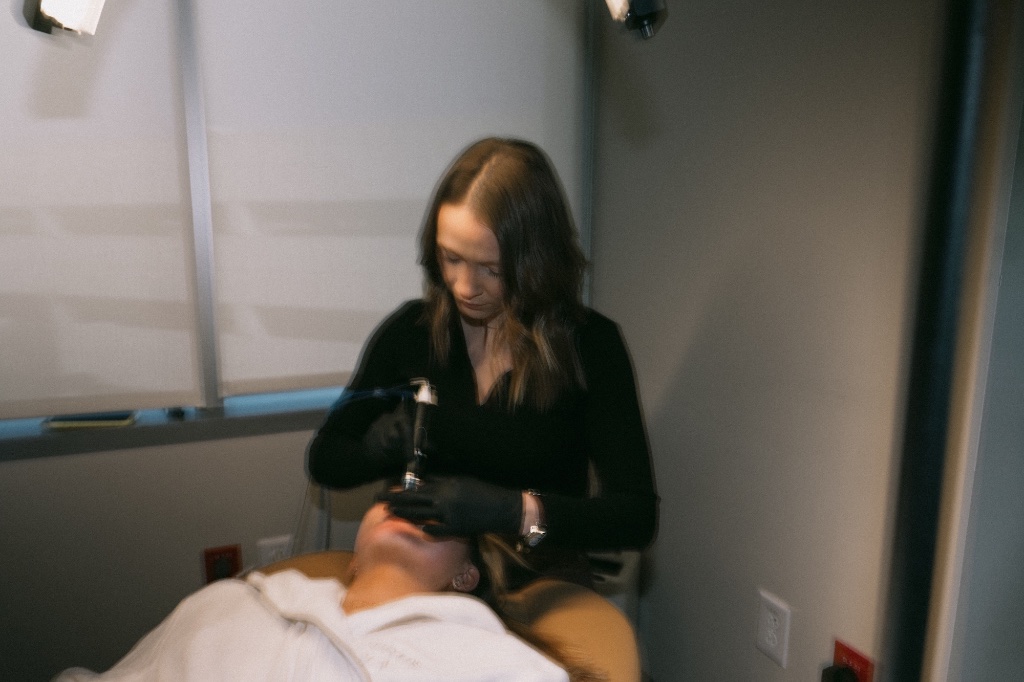
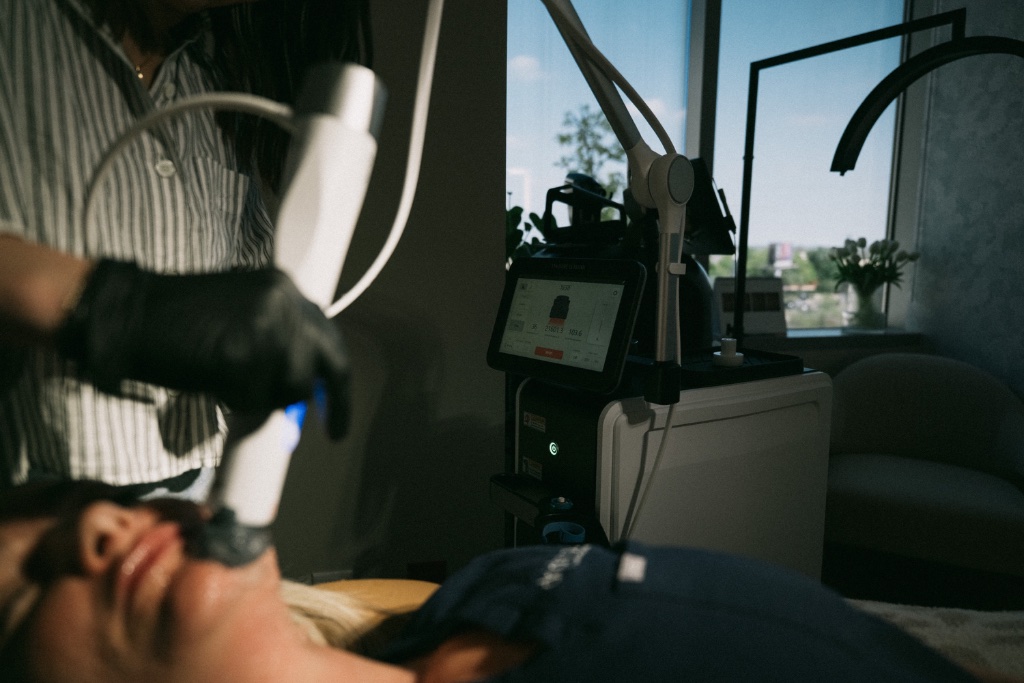
During treatment, the patient may feel warmth as RF energy is delivered into the tissue. The manufacturer's cooling technology is designed to cool the skin surface with each pulse. The experience may include sensations of contact, warmth, and cooling in sequence as the handpiece moves across the treatment area.
Some areas may feel different from others. Bony prominences, areas with less soft tissue over bone, and areas with different skin characteristics may create distinct sensations. This does not mean those areas are being treated incorrectly — it means anatomy influences how energy is perceived.
The question of whether warmth builds during treatment is best answered by the provider who is monitoring the skin and the patient who is communicating what they feel. The treatment experience is not a silent one. It is a continuous conversation.
Feel something?
Say something.
THIS IS NOT ALARMING. IT IS THE PROTOCOL.
Patients should not feel obligated to stay silent to be a "good patient." The provider needs feedback to adjust the treatment. Communication is not an interruption — it is part of how the treatment is delivered safely and comfortably.
11 / WHAT SHOULD YOU TELL YOUR PROVIDER DURING XERF?
Communication Is Part of the Treatment
During treatment, the patient should communicate with the provider if any of the following occur:
The sensation changes suddenly or noticeably
One area feels substantially different from what was described
You experience unexpected discomfort
You have a concern about heat that feels different from what was expected
You feel unwell during the treatment
Anything feels different from what the provider described before treatment
This is not a diagnostic checklist. It is a communication framework. The provider is trained to interpret what the patient reports and adjust accordingly. The patient's role is to report — not to diagnose.
17 / DENTAL WORK, IMPLANTS, AND METAL
Disclose Everything Before Treatment
Patients should disclose all relevant medical and dental history before treatment. This includes:
Dental Work
Dental implants, metal dental work, fillings, braces, retainers, and other dental hardware should be disclosed. Individualized assessment may be needed.
Facial Implants and Metal
Implants, plates, screws, and other medical devices should be disclosed. Do not assume general clearance — discuss with the provider.
The manufacturer's guidance and individualized assessment should guide whether treatment is appropriate. Patients should not self-clear based on general information. For a full discussion of safety considerations, see Is XERF Safe? Side Effects & Risks.
19 / WHAT IF YOU HAVE FILLER OR SCULPTRA?
Previous Treatment History Matters
Previous filler should be disclosed as part of treatment history. The presence of filler does not automatically increase or decrease discomfort, and patients should not invent spacing requirements. The provider should be informed of all previous treatments.
Similarly, previous biostimulatory treatment such as Sculptra should be part of the treatment history discussed before XERF. Do not invent pain differences. Disclose the history and let the provider assess.
21 / LOW PAIN TOLERANCE AND ANXIETY
You Do Not Need to Prove Anything
Low pain tolerance does not automatically make someone a poor candidate for XERF. The treatment is designed with comfort features, and the provider can adjust settings based on feedback. Useful steps before treatment include:
Discussing previous treatment experiences with the provider
Asking what sensations are expected during treatment
Understanding the comfort protocol and cooling technology
Agreeing on how to communicate during treatment
Asking what options exist if discomfort becomes significant
Patients should not self-medicate before treatment. Discuss any concerns with the provider beforehand.
22 / ANXIETY
If You Are Anxious About the Treatment
Uncertainty can amplify anticipation. Knowing the sequence of the appointment can make the experience more predictable.
BEFORE
Know what will happen
DURING
Know what to communicate
AFTER
Know what is expected
23 / HOW LONG DOES XERF TAKE?
Total Appointment Time vs. Device Treatment Time
The total appointment time includes consultation, preparation, treatment, and aftercare review. The device treatment time is the portion during which the XERF system is actively delivering energy. These are not the same number, and both depend on the individual treatment plan, the areas being treated, and the settings used.
Patients should ask the provider for an estimate of total appointment time during the consultation. The manufacturer notes that because XERF does not require numbing, session room time may be shorter compared to treatments that require a numbing period before the device is used.
30 / WHAT SHOULD NOT FEEL "NORMAL"
When to Contact the Practice
Patients should contact the treating practice if they experience unexpected or concerning symptoms, particularly symptoms inconsistent with the post-treatment expectations provided to them. This is not a frightening list — it is a communication framework.
For specific adverse events and safety documentation, refer to current manufacturer safety information and the treating practice's guidance. For a full discussion of safety, see Is XERF Safe? Side Effects & Risks.
31 / PAIN VS SAFETY
Comfort Is Not the Same as Safety
A comfortable treatment is not automatically a safe treatment. An uncomfortable sensation is not automatically an injury. Safety depends on appropriate candidacy, device protocol, provider training, treatment parameters, anatomy, monitoring, and response.
Comfort is information. Safety is a system.
The two are related but not identical. A patient can feel comfortable during a treatment that is not appropriate for them. A patient can feel uncomfortable during a treatment that is entirely safe and well-executed. The conversation about comfort and the conversation about safety are both important — and they are not the same conversation.
36 / WHY "PAINLESS" IS NOT THE BEST WORD
Trust Does Not Require the Word "Painless"
"Painless" is absolute. Patient experience is individual. A more credible discussion includes what patients may feel, how comfort is managed, how feedback is used, what safety systems exist, and what to expect afterward.
Trust doesn't require the word "painless."
It requires accurate expectations.
This is why JOLA Dallas does not market XERF as painless. The treatment involves energy delivery into tissue. The patient may feel warmth. The technology is designed to manage comfort. The provider is there to monitor and respond. The patient is there to communicate. That is a more honest framework than any absolute comfort claim.
37 / THE XERF EXPERIENCE TIMELINE
The Full Appointment, Start to Finish
ARRIVE
↓CONSULT / CONFIRM PLAN
↓PREPARE SKIN
↓REVIEW EXPECTED SENSATIONS
↓BEGIN TREATMENT
↓COMMUNICATE THROUGHOUT
↓COMPLETE TREATMENT
↓ASSESS SKIN
↓REVIEW AFTERCARE
↓RETURN TO YOUR DAY AS APPROPRIATE
38 / THE SENSORY MAP
What You May Notice
CONTACT
The handpiece moves across the treatment area. The patient feels the device on the skin.
WARMTH
RF energy is delivered into tissue. The patient may feel warmth as energy reaches the deeper layers.
COOLING
The Integrated Cryogen Delivery system cools the skin surface with each pulse, per the manufacturer.
PRESSURE
The handpiece maintains contact with the skin. The patient may feel pressure as it moves.
REPETITION
Energy and cooling alternate as the handpiece moves across the treatment area.
AREA-TO-AREA DIFFERENCE
Different areas may feel different due to anatomy, bone proximity, and skin characteristics.
POST-TREATMENT SENSATION
After treatment, the skin may feel warm, tender, or show temporary redness. Experiences vary.
SENSATION IS PERSONAL. COMMUNICATION SHOULD BE CONSISTENT.
39 / THE COMFORT CONVERSATION
10 Questions to Ask Before Treatment
What should XERF feel like?
What sensations are expected?
Does JOLA use topical numbing for XERF?
Why or why not?
What comfort features does the XERF device use?
Will some areas feel different?
What should I tell you during treatment?
What should I expect immediately afterward?
What symptoms would you want me to contact you about?
What happens if I become uncomfortable during treatment?
40 / PROVIDER
Comfort Is Part of Clinical Communication

Chey Cope
Laser Specialist — JOLA Dallas
The treatment experience includes setting expectations, understanding treatment history, confirming candidacy, monitoring the skin, communicating throughout treatment, and reviewing aftercare. Comfort is not a single moment — it is the entire arc of the appointment.
A patient who knows what to expect, who knows they can communicate, and who is being monitored by a trained provider is a patient who is better cared for — regardless of what any individual sensation feels like.
41 / WHAT JOLA WANTS YOU TO KNOW
Before Your Appointment
YOU DO NOT NEED TO:
— prove you have a high pain tolerance
— stay silent if something feels different
— know every technical term
— pretend you are not nervous
— compare your experience with someone on social media
YOU SHOULD:
+ share relevant medical history
+ share previous treatment history
+ ask questions
+ understand expected sensations
+ communicate during treatment
+ follow aftercare instructions
+ contact JOLA with concerning symptoms
42 / SOCIAL MEDIA AND THE PAIN QUESTION
Why Short-Form Content Can Distort Expectations
Short-form content often reduces treatment experiences to "10/10 painful" or "didn't feel anything." Neither necessarily predicts another patient's experience. Protocol, device, settings, treatment area, provider, individual sensitivity, and subjective language all matter. A single clip is not a treatment plan.
This is not a criticism of individual creators. It is a reminder that the treatment experience is individual, and that the most useful information comes from a consultation with a provider who knows the technology, the patient, and the treatment plan.
43 / PREVIOUS ENERGY TREATMENTS
What If You've Had a Bad Experience Elsewhere?
A prior uncomfortable treatment is worth discussing. But it does not automatically predict the XERF experience, because different technologies can use different energy modalities, delivery systems, comfort features, protocols, and treatment endpoints. Disclose the history — do not let it replace a consultation.
44 / NEEDLE AVERSION
What If You Hate Needles?
XERF is a non-needle, surface-contact radiofrequency treatment. According to the manufacturer, it does not use needles. This may be relevant for patients with needle aversion. However, needle aversion does not automatically make XERF appropriate — candidacy still comes first. For a full discussion of who XERF is for, see Am I a Good Candidate for XERF?.
45 / THE JOLA COMFORT FRAMEWORK
Before, During, After
BEFORE
Know the technology
Confirm candidacy
Disclose treatment history
Understand the sensations
Ask about numbing
DURING
Notice what you feel
Communicate
Let the provider monitor
Do not "tough it out"
AFTER
Know what is expected
Follow aftercare
Know when to contact JOLA
You should never have to guess what you are supposed to feel.
46 / THE BOTTOM LINE
Does XERF Hurt? The Bottom Line
Pain is subjective. XERF should not be given one universal pain score. The treatment uses radiofrequency energy, which may create thermal sensations as energy is delivered into tissue. The manufacturer has designed comfort features into the platform — including Wave Fit™ pulse technology, Integrated Cryogen Delivery cooling, and Accurate Impedance Feedback — to manage energy delivery and surface comfort.
According to the manufacturer, XERF is designed to be performed without topical numbing. The absence of numbing does not mean the absence of sensation. It means the platform's cooling technology is intended to manage surface comfort without anesthetic. The patient may still feel warmth, contact, and cooling pulses during treatment.
Treatment areas may feel different because anatomy is different. Bone proximity, soft tissue depth, skin characteristics, and individual sensitivity all influence perception. Treatment parameters matter. Communication matters. Patients should not feel pressured to stay silent during treatment.
Treatment duration should be described accurately by the provider, distinguishing total appointment time from device treatment time. Post-treatment sensations vary. The manufacturer states no downtime, but whether a patient feels comfortable returning to work or social plans depends on individual response. Concerning symptoms should be communicated to the treating practice.
XERF and RF microneedling feel different because the technologies differ — one uses needles, the other does not. XERF and Morpheus8 should not be compared with arbitrary pain scores. XERF and Ultherapy are different modalities — RF and ultrasound. XERF and Thermage both use RF but should not be assumed to feel identical because the platform design, cooling, and protocol differ.
Comfort does not determine candidacy. Safety does not equal the absence of sensation. A good consultation should explain the experience before treatment begins.
Patients often ask: "Does XERF hurt?" At JOLA Dallas, we think the better answer begins before the treatment starts.
You should know what the technology is doing. You should know what you may feel. You should know what is expected. And you should know that you can communicate throughout the treatment.
Because comfort is not about pretending you feel nothing. It is about knowing what you are feeling, why you are feeling it, and being cared for accordingly.
KNOW THE TREATMENT BEFORE YOU BOOK IT
Explore XERF at JOLA Dallas →
COMFORT STARTS WITH KNOWING WHAT TO EXPECT
Explore XERF Safety →
KNOW WHAT TO EXPECT
Continue Exploring XERF

STILL HAVE QUESTIONS ABOUT WHAT XERF FEELS LIKE?
Book a JOLA Consultation →
XERF CONTENT CLUSTER