

JOLA DALLAS — TREATMENT PLANNING / TIGHTENING VS FILLER VS BOTH
Many patients in Dallas and Highland Park notice a change in their face but are not sure what category of treatment actually addresses it. The face may look softer, less defined, or less supported — but the cause is not always obvious. Some changes are about support and firmness. Others are about volume, contour, or structural loss. The confusion is common because different concerns can look similar in the mirror. A patient may believe they need filler when the real issue is laxity. Another may request tightening when the actual concern is deflation. The question of whether you need skin tightening, filler, or both is not one you are expected to answer alone — and at JOLA Dallas, the determination is made through consultation, anatomy, and full-face planning, not by guessing from trend language.
Understanding the difference between laxity and volume loss is the first step. Skin tightening and filler are not interchangeable. They address different layers of the face, produce different outcomes, and serve different anatomical needs. A provider who understands facial balancing and treatment planning can distinguish between them — and can tell you when skin tightening, filler, or both is the right approach for your face.
This article explains what skin tightening actually addresses, what filler actually addresses, when each may make more sense, when both may be appropriate, and how JOLA Dallas decides between the categories through consultation-led care.

Why This Question Is So Common
Skin laxity, volume loss, contour change, and lower-face softening often overlap visually. A patient looking in the mirror sees a face that looks less defined — but whether that softening is caused by loose skin, lost volume, or both is not something the mirror can answer. The face changes in layers, not in one simple category. Support may diminish at the same time that volume decreases, and the result is a composite impression that can be difficult to parse without clinical assessment.
Patients may say "I need filler" when the issue is support. The jawline has blurred, and they assume that adding volume will restore definition — but if the problem is laxity, filler will add fullness without addressing the underlying loss of firmness. Conversely, patients may say "I need tightening" when the issue is structure. The cheeks have flattened and the temples have hollowed, and they interpret the resulting softness as loose skin — but tightening alone will not restore the volume that has been lost.
"The face changes in layers. Skin laxity, volume loss, and contour change can all produce a similar impression in the mirror — but they require different categories of treatment. Choosing the right one starts with diagnosis, not preference."
This is why the question of skin tightening, filler, or both is so common. The face does not present its concerns in neatly labeled categories. It presents an impression — and translating that impression into the correct treatment requires a provider who can read anatomy, not just a treatment menu. Provider judgment is what separates a plan that fits the face from one that fits a trend.
What Skin Tightening Actually Addresses
Skin tightening belongs to the conversation around firmness, support, and soft tissue laxity. This category is often considered when the concern is lower-face softening, early jawline blur, neck laxity, or a less supported facial frame. The skin and supportive tissue have lost some of their tautness — the face does not look hollow, but it looks less firm. Tightening addresses that firmness. It supports the frame of the face rather than adding to it.
Tightening is not the same as replacing lost volume. A patient whose temples have hollowed or whose cheeks have deflated will not benefit from tightening alone — the issue is structural loss, not laxity. But a patient whose jawline has softened, whose neck has begun to lose definition, or whose lower face feels less supported may find that tightening is the more appropriate and more elegant answer. Adding filler to a face that needs firmness, not volume, can create fullness where firmness was the actual goal.
This distinction is essential to understanding skin tightening, filler, or both. Tightening supports. Filler restores. The face tells the provider which it needs — but only if the provider is listening.
What Filler Actually Addresses
Filler belongs to the conversation around structural support, contour, and targeted volume. It may be considered when the issue is hollowness, contour loss, or specific areas that need support. Temples that have hollowed, cheeks that have flattened, under-eyes that have darkened, or a jawline that has lost structural definition — these are concerns where filler may be the appropriate tool. Filler restores what time and anatomy have diminished, and when placed with restraint and full-face thinking, it can produce results that look natural rather than obvious.
Filler is not automatically the answer to every aging or facial-balance concern. A patient whose skin has lost elasticity will not benefit from filler alone — the skin will continue to soften regardless of how much volume is added. Elegant filler depends on placement, restraint, and full-face thinking. Sculptra vs filler is a relevant question here as well — biostimulatory treatments like Sculptra stimulate collagen production rather than adding volume directly, and they may be more appropriate for certain patients.
Understanding what filler actually addresses is critical to deciding between skin tightening, filler, or both. Filler is a tool for contour and volume — not for firmness. Using it for the wrong concern produces fullness without resolution.

When Skin Tightening May Make More Sense
Skin tightening may be the more appropriate category when the concern is firmness rather than volume. Certain signs suggest that the face needs support — not fullness — and that structural tightening may produce a more elegant result than adding filler.
01
Lower-Face Softening
The jawline and lower face feel less defined, not because of volume loss but because of tissue laxity.
02
Early Jawline Blur
The transition between face and neck is less crisp, suggesting supportive tissue has relaxed.
03
Neck Support Concerns
The skin along the neck and under the chin feels less firm or taut than it once did.
04
Support Without Fullness
The face does not look hollow — it looks less supported. Adding volume would not solve the concern.
JOLA DALLAS — SKIN TIGHTENING DALLAS
Lower-Face Softening
The jawline and lower face feel less defined, not because of volume loss but because of tissue laxity. The skin and supportive tissue have relaxed, and the transition between face and neck has become less crisp. This is a firmness issue — and tightening, not filler, may be the right response. Jawline tightening is one of the most consistent applications for structural skin tightening.
Early Jawline Blur
The jawline is not gone — it is just less defined. The edge between the lower face and the neck has softened. This early blur is often best addressed with tightening rather than filler, because the issue is supportive tissue relaxation, not structural deficiency. Adding filler along the jawline when the problem is laxity can create width or heaviness rather than definition.
Neck Support Concerns
The skin along the neck and under the chin feels less firm or taut than it once did. This is a classic tightening concern — the neck is an area where laxity manifests clearly and where structural tightening can produce meaningful improvement. Neck tightening is often part of the conversation when patients notice lower-face and neck changes together.
Patients Who Want Support Without More Fullness
Some patients do not want added volume — they want the face to look firmer, more supported, and more defined without the fullness that filler produces. For these patients, tightening is the more elegant answer. It supports the frame of the face without adding to it, and the result reads as structural improvement rather than volume replacement.
When Filler May Make More Sense
Filler may be the more appropriate category when the concern is shape, contour, or structural deficiency rather than skin laxity. The signs below suggest that the face needs volume or support — not tightening.
01
Hollowing
Temples, cheeks, or under-eyes show visible volume depletion that tightening alone cannot address.
02
Contour Loss
The face has lost shape or definition in specific areas where structural fat pads have diminished.
03
Structural Deficiency
Certain features lack the underlying support they once had — not from laxity but from deflation.
04
Support Over Firmness
The skin is still relatively firm, but the architecture beneath it has changed. Volume, not tightening, is the priority.
JOLA DALLAS — FILLER DALLAS
Hollowing
Temples, cheeks, or under-eyes show visible volume depletion that tightening alone cannot address. Hollowing is a structural issue — the fat pads beneath the skin have diminished — and restoring volume in those areas is the direct response. Under-eye hollows and temple hollowing are among the most common concerns where filler is the appropriate tool.
Contour Loss
The face has lost shape or definition in specific areas where structural fat pads have diminished. The cheekbones are less prominent, the jawline is less angular, or the chin has receded. These contour changes are best addressed with filler — or with biostimulatory treatments that rebuild collagen architecture over time. Facial balancing is the framework that ensures contour restoration serves the whole face, not just one feature.
Structural Deficiency in Selected Areas
Certain features lack the underlying support they once had — not from laxity but from deflation. The midface may have flattened, the tear troughs may have deepened, or the lips may have lost structural definition. In these cases, targeted filler restores support where it is specifically needed. Biostimulators vs dermal fillers is a relevant question here, as the choice between them depends on whether the concern is better served by direct volume or by collagen stimulation.
Needing Support Rather Than Tightening Alone
The skin is still relatively firm, but the architecture beneath it has changed. Volume, not tightening, is the priority. In these faces, tightening would not address the concern — the skin is already taut, and what is missing is the structural support that filler or biostimulatory treatment can provide. This is why the question of skin tightening, filler, or both must be answered with anatomy, not assumption.
When Both May Be Appropriate
Some patients have both loss of support and loss of volume. The skin has softened and the structural architecture has diminished — and in these cases, a single category of treatment will not fully address the concern. A more complete plan may involve more than one category: one treatment to support firmness and another to address structure. This is when the question of skin tightening, filler, or both resolves into "both" — and the plan becomes layered.
This does not mean doing everything at once. Sequencing matters. The provider identifies the priority — the concern that will produce the most meaningful improvement when addressed first — and treats it. Then the face is reassessed. If the second category is still needed, it is added. If the first treatment resolved more than expected, the plan is simplified. Staging treatment over multiple appointments is often the more refined approach, because it allows the provider to see how the face responds before committing to more.
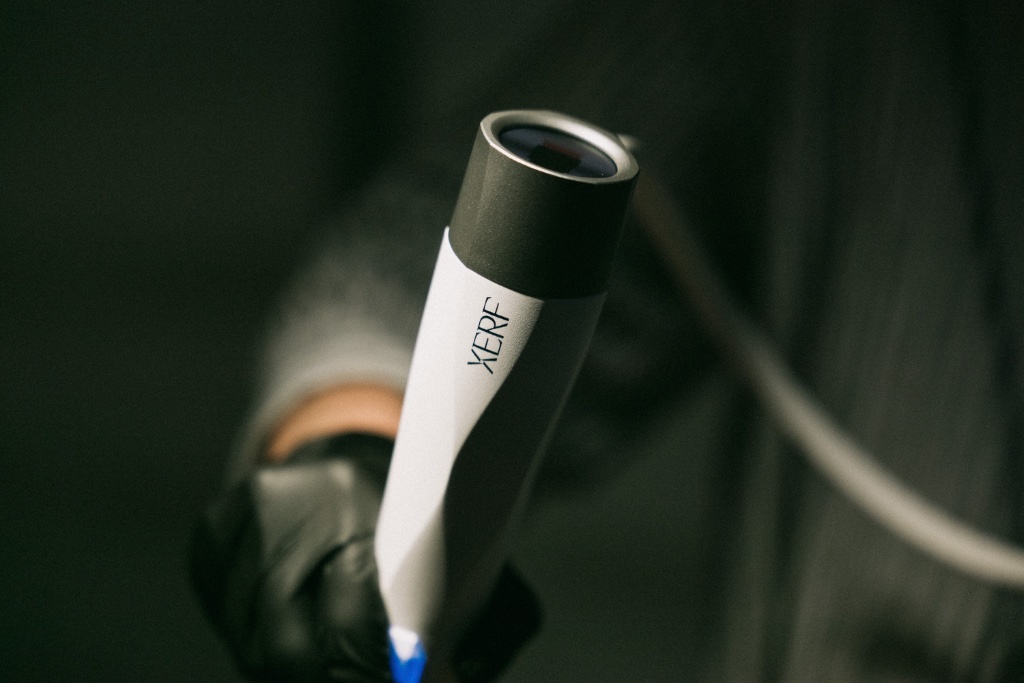
For patients who need both, the JOLA treatment stack integrates XERF, fillers, skincare, and facial balancing into a coordinated plan. The result is refinement across multiple dimensions — firmness, structure, proportion, and skin quality — which is what produces a natural-looking, expensive-reading outcome. A layered plan, built progressively, is often superior to a single-category plan that addresses only one dimension of the face's needs.
01
TIGHTENING
Firmness, support, lower-face frame.
02
STRUCTURAL SUPPORT
Contour, architecture beneath the surface.
03
VOLUME
Hollowing, deflation, specific area loss.
04
CONTOUR
Shape, proportion, facial relationships.
05
SEQUENCING
Priority first, reassess, then refine.
06
NATURAL-LOOKING OUTCOME
The right tool for the actual problem.
JOLA DALLAS — CONSULTATION-LED CATEGORY SELECTION
Why Guessing Often Leads to the Wrong Treatment
Patients are not expected to diagnose their own anatomy. The face is a complex structure, and the distinction between laxity and volume loss — between firmness and contour — requires clinical training to assess accurately. Online trends often oversimplify what the face needs, reducing complex anatomical changes to a product name or a treatment buzzword. A patient reads that filler is the answer to looking tired and assumes it applies to their face. Another reads about skin tightening and assumes it will resolve their contour concerns. Neither assumption is necessarily correct.
Choosing a treatment by trend name can lead to overcorrection or poor fit. Filler placed where tightening was needed creates fullness without resolution. Tightening performed where filler was needed firms the skin without restoring the structure beneath it. Either error produces a result that does not address the actual concern — and that may look less natural than doing nothing at all. Overtreatment often begins with a misdiagnosis, not with a bad product.
This is why consultation matters more than self-selection. A provider who understands clinical fluency can read the face accurately and recommend the category — or categories — that will actually serve it. The question of skin tightening, filler, or both is a clinical question, and it deserves a clinical answer.

How JOLA Decides Between Tightening, Filler, or Both
At JOLA Dallas, the decision between tightening, filler, or both is made through a comprehensive consultation that evaluates the face and skin as an integrated system. The provider does not begin with a treatment — they begin with an assessment. Consultation-led care means the plan is driven by anatomy, not by request.
The assessment includes a full-face evaluation — every feature in context, no area in isolation. Lower-face and profile analysis examines how the jawline, chin, and neck transition. Skin quality and support review assesses texture, tone, elasticity, and firmness. The provider evaluates volume loss versus laxity: Is the face hollowing, softening, or both? From that evaluation, a priority emerges — the concern that, when addressed, will produce the most meaningful improvement.
If the priority is firmness, XERF may be recommended. If the priority is contour or volume, dermal fillers or Sculptra may be the better tool. If both laxity and volume loss are present, a staged plan involving multiple categories may be built. Facial balancing ensures that whatever is chosen serves the whole face. The plan may be singular, layered, or staged over time — and the provider will tell you which, and why.
Why XERF Is a Key Part of This Conversation
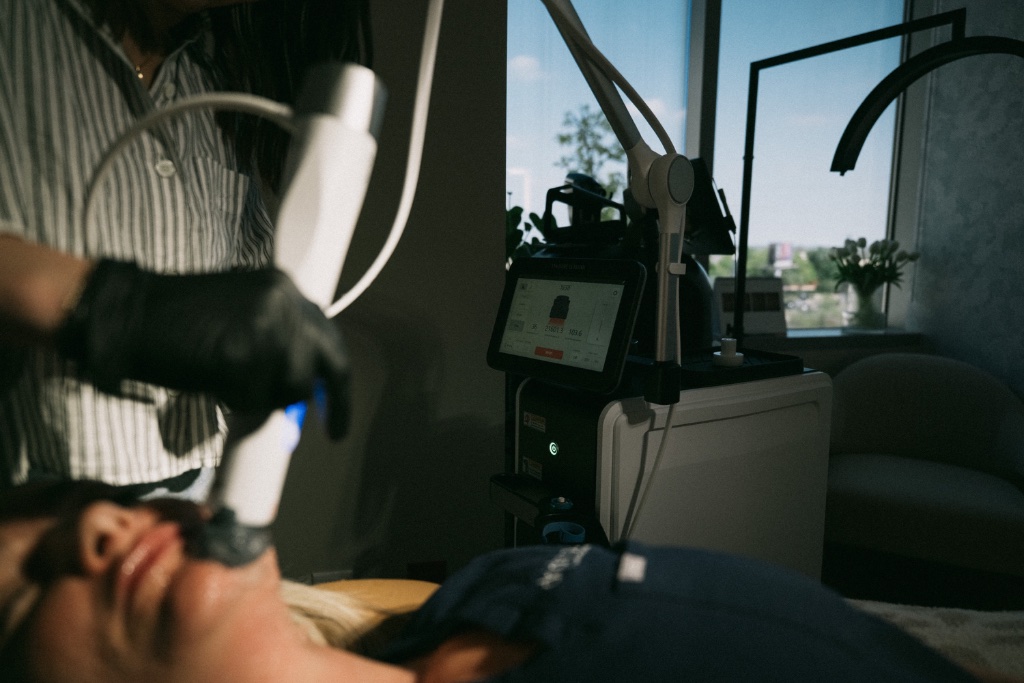
XERF is relevant when the conversation is about structural skin tightening, firmness, and lower-face support. XERF uses multifrequency monopolar radiofrequency energy to stimulate collagen remodeling and support structural tightness — without adding volume. For some patients, XERF may be more appropriate than filler, because the concern is firmness rather than volume. For others, it may be one part of a broader plan that also includes injectables, skincare, or facial balancing.
Understanding what XERF is is essential to understanding why it belongs in the tightening-versus-filler conversation. XERF does not add volume. It firms. It supports the frame of the face. Jawline tightening and neck tightening are among its most consistent applications — and for patients whose primary concern is lower-face softening or laxity, XERF may be the more elegant answer than filler.
For patients who need both tightening and volume, XERF and fillers can work together — but only when sequenced intelligently. The provider identifies which concern is the priority, treats it first, and reassesses before adding the second category. Rushing both undermines both. This is why the question of skin tightening, filler, or both is not just about which categories to choose — it is about how to sequence them.
Why Natural-Looking Results Depend on Choosing the Right Category
A natural-looking result is not just about doing less. It is about choosing the right tool for the actual problem. The wrong category can create imbalance even if the treatment itself is well performed. Filler placed where the face needed tightening produces fullness without firmness. Tightening performed where the face needed volume firms the skin without restoring the structure beneath. Either mismatch produces a result that looks off — and that "off" quality is what reads as unnatural.
Elegance depends on diagnosis, editing, and restraint. Restraint means choosing the right category — and choosing not to add more than the face needs. A provider who diagnoses accurately and treats with restraint will produce a result that reads as natural because it addresses the actual concern with the appropriate tool. What makes a result look expensive is not the product — it is the judgment behind the choice.
This is why skin tightening, filler, or both is not a question of preference. It is a question of fit. The right category for the right concern — placed with restraint and sequenced with patience — is what produces a result that looks like you, supported and refined.
What Patients Should Ask in a Consultation
The right questions help ensure the plan is built on diagnosis, not assumption. During your consultation at JOLA Dallas, consider asking:
Is this a support issue, a volume issue, or both?
Clarifies whether the concern is laxity, deflation, or a combination.
What is the real priority?
Identifies which concern, when addressed first, will produce the most meaningful improvement.
What would happen if we treated less?
Tests whether the plan is built on restraint or on volume.
Does this need to be staged?
Determines whether sequencing over multiple visits will produce a better result.
What category would you choose if the goal is to look natural?
Shifts the conversation from product to philosophy.
These questions help ensure the plan is built on diagnosis, not assumption. A provider who answers them with specificity — who can explain why tightening, filler, or both is the right choice for your face — is a provider who is thinking clinically. That is the standard JOLA Dallas holds.
Begin With a Consultation at JOLA Dallas
If you are wondering whether you need skin tightening, filler, or both — the answer starts with a consultation. Your plan will be built on full-face assessment, anatomy-first thinking, and the willingness to choose the right category for the actual concern. That is how natural-looking results are created.