
TREATMENT COMPARISON / SKIN REFINEMENT
JOLA DALLAS
MICRONEEDLING
VS CHEMICAL PEEL
Two different treatment paths for texture, tone, and elevated skin refinement.
JOLA DALLAS / APRIL 2026
14 MIN READ
Among patients exploring skin-improvement options in Dallas, Highland Park, University Park, and the Park Cities, two treatment categories come up more consistently than almost any others: microneedling and chemical peels. Both are well-established in clinical skin care. Both are available at reputable luxury med spa dallas practices. Both are often positioned as solutions for patients who want better skin — more refined, more luminous, more polished. And both come up in the same breath so often that patients frequently arrive at consultations assuming they are choosing between two versions of the same thing.
They are not. The microneedling vs chemical peel dallas comparison is a genuinely meaningful clinical question — one that deserves a considered, non-promotional answer. Microneedling and chemical peels work through different mechanisms, at different depths, on different aspects of skin quality. Choosing between them — or determining whether a combination approach is more appropriate than either alone — requires an understanding of what each treatment actually does, and more importantly, what the individual skin needs most.
This guide explains both treatments clearly, explores how they differ, and walks through the clinical reasoning that shapes how JOLA Dallas approaches this choice. The goal is not to tell you which treatment is better. It is to give you the information that makes a consultation more meaningful — and a treatment plan more intelligent.

Why Microneedling and Chemical Peels Are Often Compared
The reason the microneedling vs chemical peel dallas question arises so frequently is that both treatments exist in the same general territory of skin improvement. They are both used for patients who want better-looking, better-functioning skin. They are both non-surgical. They are both available at clinical skin care practices. And they both address concerns — texture, dullness, uneven tone — that significantly overlap in how patients describe them.
But the overlap in application does not mean equivalence in mechanism. When patients assume microneedling and chemical peels do the same thing, they are working from a surface-level understanding of what each treatment involves. In reality, they work through fundamentally different biological processes, act on different tissue layers, and produce different kinds of results on different timelines. Understanding this distinction is the starting point for any intelligent treatment decision.
For JOLA Dallas, the conversation around microneedling or chemical peel dallas begins with the skin itself — not with a preference for one treatment over the other. The question is never "which treatment is more popular?" but "what does this specific skin, in this specific condition, with these specific goals, actually need?" That question can only be answered after a thorough assessment. Not before.
What Microneedling Is
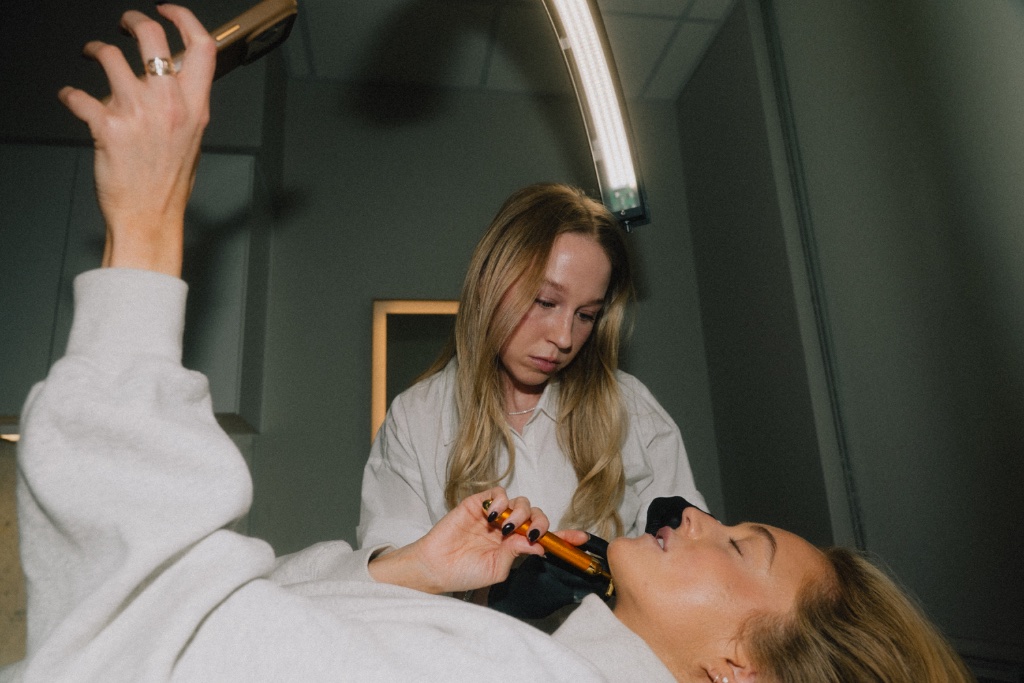
Microneedling dallas is a clinical skin-refinement treatment that uses a device fitted with very fine needles to create controlled micro-channels in the skin's surface. These micro-injuries — too small to be visible to the eye but large enough to trigger a biological response — activate the skin's natural wound-healing cascade. Fibroblasts, the cells responsible for producing collagen and elastin, become more active in response to the treatment. Over the weeks and months following a session, the skin produces new structural proteins in the treated tissue.
The primary outcome of this process is a gradual improvement in skin quality from within: smoother texture, more refined surface, improved firmness, and a general increase in the density and vitality of the dermal tissue. Patients often describe the result as skin that simply looks and feels better — more like itself at its best, rather than a dramatic transformation. This quality of gradual, natural-looking improvement is part of what makes microneedling dallas particularly appealing to patients who value subtlety and who are building a longer-term skin strategy rather than seeking a single corrective event.
Provider technique matters significantly with microneedling. The needle depth, pass density, and treatment parameters all require clinical judgment — they should be calibrated to the individual skin type, condition, and treatment intent rather than applied uniformly. A microneedling session performed by an experienced, anatomy-literate provider produces a meaningfully different result than the same device in less skilled hands. This is part of why clinical fluency at JOLA Dallas shapes every skin-treatment decision rather than allowing trend or protocol to substitute for judgment.

What a Chemical Peel Is
A chemical peel dallas is a skin-renewal treatment that uses a carefully selected acid formulation — applied to the skin's surface — to accelerate cell turnover by removing the outermost layer of dead and dulling epidermal cells. As the treated surface sheds and regenerates, the skin beneath is typically fresher, brighter, and more even in tone. Depending on the formulation and depth of the peel, the renewal process may also reach the upper dermis, providing a degree of structural support in addition to surface improvement.
Not all chemical peels are equivalent. The category spans a wide range of formulations and intensities — from superficial peels that produce subtle brightening with minimal downtime to medium-depth peels that deliver more significant surface renewal alongside a more visible recovery period. The selection of the appropriate peel formulation, concentration, and approach is a clinical decision that depends on the patient's skin type, sensitivity, primary concern, and tolerance for downtime. At JOLA Dallas, no peel is selected from a standard menu — the protocol is designed around the individual skin.
The primary strength of a chemical peel dallas in the context of skin-rejuvenation planning lies in its ability to address what lives at the surface: tone irregularity, dullness, accumulated dead cells, mild discoloration, and a general quality of flatness or tiredness in the skin's appearance. It is one of the more direct tools available for patients whose primary concern is not structural but luminous — who want skin that looks genuinely bright, fresh, and alive, rather than simply smoother. This connects naturally to the broader territory of medical-grade facials at JOLA Dallas — clinical treatments that go meaningfully deeper than the standard spa facial.
Microneedling vs Chemical Peel: The Main Differences
Texture vs Surface Renewal
The most fundamental difference in the microneedling vs chemical peel dallas comparison is where each treatment primarily acts and what it primarily changes. Microneedling targets the dermis — the structural layer of the skin — and produces its primary results through collagen stimulation and tissue-level renewal. Chemical peels target the epidermis — the surface layer — and produce their primary results through accelerated cell turnover and surface-level renewal. Texture improvement that originates in the structural layer is addressed more directly by microneedling. Surface clarity, brightness, and tone are addressed more directly by a peel.
Tone and Glow vs Collagen-Focused Support
For patients seeking a glowing skin treatment dallas in the most immediate sense — brighter, more even, more luminous skin — chemical peels are often the more directly relevant modality. For patients seeking long-term collagen support, structural improvement, and the kind of gradual skin-quality investment that compounds over time, microneedling is typically the more relevant choice. Neither is categorically superior — they serve different goals, which is why a clear understanding of what the patient values most is so important before any treatment recommendation is made. The philosophy behind this kind of thoughtful, restrained treatment selection is explored in The Art of Restraint.
Downtime and Recovery Considerations
Both treatments involve some degree of post-treatment skin response, but the nature and duration of that response differs. Microneedling typically produces redness and some sensitivity in the hours to days following treatment — most patients find it manageable and schedule around it with a few days of comfort buffer. Chemical peels vary considerably by depth: a superficial peel may produce minimal visible response, while a medium-depth peel can involve several days of visible peeling and flaking as the treated skin renews. Downtime tolerance is a meaningful clinical factor in the microneedling vs chemical peel dallas conversation, and patients should discuss it openly during their consultation.
Why the Right Choice Depends on the Skin
Ultimately, the microneedling vs chemical peel dallas decision is not answerable in the abstract. The right choice depends on what the individual skin needs: its current condition, the primary concern driving the patient to seek treatment, the degree of downtime that is acceptable, the treatment history, and the longer-term goals. A patient with rough, collagen-depleted skin who is focused on structural refinement may be best served by microneedling. A patient with generally good skin who wants elevated surface renewal and brightness may be best served by a peel. A patient with layered concerns — both structural and surface — may be best served by a combination approach. None of these conclusions is reachable without looking at the skin.
MICRONEEDLING
CHEMICAL PEEL
THE RIGHT CHOICE — OR COMBINATION — IS ALWAYS DETERMINED THROUGH CLINICAL CONSULTATION

When Microneedling May Be the Better Fit
In the microneedling vs chemical peel dallas comparison, microneedling dallas tends to be the more clinically relevant choice for patients whose concerns are primarily structural and texture-driven rather than surface and tone-driven. The following presentations often align well with what microneedling can offer:
- Patients focused on texture — those whose skin feels rough, irregular, or less smooth than it once did, where the concern originates in the structural layer rather than simply at the surface. Microneedling's collagen-stimulating mechanism addresses this layer directly in a way that surface exfoliation cannot replicate.
- Patients interested in collagen-supportive improvement — those who approach skin rejuvenation dallas as a long-term biological investment rather than a surface correction. Microneedling fits naturally within a collagen-banking philosophy that builds structural skin quality over time, which connects to the broader skin health approach at JOLA Dallas.
- Patients wanting gradual, natural-looking refinement — those who prefer improvement that develops progressively, reads as inherent rather than introduced, and is sustainable over time rather than relying on repeated short-cycle surface renewal.
- Patients building a longer-term skin strategy — those enrolled in or interested in skin health programs that sequence treatments across multiple seasons and years for cumulative structural improvement.
As always, the determination of whether microneedling is genuinely the most appropriate treatment for a given patient belongs in a clinical consultation — not in a general profile. The above describes tendencies, not certainties.
When a Chemical Peel May Be the Better Fit
In the microneedling vs chemical peel dallas comparison, a chemical peel dallas tends to be the more clinically relevant choice for patients whose primary concern is surface quality: tone, brightness, freshness, and the kind of refined luminosity that a more structurally focused treatment cannot deliver as directly. The following presentations often align well with what a peel can offer:
- Patients focused on surface dullness — those whose primary complaint is that their skin looks flat, tired, or lacking in luminosity, rather than specifically rough or structurally changed. A peel's accelerated cell-turnover mechanism addresses this surface quality most directly.
- Patients seeking tone refinement — those with mild, diffuse tone irregularity, mild discoloration, or uneven skin brightness that would benefit from the surface-renewal and brightening properties of a well-selected peel formulation. For more targeted or persistent discoloration, pigment correction may be the more appropriate primary intervention.
- Patients wanting brighter-looking skin — those who describe their goal in terms of glow, radiance, and freshness rather than structural improvement. Chemical peels are among the most established and effective tools for this kind of glowing skin treatment dallas outcome.
- Patients seeking elevated maintenance — those who already have reasonable skin quality and are looking for a reliable, clinical way to maintain freshness, surface clarity, and a polished appearance over time — without necessarily addressing structural change. A well-selected, periodically scheduled peel can be an elegant maintenance tool within a broader skin care strategy.
Why Some Patients Benefit From Both
For many patients, the microneedling vs chemical peel dallas conversation resolves not as an either/or choice but as a question of how to coordinate both within a thoughtful, sequenced treatment strategy. Skin quality is rarely a single-layer concern. A patient who describes rough texture likely also has some degree of surface dullness. A patient seeking brightening often has collagen-level improvements to make as well. The two concerns coexist — and addressing only one of them tends to produce results that are less complete than they could be.
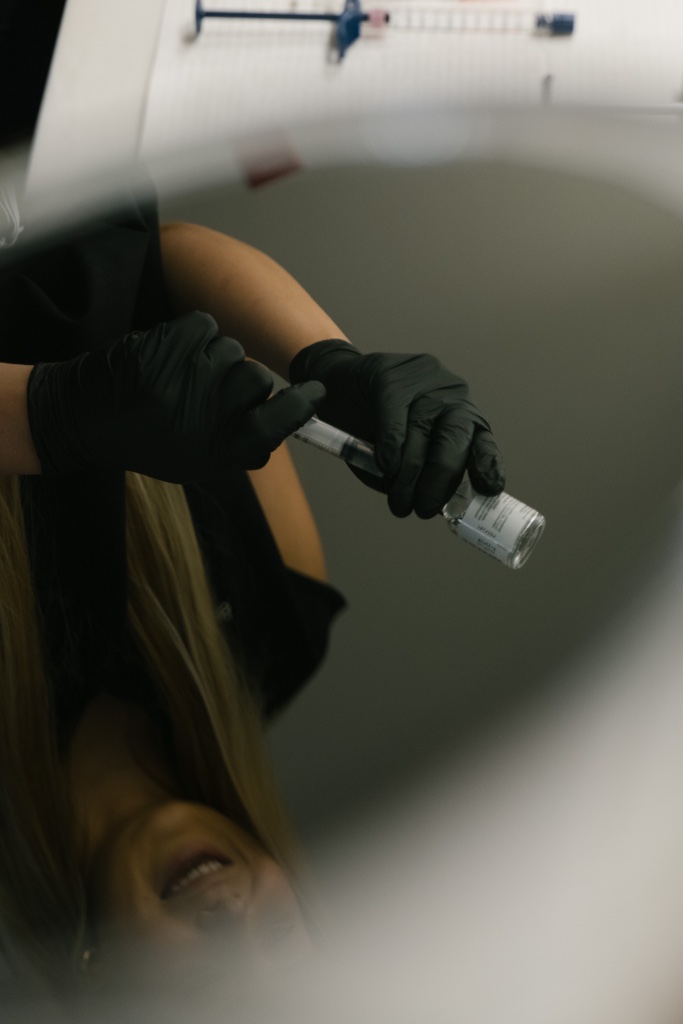
This is the clinical foundation of JOLA Advanced Skin Refinement — a combination protocol that pairs microneedling and a chemical peel in a single, sequenced treatment. Rather than choosing one modality at the expense of the other, it layers them: microneedling for structural and collagen-focused improvement, chemical peel for surface renewal and tone. The protocol is calibrated to the individual skin — not a fixed recipe applied to everyone — and the result is a more comprehensive approach to skin refinement treatment dallas that neither treatment alone can deliver.
The key principle here is that combination treatment should be provider-guided rather than trend-driven. Not every patient needs or benefits from a combined approach. Some skins are better served by one modality with appropriate sequencing over time. The decision to combine treatments should follow a clinical assessment that identifies a genuine rationale — not an assumption that more modalities equals better results.
What to Expect During a Consultation
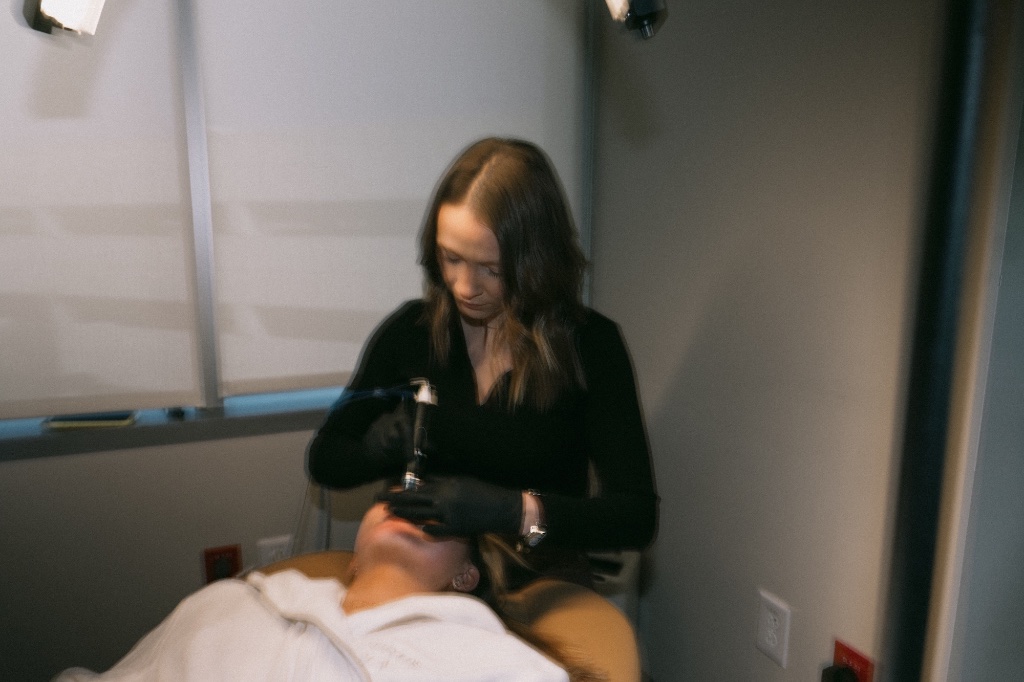
A consultation focused on the microneedling vs chemical peel dallas question at JOLA begins with the skin — not with the patient's pre-existing preference. Your provider performs a thorough assessment: evaluating the skin's current condition, its texture and tone, its sensitivity profile, its history of previous treatments, and its response to any products you are currently using. This evaluation is the foundation of every treatment recommendation that follows.
The consultation also includes an open conversation about your goals. Not just "what do you want treated?" but "what does better skin look like to you?" Some patients are focused on how the skin feels. Others are focused on how it photographs. Others care most about consistency of tone and a quality of freshness that makes them look well-rested. These distinctions matter — and they inform whether microneedling, a peel, or a combination approach is the most appropriate recommendation for your particular situation.
Downtime tolerance is also a factor that belongs in this conversation. If your schedule does not accommodate five to seven days of visible skin renewal, a medium-depth peel — however effective it might be for your concerns — may not be the right choice at this time. A well-planned skin strategy works within the practical realities of your life, not around them. Treatment planning at JOLA is always designed to be sustainable — not just optimal in a vacuum. This is part of why the treatment planning process is so central to every recommendation made at the clinic.
If the consultation determines that neither microneedling dallas nor a chemical peel dallas is the most appropriate primary treatment for your specific skin at this specific time — that a different approach, a different sequence, or a different combination makes more clinical sense — you will hear that clearly and honestly. A good consultation is not a sales conversation. It is a clinical one.

How Microneedling and Chemical Peels Fit Into a Larger Skin Strategy
The best skin outcomes tend not to come from one treatment chosen correctly but from a sustained, thoughtfully coordinated strategy that layers the right interventions at the right times. Microneedling dallas and chemical peel dallas treatments are both well-suited to this kind of long-view approach — each contributing meaningfully as part of a broader plan rather than as isolated events.
At JOLA Dallas, the skin-refinement ecosystem includes:
- Advanced Skin Refinement — the combination protocol that pairs microneedling and a chemical peel in a single, coordinated treatment for patients whose skin benefits from both structural and surface renewal simultaneously.
- Medical-Grade Facials — clinical skin treatments that sit between standard maintenance facials and more active corrective protocols, providing a consistent foundation of skin health that makes other treatments more effective.
- Pigment Correction — targeted treatment for patients where tone irregularity is more persistent or pronounced than surface-renewal treatments alone can address, requiring a more focused, evidence-based approach to discoloration.
- Skin Health Programs — the strategic layer that converts individual treatments into a coherent, sustained investment in skin quality, scheduling and sequencing sessions around seasonal changes, skin response, and long-term goals.
- HydraFacial in Dallas — hydration-focused clinical facial treatment that supports skin clarity and barrier health, often used alongside or between more active refinement sessions to maintain baseline skin quality.
- Treatment Planning — the consultation-first process that connects individual treatment decisions to a broader skin strategy, ensuring that each session has context, purpose, and direction within a longer-term plan.
The relationship between all of these treatment categories — and the skill with which they are coordinated — is what separates a genuinely effective medical-grade skin treatment dallas approach from a series of unrelated appointments. This is the territory that JOLA Dallas operates in, and it is why consultation is always the starting point for any skin-improvement recommendation.
Begin Your Skin Consultation at JOLA Dallas
If you are weighing microneedling vs chemical peel dallas — or simply want an honest, assessment-led conversation about what your skin needs and which treatment path is most appropriate — the right next step is a consultation at JOLA Dallas. Patients in Dallas, Highland Park, University Park, Preston Hollow, and the Park Cities are welcome to begin.
214.515.0002 / info@joladallas.com
Frequently Asked Questions
Explore Skin Refinement in Dallas
JOLA Dallas offers consultation-led, anatomy-first skin refinement for patients in Dallas, Highland Park, University Park, Preston Hollow, and the Park Cities. Begin with an honest clinical assessment of what your skin needs — and which treatment path is genuinely right for you.
BEGIN CONSULTATION