
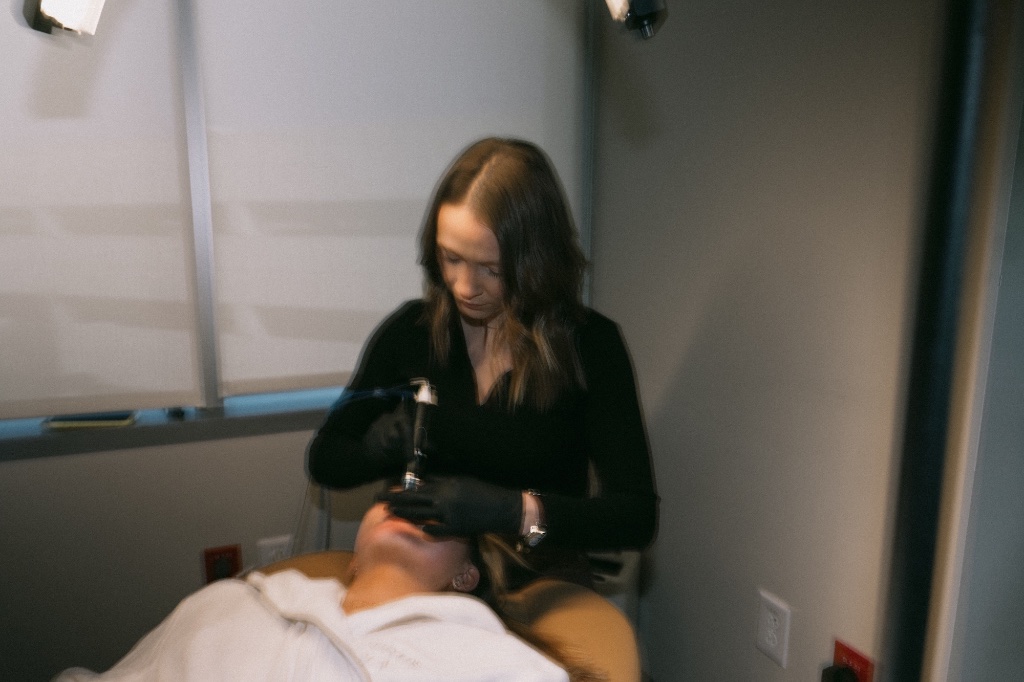
JOLA DALLAS — REFINED AESTHETIC WORK / NATURAL-LOOKING OUTCOMES
Patients in Dallas and Highland Park often know when a result looks expensive, elegant, or refined — even if they cannot immediately explain why. There is a quality certain outcomes carry that reads as quiet luxury: the face still looks believable, the skin looks cared for, and the proportions feel harmonious. The answer to what makes a result look expensive is rarely more product or a more obvious treatment. The most elevated results usually come from harmony, editing, skin quality, and restraint. At JOLA Dallas, refined aesthetic work is shaped by consultation, anatomy, sequencing, and judgment — not by volume.
The distinction between an elegant result and an obvious one is not about price point. It is about approach. A provider who understands facial balancing, consultation-led care, and the architecture beneath the surface will produce a different quality of outcome than one who treats requests. What makes a result look expensive is the invisible work — the planning, the sequencing, the willingness to do less — that produces a face still recognizably itself.
This article explains what makes a result look expensive, what usually makes a result look overdone, how restraint and skin quality contribute to the overall impression, and how JOLA Dallas approaches refined aesthetic outcomes through consultation-led, anatomy-first planning.
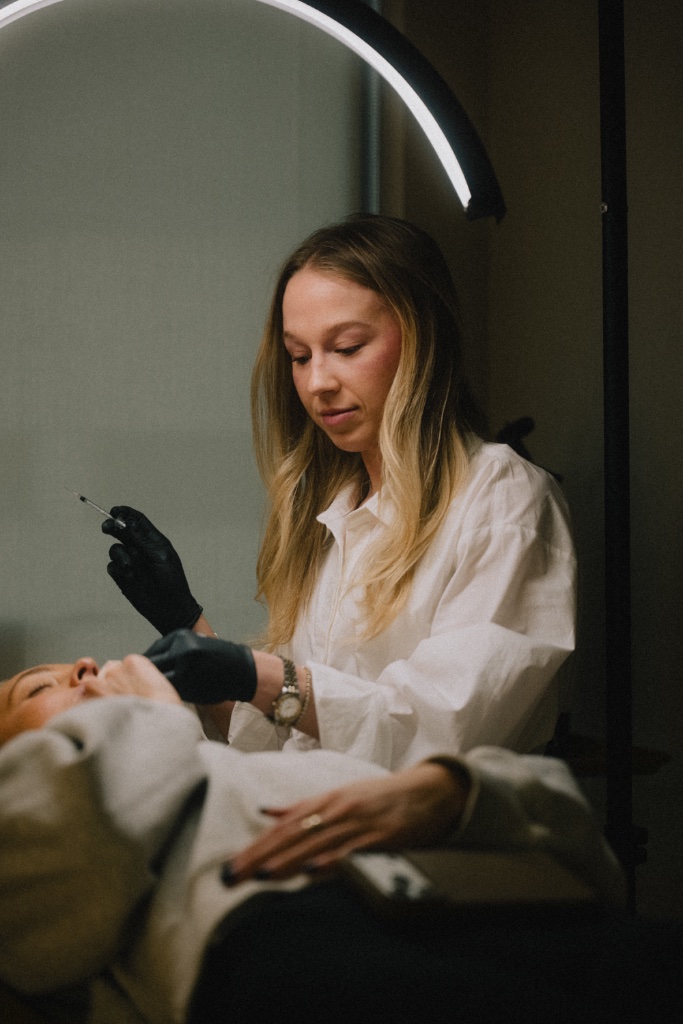
What "Expensive-Looking" Actually Means in Aesthetics
Expensive-looking does not mean dramatic. It means the face still looks believable. The skin looks cared for. The proportions feel harmonious. The result looks intentional but not obvious — the patient looks like themselves, but more rested, polished, or supported. That quality is what people recognize when they say a result looks expensive, even if they lack the clinical vocabulary to explain it.
"The most expensive-looking result is the one where no one can tell anything was done. The face reads as coherent, cared for, and harmonious — and that impression comes from restraint, not from volume."
What makes a result look expensive is the absence of distraction. No single feature demands attention. The jawline, the cheeks, the lips, and the under-eyes exist in proportion to each other. The skin supports the structure rather than competing with it. The patient's expression is alive, not frozen. When all of these elements are in balance, the result reads as elevated — and that elevation is the product of restraint, planning, and judgment rather than intensity.
What Usually Makes a Result Look Cheap or Overdone
The characteristics that make a result look overdone are well known: too much product, poor proportion, ignoring facial harmony, overfilled features, frozen movement, and obvious trend-following. Each of these errors shares a root cause — the treatment was driven by request rather than by assessment. A patient asks for fuller lips, higher cheeks, or a sharper jawline, and the provider delivers without considering how that isolated change affects the rest of the face.
Not enough attention to skin quality is another common contributor. Even well-placed injectables can look less refined when the skin lacks tone, texture, or luminosity. Glow alone is not enough, but poor skin quality can undermine even well-done structural work. Recognizing overtreatment is a skill — and the providers who can see it are usually the ones who avoid creating it.
One strong feature can throw off the whole impression. Lips that are dramatically larger than the face's natural proportions, cheeks that sit too high, or a jawline that looks sculpted rather than supported — each of these creates a visual distraction that reads as intervention rather than refinement. What makes a result look expensive is the opposite: nothing demands attention, because everything is in balance.

The Real Anatomy of a Refined Result
Refined aesthetic work is not a single skill. It is a composite of six elements that, together, produce the impression of expensive-looking care. Each one matters independently, but none is sufficient alone.
01
HARMONY
No feature in isolation. The face reads as a whole.
02
RESTRAINT
Less when less serves the result. Editing over stacking.
03
MOVEMENT
Expression preserved. The face stays alive.
04
SKIN QUALITY
Texture, tone, and firmness elevate everything.
05
STRUCTURE
Support beneath the surface defines the impression.
06
EDITING
Each step informed by the last. Refinement over volume.
JOLA DALLAS — REFINED AESTHETIC WORK DALLAS
Harmony
Harmony means the face reads as a whole, not as a collection of treated features. The lips relate to the chin. The cheeks relate to the temples. The jawline relates to the neck. When these relationships are respected, no single element calls attention to itself. Full facial balancing is the practice of treating the face as an integrated system — and it is the foundation of what makes a result look expensive.
Restraint
Restraint is the willingness to do less when less serves the result. It is not the same as timidity — it is clinical confidence. A provider who recommends restraint is one who can see the endpoint and knows that reaching it does not require maximum intervention. Saying no to more treatment is one of the clearest signals of expertise. What makes a result look expensive is often what was not done.
Skin Quality
Skin quality is the canvas. Polished texture, even tone, and firmness affect how the entire face reads. Even the most precise injectable work can look less elevated when the skin is neglected. Conversely, strong skin quality can make a conservative treatment plan look remarkable. Elegant results are usually supported by more than one category of care — and skin is often the category that elevates everything else.
Movement
The face is meant to move. Frozen or overly restricted expression reads as artificial — and nothing undermines the impression of expensive-looking work faster than a face that does not animate naturally. Neuromodulators should soften movement, not eliminate it. The goal is a face that expresses freely while looking rested. Movement preserved is one of the quietest but most powerful signals of refined work.
Structure
Structure refers to the architecture beneath the surface — bone support, fat pad volume, skin firmness, and the relationships between them. Refined results address structure, not just surface. This is why biostimulatory treatments and energy-based devices like XERF belong in the conversation about expensive-looking work. They support the foundation that makes everything else read better.
Editing
Editing is the process of reassessing at each stage and refining only as much as the face requires. It means treating the priority concern first, letting tissue settle, and then deciding whether the next step is needed — rather than executing a predetermined plan regardless of feedback. Subtle results often take more than one appointment because editing requires time. What makes a result look expensive is the accumulation of small, correct decisions — not a single dramatic intervention.

Why Skin Quality Matters as Much as Injectables
Glow alone is not enough, but poor skin quality can undermine even well-done structural work. Polished texture, tone, and firmness affect how the entire face reads. A face with beautiful injectable work but neglected skin will not read as expensive — it will read as partially cared for. Elegant results are usually supported by more than one category of care, and skin is often the category that elevates everything else.
At JOLA Dallas, skin rejuvenation and collagen support are treated as foundational, not optional. Medical-grade facials, HydraFacial, chemical peels, and microneedling each address different dimensions of skin quality — texture, tone, clarity, and collagen architecture. Skin health programs and custom skincare extend the results between visits. Together, these treatments create the skin quality that makes injectable and structural work read as refined rather than obvious.
What makes a result look expensive is often the layer most patients do not think about. They focus on volume, contour, or lines — but the skin is what the eye registers first. A provider who addresses skin quality alongside structural treatment is building the result from the foundation up.
Why Facial Balancing Changes Everything
One feature alone rarely defines the impression of the face. Lips, chin, jawline, temples, cheeks, and under-eyes interact — and when one is treated in isolation, the relationships between them can become discordant. Facial balancing is the practice of evaluating the face as an integrated system and treating it accordingly. Full-face thinking produces more cohesive outcomes because every adjustment is made in context.
Refined work often comes from balance, not feature exaggeration. A patient who arrives requesting fuller lips may actually benefit more from addressing the midface, the jawline, or the under-eyes — because the lips are not the cause of the impression they are reacting to. Natural-looking results require the provider to diagnose the face, not just treat the request. This is why facial balancing changes everything: it shifts the framework from isolated features to whole-face harmony, and that shift is what produces the impression of expensive-looking work.
What makes a result look expensive is coherence. When the features are in balance, the face reads as intentional. When one feature dominates, the face reads as treated. The difference is not subtle — and it is the difference between elegance and obviousness.

Why XERF Belongs in the "Expensive-Looking" Conversation
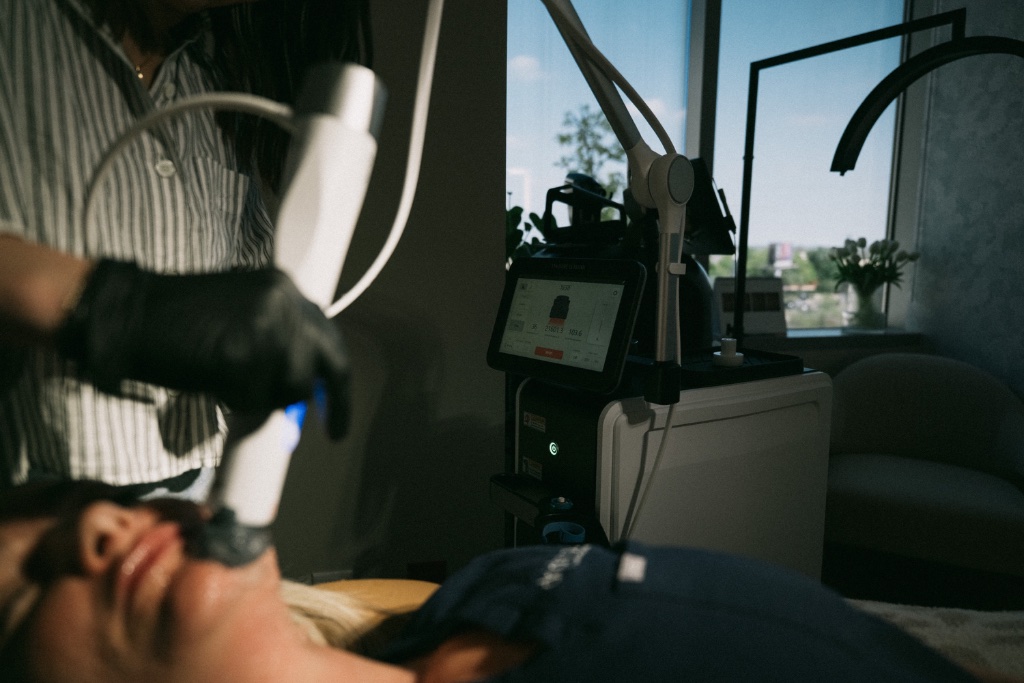
Refined results are not only about volume or injectables. Some patients need structural support, firmness, or lower-face refinement rather than more filler — and this is where XERF enters the conversation about what makes a result look expensive. XERF uses multifrequency monopolar radiofrequency energy to stimulate collagen remodeling and support structural firmness. The result is not about adding volume; it is about supporting the architecture that makes the face read as lifted, firm, and youthful.
XERF fits into this conversation because it may support a quieter kind of elegance: contour, support, and structural improvement without obvious intervention. For a patient whose concern is jawline blur or lower-face laxity, adding filler will not address the issue — but structural tightening might. Understanding what XERF is and how it works is essential to understanding why it belongs in the refinement conversation. XERF and facial balancing can work together to create structural harmony that injectables alone cannot achieve.
What makes a result look expensive in the context of XERF is the same principle that applies to injectables: restraint and sequencing. XERF results develop gradually over 8 to 12 weeks as collagen organizes. The treatment is progressive by design — and that progression is part of what makes the outcome look natural rather than abrupt. How many treatments are needed depends on anatomy and goals, and that determination is made through consultation — not assumption. XERF is a tool for the patient whose path to expensive-looking work runs through structure, not volume.
For patients combining categories, the JOLA treatment stack integrates XERF with injectables, skincare, and facial balancing into a layered plan. The result is refinement across multiple dimensions — skin quality, structure, proportion, and harmony — which is precisely what makes a result look expensive.
Why the Most Expensive-Looking Work Usually Takes Restraint
More is not more luxurious. The assumption that a higher-quality result requires more product, more treatment, or more intensity is one of the most common misunderstandings in aesthetic medicine. The opposite is closer to the truth. A well-edited result usually reads as more sophisticated than a fully loaded one. The face that looks expensive is the one where nothing was unnecessary — where every intervention served a purpose and nothing was added to satisfy a request that the face did not actually need.
Subtle work often takes stronger judgment than aggressive work. It is easy to add. It is harder to know when to stop. A provider who can see the endpoint — who knows that the face needs one treatment, not three — is exercising a level of clinical fluency that goes beyond technical skill. Restraint is one of the clearest signals of expertise, and it is also what makes a result look expensive. The patient who leaves with less but looks better has received a higher quality of care than the one who leaves with more and looks treated.
This is why provider judgment matters more than the product or device. The same filler, the same laser, the same protocol — in the hands of a provider who values restraint, produces a different result than in the hands of one who does not. What makes a result look expensive is not what was used. It is how it was decided.
How JOLA Approaches Refined Aesthetic Work
JOLA Dallas approaches refined aesthetic work through consultation-led care. Every plan begins with a full-face and full-skin assessment — not with a treatment menu. The provider evaluates anatomy, movement, support, skin quality, and goals. From that assessment, a plan is built: what to treat now, what to sequence later, and what to leave alone. Treatment planning is where refinement begins — before any product is placed or any device is activated.
Anatomy-first planning means decisions are grounded in the structure of the face — not in trends or volume. Facial balancing, injectables, laser treatments, and XERF are all planned with the same philosophy: restraint over excess, long-term thinking over short-term treatment stacking. The category chosen depends on what the face needs — and a provider who understands category logic will produce a more refined result than one who defaults to the same tool for every concern.
Luxury at JOLA is in the details. It is in the time taken during consultation. It is in the sequencing of treatment over multiple visits. It is in the willingness to recommend less. It is in the attention to skin quality alongside structural work. These are the choices that, together, produce a result that reads as expensive — not because it was costly, but because it was considered.

Who This Approach Is For
This approach is for patients who want to look like themselves. Patients who want subtle, elevated results — not dramatic transformation. Patients who value harmony over trend-driven treatment and who understand that the most refined outcomes are often the result of restraint, not intensity.
It is for patients who want a face and skin strategy, not just a quick fix. Patients who are willing to invest in a consultation that examines the whole picture before any treatment begins. Patients who are comfortable with sequencing — who understand that the best results may require more than one visit, and that pacing is a feature, not a compromise.
It is for readers comparing practices and treatment philosophies — patients in Dallas, Highland Park, University Park, Preston Hollow, and the Park Cities who are looking for a provider whose approach to what makes a result look expensive is grounded in judgment rather than volume. If that describes you, JOLA Dallas is built around the kind of care you are looking for.
Begin With a Consultation at JOLA Dallas
If you want refined, natural-looking results — built through planning, restraint, and facial harmony — begin with a consultation at JOLA Dallas. Your plan will be consultation-led, anatomy-first, and sequenced for a result that looks expensive because it was considered.