

INJECTABLE GUIDE / EXPERTISE + SAFETY
WHO IS INJECTING YOUR FACE?
What credentials, training, and experience actually mean for your safety and results.
JOLA DALLAS / MAY 2026
13 MIN READ
Most patients researching injectables in Dallas — and across Highland Park, University Park, Preston Hollow, and the Park Cities — spend a significant amount of time thinking about products. Which brand. Which filler. Which neuromodulator. These are reasonable questions. But there is a more important question that is asked far less often: who is injecting your face, and why does that person specifically matter to how safe the treatment is and how natural the result looks?
The product in the syringe is not the primary variable in an injectable outcome. The person holding it is. The same hyaluronic acid filler, in different hands, can produce results that look either beautifully subtle or obviously overdone. The same neuromodulator, placed with either anatomical precision or without it, can either preserve your natural expression or significantly alter it. Product quality matters — but it is the injector's knowledge, judgment, and restraint that ultimately determines whether a treatment looks like a genuine improvement or like something was done to your face.
This article does not exist to alarm. It exists to inform. Understanding who is injecting your face — and what credentials, training, and experience actually mean in this context — is one of the most important investments a patient can make before booking a treatment. At JOLA Dallas, this is the foundation on which every injectable consultation is built.

Why the Injector Matters as Much as the Product
It is worth being direct about something that the aesthetics industry does not always make clear: the FDA-approved product in the syringe is not what determines the quality of your result. It is one component. The injector's understanding of facial anatomy, movement patterns, balance, and restraint is what transforms a technically administered treatment into a genuinely refined aesthetic outcome.
Consider what happens when Botox or Dysport is administered in the forehead. The same product, in the same treatment area, can either preserve natural brow movement and produce a rested appearance — or significantly elevate the brow, flatten natural expression, and create an obviously treated look. The difference is not the product. It is how many units were used, precisely where they were placed, and how the injector accounted for that specific patient's muscle anatomy and movement patterns before the needle ever touched the skin.
The same principle applies to fillers. A provider who understands facial proportions, the geometry of volume loss, and how product behaves at depth will produce results that look like natural aging reversal. A provider who does not will produce results that look like filler was added — visible, separate from the face, and resistant to the naturalness that most patients are genuinely seeking. The product is the same. The understanding behind its use is not.
This is why the experienced injector dallas conversation matters. It is not about status or prestige. It is about the direct, demonstrable connection between the injector's knowledge and the quality of what happens to your face.
What Credentials Actually Mean
When patients ask about injector credentials dallas, they are usually asking the right question — though the answer is more nuanced than a simple list of letters after a name. Credentials in aesthetic medicine serve as a starting point. They establish that someone is licensed, trained to a certain level, and operating within a legal scope of practice. They are not, by themselves, a guarantee of quality outcomes.
Medical licensure is the baseline. Providers administering injectable treatments in a medical setting should hold appropriate licensure — whether as a physician, nurse practitioner, physician assistant, or registered nurse depending on jurisdiction and applicable state regulations. The licensure establishes that someone has completed formal medical education and passed the regulatory requirements to practice within their designated scope.
Scope of practice matters in combination with licensure. Not all licensed medical professionals have the same scope, and scope does not automatically translate to expertise in facial aesthetics. A provider may be legally permitted to administer injectables while having relatively limited training specifically in facial anatomy, aesthetic proportions, and injectable technique. This is where training and clinical experience become the more meaningful variables.
Clinical environment and oversight are also worth considering. Injectable treatments administered within a medically supervised environment — under the oversight of a physician experienced in facial aesthetics — carry a different level of accountability than those administered in settings with more limited medical supervision. Understanding the clinical context of a practice, and who is ultimately responsible for patient care, is a reasonable part of a patient's due diligence.
Credentials are necessary. They are not sufficient. The full picture of what makes an injector excellent includes training, clinical experience, aesthetic judgment, and a consultation-led approach that prioritizes your individual anatomy over any standardized protocol.
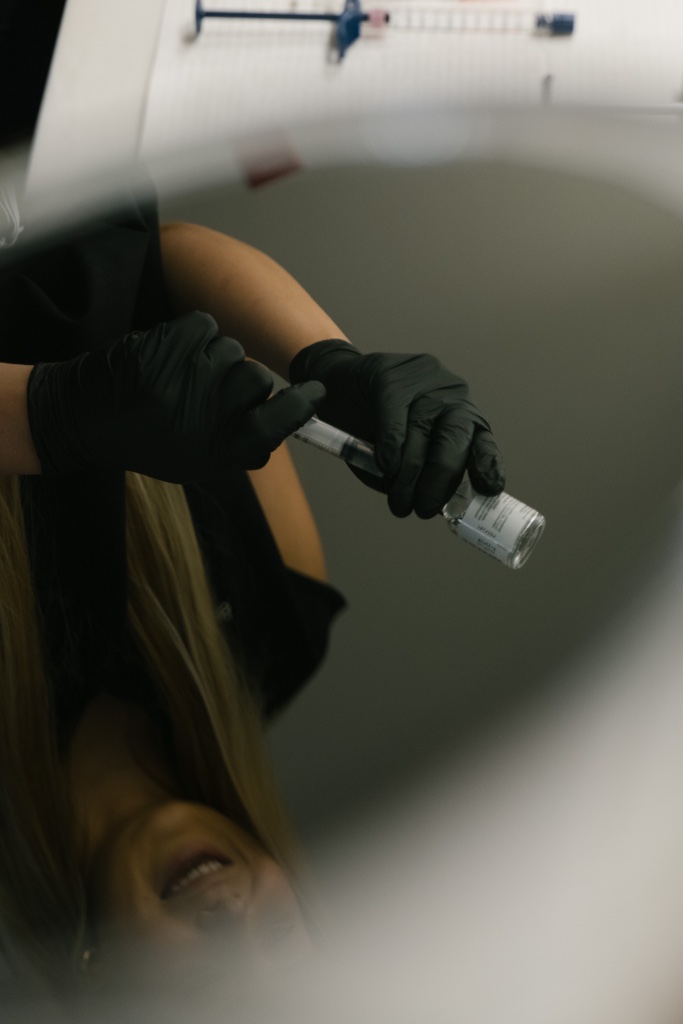
Why Training Matters in Aesthetic Medicine
Injectable aesthetic medicine is a specialty within a specialty. It draws on foundational medical training — particularly in anatomy — but it also requires specific technical skills, aesthetic judgment, and a working knowledge of how products behave in different tissue layers under different conditions. None of this is automatically acquired through general medical education. It is built deliberately, through focused training and accumulated clinical experience.
Facial Anatomy and Safety
The face contains a complex network of nerves, arteries, veins, and anatomical structures — many of which are in close proximity to common injection sites. Deep knowledge of this anatomy is not optional for an injector; it is the prerequisite to both safety and precision. Understanding where the facial artery runs, how the supratrochlear and supraorbital arteries relate to common glabellar injection points, and how filler behaves at varying tissue depths requires specific study of facial anatomy — not a passing familiarity with it. For patients considering filler injector dallas options, this anatomical fluency is one of the most important qualities to look for in a provider. This is the foundation of clinical fluency.
Product Knowledge and Technique
Different products behave differently. Hyaluronic acid fillers vary in their rheology — their thickness, cohesivity, and lift capacity — which determines where in the face each product is appropriate and how it interacts with the tissue around it. Neuromodulators differ in their diffusion characteristics, unit equivalencies, and onset timelines. Biostimulatory products like Sculptra require specific technique to distribute appropriately and avoid nodule formation. Advanced training in product-specific technique — not just general injectable training — is what allows a provider to select the right product for the right purpose and use it correctly. See our guide on Sculptra vs filler for an illustration of how nuanced these decisions are.
Knowing What Not to Treat
One of the most underappreciated dimensions of injectable expertise is the knowledge of when not to treat — or when to treat differently than requested. A patient may present requesting lip filler when a cheek support issue is the underlying structural cause of what they are seeing. A patient may request additional filler in an area that is already well-treated and does not benefit from more product. A patient may be a poor candidate for a specific treatment due to their anatomy, skin quality, or history. Recognizing these situations — and communicating them honestly — is a skill that develops through experience and is inseparable from safe, high-quality care.
Why Continuing Education Matters
Aesthetic medicine evolves. New products, new techniques, updated anatomical research, and refined approaches to treatment planning emerge regularly. Providers who invest in ongoing education — attending advanced trainings, studying new literature on facial anatomy, participating in clinical skill development — bring a meaningfully higher level of capability than those whose knowledge stopped at their initial training. Continuing education is not a credential that appears on a certificate. It is a practice that reflects genuine commitment to delivering the best possible outcomes.
Why Experience Changes Results
Training establishes capability. Experience refines it. The difference between a technically trained injector and a genuinely experienced one is measurable — not in volume of patients treated, but in the development of the clinical pattern recognition and aesthetic judgment that only accumulates over time and through careful, reflective practice.
An experienced injector dallas has assessed hundreds or thousands of individual faces — each with its own structural proportions, movement patterns, asymmetries, and aesthetic history. From this accumulation, they develop a kind of perceptual fluency that allows them to read a face quickly and accurately: identifying where volume has been lost versus where skin has simply changed quality, distinguishing dynamic asymmetry from structural asymmetry, recognizing when a treatment request reflects a misidentification of the underlying cause of the concern.
Experience also changes how injectors think about planning over time. A less experienced provider may approach each appointment as a discrete event. An experienced provider understands that each treatment exists within a longer arc — that the decisions made today affect what is possible in six months, in two years, in a decade. They plan with that long view in mind, which is why patients with experienced injectors often find that their results compound positively over time rather than accumulating toward an overdone appearance.
Perhaps most importantly, experience teaches restraint. Knowing when to do less — and having the confidence to exercise that judgment — is one of the hallmarks of an injector who has seen enough outcomes to understand that the most elegant results usually involve less product than the maximum possible. The Art of Restraint is a topic we return to often at JOLA, precisely because it reflects this hard-won dimension of genuine expertise.
CREDENTIALS / TRAINING / EXPERIENCE
CREDENTIALS
The Foundation
Medical licensure and scope
Clinical environment oversight
Regulatory compliance
Establishes legal authority to treat
Necessary — not sufficient alone
TRAINING
The Capability
Facial anatomy depth
Product knowledge and technique
Safety awareness and risk
Knowing what not to treat
Ongoing education practice
EXPERIENCE
The Judgment
Pattern recognition
Anatomical assessment fluency
Long-term treatment planning
Refined restraint and proportion
Natural-looking results over time
Safety and Results Are Connected
A common misconception is that safety and aesthetic quality are separate concerns — that a treatment can be medically safe while still looking unnatural or overdone. In practice, the same qualities that make a treatment safe also make it more likely to look excellent. Careful assessment, precise technique, conservative dosing, anatomical fluency, and deliberate planning all support both safety and elegance simultaneously.
The reverse is also true. Injectables safety dallas is not only about avoiding immediate complications. It is also about avoiding the long-term consequences of poor planning: product placed in the wrong tissue plane, accumulated filler that distorts facial geometry over time, muscle patterns disrupted in ways that affect expression or symmetry. These are aesthetic harms as much as medical ones, and they are best prevented by the same qualities — anatomical knowledge, clinical judgment, and restraint — that produce the most beautiful results.
This is why who is injecting your face is ultimately a question about both safety and quality together. Not one or the other. The standard at JOLA is that every treatment should be both safe and elegant — and that these goals are achieved through the same clinical discipline.

What Questions Patients Should Ask Before Booking
Asking thoughtful questions before booking an injectable treatment is not a sign of distrust. It is a sign of informed decision-making — and any provider worth booking should welcome it. Below are the questions most worth asking when evaluating an injector.
- 01
Who will actually perform the treatment?
In some practices, the person who consults with you is not the person who performs the injection. Knowing this in advance allows you to evaluate the specific provider who will be treating you, rather than the face of the practice.
- 02
What is their clinical background in aesthetic medicine?
Beyond licensure, understanding where a provider has trained specifically in facial aesthetics — and how long they have been practicing — gives you a more complete picture of their capability and judgment.
- 03
How do they evaluate the face before recommending treatment?
A provider who immediately recommends specific products or quantities without first assessing the whole face is skipping the step that matters most. Ask how the assessment process works before treatment is discussed.
- 04
Do they treat areas in isolation or take a full-face approach?
Treating a single area without considering how it relates to the rest of the face often produces results that look technically correct but harmonically off. A full-face philosophy is a meaningful differentiator. This is the foundation of facial balancing.
- 05
What happens if you are not a candidate?
A trustworthy injector should be able to decline a treatment if it is not appropriate — and should be willing to explain why and offer alternatives. If a provider seems to agree with every request without clinical assessment, that is relevant information.
Why Consultation Quality Tells You a Lot
The consultation is where expertise becomes visible before treatment ever begins. A provider who conducts a thorough, unhurried consultation — one that includes observation of your face at rest and in motion, discussion of your specific concerns and goals, and an honest assessment of what is and is not appropriate — is demonstrating the same qualities that will show up in the treatment room.
Pay attention to whether the provider looks at your whole face or focuses immediately on the area you mentioned. Pay attention to whether they talk about proportion, harmony, and how different areas of the face relate — or whether they discuss units and products exclusively. Pay attention to whether they ask what you want to look like, or what specifically bothers you — these are different questions that reveal different levels of assessment depth.
Most revealingly: notice whether the provider is willing to recommend less than you expected, or to suggest that a specific treatment is not appropriate for your anatomy or goals. The ability to say "not yet," "not this treatment," or "I think we should approach this differently" is one of the most reliable signs of genuine expertise. It requires confidence in one's own assessment, and a commitment to the patient's long-term wellbeing over the short-term transaction.
At JOLA, the treatment planning consultation is the foundation of everything. No treatment is administered before a full-face assessment has been completed and a plan has been built around the individual's anatomy and goals. This is not bureaucracy — it is the clinical discipline that produces outcomes worth having.

Natural-Looking Results Require More Than Technical Skill
There is a common assumption that natural-looking injectable results are simpler to achieve than dramatic ones — that less treatment means less difficulty. The reverse is true. Producing results that look imperceptibly good, that are difficult to attribute to a specific treatment, that preserve the patient's identity and expression while genuinely improving what they came in to address — this is among the most demanding work in aesthetic medicine.
It requires restraint — the willingness to use less product than the maximum possible, because the optimal outcome often lives below the threshold of what a patient initially thinks they want. It requires proportion — a deep understanding of facial geometry and how small changes in one area affect the perception of adjacent areas. It requires expression preservation — knowing that a face's unique movement patterns are part of its identity, not a problem to be solved. And it requires a commitment to the patient's identity — understanding that the goal is not transformation, but refinement.
These qualities do not come from a training manual. They emerge from years of careful, reflective practice — from seeing how subtle corrections compound over time, how the face ages in patterns that respond differently to different approaches, and how the same product in different anatomical contexts requires entirely different judgment. This is why natural-looking injectables dallas is not primarily a marketing phrase. At JOLA, it reflects a clinical standard that is built from the ground up through the qualities described throughout this article: credentials, training, experience, and the judgment that grows from all three.
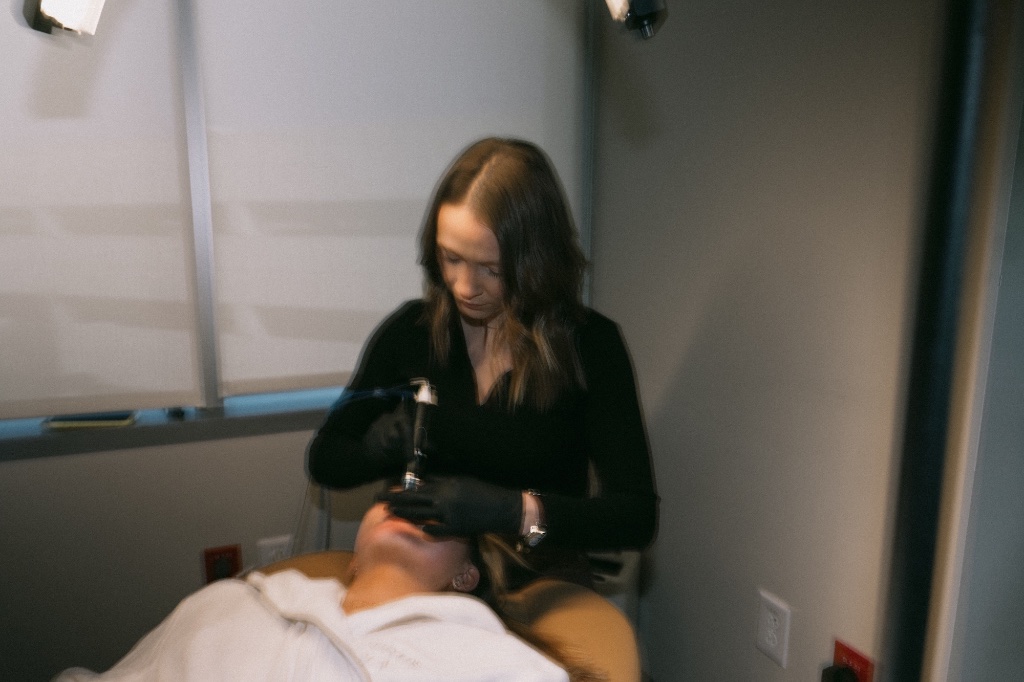
How JOLA Thinks About Injectable Expertise
At JOLA Dallas, the approach to injectables is built on a clear set of principles that inform every treatment decision — from the initial consultation through long-term planning.
Consultation-led care means that no treatment is administered before a thorough assessment has been completed. The plan is derived from the patient's actual anatomy and goals, not from a menu. This applies equally to neuromodulators, facial balancing with filler, lip enhancement, under-eye rejuvenation, and more complex regenerative and advanced treatments.
Anatomy-first planning means that the structure of the face — the bone, fat pad, and muscle patterns that are unique to each patient — precedes any product or technique decision. The same treatment looks entirely different on different anatomical profiles. Our providers understand this, and it shapes every recommendation.
Restraint over excess means that the goal at JOLA is never the most treatment possible. It is the most considered treatment possible. Patients who come to JOLA often describe their results as looking like themselves — only more rested, more refined, more balanced. That is not a coincidence. It is the outcome of deliberate understatement and careful, long-term thinking. For more on this philosophy, see The Art of Restraint and Clinical Fluency.
Long-term patient trust is the measure of success. Not the immediate after-photo. Not the unit count. Not the number of syringes. The measure is whether, in six months and in three years, a patient looks genuinely better — and whether they trust the practice enough to continue building their aesthetic plan within it.
Begin With a Consultation
If you are considering injectables in Dallas and want to understand who is injecting your face — and why it matters — we welcome the conversation. A consultation at JOLA Dallas begins with your face, your anatomy, and your goals. It ends with an honest plan, a clear explanation of what is and is not appropriate, and the kind of clinical transparency that allows you to make truly informed decisions. To schedule, contact JOLA Dallas or book directly below.
Frequently Asked Questions
BUILD THE PLAN
Injectables in Dallas
The complete overview of JOLA's consultation-led injectable approach.
Facial Balancing Dallas
Anatomy-first proportional refinement through a full-face planning philosophy.
Under-Eye Rejuvenation Dallas
Regenerative and injectable options for under-eye hollows and shadowing.
Treatment Planning
The first step before any treatment decision at JOLA Dallas.
The Art of Restraint
Why natural-looking aesthetics require more precision, not less.
Clinical Fluency
Anatomy, judgment, and the convergence of medicine and aesthetic care.
Botox vs Dysport Dallas
How JOLA selects the right neuromodulator for each patient's anatomy and goals.
Specialty Treatments Dallas
Advanced and nuanced injectable treatments at JOLA Dallas.
JOLA DALLAS
Credentials, training, and experience
in every consultation.
At JOLA Dallas, who is injecting your face is a question we answer clearly — through consultation-led care, anatomy-first planning, and a commitment to natural-looking outcomes built on genuine expertise.
214.515.0002