

JOLA DALLAS — PROVIDER JUDGMENT / CONSULTATION-LED AESTHETICS
Many patients in Dallas and Highland Park begin their aesthetic research by searching for a specific product or device. They look for Botox, filler, a particular laser, or XERF by name — assuming that the treatment they name will determine the quality of their result. But aesthetic outcomes depend on far more than whether a provider offers a given product. The real differentiator is judgment: what to recommend, what not to recommend, how much, when, and why. At JOLA Dallas, treatment quality starts with evaluation, not with a product or a machine.
The principle is simple but often overlooked: provider judgment matters more than the product or device. Two providers can use the same filler and produce completely different results. Two practices can own the same laser and deliver completely different outcomes. The product is the tool. The device is the instrument. But the person choosing, sequencing, and editing treatment is what actually changes the result. This article explains why that distinction matters — across injectables, laser treatments, and XERF — and how JOLA's consultation-led philosophy puts judgment at the center of every decision.
Understanding why provider judgment matters more than the product or device helps patients ask better questions, choose better providers, and achieve more natural-looking results. It reframes the conversation from "What do you offer?" to "How do you decide?" — and that shift is where luxury aesthetic care truly begins.
Why the Product or Device Is Only Part of the Story
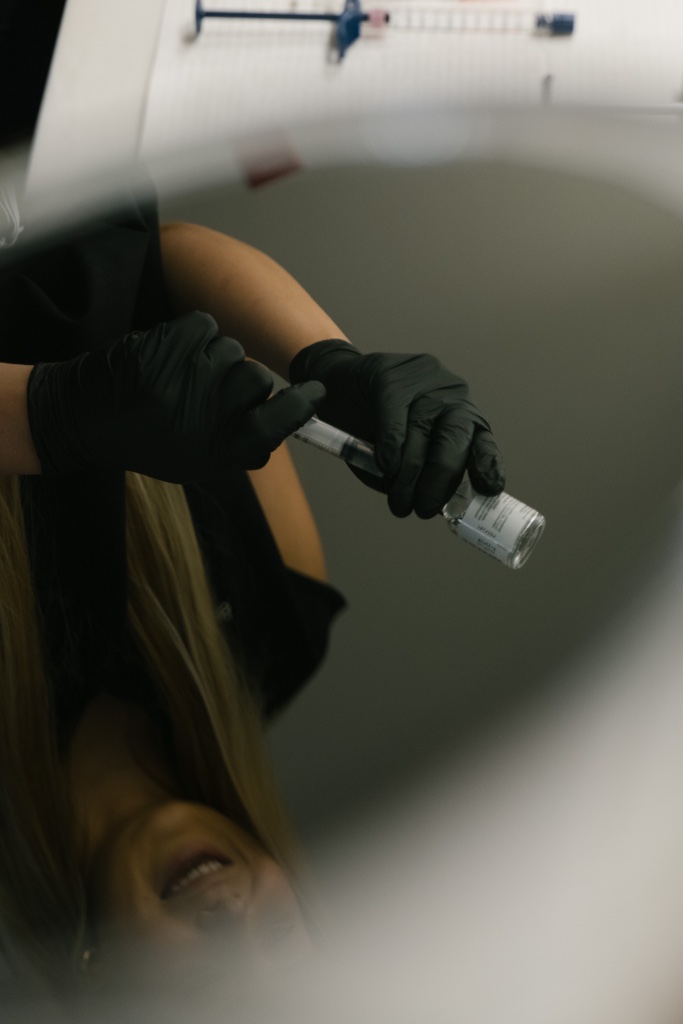
Products and devices are tools, not treatment philosophies. A filler is a substance. A laser is a wavelength. A radiofrequency device is an energy delivery system. None of these tools makes decisions on their own. The same product can look elegant in one case and excessive in another. The same device can be appropriate for one patient and wrong for another. The person choosing, sequencing, and editing treatment changes the outcome — and that is why provider judgment matters more than the product or device.
"The product does not determine the outcome. The decisions made with it do. Two providers can use the same tool and produce completely different results — because judgment, not the tool, is what shapes the face."
This is why patients who compare providers solely by which products they carry are missing the most important variable. A practice that offers every product and every device is not automatically a practice that uses them well. The question is not what is on the shelf — it is who is reading the face, making the plan, and deciding what to leave alone. Clinical fluency — the ability to diagnose, sequence, and edit — is what separates a practice that serves the face from one that serves the catalog.
What Provider Judgment Actually Includes
Provider judgment is not a single skill — it is a composite of clinical observations and decisions that together determine the treatment plan. When a provider exercises judgment, they are evaluating:
Anatomy
Bone structure, fat pad support, proportional relationships between features.
Movement
How the face behaves dynamically — as important as how it appears at rest.
Facial Proportions
Whether treating one area will shift balance elsewhere in unexpected ways.
Skin Quality
Texture, tone, firmness, hydration — inseparable from facial structure.
Timing
Whether this is the right moment in the plan, or whether something should come first.
Candidacy
Whether the patient is a good candidate for this treatment at this time.
Treatment History
What has been done before, and how that affects what should happen next.
Combination Decisions
When to combine treatments and when not to combine them.
When to Say No
The willingness to decline, delay, or redirect when the request does not serve the face.
Each of these elements is a judgment call. Together, they form the framework through which a skilled provider decides not only what to treat, but what not to treat — and that editing is where provider judgment matters more than the product or device. A provider who evaluates all of these factors will produce a fundamentally different result than one who simply performs whatever was requested. This is the foundation of treatment planning and facial balancing at JOLA.

01
DIAGNOSIS
What is actually happening with the face and skin?
02
CANDIDACY
Is this patient a good candidate for this treatment?
03
TIMING
Is this the right moment in the plan?
04
RESTRAINT
Would less serve the result better?
05
SEQUENCING
Does something need to come first?
06
NATURAL-LOOKING OUTCOME
Better long-term result through judgment
JOLA DALLAS — PROVIDER JUDGMENT OVER PRODUCT OR DEVICE
Why This Matters in Injectables
Injectables — neuromodulators, dermal fillers, and biostimulatory treatments — are where the principle is most visible. These are not one-size-fits-all products. Every injection requires a decision: how much, where, in what sequence, and whether the patient is even a candidate. Natural-looking outcomes come from deciding how much is actually appropriate — and that decision is made by the provider, not by the product label. Injectables in Dallas at JOLA are guided by full-face assessment, not by isolated requests.
Product Choice Is Not the Whole Result
Choosing the right product is part of the equation — but it is only a small part. The same filler can restore volume elegantly or create an overfilled appearance, depending on where it is placed and how much is used. The same neuromodulator can soften movement naturally or freeze expression entirely. Provider judgment matters more than the product or device because the tool does not determine the result — the decisions made with it do. A provider who selects the right product but places it poorly, or uses too much, or sequences it incorrectly will produce a worse outcome than a provider who uses a different product with better judgment.
Dose, Placement, and Restraint Matter
Dose is a judgment call. Placement is a judgment call. Restraint — knowing when to stop — is perhaps the most important judgment call of all. A face can reach a point where additional product does not improve the result; it harms it. The features lose their natural relationships, the face begins to look treated rather than refined, and the result moves from elegant to obvious. The art of restraint is knowing where that line is — and it is why provider judgment matters more than the product or device. The provider who knows when to stop is the one who produces results that look natural, not overdone.
Full-Face Assessment Changes Everything
A patient who requests lip filler may be responding to a structural change in the lower face. A patient who requests cheek volume may be presenting with midface concerns that extend beyond the cheeks. Facial balancing means evaluating the whole face — not treating requests in isolation. When a provider assesses the full face, the treatment plan often looks different from what the patient initially requested. That difference is the product of judgment — and it is what separates natural-looking results from ones that look treated.
Why Elegant Injecting Is More Than Technical Skill
Technical skill is the ability to perform an injection safely and accurately. Elegant injecting is something more — it is the judgment to know what to inject, where, how much, and when not to inject at all. Credentials, training, and experience matter because they build the foundation for that judgment. But judgment itself is developed over time, through thousands of faces observed and plans refined. This is why provider judgment matters more than the product or device — the product is the same regardless of who holds it, but the outcome is entirely different.

Why This Matters in Lasers and Energy-Based Treatments
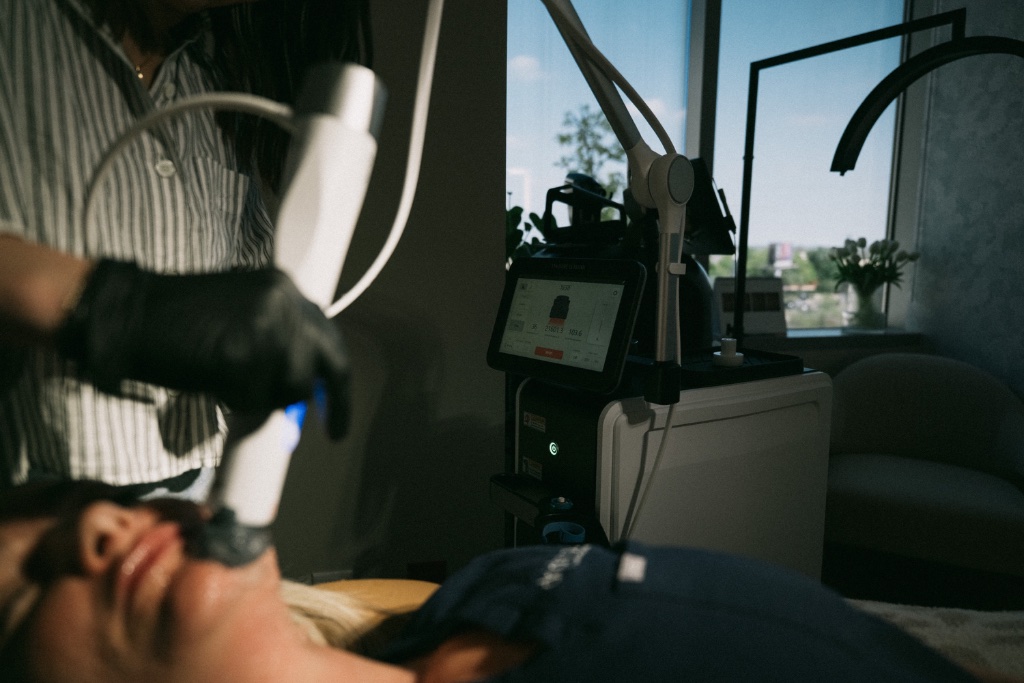
The same principle applies to lasers and energy-based devices. These are not one-size-fits-all treatments. Skin type, concern, timing, tolerance, and goals all determine whether a particular device is appropriate. A laser that resurfaces beautifully on one skin type may be too aggressive for another. A radiofrequency device that tightens effectively for one patient may be unnecessary for another whose concern is better addressed by a different category entirely.
The right provider evaluates whether tightening, resurfacing, pigment treatment, or maintenance is actually needed — and whether the timing is right. Owning the device is not the same as knowing when to use it well. A practice that owns every laser but applies them without judgment will produce inconsistent results. A practice that selects carefully — using the right device for the right patient at the right time — will produce better outcomes with fewer treatments. Provider judgment matters more than the product or device, and this is especially true in laser treatments in Dallas, where the range of available devices can tempt providers to use technology before evaluating need.
At JOLA, laser planning follows the same consultation-led approach as injectables. The provider evaluates skin quality, concern, treatment history, and timing before recommending a device. If the concern is better served by a different category — skincare, injectables, or structural treatment — the provider says so. The device does not drive the plan; the assessment does.
Why XERF Is a Good Example of This Principle
XERF is discussed as a structural RF skin-tightening treatment — a multifrequency monopolar radiofrequency device that delivers energy across multiple skin depths to support collagen remodeling and firmness. But the real question is not only "do you have XERF?" It is "who is deciding whether XERF is right for me?" That question captures exactly why provider judgment matters more than the product or device.
Some patients are strong candidates for XERF. They have early to moderate skin laxity, jawline softening, or neck concerns that align with what the treatment is designed to address. For these patients, XERF may be central to the plan — the primary structural intervention. Understanding candidacy is the first step, and it requires a provider who can evaluate skin quality, degree of laxity, and treatment goals honestly.
Other patients may need a different priority first. A patient who requests XERF may actually need injectables or facial balancing before structural tightening makes sense. Another patient may benefit more from resurfacing or a skin health program as the first step. And for some patients, XERF may be a supportive element within a broader plan — not the primary treatment, but one component of a sequenced approach. XERF and facial balancing can work together, but only when the provider determines the right sequence and priority.
This is where provider judgment matters most. A practice that offers XERF to every patient who asks for it is not exercising judgment — it is fulfilling requests. A practice that evaluates whether XERF is appropriate, where it fits in the plan, and whether it should be prioritized, deferred, or replaced by a different treatment is one that puts judgment first. Understanding what XERF is and what it treats matters — but understanding how it compares to other options and when it is the right choice requires a provider who can make that determination.
Why Judgment Shapes Natural-Looking Results
Natural-looking results come from editing. The provider must decide what to treat and what to leave alone — and that editing is the visible signature of judgment. A face that has been treated with restraint looks more natural than one that has been treated aggressively. The features retain their relationships. The movement stays believable. The result looks like the patient — just refined, not transformed.
Subtle outcomes usually reflect stronger judgment, not less expertise. It takes more skill to know when to stop than to keep going. A provider who recommends less is not being conservative for its own sake — they are being precise. Luxury in aesthetics often means restraint, not more intervention. The luxury med spa experience in Dallas is not defined by how many treatments are performed — it is defined by how thoughtfully each one is chosen. Provider judgment matters more than the product or device because the most natural-looking results are the ones where the treatment is invisible — planned, edited, and sequenced by someone who understood the face.

Why Judgment Also Shapes Safety
Safety and aesthetics are connected. The same judgment that protects the aesthetic result also protects the patient. Anatomy, timing, technique, and candidacy all affect both outcomes — a treatment that is inappropriate for the anatomy, performed at the wrong time, or stacked on top of incompatible prior treatments can compromise both safety and result quality.
Good judgment reduces unnecessary treatment and protects long-term outcome quality. A provider who declines to treat a patient who is not a good candidate — or who recommends waiting until conditions are right — is practicing medicine, not sales. Safety in aesthetic medicine is not a separate concern from aesthetics — it is the foundation. A practice that treats safely is a practice that treats well, because the same clinical judgment that prevents complications is the judgment that produces natural-looking results. This applies across injectables, lasers, and combination therapy — and it is another reason why provider judgment matters more than the product or device.
Why Patients Should Ask Better Questions
Most patients ask: "What product do you use?" That is a reasonable starting point, but it is not the most important question. The product is the tool — and as we have established, the tool does not determine the outcome. Better questions reveal whether a provider exercises judgment or simply fulfills requests. Patients should also ask:
How do you evaluate the face?
How do you decide if I am a candidate?
What if this is not the right treatment for me?
How do you build a treatment plan?
What happens if the treatment I requested is not the best option?
How do you decide when to combine treatments and when not to?
These questions reveal the provider's process. A practice that welcomes them is one that values judgment over volume. A practice that deflects them — that steers the conversation back to products and promotions — may be treating requests rather than diagnosing faces. Better questions lead to better decisions, and understanding why provider judgment matters more than the product or device helps patients identify the providers who will serve their faces best. A JOLA consultation is designed around exactly these questions.

How JOLA Applies This Philosophy
JOLA's approach is built around the principle that provider judgment matters more than the product or device. Treatment philosophy at JOLA is consultation-led — the plan is driven by what the assessment shows, not by what was requested. Anatomy-first planning means decisions are grounded in clinical observation of the face. The consultation is where every treatment decision begins.
Full-face and full-skin assessment ensures no feature is evaluated in isolation. Facial balancing integrates decisions across the whole face. Injectables are planned with dose, placement, and restraint in mind. Laser treatments are selected based on skin type, concern, and timing — not on device availability. XERF is recommended when structural tightening is the right priority, deferred when something else should come first, and declined when it is not the right fit. Skin rejuvenation and collagen are integrated into the plan as structural support, not as afterthoughts. Treatment planning ties it all together.
Restraint over excess is not a slogan — it is how the practice operates. Strategic sequencing means treatments are staged thoughtfully, with each step informing the next. Saying no when needed is part of protecting the patient and the result. Choosing differently when it serves the patient better — redirecting from the requested treatment to the appropriate one — is what makes the consultation valuable. The goal is not pressure. The goal is clarity.

What This Means for the Patient Experience
The goal is not pressure. The goal is clarity. Patients should feel informed, edited, and guided — not sold to. Trust is built when expertise is visible in recommendation quality, not in sales energy. A provider who says "I would not recommend that for your face" is demonstrating the same judgment that produces natural-looking results. A provider who says "yes" to every request is not demonstrating expertise — they are demonstrating a willingness to fulfill orders.
At JOLA Dallas, the patient experience is shaped by this principle. The consultation is where judgment is exercised — where the face is assessed, the plan is built, and the right treatments are selected. Patients leave not with a sense that they were sold something, but with a sense that they were understood. That is the difference between a practice that serves the face and one that serves the transaction — and it is why provider judgment matters more than the product or device. For patients in Dallas, Highland Park, University Park, Preston Hollow, and the Park Cities, that distinction is what makes JOLA a practice that can be trusted with the nuances of the face.
Begin With a Consultation at JOLA Dallas
If you are looking for a practice that values judgment over volume — that will tell you honestly whether a treatment is right for your face — begin with a consultation at JOLA Dallas. The best care starts with evaluation, not with a product name.