
JOLA DALLAS — STAGING / SEQUENCING AND NATURAL-LOOKING REFINEMENT
Many patients in Dallas and Highland Park assume the best result comes from doing everything in one appointment. The logic feels intuitive: schedule one visit, address every concern, and leave with the final outcome. In reality, subtle and elegant outcomes are often created through pacing. Staged treatment allows the face and skin to be assessed more intelligently over time — and at JOLA Dallas, more than one appointment is often a sign of better planning, not incomplete care. The understanding that subtle results often take more than one appointment is foundational to how thoughtful aesthetic medicine actually works.
The face reads as a whole. When too much is changed at once, it becomes difficult to see what was actually needed. Swelling obscures judgment. Settling changes proportions. And the temptation to add more — to chase an immediate impression rather than build a lasting one — can push the face past its natural relationships. Treatment planning at JOLA is built on the opposite principle: assess, treat the priority, let the face settle, then reassess with clarity. That process usually requires more than one visit.
This article explains why subtle results often take more than one appointment, what staging a treatment plan actually means, how the principle applies to both injectables and XERF or laser treatments, and how JOLA's consultation-led approach decides what happens now versus later.
Why Natural-Looking Results Are Often Built, Not Delivered All At Once
Subtle results depend on progression. The face is not a collection of isolated features — it is a system of relationships. When one area changes, the perception of neighboring areas shifts. A jawline treatment affects how the cheeks read. An under-eye correction changes how the midface is perceived. When everything is changed simultaneously, the provider loses the ability to see how each adjustment influences the whole. Facial balancing depends on reading those relationships — and reading them accurately requires seeing the face at different stages.
"Elegance in aesthetic medicine comes from what is added slowly, not from what is added immediately. The face needs time to show the provider what it actually needs next — and that feedback only comes between appointments."
Timing allows better editing. When a provider treats one area and then waits, the face reveals whether the next step is needed — or whether the first step was enough. Sometimes a patient who expected three syringes of filler needs only one, because addressing the priority concern resolved the perceived need for more. That kind of insight is invisible in a single-visit plan. Natural-looking results emerge from this kind of staged, observant care — and that is why subtle results often take more than one appointment.
Why Doing Everything at Once Is Not Always Better
There is an assumption that more treatment in one visit equals a better or more complete result. The opposite is often true. Swelling, settling, and visual judgment all matter — and when too much is treated at once, those variables become noise. The provider cannot clearly see what worked, what was unnecessary, or what the face still needs. More treatment in one visit can make it harder, not easier, to assess what was actually needed.
Staged treatment reduces the risk of overtreatment. When the face is treated in sequence, each step is informed by the last. The provider sees how tissue responds, how proportions shift, and how the patient feels about the change before committing to more. This is not caution for its own sake — it is clinical accuracy. A staged treatment plan protects the patient from the kind of volume-driven approach that leads to an overfilled or over-treated appearance.
Good pacing creates more believable outcomes because the face is never pushed past its natural reading. Each appointment builds on a settled, readable baseline — not on swelling or guesswork. The art of restraint includes knowing that speed is not a virtue in aesthetic medicine. The goal is not to finish quickly. The goal is to finish well.
What Staging a Treatment Plan Actually Means
Staging is not simply splitting one plan into multiple visits. It is a deliberate methodology — a way of building a result through informed, sequenced steps. Each stage has a purpose, and the plan evolves based on what the face reveals at each step.
01
Prioritizing the Main Concern First
The most impactful intervention is identified and treated before anything else.
02
Allowing Tissue and Features to Settle
Swelling subsides, filler integrates, and the face returns to a readable baseline.
03
Evaluating the Face With Better Clarity
The provider reassesses what has changed and what the face still needs.
04
Building a Long-Term Result
Each step serves the final outcome, not an immediate impression.
JOLA DALLAS — STAGED TREATMENT PLAN DALLAS
Prioritizing the Main Concern First
Every face has a primary concern — the issue that, when addressed, creates the most meaningful improvement. It might be volume loss in the midface, laxity along the jawline, or hollowing under the eyes. Staging begins by identifying that priority and treating it first. Everything else waits. This approach ensures that the most impactful intervention is not obscured by simultaneous changes elsewhere. When the priority is treated alone, the provider and the patient can both see its effect clearly.
Allowing Tissue and Features to Settle
After treatment, tissue needs time to settle. Filler integrates with surrounding tissue. Swelling subsides. The face returns to a readable baseline — a state where the provider can accurately assess the result rather than reacting to temporary distortion. Settling is not a delay. It is a clinical phase. Without it, every subsequent decision is made on unstable information. Subtle results often take more than one appointment because the settling phase is non-negotiable — it is how the face communicates what it needs next.
Evaluating the Face Again With Better Clarity
Once the face has settled, the provider evaluates it again — this time with better clarity. What changed? Did the priority treatment resolve the concern, or is there more to address? Has treating one area revealed a need elsewhere — or eliminated the perceived need for a treatment that was originally planned? This reassessment is the core of staging. It is where editing happens. A plan that was originally built for three treatments may become two. Or it may become four — but each addition is now informed by observation, not assumption. The consultation never really ends; it continues at every visit.
Building a Long-Term Result Instead of Chasing an Immediate One
The goal of staging is a long-term result — one that holds its quality over months and years, not just days. When a provider chases an immediate impression, the plan becomes reactive. When a provider builds toward a lasting outcome, the plan becomes architectural. Each step serves the final result, not the next mirror check. This is why subtle results often take more than one appointment: the subtle result is the one that was built deliberately, tested at each stage, and refined only as much as the face required.
01
CONSULT
Full-face assessment before any treatment.
02
PRIORITIZE
Identify what matters most for this face.
03
TREAT
Address the priority concern first.
04
REASSESS
Evaluate the face again with better clarity.
05
REFINE
Add only what the settled face still needs.
06
NATURAL-LOOKING RESULT
A result that reads as the patient — refined.
JOLA DALLAS — PACING, SEQUENCING, AND CONSULTATION-LED CARE
Why This Matters in Injectables
Staging is especially relevant in injectables because the effects of filler and neuromodulators unfold over time. Dermal fillers settle. Neuromodulators take days to fully express. And facial balancing may shift once one area is treated — the relationship between features changes, and what seemed necessary before may no longer be needed. Some patients need less than expected once the priority issue is addressed.
Consider lip enhancement. A patient may arrive wanting significant volume, but after a conservative first treatment and a settling period, the provider and patient may agree that the result is already where it needs to be — that adding more would push past natural into obvious. The same principle applies to under-eye rejuvenation, where treating the tear trough first may reveal that the midface needs less support than initially planned. Sculptra and other biostimulatory treatments are inherently staged — collagen production develops over weeks, and the result is evaluated progressively.
Staged injectable treatment often looks more refined than all-at-once correction because it respects the face's feedback. Each visit answers a question: Was that enough? What does the face still need? This is why subtle results often take more than one appointment — the subtlety comes from listening to the face between steps, not from loading it with product in a single session.
Why This Matters in Skin and Laser Treatment
The principle of staging extends well beyond injectables. Laser treatments and skin therapies are inherently progressive. Skin responds over time. Collagen-focused treatments do not produce their final result in a single session — they stimulate a biological process that unfolds over weeks. Skin rejuvenation and collagen support are built through sequenced sessions, not delivered in one visit.
Not every category should be layered aggressively in one moment. Combining multiple laser modalities, chemical resurfacing, and energy-based treatments in a single session may seem efficient — but it can overwhelm the skin, extend recovery, and obscure which treatment produced which result. Timing matters for quality, for recovery, and for sequencing. A provider who stages skin treatments can see how the skin responds to each intervention and adjust the plan accordingly. This is the same logic that applies to injectables: assess, treat, reassess, refine.
Why This Matters for XERF
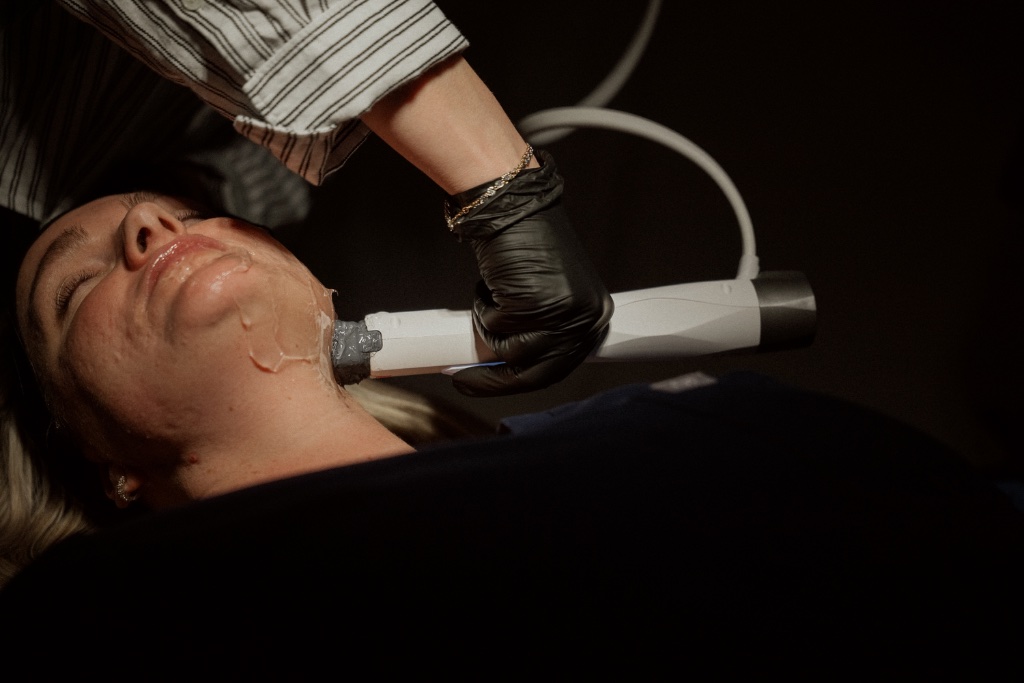
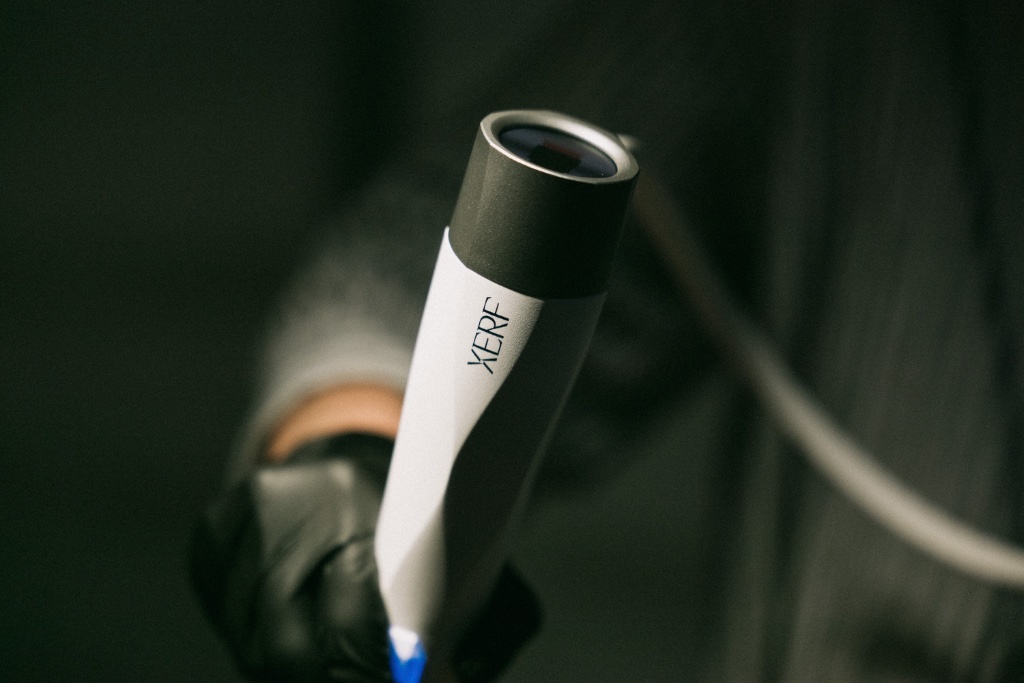
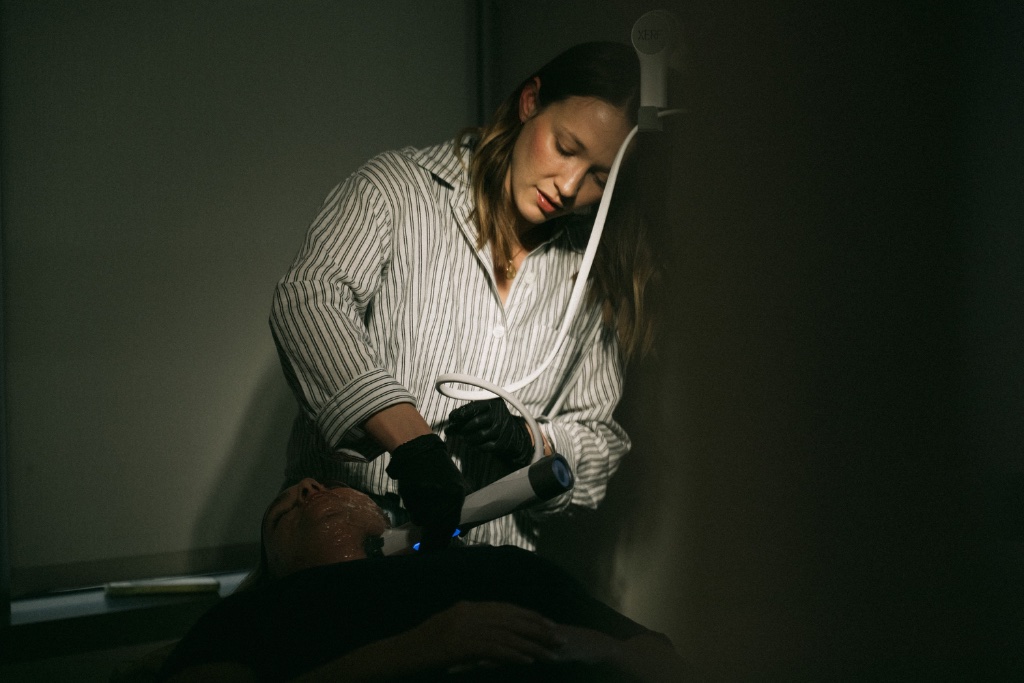
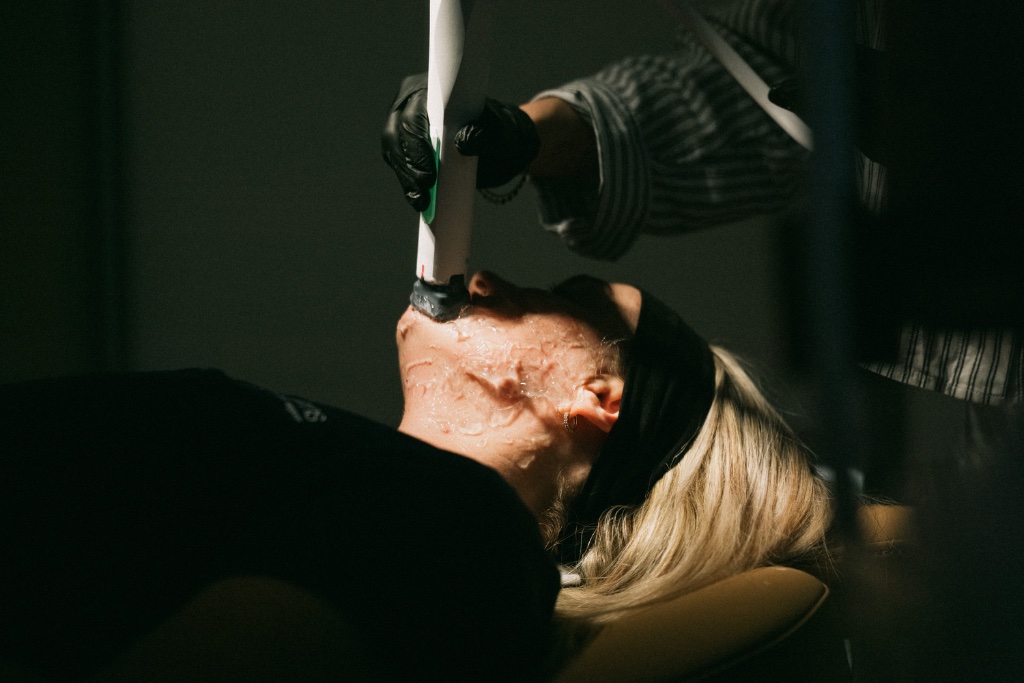
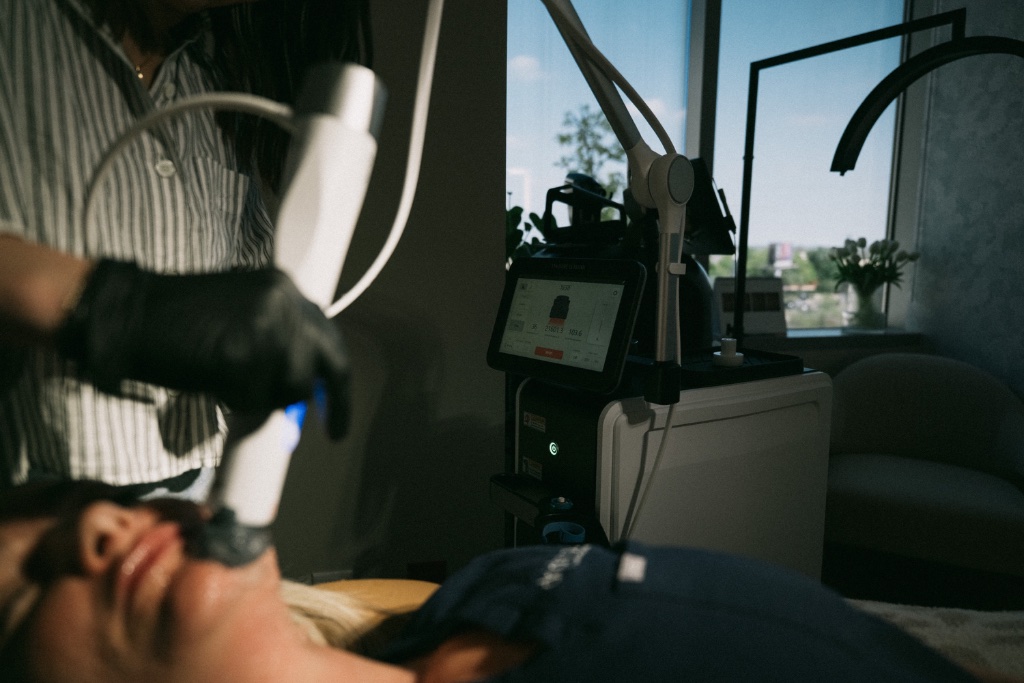
XERF is a strong example of why immediate thinking is not always the best framework. XERF uses multifrequency monopolar radiofrequency energy to stimulate collagen remodeling and support structural firmness. But the result is not instantaneous. Collagen synthesis begins after treatment and develops over 8 to 12 weeks. The face tightens gradually — and that progression is part of what makes the result look natural rather than abrupt. Understanding when XERF results appear is essential to understanding why staging matters.
Patients may want tightening, but the result often needs to be evaluated as part of a broader plan over time. XERF may sit inside a staged plan involving consultation, initial treatment, reassessment at the appropriate interval, and sometimes other categories. How many XERF treatments are needed depends on the degree of laxity, the patient's anatomy, and the broader treatment goals — and that determination is made progressively, not all at once. For some patients, XERF is the primary intervention. For others, it supports injectable work. For others, it is sequenced after laser resurfacing. What XERF is and how it fits into a plan are two different questions — and the second one requires judgment over time.
This is why subtle results often take more than one appointment in the context of XERF specifically. The treatment itself is designed to be progressive. Trying to force an immediate result — through excessive energy or unnecessary additional sessions — contradicts the mechanism. XERF and facial balancing can work together beautifully, but only when the provider sequences them intelligently. Rushing either one undermines both.
How JOLA Decides What Happens Now vs Later
At JOLA Dallas, the decision of what to treat now versus later is made through a comprehensive consultation that evaluates the face and skin as an integrated system. The provider assesses several variables before building a staged plan:
Full-Face and Full-Skin Assessment
The entire face and skin are evaluated — no feature in isolation.
Anatomy
Bone structure, fat pad support, and structural relationships.
Movement
How facial expressions affect the areas of concern.
Support
Where volume, laxity, or structural weakness exists.
Skin Quality
Texture, tone, elasticity, and collagen status.
Event Timing
Whether a specific date or season affects the plan.
Treatment Goals
What the patient wants — and whether those goals are realistic.
Budget and Pacing
How to sequence treatment within the patient's timeline and resources.
From this assessment, a priority emerges. The provider identifies the treatment that will deliver the most meaningful improvement and builds the plan around it. Secondary treatments are sequenced — not stacked — and each is contingent on how the face responds. If the priority treatment resolves more than expected, later steps may be simplified. If it reveals additional needs, later steps may be adjusted. Prioritization matters because it gives the plan a spine — a logical structure that connects each appointment to a clear purpose.

Why Patients Sometimes Misread Staging as "Not Enough"
Some patients equate more treatment with better care. If a provider recommends a staged plan — two or three appointments rather than one comprehensive visit — the patient may interpret that as hesitation, inexperience, or an attempt to generate additional visits. This is a common misreading, and it deserves a direct response.
Thoughtful staging is often a higher level of judgment, not a lower one. A provider who recommends pacing is a provider who is prioritizing the result over the transaction. Slowing down is not withholding — it is editing. It means the provider would rather build the right outcome over two visits than the wrong outcome in one. Saying no to more treatment — or saying not yet — is one of the most clinically responsible things a provider can do. A staged plan protects both the result and the patient from the kind of over-treatment that leads to an unnatural appearance.
The providers patients should trust most are often the ones who recommend less than expected — not because they are less skilled, but because they are more willing to let the face guide the plan. Provider judgment is what separates a provider who treats requests from one who diagnoses faces. When subtle results often take more than one appointment, the provider who stages is the one who understands that.
Why Subtle Results Usually Look More Luxurious
Luxury in aesthetics is often invisible in the best way. The work should feel coherent, not announced. When someone looks rested, refined, and like themselves — without any obvious sign of treatment — that is the aesthetic of quiet luxury. It is the result of restraint, pacing, and the willingness to build slowly. A luxury med spa experience in Dallas is not defined by how many treatments are performed in one visit. It is defined by how thoughtfully each one is chosen and sequenced.
Gradual refinement usually reads as more believable. The face changes in a way that friends and colleagues notice without identifying — they see improvement without seeing intervention. That quality is not achievable through a single aggressive appointment. It comes from a plan that respects the face's timeline. Restraint and pacing distinguish elegant work from obvious work. This is why subtle results often take more than one appointment — and why that is not a compromise. It is the point.
How This Reflects JOLA's Philosophy
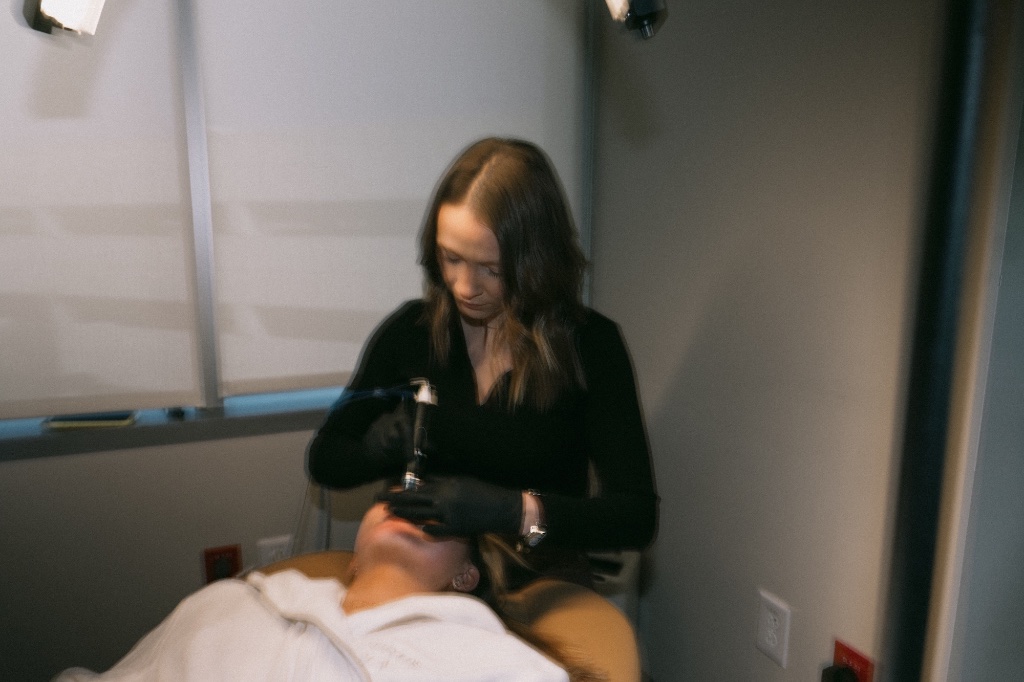
Staging is not a tactic. It is a reflection of how JOLA thinks about aesthetic medicine. Consultation-led care means the plan is driven by assessment, not by request. Treatment planning means each step has a reason. Anatomy-first planning means decisions are grounded in the structure of the face — not in trends or volume. Restraint over excess means the provider is willing to do less when less serves the result. Clinical fluency means the provider can read the face accurately enough to know when to act and when to wait.
Natural-looking outcomes are prioritized over immediate intensity. Facial balancing, injectables, laser treatments, and XERF are all planned with the same philosophy: long-term thinking instead of short-term treatment stacking. The goal is not to complete a checklist in one visit. The goal is to build a result that holds — one that looks like the patient, supported and refined, not transformed or overdone.
This is why subtle results often take more than one appointment at JOLA. Not because the care is incomplete — because the care is complete in the way that matters most: it is built to last, and it is built to look like you.
Begin With a Consultation at JOLA Dallas
If you want natural-looking results that are built over time — not rushed in a single visit — begin with a consultation at JOLA Dallas. Your plan will be staged, sequenced, and informed by the face's response at each step. That is how subtle, elegant, lasting outcomes are created.