
PHILOSOPHY / JOURNAL
DALLAS / MAR 2026
SPACE & CARE
Archi-
tecture
as Care
How environment, light, and material become a form of clinical attention — at JOLA Dallas.
9201 N CENTRAL EXPY / DALLAS TX
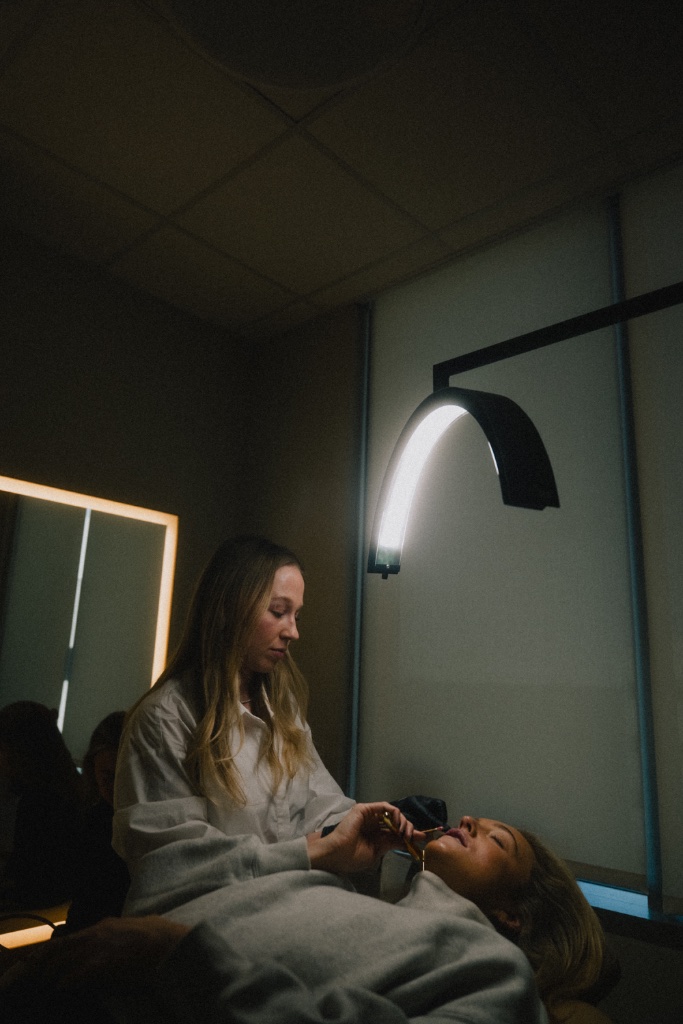
The experience of receiving aesthetic treatment in Dallas — in Highland Park, University Park, Preston Hollow, or the Park Cities — begins long before a provider enters the room. It begins at the door. In the quality of light as a patient moves through a space. In the absence of noise from adjacent rooms. In the texture of a surface beneath their hand.
This is not an abstract idea. It is a clinical one. In aesthetic medicine, where patients arrive with questions that are personal and expectations that range from cautious to hopeful, the design of the space is part of the quality of care. A luxury med spa dallas that understands this does not treat its environment as a backdrop. It treats it as a medium — one through which care is expressed before a needle is lifted or a laser calibrated.
At JOLA Dallas, the concept of architecture as care is not decorative. It is foundational.
AUTHOR
JOLA DALLAS
DATE
MARCH 2026
CATEGORY
PHILOSOPHY
LOCATION
DALLAS, TX
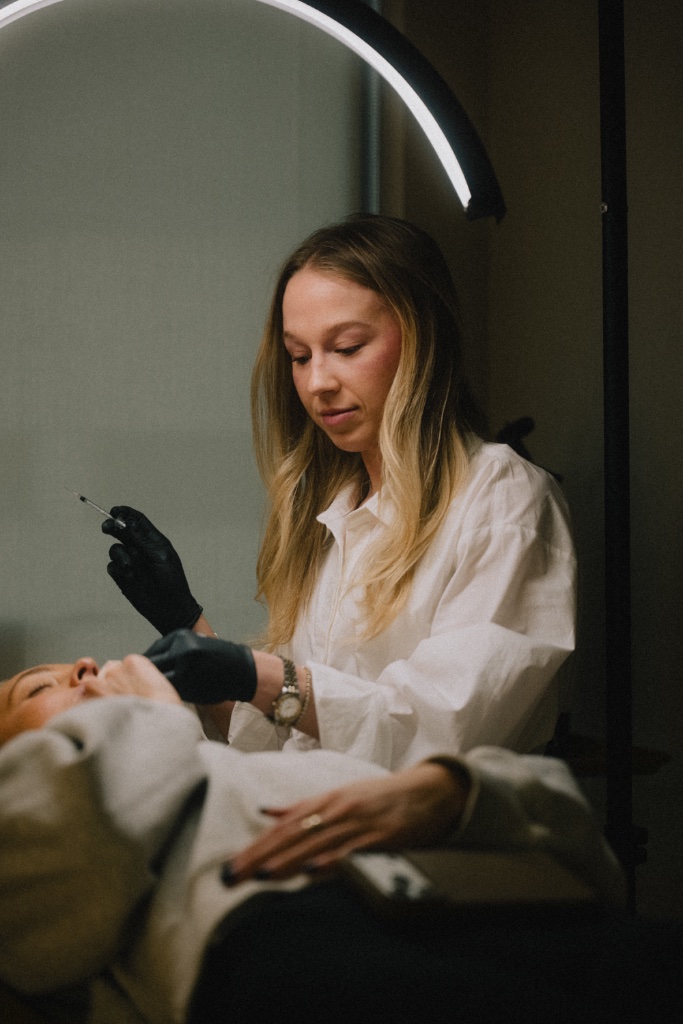
JOLA DALLAS / INTERIOR STUDY
What "Architecture
as Care" Means
Architecture as care is the proposition that a physical environment can be an act of clinical intentionality — that the way a space is designed expresses something real about the values, the attentiveness, and the priorities of the people who created it. Space is not neutral. A room that was designed with care communicates care.
Lighting affects how a patient reads their own reflection and how a provider reads anatomy. Acoustic design determines whether confidential consultation stays private. The selection of materials — their warmth, weight, and finish — determines whether a room feels like a sanctuary or a waiting room. The pacing of spatial sequence — from arrival to reception to consultation to treatment — determines whether a patient feels processed or attended to.
In this framework, the environment is not a container for care. It is part of care itself. A high end aesthetic clinic dallas that operates from this understanding treats the clinical and the spatial as a single continuous experience — one that begins when the patient enters and does not end until they leave.
SPATIAL ELEMENTS
LIGHT
01
MATERIAL
02
ACOUSTICS
03
SEQUENCE
04
PRIVACY
05
PROPORTION
06
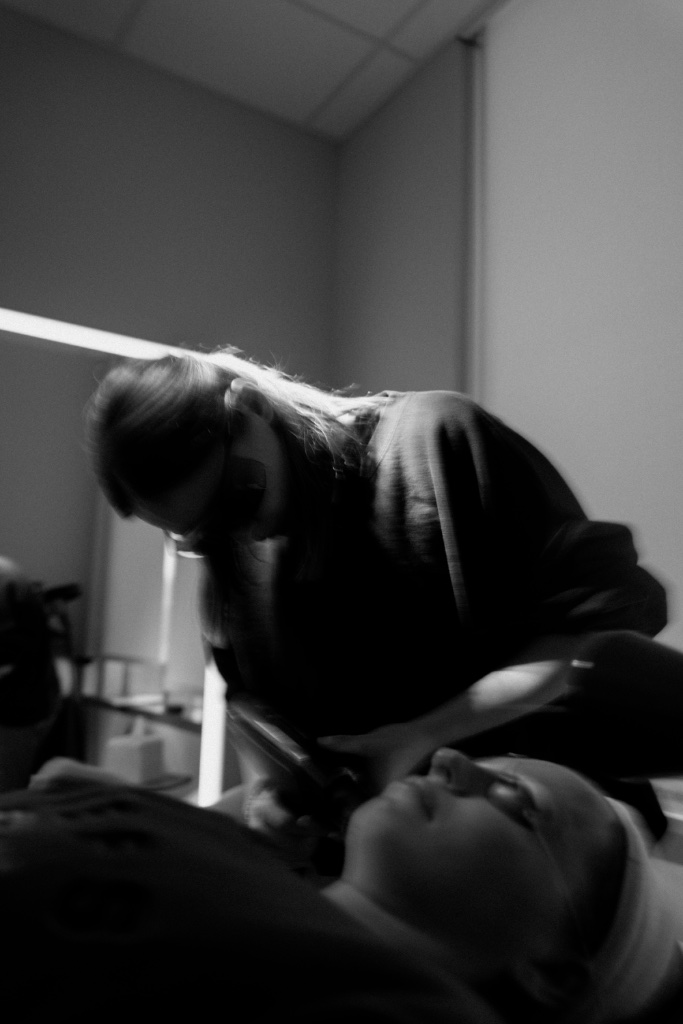
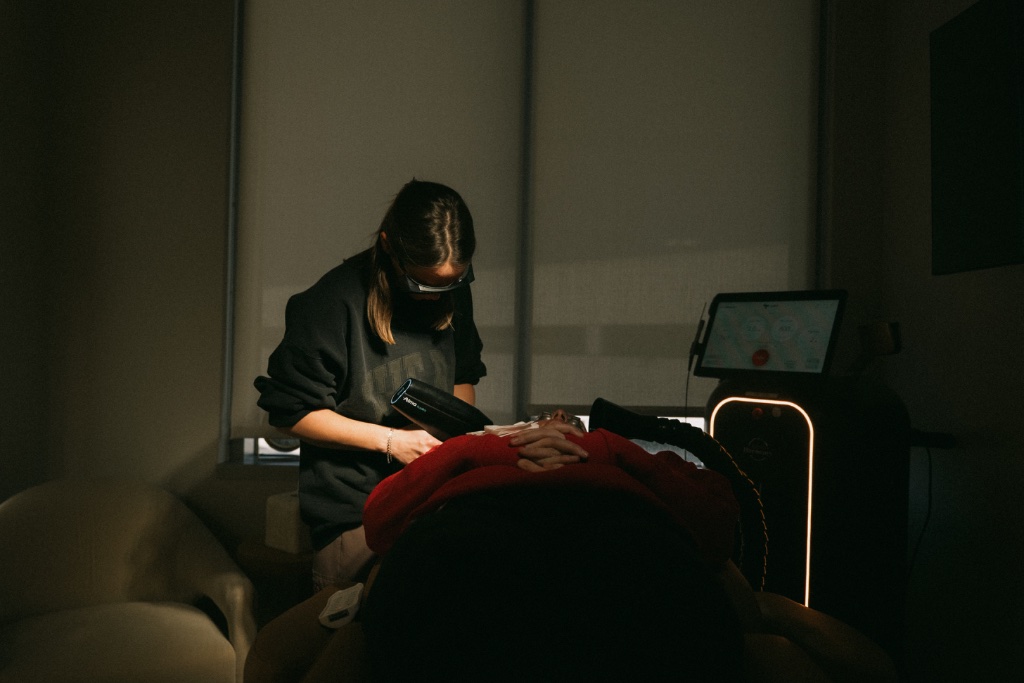
MATERIAL STUDY
Why Environment Matters
in Aesthetic Medicine
01
Emotional Comfort
Environments using natural light, low ambient noise, and warm materiality measurably reduce physiological stress. A calmer patient communicates more clearly — enabling a more accurate, more tailored treatment plan.
02
Privacy & Discretion
A space that guarantees privacy — visually, acoustically, and in patient flow — is not a luxury. It is a minimum clinical standard. True privacy creates conditions for honest communication, which enables excellent outcomes.
03
Trust Through Space
Patients read environments as evidence. A clinical space that is well-maintained and thoughtfully lit signals that the people here take precision seriously. This operates entirely without words.
04
Confidence & Care
Patients who receive care in well-designed environments consistently report higher satisfaction. In a field where patient comfort directly affects clinical communication, this is not peripheral. It is central.
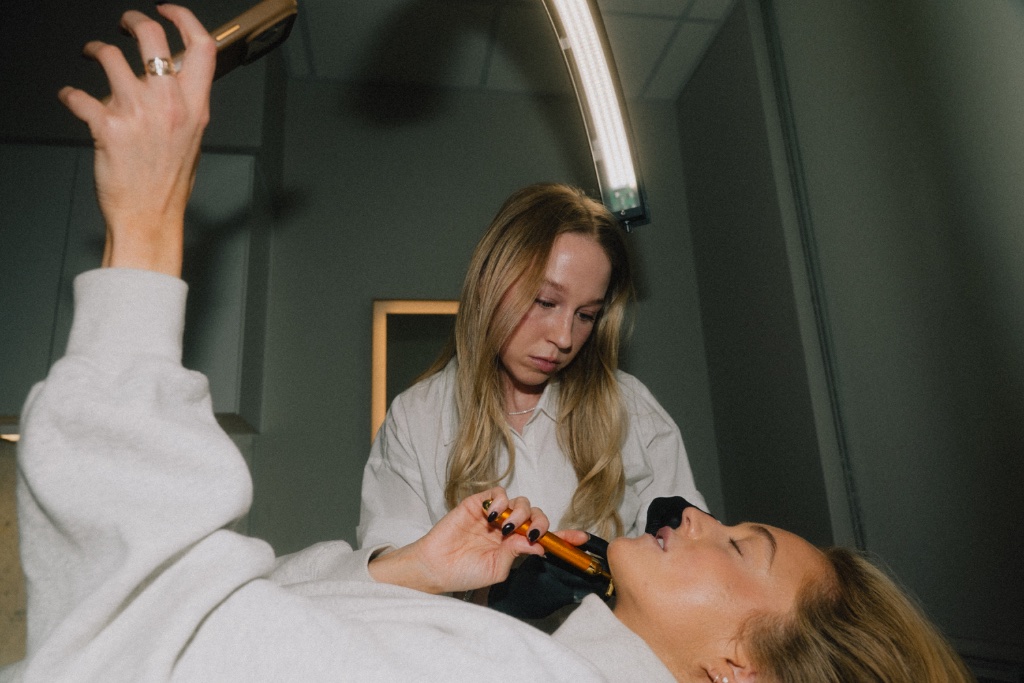
THE ROLE OF DESIGN
The Role of Design
in the JOLA Experience
Every spatial decision — from light quality in the consultation room to the sequencing of the patient journey — reflects the same philosophy that governs the clinical work: restraint is more powerful than excess, and details compound.
Calm, Light & Materiality
Stone, linen, plaster, glass — chosen for how they age and feel underhand, not just how they photograph.
Privacy & Quiet
Acoustic separation and deliberate patient-flow design ensure that what happens in the consultation room stays there.
Luxury Without Excess
Luxury felt before it is seen: through proportion, through light at a particular time of day, through the weight of a material.
Personalized Care
A calm environment reduces friction — patients speak more openly, enabling more accurate and more tailored treatment plans.
CONSULTATION ENVIRONMENT / NATURAL LIGHT STUDY
Architecture, Restraint,
and Natural-Looking Results
There is a coherence between the philosophy of architecture as care and the philosophy of natural-looking aesthetic outcomes that is not coincidental. Both are guided by the same principle: restraint produces results that feel more right, more lasting, and more aligned with the person — whether that person is a patient or a building's occupant.
A practice that over-treats its patients is making the same category of error as an architect who over-decorates a room. The error is one of excess: of believing that more is more. The results look done. Recognizable as treatment. Resistant to the natural quality that genuine skill produces.
At JOLA, the restrained character of the environment is the same impulse that governs facial balancing and natural-looking lip enhancement. The architecture is a preview of the aesthetic intelligence the patient can expect from the clinical work.
"The space signals something about what is likely to happen within it."
JOLA DALLAS / SPATIAL PHILOSOPHY
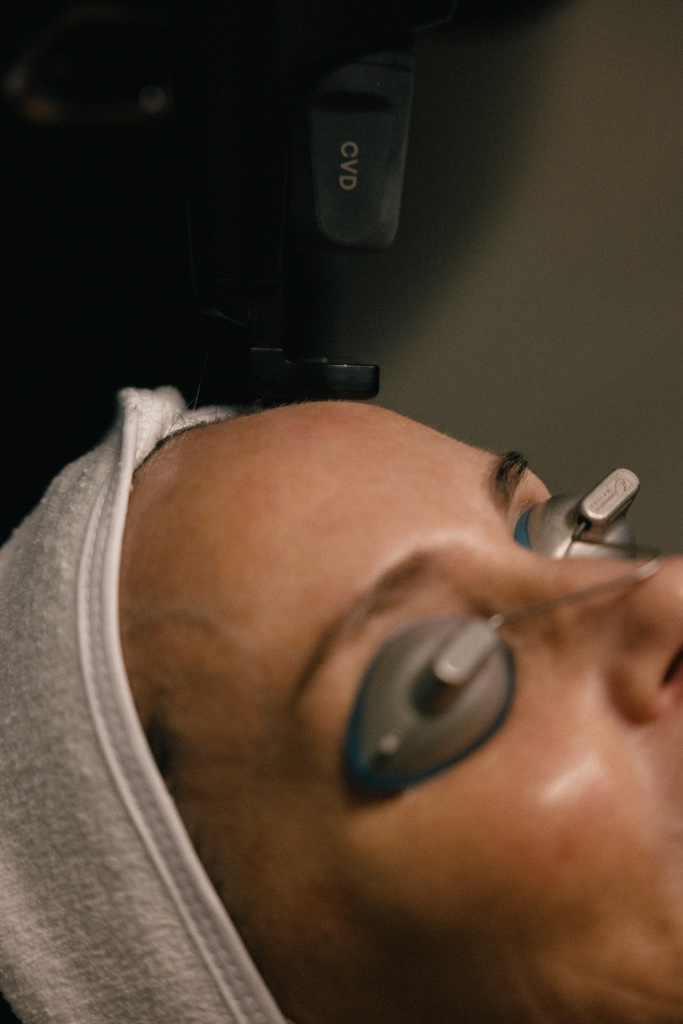
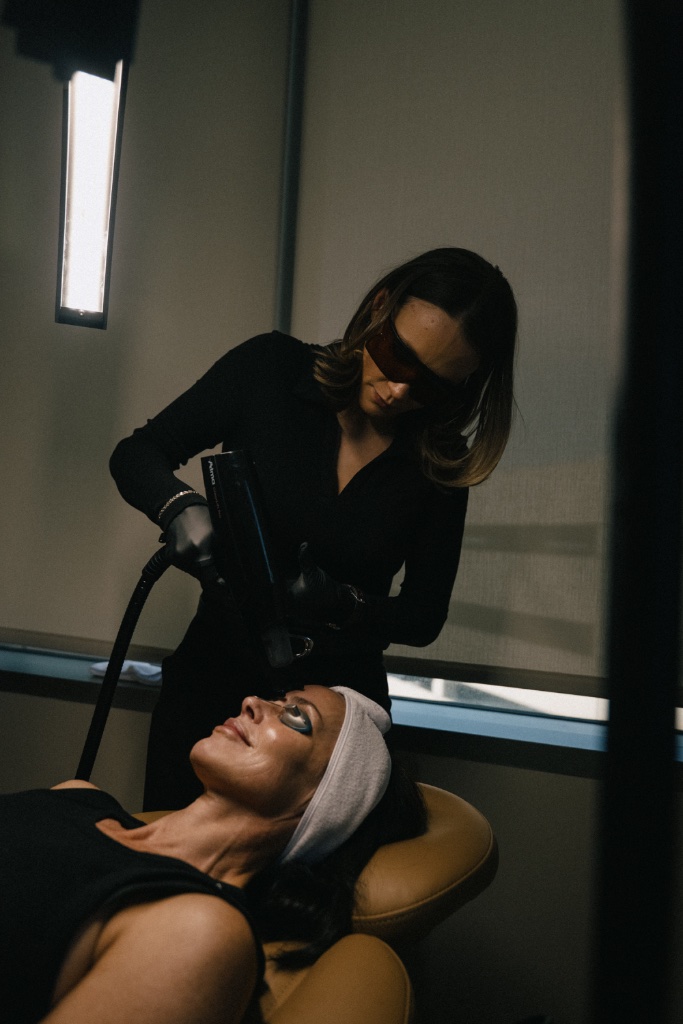
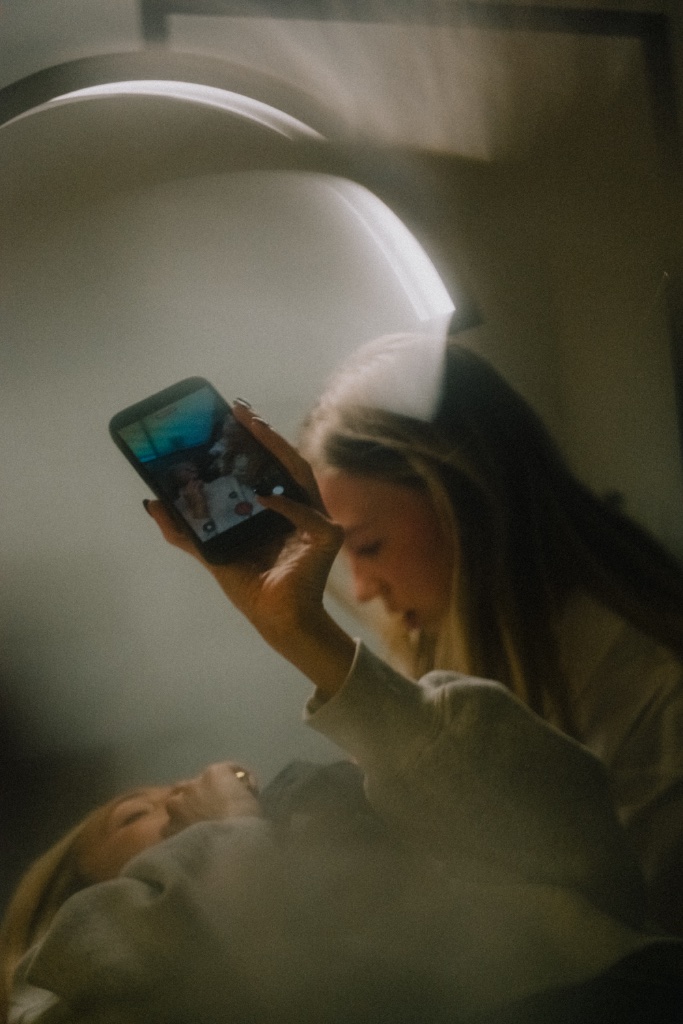
Care Begins
Before Treatment
The moment a patient arrives is the beginning of the clinical encounter — even before the provider has entered the room. What the patient experiences in those minutes shapes their emotional and physiological state for everything that follows.
A waiting experience that is calm, private, visually resolved, and unhurried begins to work on that anxiety before the consultation even begins. It signals that the practice is in control of its environment and therefore of its processes.
For patients considering injectable treatments, laser protocols, or skin and facial care in Dallas, a consultation room that projects clinical credibility through its design creates a foundation of trust before a single clinical word is exchanged. Patients interpret the quality of the space as evidence of the quality of the practice.
This is why thoughtful med spa design dallas is not a cosmetic concern. The environment prepares the patient — and a prepared patient is the foundation of a successful treatment relationship.

THE LUXURY OF
FEELING CONSIDERED
True luxury in a clinical environment is not about visual extravagance. It is about the feeling of being considered — at every point and in every detail.
The difference is felt rather than seen. A space that has clearly been thought about, that holds the patient with intention, and that supports the clinical work happening within it. This is the standard toward which jola dallas orients its environment.
The best version of a luxury aesthetics dallas experience is one in which the patient arrives uncertain and leaves confident — because everything about the encounter communicated that they were in the right place.
CONSULTATION STUDY
Architecture as Care
in Dallas
01
The City
Dallas is a city with a sophisticated relationship to design. Its residential neighborhoods — Highland Park, University Park, Preston Hollow, the Park Cities — are defined by the quality of their built environment. Patients from these neighborhoods are not indifferent to the spaces they inhabit. They notice.
02
The Expectation
Luxury med spa dallas patients evaluate clinical choices in ways that extend beyond treatment menus and provider credentials. They seek congruence: between the quality of results they have seen and the quality of the environment delivering them. A clinic that performs at a high clinical level but operates in a generic environment creates a dissonance that design-conscious patients register immediately.
03
The Standard
JOLA Dallas is located at 9201 N Central Expressway. The environment has been considered in that context: a space for the patients who come to it, shaped by an understanding of what those patients value. Design and wellness dallas, at its most coherent, means understanding that context and building to it.
Related Experiences
Frequently Asked Questions
01
What does "architecture as care" mean?
Architecture as care is the idea that a physical environment can itself be an expression of how a practice treats its patients. When a space is designed with attention to light, materiality, privacy, and calm — rather than built for efficiency alone — it communicates something meaningful before a single clinical interaction begins. At JOLA Dallas, this philosophy holds that the design of the environment is not separate from the quality of care offered within it. They are the same thing expressed in different registers.
02
Why does the treatment environment matter in aesthetic medicine?
Aesthetic medicine is deeply personal. Patients arrive with concerns about their appearance, their aging, their sense of themselves — and those concerns make them perceptive to everything around them. An environment that is cold, clinical, or poorly considered will register as such, creating a baseline of discomfort that affects how patients communicate their goals, how much they trust their provider, and how satisfied they feel with the overall experience. A thoughtfully designed environment reduces anxiety, builds trust, and creates the conditions in which genuine care can take place.
03
Can design actually affect the patient experience?
Yes — and the evidence for this is both intuitive and research-supported. Environments that use natural light, appropriate acoustic design, and careful material selection measurably reduce stress and cortisol response in occupants. In aesthetic medicine specifically, a calm, private, unhurried environment encourages patients to speak more openly about their goals, ask more questions, and engage more honestly with their provider. This quality of communication directly improves the quality of the treatment plan — and therefore the quality of the outcome.
04
What makes a luxury aesthetic clinic feel different?
True luxury in a clinical environment is not about visual extravagance. It is about the feeling of being considered — at every point and in every detail. The quality of light in the consultation room. The absence of noise from adjacent spaces. The unhurried pacing of every interaction. The way materials are selected not just for appearance but for how they feel and age. A high-end aesthetic clinic in Dallas delivers this kind of considered experience consistently, from the moment a patient arrives to the moment they leave — not as a performance, but as a genuine expression of how care is understood.
05
Why do privacy and atmosphere matter during consultations?
A consultation in aesthetic medicine is one of the more intimate professional interactions a patient can have. Patients discuss concerns about their appearance, their aging, and often their self-perception — topics that require a degree of trust and comfort that a poorly designed or insufficiently private environment cannot support. Privacy is not a luxury in this context. It is a clinical necessity. Consultation rooms that offer genuine acoustic and visual privacy allow patients to be honest, and honest communication is the foundation of a successful treatment plan.
NEXT STEP
Experience care that begins with the space itself.
Begin your consultation at JOLA Dallas. A comprehensive assessment is included with every new patient appointment — conducted in an environment designed to support the quality of conversation that good treatment planning requires.
ADDRESS
9201 N Central Expy Dallas TX 75225
TELEPHONE
214.515.0002
info@joladallas.com
JOLA DALLAS / 2026