
JOLA DALLAS
MARCH 2026
INJECTABLES
A growing number of aesthetic patients in Dallas — and across Highland Park, University Park, and the Park Cities — are arriving at consultations with a specific request: they do not want to look like they have had filler. They want to look like themselves, but better. More rested. More proportionate. More refined. What they are describing, even if they do not use the term, is facial balancing.
This shift reflects a broader evolution in how patients — and the best providers — think about injectable treatment. The question is no longer simply "what product do I use?" It is "what does this face actually need?" — and the answer almost always involves looking at the whole face rather than treating individual features in isolation.
At JOLA Dallas, facial balancing in Dallas is approached as a full-face strategy grounded in anatomical understanding, proportion, and restraint. This article explains what it means, who it is for, and what patients should expect from this approach to aesthetic care.

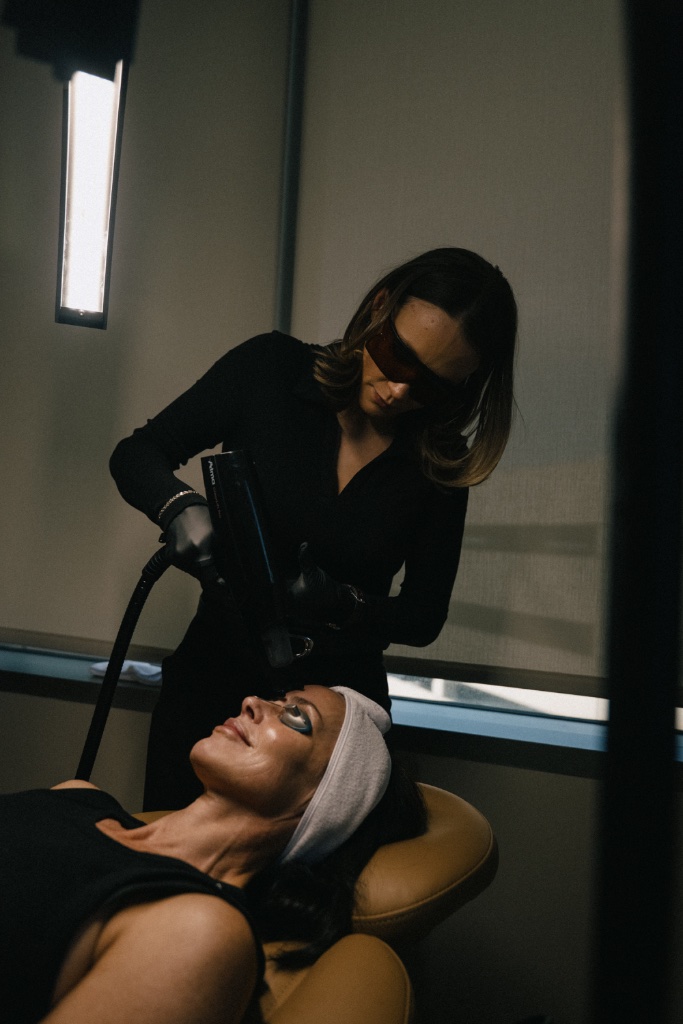
JOLA DALLAS / CONSULTATION ENVIRONMENT
What Facial Balancing Actually Means
Facial balancing dallas is not a specific product or a single injectable technique. It is a philosophy of treatment — one that evaluates the full face as a coherent structure before recommending any intervention. Rather than asking "how can I address this one concern?", the facial balancing approach asks "what does this face actually need to feel more harmonious, more proportionate, and more itself?"
Proportion is the foundation. Aesthetic beauty — the kind that reads as natural rather than treated — is largely a function of how facial features relate to one another. The ratio of the upper, middle, and lower face. The balance between the width of the cheekbones and the narrowing of the jawline. The projection of the chin relative to the nose and lips in profile. When these relationships are aligned, the face reads as harmonious. When one feature falls outside the expected ratio — whether by nature, aging, or the effects of prior treatment — the face can feel slightly off in a way that is difficult to name but immediately perceptible.
Natural facial balancing dallas differs from trend-driven filler treatment in a critical way: it is not about adding the features that are currently popular. It is about supporting the structure that is already there. The goal is subtlety — adjustments that bring the face into better proportion without signaling that anything has been done.
This is why the most skilled outcomes in facial harmony dallas are often invisible in the clinical sense. Patients look rested, more defined, more themselves — and cannot always describe what changed.
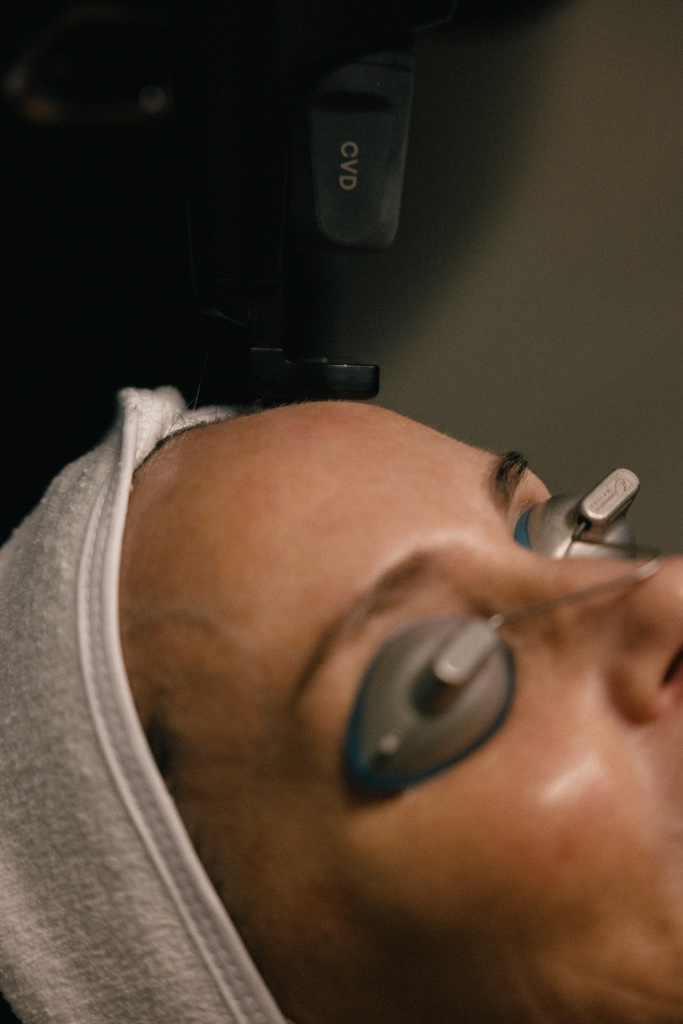

PROPORTION STUDY / FULL-FACE HARMONY
What Areas Are Commonly Treated in Facial Balancing?
Because facial balancing in dallas is a whole-face strategy, the areas treated in any given plan depend on a full assessment of your individual anatomy. That said, a number of treatment areas appear consistently in facial balancing plans because of the outsized role they play in overall facial proportion.
Lips
The lips do not exist in isolation — their size, shape, and projection are read in the context of the surrounding face. Lip enhancement in a facial balancing context is about proportion and hydration rather than volume alone. A lip that projects slightly beyond the chin in profile, or that is disproportionately large relative to the midface, can pull attention in a way that reads as treated. Subtle refinement — guided by the ratios of the surrounding face — produces results that feel entirely natural. Learn more about our approach to lip enhancement in dallas.
Chin
The chin is one of the most structurally influential areas in facial balancing. A chin that lacks projection — particularly in profile — can make the nose appear more prominent, the lips appear fuller than they are, and the lower face appear recessed. Targeted chin filler in a facial balancing plan is often one of the highest-impact interventions available, producing visible improvement in profile harmony with minimal product. Patients interested in chin filler dallas often do not realize how much of their overall concern traces back to this single anatomical relationship.
Jawline
The jawline defines the lower face and frames the chin. Softening of the jawline with age — or a naturally less defined jaw — can affect facial structure in ways that are difficult to correct with any single treatment. Jawline contouring with dermal filler, as part of a balanced plan, supports definition and improves the overall frame of the face.
Cheeks
The cheeks provide the scaffolding of the midface. Volume loss in the cheeks — which typically precedes the appearance of nasolabial folds and lower-face descent — is a common contributor to facial imbalance. Restoring appropriate midface volume supports the structures above and below it, often improving multiple concerns simultaneously.
Under-Eyes
The under-eye area is one of the most structurally complex regions of the face and one of the most visible contributors to a tired or aged appearance. Under-eye hollowness — the transition between the lower lid and the cheek — creates shadow that reads as fatigue regardless of actual rest. Strategic treatment of this area, using filler or regenerative approaches, can significantly improve overall facial freshness. Explore our approach to under-eye treatments in dallas.
Temples
Volume loss in the temples is one of the earliest signs of facial aging — and one of the most frequently overlooked. Temporal hollowing creates a narrowing of the upper face that can make the brows and forehead appear heavier. Restoring subtle volume to the temples broadens and supports the upper face in a way that reads as youthful rather than treated.
Profile Balance
Many of the most significant improvements in facial balancing come from addressing the relationships visible in profile — the nose-to-lip-to-chin ratio, the projection of the lower face, and the support of the neck and jawline. Profile assessment is a standard part of every JOLA facial balancing consultation.
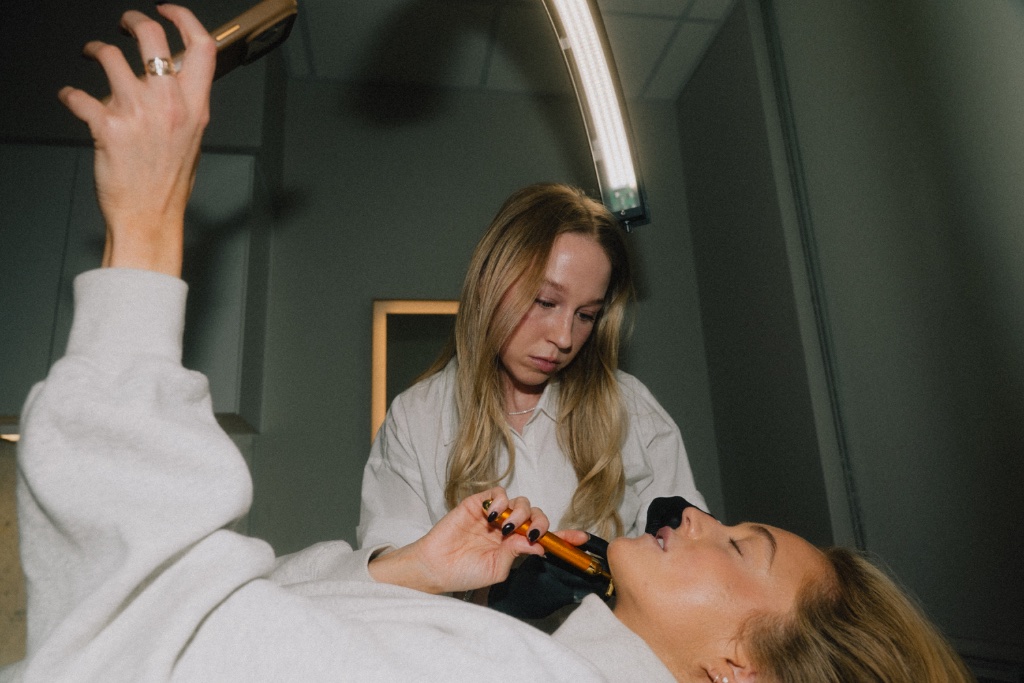
FULL-FACE CONSULTATION / ANATOMY ASSESSMENT
How Facial Balancing Works
Consultation and Full-Face Assessment
Every facial balancing dallas appointment at JOLA begins with a comprehensive assessment — not with product selection. Your provider evaluates your full facial anatomy at rest and in motion: bone structure, soft tissue distribution, volume relationships between facial thirds, skin quality, and the dynamics of your natural expression. Photography from multiple angles, including profile, is standard. The consultation is where the work of facial balancing actually happens. By the time any product is selected, the plan is already formed.
Anatomy, Proportion, and Structural Planning
Structural planning in facial harmony dallas involves identifying the proportional relationships that feel imbalanced and determining which interventions will address the most impactful ones with the least amount of product. Because dermal fillers are additive — they add volume to an existing structure — the planning stage is critical to ensuring that what is added improves the overall relationship of features rather than overcorrecting one area at the expense of another. Good structural planning looks like restraint. It often involves treating fewer areas than patients expect, and using less product than they have been told they need elsewhere.
Choosing the Right Injectable Approach
Full face filler dallas plans at JOLA typically involve a combination of products selected for specific anatomical requirements. The tools most commonly used in facial balancing include:
Hyaluronic acid fillers
The standard category of dermal filler, available in a range of viscosities suited to different depths and tissue types. Softer formulations for delicate areas like the lips and under-eyes; firmer formulations for structural areas like the chin and jawline.
Neuromodulators (Botox / Dysport)
Used in combination with filler in many facial balancing plans. Botox or Dysport can relax the muscles that create dynamic lines, adjust brow position, and refine the lower face — often improving overall harmony without adding volume. Learn more about neuromodulators in dallas.
Sculptra
A biostimulatory collagen-stimulating treatment that builds gradual structural support over months. Used in facial balancing plans where patients want long-term improvement rather than immediate volumization. Explore Sculptra in dallas.
Why Conservative Treatment Often Looks Better
One of the most consistent findings in aesthetic medicine is that conservative treatment produces more natural-looking results than aggressive treatment — particularly in the context of facial balancing. Less filler in the right location looks better than more filler in multiple locations without a coherent plan. Adding modest volume to the chin can improve profile harmony more significantly than filling the lips, the cheeks, and the temples simultaneously. Conservative treatment is also easier to build on: small adjustments can be made at follow-up appointments to bring the result closer to the intended outcome. Over-treatment is more difficult to reverse. At JOLA, the default is always restraint. We recommend what the anatomy needs, not what the trend suggests.
LOWER FACE STUDY / JAWLINE AND CHIN DETAIL
Who Is a Good Candidate for Facial Balancing?
Facial balancing dallas is suited to a wide range of patients. Several profiles appear with particular consistency:
Patients who feel something is off but cannot name it
The most common presentation. Patients who look at photographs of themselves and feel slightly uncomfortable — as if something is not quite right — but cannot point to a single feature that is the problem. This diffuse sense of disproportionality is often the result of multiple small imbalances that, taken together, shift the face away from its natural harmony. A whole-face assessment identifies these relationships and a targeted plan addresses them.
Patients seeking more refined proportions
Patients who feel their features are individually fine but that the overall face lacks the kind of refinement they are looking for. This often involves very subtle adjustments — a small amount of chin projection, minor cheekbone support, or modest jawline definition — that shift the overall read of the face without altering any individual feature dramatically.
First-time filler patients
Facial balancing is an ideal entry point for patients who want to explore injectable treatment without committing to a single-area approach. Beginning with a whole-face consultation and a conservative, proportionally guided plan reduces the risk of the isolated-treatment imbalance that can occur when individual areas are treated without strategic context.
Patients with profile imbalance
Profile balance — the relationship between the nose, lips, and chin as seen from the side — is one of the most impactful and most underaddressed concerns in aesthetic treatment. Patients who feel their nose appears prominent, their lips appear recessive, or their lower face lacks projection often have a chin or jaw issue that, when addressed, significantly improves overall profile harmony.
Patients who want natural-looking enhancement
The defining characteristic of the facial balancing patient is a preference for results that look like themselves rather than a different person. If you have had prior injectable treatment that felt overdone, looked unbalanced, or did not reflect your goals — a facial balancing consultation at JOLA is the appropriate starting point.
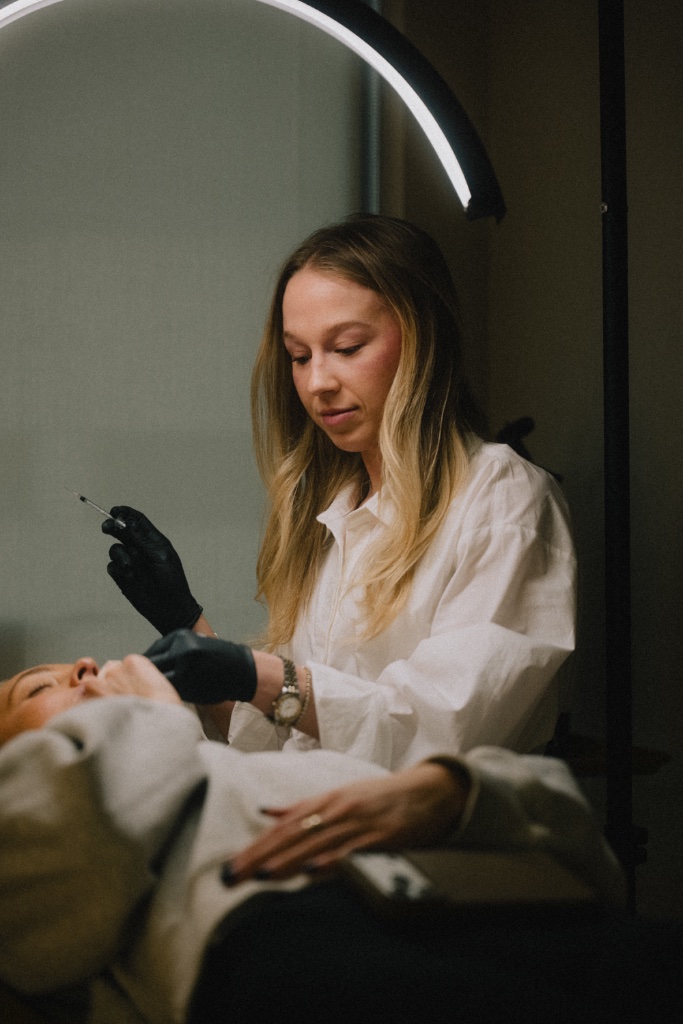
JOLA DALLAS / INTERIOR STUDY
Facial Balancing vs. Traditional Filler Appointments
A traditional filler appointment is typically reactive: a patient identifies a concern — lips, nasolabial folds, marionette lines — and that area is treated. There is nothing inherently wrong with this approach. Single-area treatment is appropriate when the concern is truly isolated and when treating it will not create imbalance elsewhere.
The problem arises when single-area treatment is applied without considering its effect on the rest of the face. Lip filler that makes the lips proportionally larger than the chin supports beneath them can look incongruous in profile. Cheek filler that adds midface volume without addressing jawline definition can create a heaviness in the lower face. Under-eye filler applied without considering the adjacent cheek transition can produce a visible line or a swelling that reads as unnatural.
Facial balancing dallas addresses this by making the full face the unit of analysis — not the individual concern. The result is a more cohesive outcome that addresses the actual source of disproportionality rather than its visible symptoms. Patients who have received single-area treatment elsewhere and felt dissatisfied often find that a reorientation toward full-face strategy — with appropriate adjustment of prior work where needed — produces the result they were originally looking for.
Expert planning is the differentiating factor. The facial balancing program at JOLA requires more time at the consultation stage than a standard filler appointment — and produces more considered, more proportional, and more lasting results.

PROFILE BALANCE / INJECTABLES DALLAS
What to Expect During a Facial Balancing Appointment
The experience of a facial balancing dallas appointment at JOLA is notably different from a standard filler visit. The consultation phase is longer, more analytical, and more collaborative. The following outlines what patients should anticipate.
Full-face consultation
Your provider will conduct a comprehensive assessment of your facial anatomy using frontal, lateral, and three-quarter-angle views. Resting and animated photographs may be taken. The assessment focuses on proportion, volume relationships, bone structure, and soft tissue quality — not on the individual concern you arrived with, which may or may not be the primary driver of the imbalance.
Structural treatment planning
Based on the assessment, your provider will outline which areas they recommend treating, in what order, and with which products. This plan will be explained in full before any treatment proceeds. You should expect to leave a first consultation with a clear understanding of the recommended approach and the rationale for each recommendation.
One visit vs. staged treatment
Some patients can address their primary concerns in a single visit. Others — particularly those seeking more significant structural refinement, or those new to injectables — benefit from staged treatment. Staged treatment allows each round of adjustment to settle fully before the next is added, reducing the risk of overcorrection and allowing each intervention to be assessed in the context of the full result. For patients seeking long-term facial balancing, staged treatment is frequently the preferred approach.
Post-treatment expectations
Immediate swelling is expected, particularly in the lips and under-eye area. Most structural areas — chin, jawline, cheeks — show less post-treatment swelling and settle more quickly. Full results are typically visible at two weeks. Some mild bruising at injection sites is normal. A follow-up appointment at two weeks allows for assessment and any refinement that may be warranted.
Does Facial Balancing Still Look Natural?

NATURAL RESULTS / ANATOMY-FIRST PHILOSOPHY
The short answer is yes — and facial balancing, when practiced with genuine restraint, typically produces more natural-looking results than single-area filler treatment. This is counterintuitive to patients who assume that treating multiple areas will look more done. In practice, the opposite is often true: proportionally guided multi-area treatment looks more natural precisely because it improves the full face rather than drawing attention to a single changed feature.
The principles that underpin natural-looking facial balancing in dallas at JOLA include:
Preserving expression and identity
The face you have at rest and in motion should remain recognizably yours. Facial balancing should not erase what makes your face distinctive — it should support the features that are already working while refining the proportional relationships that are not.
Anatomy before trend
What is popular in injectable treatment at any given moment is not always what is anatomically appropriate for any given face. Facial balancing is guided by your individual structure, not by the current aesthetic of social media.
Restraint as a standard
At JOLA, the default in facial balancing is to do less and assess. Adding more is always possible. Reversing overdone treatment is a different clinical situation entirely.
Long-term relationship over one-time visits
The best facial balancing outcomes are built over time, with a provider who knows your face, understands how it has changed, and can calibrate each visit accordingly. A single visit can produce meaningful improvement; a long-term treatment relationship produces the kind of sustained, natural-looking refinement that represents the genuine goal of this approach.
Related Treatments to Consider
Facial balancing dallas draws from the full injectable toolkit. The treatments most frequently incorporated into facial balancing plans at JOLA include:
Dermal Fillers
The primary tool of facial balancing. Hyaluronic acid fillers in varied formulations address volume, structure, and proportion across multiple facial zones.
Lip Enhancement
Proportionally guided lip treatment — addressing shape, projection, hydration, and balance relative to the surrounding face.
Under-Eye Treatments
Strategic correction for hollowness and shadowing beneath the eyes — one of the highest-impact areas in overall facial harmony.
Neuromodulators (Botox / Dysport)
Used in combination with filler to address dynamic movement, brow position, and lower-face refinement as part of a complete facial balancing strategy.
Sculptra
Biostimulatory collagen support for patients seeking gradual, structural rejuvenation over a longer treatment horizon.
Full-Face Assessment
A dedicated consultation for patients seeking a comprehensive evaluation and strategic treatment plan — the foundation of every facial balancing plan at JOLA.
Frequently Asked Questions
What is facial balancing?
Facial balancing is a full-face injectable strategy that evaluates and refines the proportional relationships between facial features — rather than treating one area in isolation. It may involve the use of dermal fillers, neuromodulators, or a combination of both, placed strategically to improve overall harmony, symmetry, and structure. The goal is a result that looks cohesive and natural, not like any single feature has been altered.
How is facial balancing different from getting filler?
Traditional filler appointments are often single-area focused — a patient comes in to address their lips, or their nasolabial folds, and that specific area is treated in isolation. Facial balancing begins instead with a whole-face assessment: your provider evaluates your full facial structure, identifies the proportional relationships that feel off, and recommends a coordinated treatment plan. The difference in outcome is significant — facial balancing tends to produce results that look more refined and more natural because the full context of your face is considered.
Who is a good candidate for facial balancing?
The best candidates are patients who feel something about their appearance is slightly off — but cannot identify exactly what. Patients with profile imbalance (where the chin or jaw does not project appropriately relative to the nose or lips), patients seeking more refined proportions without dramatic change, first-time filler patients who want subtle improvement, and patients who have been treated with single-area filler elsewhere and feel their results look unbalanced. Facial balancing is particularly suited to patients who prioritize natural-looking enhancement.
Does facial balancing look natural?
Yes — when approached with restraint and anatomical understanding, facial balancing produces some of the most natural-looking injectable outcomes available. The philosophy at JOLA centers on preserving your identity and expression while refining what is already there. The goal is never transformation. It is a better, more proportionate version of yourself. Under-treatment is always preferable to over-treatment, and staged appointments allow results to be calibrated carefully over time.
How much does facial balancing cost in Dallas?
Facial balancing cost in Dallas varies depending on the areas treated, the products used, and the overall scope of the plan. Because it is a personalized, full-face strategy rather than a standardized single-area appointment, pricing is discussed transparently at consultation — where your provider can assess your anatomy, outline a plan, and explain exactly what treatment would involve and what it would cost. JOLA does not apply flat-rate promotional pricing. We recommend what is clinically appropriate and price accordingly.
NEXT STEP
Facial balancing in Dallas, guided by proportion and restraint.
Begin your consultation at JOLA Dallas. Every new patient appointment includes a comprehensive full-face assessment and a clear, honest discussion of what treatment would involve and what it would cost.