JOLA / THE PROFILE STUDY / 007
How to Improve Jawline Definition Without Surgery
A JAWLINE
IS NOT
A LINE.
IT IS AN EDGE
BETWEEN
TWO PLANES.
Jawline definition, chin projection, and why “jawline filler” answers only one of six questions.
CHINANGLESHADOWSKINDESCENTMUSCLEPROPORTION
STAGE 1 / 4 · THE EDGE
01THE EDGE
02THE FRONT
03THE SHADOW
04THE DRAPE
YOU SEARCHED
FOR A SHARPER JAW.WHAT YOU ARE
LOOKING AT
IS CONTRAST.
THE 60-SECOND ANSWER
How do you improve jawline definition without surgery?
Jawline definition comes from contrast: a visible edge where the face plane meets the shadowed neck plane beneath it. Several different things can blur that edge, which is why the answer depends on which one is present in your face.
A chin that sits back shortens the visible edge and softens the neck angle. Loss of structure at the jaw angle stops the border from turning. Fullness under the chin fills the shadow that made the edge readable. Skin that has lost firmness drapes rather than following the bone. Jowls drift across the border and interrupt it. A wide or heavy lower-face proportion reads as bulk rather than definition. Posture, light and camera lenses change all of it by the hour.
Non-surgical options map onto those causes rather than onto the word jawline. Chin and jawline filler can restore projection and structure in selected faces. Energy-based tightening such as XERF, or K-LUXE where surface quality matters too, can address firmness along the jaw and under the chin. A biostimulator such as Sculptra can build gradual support where broad structural thinning is part of the picture. A neuromodulator can change muscle-driven width or neck-band pull in selected cases. Where the edge is lost to significant descent or skin excess, the honest conversation may be surgical.
Most people arrive with more than one cause, and some have three. That is the reason assessment comes before product. A plan that begins with a product name has already decided something the face has not been asked about yet.
Facial Balancing at JOLA →YOU SEARCHEDFOR A SHARPER JAW.WHAT YOU ARELOOKING ATIS CONTRAST.
CHAPTER
01
WHAT ACTUALLYMAKES AJAWLINE LOOKDEFINED?
A jawline reads as defined when an edge is visible: the mandibular border running from the chin back to the jaw angle. That edge is not a line drawn on the face. It is the contrast between the face plane and the shadowed neck plane beneath it. Four things set that contrast: projection at the front, structure at the back, a clear shadow below, and skin that follows the bone.
Start with what you are actually looking at, because the word is used loosely. A jawline is a border, not a feature. It exists where two surfaces meet at an angle, and you see it only because light falls differently on each. Remove the shadow and the edge stops reading.
Two of those contributors sit at the ends of the edge. Projection at the front comes from the chin, which carries the border forward. Structure at the back comes from the jaw angle, which turns the edge so it can be read at all. Between them, the shadow beneath the border is what creates the visible line.
Three distinctions carry most of the weight. Definition is not width: a jaw can be wide and undefined, or narrow with a very clear edge. Sharp is not balanced. And bone is not soft tissue, since the skeleton sets the frame while the edge you see is mostly created by what sits in front of and beneath it.
This study will not name one ideal jawline. There is no single angle, width or border that every face should be measured against, and the version of that idea aimed at men is no more useful than the version aimed at women. A jawline is balanced or unbalanced one face at a time.
DEFINITIONIS CONTRAST,NOTSHARPNESS.
The Weight of the Face →CHAPTER
02
THEPROFILEMAP.
The Profile Map is JOLA's editorial framework for reading a jawline. An edge that has softened may involve any of seven components: chin projection, jaw angle structure, the shadow beneath the border, skin firmness, tissue descent, muscle, and proportion. Not every face has all seven, not every component can be changed without surgery, and not every component should be treated.
The first component is the front anchor. The chin positions the border, and a chin that sits back shortens the visible edge while making the area beneath it read fuller even when nothing extra is there. It is the component most often left out of a jawline conversation, and Chapter 03 explains why that is a mistake.
The second is the back anchor. The jaw angle is where the border turns, and the quality of that turn decides whether the edge reads as a line or fades into the neck. Structure here is bone and the soft tissue that sits over it, which is why the angle and the masseter are two different findings.
The third is the shadow. The space beneath the border is not empty; it is the reason the edge is visible. Fullness there fills the shadow, and the jawline softens without anything happening to the jaw itself. Fat, skin and chin position produce that fullness in different proportions.
The fourth is skin. Firmness decides whether the surface follows the bone or drapes past it. This is a quality question rather than a volume question, and it behaves differently from the other six components: it can be improved, but it cannot be built outward.
The fifth is descent. When soft tissue moves downward it crosses the border rather than sitting behind it, and the clean edge becomes a scalloped one. This is the component that most often changes the conversation from non-surgical to surgical, and the one where an honest boundary matters most.
The sixth is muscle. A large masseter widens the lower face in front of the angle, and the platysma can pull downward along the jaw and neck. Both change how the lower face reads, and both are muscular rather than structural, which is a different mechanism entirely.
The seventh is proportion, and it is the one that keeps the other six honest. A jaw is read against the midface in front of it, the chin below it and the neck beneath it. A border that has not changed at all can read as weak because something above it changed, and treating the jaw would then be treating the wrong end of a relationship.
ONE EDGE.SEVENPOSSIBLECAUSES.
CHAPTER 02 / THE PROFILE MAP
ONE EDGE.
SEVEN
POSSIBLE
CAUSES.
The Profile Map is JOLA’s editorial framework for reading a jawline. An edge that has softened may involve any of these seven components. Not every face has all seven. Not every component can be changed without surgery. Not every component should be treated.
01
FRONT
WHAT IT IS
Chin projection, the front anchor of the edge.
WHY IT CHANGES THE EDGE
The chin is where the jawline begins. When it sits back, the visible edge is shorter and the neck angle softens, which can make the area under the chin read as fuller than it is.
WHAT CONVERSATION IT OPENS
A projection and facial-balancing conversation.
WHAT IT IS CONFUSED WITH
A jaw problem. The edge often starts at the chin rather than at the jaw.
02
ANGLE
WHAT IT IS
Structure at the jaw angle, the back anchor.
WHY IT CHANGES THE EDGE
The angle is where the edge turns. Where bone and soft-tissue support are underdeveloped or have thinned, the turn is soft and the border stops reading as a line.
WHAT CONVERSATION IT OPENS
A structure conversation, which may include assessment of the angle itself.
WHAT IT IS CONFUSED WITH
Masseter width. Width sits in front of the angle and reads as bulk, not definition.
03
SHADOW
WHAT IT IS
The space under the edge; submental fullness fills it.
WHY IT CHANGES THE EDGE
The jawline is visible because of the shadow beneath it. Fullness under the chin fills that shadow, and the edge disappears without anything happening to the jaw.
WHAT CONVERSATION IT OPENS
A fullness conversation that separates fat, skin and chin position.
WHAT IT IS CONFUSED WITH
Skin laxity. Fullness is volume; laxity is firmness.
04
SKIN
WHAT IT IS
Firmness of the skin following the bone.
WHY IT CHANGES THE EDGE
Skin that has lost firmness drapes rather than following the mandibular border. The bone can be unchanged while the edge softens.
WHAT CONVERSATION IT OPENS
A firmness conversation, which may include energy-based tightening.
WHAT IT IS CONFUSED WITH
Fat. Firmness and volume are different problems with different answers.
05
DESCENT
WHAT IT IS
Jowls and soft tissue drifting across the edge.
WHY IT CHANGES THE EDGE
When tissue descends, it crosses the border and interrupts it, producing a scalloped line rather than a clean one.
WHAT CONVERSATION IT OPENS
An honest boundary conversation that may include surgical evaluation.
WHAT IT IS CONFUSED WITH
Something filler can lift. Filler adds volume; it does not reposition tissue.
06
MUSCLE
WHAT IT IS
Masseter width and platysma pull.
WHY IT CHANGES THE EDGE
A large masseter widens the lower face at the angle. The platysma can pull downward along the jaw and neck and blur the lower edge in some people.
WHAT CONVERSATION IT OPENS
A neuromodulator conversation, where the mechanism is muscular rather than structural.
WHAT IT IS CONFUSED WITH
Bone. Muscle changes width and pull, not the skeleton underneath.
07
PROPORTION
WHAT IT IS
How the jaw reads relative to the midface, chin and neck.
WHY IT CHANGES THE EDGE
Facial balance is about relationships. A jaw that reads weakly may be a proportion question involving the midface or the chin rather than a jaw question.
WHAT CONVERSATION IT OPENS
A facial-balancing conversation that considers the whole face.
WHAT IT IS CONFUSED WITH
Sharper is better. Balance is the goal, not a template.
CHAPTER
03
WHY DOESTHE CHINMATTER SOMUCH FORTHE JAWLINE?
The chin is the front anchor of the jawline. When it sits back, the visible edge is shorter, the neck angle softens, and the area beneath the chin reads as fuller than it is, even with no extra fat present. In selected faces, restoring projection at the chin can define the jawline more than treating the jaw itself.
This is the least intuitive idea in the study, so it is worth stating plainly. A jawline runs from the chin to the angle. If the front end of that border moves backward, the border itself gets shorter, and a shorter border reads as a softer one. Nothing has happened to the jaw. The starting point moved.
The same change alters the neck. A projected chin holds the soft tissue beneath it forward, so the transition from under the chin into the neck happens at a sharper angle. When the chin sits back, that transition flattens, and the flat version reads as fullness rather than as a jawline.
That is why a patient can be told their jawline looks soft and reasonably conclude they need jawline treatment, when the finding is at the front. It is also why the reverse happens: some people treated along the border see little change, because the border was never the part that had stopped reading.
It is important to separate two things here. Soft-tissue projection at the chin and skeletal position are not the same, and they are not corrected the same way. A chin that reads back because of how the skeleton is built is an orthodontic or surgical conversation, and a clinician should say so rather than treat around it.
Where the finding is soft tissue, or where a small structural addition is appropriate, the treatment conversation belongs to facial balancing rather than to the jaw. Adding projection at the front changes the border, the shadow beneath it and the proportion of the lower third at once.
THE CHINDECIDES MOREOF THE JAWLINETHAN THEJAW DOES.
Facial Balancing at JOLA →CHAPTER
04
CAN JAWLINEFILLER CREATEDEFINITION?
In selected faces, filler placed along the jaw angle and the mandibular border can add structure where bone or soft-tissue support is underdeveloped or has thinned. It can also disappoint, and the reasons are worth understanding before the appointment rather than after it. Filler adds structure. It does not change skin firmness, remove fullness or reposition descent.
Where the jaw angle is genuinely underdeveloped and the skin over it is firm, adding support along the border is one of the few non-surgical ways to change how the edge reads. The change is structural, it is visible from the side, and in the right face it looks like the person rather than like a treatment.
It disappoints when the edge is blurred by something other than structure. If skin has lost firmness, or fullness is filling the shadow, or tissue has begun to descend, adding volume to the border does not sharpen the edge. It makes the lower third wider, and a wider lower third reads as heavier rather than as more defined.
The failure mode is recognizable and worth naming. An over-built jaw is squared, widened and slightly convex, and it is one of the clearest signs of work that has gone past the face it was meant to refine. It is also difficult to reverse unobtrusively. This is the single strongest argument for conservatism in the region.
Treatment has to suit the individual face rather than a template. A uniform approach for men, in particular, produces jaws that look strong in isolation and unnatural on the person, because the goal is balance for one face rather than the widest border available. The same caution applies in the opposite direction.
None of this makes jawline filler wrong. It makes it specific. In the right face, placed conservatively and aimed at structure rather than at the shadow, it does something no device does. In the wrong face, it removes the contrast it was supposed to create.
SHARPERIS NOTALWAYS BETTER.BALANCEDIS.
How much filler is too much →CHAPTER
05
WHAT IF THEPROBLEM ISUNDER THE JAW,NOT ON IT?
Fullness under the chin fills the shadow that makes the edge visible, so the jawline softens without anything changing on the jaw itself. What causes that fullness decides the conversation: fat, lax skin, a recessed chin, posture, or anatomy such as a low hyoid. They are different findings with different answers.
This is the component patients find hardest to see, because they are looking for the edge and the cause is in the space beneath it. A jawline is visible because of contrast between the face plane and the neck plane. Fullness under the chin reduces that contrast by lighting the shadow from within.
Fat is one contributor and is not the only one. Soft tissue distribution, the position of the chin in front of it, the firmness of the skin containing it, and inherited anatomy all change how the region reads. Two people with identical fat can look entirely different under the chin because of what sits above and in front of it.
That distinction decides what can help. Energy-based tightening addresses firmness rather than volume, so it can improve how the skin behaves over the region without reducing what is inside it. Fat reduction is a different category of treatment with a different mechanism, and it addresses volume rather than firmness or skin quality.
A chin that sits back is a third and separate cause, covered in the previous chapter. Restoring projection at the front changes how the area beneath the chin reads, without any treatment directed at the fullness at all. Where a patient has both a recessed chin and submental fullness, the order of the conversation matters.
Posture and anatomy are the quiet contributors. A head carried forward changes the angle at which the region is read, and a low hyoid changes where the under-chin transition sits. Neither is a condition, and neither is corrected by a device. Both are worth noting so that expectations stay attached to anatomy.
Where a patient is concerned about volume, the honest answer is that a consultation has to establish what the volume actually is, and whether the practice offers a treatment appropriate to it. When it does not, saying so is more useful than describing an alternative that has not been assessed.
WHAT BLURSTHE EDGEIS RARELYON THE EDGE.
XERF under the chin →CHAPTER
06
DOES SKINTIGHTENINGDEFINE THEJAWLINE?
When the edge is blurred by mild skin laxity, energy-based tightening such as XERF, or K-LUXE where surface quality also matters, may help the skin follow the bone again. The limits are just as important: tightening does not add projection, build a jaw angle, reduce significant fullness, or reposition descended tissue.
Tightening addresses one component of the map, and it addresses it well. Skin that has lost firmness drapes past the mandibular border rather than tracking it. Where that is the dominant finding and the change is mild, improving skin quality can restore how sharply the border reads without adding anything to the face.
The mechanism is a firmness mechanism. Energy delivered into the skin and the tissue beneath it prompts a collagen response over time, which changes the quality of the surface. It does not add volume, so it cannot restore a chin that has lost projection, and it does not build an angle that was never pronounced.
The other limits are equally firm. Tightening does not reduce significant fullness; fullness is volume and this is not a volume treatment. It does not reposition tissue that has descended, because position is not a quality of the skin. Where the edge is lost to descent, tightening makes the skin better without bringing the edge back.
XERF is the treatment most often used along the jaw and under the chin in this practice. Where the surface also needs work, K-LUXE pairs XERF with ULTRA so that firmness and skin quality are addressed together rather than in two separate plans. The detail on both belongs to their own pages rather than here.
TIGHTENINGIS NOTBUILDING.
Skin tightening, filler or both →CHAPTER
07
WHEN THE JOWLIS COVERINGTHE JAWLINE
A jowl interrupts the edge by drifting across it, turning a clean border into a scalloped one. Volume and structure placed in front of the jowl, in the pre-jowl region and the chin, can camouflage mild jowling. Tightening can help mild laxity. Significant descent cannot be filled or tightened away, and saying so plainly is part of good care.
The shape of the problem matters more than its depth. A jowl does not sit behind the jawline and push it outward. It crosses the border, so what was a single edge becomes two, and the eye reads the interruption as a loss of definition rather than as an addition of tissue.
That is why the treatment logic is inverted from intuition. Adding volume directly at the jowl tends to deepen the appearance of heaviness rather than restore the edge. Adding structure in front of the jowl, at the pre-jowl region and the chin, changes the contour around the interruption so that it reads less.
Where the contribution is mild laxity, energy-based tightening is a reasonable conversation, because firmness is part of what makes a jowl visible. Where tissue has genuinely moved downward, neither filler nor tightening brings it back. The distinction between mild laxity and true descent is the whole chapter.
It is worth being direct about the boundary. Filler cannot be used to lift descended tissue, and no non-surgical device repositions it. Where a patient has significant descent, the honest recommendation may be surgical evaluation with an appropriately qualified specialist, and raising it early is more respectful than staging treatments that cannot reach the goal.
Camouflage also has limits worth stating. It can make a mild jowl less noticeable by changing what surrounds it. It cannot make a significant one disappear, and a plan that implies otherwise will produce a patient who is diligent, well treated, and still looking at the same jowl.
What this chapter argues for is precision about the word jowl, because the same word describes an early change in skin and tissue position and a much later one. One is a non-surgical conversation. The other is not. The Lower Face Study covers the full picture; here it belongs as the boundary of what a jawline plan can reach.
YOU CANNOTFILL YOURWAY OUTOF DESCENT.
The Lower Face Study →CHAPTER 08 / THE SILHOUETTE STUDY
FIVE WAYS
TO LOSE
AN EDGE.
Switch each factor on and off and watch what happens to the jawline. In every state the jaw is the same jaw. What changes is where the contrast goes. This is an educational schematic of five mechanisms, not a simulation of a clinical outcome.
NO FACTOR SWITCHED ON · THE JAW AT ITS BASELINE
Nothing is switched on. The edge runs clean from the chin to the jaw angle and the shadow beneath it gives the border something to read against. Switch on a factor to see which conversation it opens.
FIVE WAYS TO LOSE
AN EDGE. FIVE
DIFFERENT
CONVERSATIONS.
FIVE WAYSTO LOSEAN EDGE.FIVEDIFFERENTCONVERSATIONS.
CHAPTER
09
IS IT MUSCLE?MASSETER,PLATYSMA ANDTHE JAWLINE
Two muscles change how a jawline reads, and neither of them changes bone. A large masseter widens the lower face in front of the jaw angle, which is a width finding rather than a definition one. The platysma can pull downward along the jaw and neck and blur the lower edge in selected people. Neuromodulators may change both by clinician judgment, and they do not tighten skin or add structure.
The masseter is the clearer of the two. Where it is bulky, the lower face gains width at and in front of the angle, and a wider lower face reads as heavier rather than as more defined. This is the finding most often mistaken for the jawline itself, and it is the reason width and definition are kept separate throughout this study.
The platysma is the subtler one. It is a thin sheet of muscle in the neck, and in some people its activity pulls downward along the jaw and neck. Where that pull is part of the picture, it can soften the lower border in a way that has nothing to do with the bone or the skin over it.
Neuromodulators act on muscle activity, which is what makes them relevant to muscle findings and irrelevant to the others. Relaxing a masseter changes width. It does not create an edge, and it does not change the shadow beneath the border. Relaxing platysmal activity can change a pull; it cannot tighten skin or reposition tissue.
Both uses sit outside the product labeling for these muscles, which means they are clinician-selected applications rather than on-label indications. That distinction is not a technicality. It is why the selection, the dose and the judgment belong to an experienced provider, and why the assessment matters more here than the product does.
MUSCLECHANGES WIDTH.IT DOES NOTBUILDAN EDGE.
The Weight of the Face →CHAPTER
10
CAN SCULPTRAHELP JAWLINEDEFINITION?
Sculptra builds gradual collagen-based support, and it may help where broad structural thinning along the jaw and lower face is part of the picture. It is not a sculpting tool for a crisp edge, and it is not immediate. It supports structure over time rather than adding projection in a single visit.
The mechanism is why the expectations differ from filler. A biostimulator prompts the skin to build its own collagen support over a period of months rather than adding volume at the moment of treatment. The change is broader and softer, and it develops rather than appearing.
That makes it suited to a different finding. Where the jaw and lower face have lost support across a region rather than at one point, a gradual build can change how the whole area reads. Where the goal is a specific edge at a specific place, this is not the tool, and the honest answer is to say so.
It also follows that the result is not immediate. A patient hoping to see a sharper border after a single appointment is asking for something the mechanism does not produce. The value of understanding this early is that a realistic timeline replaces a disappointing one.
Combination is worth mentioning without overstating it. A biostimulator and a filler do different things, and in some faces both are part of a staged plan. That is a planning conversation rather than a product comparison, and it belongs to assessment rather than to an article.
One wording note is worth keeping explicit. Descriptions of what biostimulators are used for by clinicians are not the same as approved labeling for a specific area, and the review gate on this article requires that distinction to be verified before publication rather than assumed.
SCULPTRABUILDS SUPPORT.IT DOES NOTSCULPTAN EDGE.
Biostimulators vs dermal fillers →CHAPTER 11 / THE ANGLE STUDY
A SELFIE
IS NOT A
FACIAL
ANALYSIS.
Head position and camera distance change apparent jawline definition more than most people expect. A close-range front camera widens and lowers the lower face, and a chin held slightly high flattens the neck angle. Both make the edge read softer than it is.
This is not a reason to dismiss what you see in a photograph, and it is a reason to hold it lightly. A jawline assessed in a mirror at eye level and a jawline assessed in a distorted selfie are two different measurements of the same face.
NEUTRAL POSTURE · MIRROR DISTANCE
At mirror distance with the head level, the border runs from the chin to the jaw angle and the shadow beneath it stays intact. This is closer to what a clinician assesses, and it is a more useful reference than a photograph taken from an arm’s length away.
A SELFIEIS NOTA FACIALANALYSIS.
CHAPTER
12
DOES AGE,WEIGHT OR SEXCHANGE THECONVERSATION?
Age changes which components of the map are most likely to be present. Weight change changes where volume sits. And male and female jawlines differ on average in angle and width. None of these change the goal, which stays balance for the individual face rather than a template for a group.
In the twenties and thirties, the map is usually short. The findings are more often projection, proportion, submental fullness or posture than skin or descent, because firmness has not changed much yet. A young face with a soft edge is frequently a structural or anatomical finding rather than an aging one.
In the forties and fifties, skin and support enter the picture. Firmness begins to change, the shadow beneath the border can start to fill, and early jowling may appear as a slight scalloping rather than an obvious sign. This is where the conversation typically becomes multi-component and where ordering treatments starts to matter.
From the sixties onward, descent and skin excess become the components most likely to dominate, and with them the surgical boundary. Where tissue position has changed significantly, the honest recommendation is evaluation with a qualified surgical specialist rather than a longer series of non-surgical treatments aimed at a goal they cannot reach.
Weight change is its own variable. Loss can sharpen a jawline by reducing fullness under the chin, and it can also deflate the lower face, reveal laxity that was being carried, and leave an edge that reads less defined than before. Gain does the reverse. Where volume has moved, the plan follows the mechanism rather than the direction of the scale.
Sex differences are real and modest. On average, male jaws are wider at the angle and female jaws narrower, and the soft tissue over them is distributed differently. What does not follow is a template. A wider jaw is not automatically better on a man, and the goal in every face is one that reads as balanced rather than as maximally pronounced.
BALANCEIS NOTSTANDARDIZATION.
GLP-1 and your face →CHAPTER
13
WHO IS ACANDIDATE,AND WHO IS NOT?
Candidacy is not a matter of wanting a sharper jawline. It is a matter of whether the cause is one that a non-surgical option can reach. Mild to moderate softening from projection, structure, mild laxity or mild fullness is a reasonable starting point. Significant skin excess, heavy jowling, skeletal retrusion and a goal of a dramatic transformation are not.
The candidates share a pattern. The change is mild to moderate, the skin still follows the bone reasonably well, and the component losing the edge is identifiable. A chin needing a small amount of projection, an angle needing support, a mild firmness change along the border: these are the findings where non-surgical treatment does its best work.
The people better served by a different conversation are equally identifiable. Where there is significant skin excess or heavy jowling, tissue position has changed in a way non-surgical tools do not address. Where the chin is significantly recessed as a matter of skeletal structure, the question belongs to an orthodontic or surgical assessment rather than to a filler plan.
The third group is defined by expectations rather than by anatomy. Somebody looking for a dramatic snatched jaw is describing a result that does not suit most faces, and producing it in the rare face where it is achievable is not automatically the right outcome. Where the goal is a template rather than a balance, the assessment should name that clearly.
Some candidates turn out to be nobody's patient. Where the edge has always been soft and nothing has changed, where the skin is firm, the support intact and the proportion consistent, the honest conclusion is that the jawline is simply how the face is built. That is a real answer, and it is frequently more useful than a treatment.
A CANDIDATEIS NOT SOMEONEWHO WANTS IT.IT IS SOMEONEWHOSE CAUSECAN BE REACHED.
Why good medicine sometimes means no →CHAPTER
14
WHAT ARETHE RISKS?
Every treatment on the map carries its own risks, and the region carries more than most. Filler along the mandibular border can cause bruising, swelling, asymmetry, lumps, widening or heaviness, and it carries the recognized risk of vascular compromise. Neuromodulators in the lower face and neck can alter movement when placement is imprecise. Energy-based tightening can cause temporary redness and, rarely, burns or textural change.
Filler in this region is not a low-risk injection simply because the area looks robust. The border sits near named vessels, and product entering a vessel is a medical emergency rather than a cosmetic complication. This is the reason a provider needs specific training and a plan for recognizing and managing vascular events, and it is the reason this article contains no technique.
Widening and heaviness are the quieter risks, and they are worth naming because they are the most likely. Product added to a border that did not need structure makes the lower face wider rather than sharper, and the change is diffuse enough that it can take some time to recognize. Lumps and asymmetry are the more familiar filler complications and are more likely in a region that moves.
Neuromodulators in the lower face and neck carry a different set of risks. The muscles here are small, sit close together, and do different things. Placement that reaches beyond the intended muscle can change how a smile reads, how the lower lip moves, or how the neck behaves. These changes are temporary, and they are visible while they last.
Energy-based tightening risks are usually mild and short-lived. Temporary redness and sensitivity are expected. Burns and textural change are uncommon and are associated with inappropriate energy for the skin being treated, which is why the settings belong to the provider and to the assessment rather than to a protocol.
What this chapter deliberately does not include is any complication rate. Numbers of that kind depend on the provider, the product, the anatomy and the definition being used, and quoting one would imply a precision that does not exist. What is genuinely useful is knowing that the risks are real, that they are specific to each treatment, and that they should be discussed at consultation before the plan is agreed.
EVERY TOOLHAS AFAILURE MODE.NAME ITBEFOREYOU CHOOSE IT.
How to choose an injector →CHAPTER
15
HOW LONG DORESULTS LAST,AND WHAT DOESMAINTENANCELOOK LIKE?
Longevity is a property of the category rather than of the jawline, and the categories behave differently. Structure placed with filler and a gradual collagen response behave differently, and both behave differently from a muscle effect. None of them stop the changes that were already underway, which is why maintenance is a conversation rather than a calendar.
Structural volume is the most durable of the immediate changes, though how long it lasts depends on the product, the area, the individual and how much movement the region sees. The jawline moves less than the mouth, which tends to help. Nobody should expect a single treatment to be permanent, and nobody should be told it will be.
A muscle effect has its own timeline, and it fades rather than ending. Activity returns gradually, and the change reverses with it. This is one reason muscle findings are often revisited rather than resolved, and it is also why the effect is manageable in a way that a structural change is not.
A collagen-based response develops and then remodels. It is not a fixed quantity that sits in the face; it is tissue the body has built, and it follows the same trajectory as the rest of the face over time. Maintenance in this category is about sustaining a direction rather than maintaining an object.
What maintenance should not be is a schedule set in advance regardless of what the face is doing. The useful rhythm is assessment-led: look at the edge, compare it with the plan, and decide whether anything is needed now. Some patients want to sustain a result and some are content to let it settle, and both are legitimate.
MAINTENANCEIS NOTA CALENDAR.IT ISAN ASSESSMENT.
Treatment planning →CHAPTER
16
WHAT DOESNON-SURGICALJAWLINECONTOURING COSTIN DALLAS?
There is no single price for jawline contouring, because there is no single treatment. Cost follows what is being treated, how much of it, how many regions are involved, whether treatments are combined and how maintenance is planned. JOLA does not publish prices online, and the reason is that a price before an assessment is a guess.
The category is the first variable. A filler plan, an energy-based tightening plan and a biostimulator plan are priced on different bases, and comparing them by the number on the invoice compares nothing meaningful, because they are doing different things.
The second variable is quantity. A small amount of projection at the chin is a different investment from supporting the full border on both sides, and the amount appropriate to a face is decided at assessment rather than at booking. This is the variable patients most often underestimate, not because it is hidden but because it depends on the anatomy.
The third is regions. The chin, the jaw angle, the border itself and the region under the chin are four different areas, and a plan that addresses two of them costs less than one that addresses four. Which of those belong in a plan is a clinical conclusion, and the answer differs between two people who describe their concern in identical words.
The fourth is combination and sequencing. Where a plan stages treatments across appointments, the total is a sum of parts rather than a single figure, and the order affects what is worth doing at all. Spending differently rather than spending more is a legitimate outcome of good planning.
A PRICEBEFORE ANASSESSMENTIS AGUESS.
The JOLA consultation →THE PROFILE DECISION MAP
WHAT ARE YOU
NOTICING?
This is not a diagnostic tool and it does not prescribe a treatment. It helps you name what you see so the conversation can begin in the right place.
WHAT YOU SEEIS THE BEGINNINGOF THECONVERSATION.NOT THETREATMENTPLAN.
THE JOLA TREATMENT MATRIX
Which tool belongs to which cause?
No yes or no, no best or worst. Each cell describes the general relationship between a treatment category and a cause of a softened jawline. It is editorial education, not a treatment recommendation, and an individual assessment can change any cell.
| CAUSE | CHIN FILLER | JAWLINE FILLER | SCULPTRA | XERF | K-LUXE | NEUROMODULATOR | SKINCARE | SURGICAL EVAL | FACIAL BALANCING |
|---|---|---|---|---|---|---|---|---|---|
| RECESSED CHIN | P | S | N | N | N | N | N | A | P |
| WEAK JAW ANGLE | S | P | S | N | N | N | N | N | P |
| SUBMENTAL FULLNESS | S | N | N | S | S | N | N | A | S |
| MILD SKIN LAXITY ALONG THE JAW | N | N | S | P | P | N | S | N | S |
| MILD JOWLING ACROSS THE EDGE | S | S | S | S | S | N | N | A | S |
| SIGNIFICANT DESCENT / SKIN EXCESS | N | N | N | S | S | N | N | X | N |
| MASSETER-RELATED WIDTH | N | D | N | N | N | P | N | N | S |
| PLATYSMA PULL | N | N | N | S | S | A | N | N | N |
| MIXED CONCERNS | A | A | A | A | A | A | A | A | A |
PPRIMARY CONVERSATION
SPOSSIBLE SUPPORTING ROLE
DDIFFERENT TARGET
NNOT THE PRIMARY MECHANISM
XSURGICAL EVALUATION MAY BE MORE RELEVANT
ADEPENDS ON ASSESSMENT
Educational framework. Not a treatment plan.
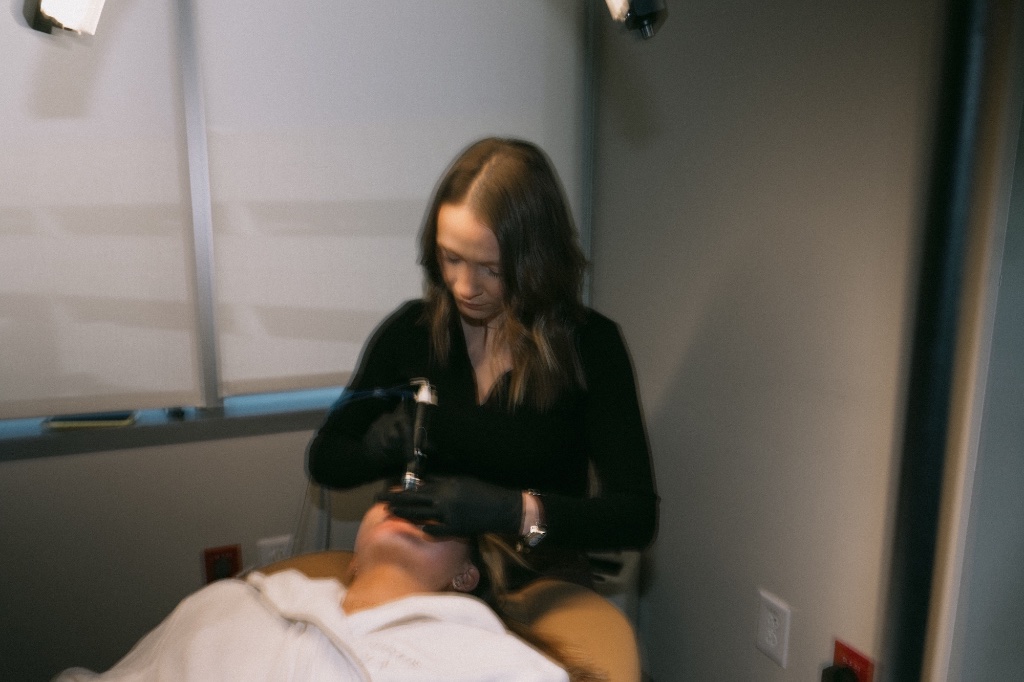
NATURAL RESULTS
A natural jawline result reads as the patient's own structure, better lit.
The face does not look wider, squarer or heavier. The edge is clearer, the neck angle cleaner, and nothing looks built. That is a more demanding outcome than a pronounced jaw, and it is the one worth aiming at.
Over-built jaws are among the most recognizable signs of overdone work, because the lower third is where a face is read at a glance. A border that has been widened and squared looks strong in a still photograph and wrong in motion, where the face is no longer behaving like a face.
A result that looks natural is not a result with no change. It is a result where the jawline participates in expression, where the region under the chin still looks like a neck rather than a shelf, and where the person still looks like themselves from the side as well as the front.
What makes a result look expensive →BALANCEDIS NOTBUILT.
BEFORE AND AFTER INTEGRITY
How photographs of the jawline should be taken
The lower face is unusually sensitive to camera distance, lens choice, head position and lighting direction. A small change in chin angle, or light arriving from a different height, changes how defined the edge reads without anything about the jaw changing.
Credible comparisons require the same camera, lens, distance, lighting, head position and expression. No deliberate chin lift in the after image. No lighting change to deepen or erase the shadow beneath the border. No digital whitening of the jawline. No AI-altered imagery. JOLA does not use AI-generated before and after images.
CHANGETHELIGHT.CHANGETHEEDGE.DOCUMENTTHERESULT.DON'TMANUFACTUREIT.
THE MYTH INDEX / 18
Eighteen things people believe about jawline definition
MYTH 01
A DEFINED JAWLINE MEANS A SHARP ONE.
REALITY
Definition is contrast. A soft, balanced edge can be well defined.
MYTH 02
JAWLINE FILLER ALWAYS SHARPENS THE FACE.
REALITY
In the wrong face it widens and heavies the lower third.
MYTH 03
THE JAWLINE IS ABOUT THE JAW.
REALITY
The chin often decides more of the edge than the jaw does.
MYTH 04
A DOUBLE CHIN IS ALWAYS FAT.
REALITY
Skin, chin position, posture and anatomy can all create fullness.
MYTH 05
SKIN TIGHTENING CREATES A JAWLINE.
REALITY
Tightening helps skin follow the bone. It does not build bone or projection.
MYTH 06
MASSETER BOTOX DEFINES THE JAWLINE.
REALITY
It can change width. Width and definition are different things.
MYTH 07
EVERY MAN SHOULD HAVE A SQUARE JAW.
REALITY
The goal is balance for the face in front of you, not a template.
MYTH 08
A SOFT JAWLINE IS A FLAW.
REALITY
A soft edge is one expression of facial anatomy.
MYTH 09
FILLER CAN REPLACE A FACELIFT FOR THE JAWLINE.
REALITY
Filler cannot reposition descended tissue or remove excess skin.
MYTH 10
MORE PRODUCT MEANS MORE DEFINITION.
REALITY
Over-built jaws are among the most recognizable signs of overdone work.
MYTH 11
JAWLINE AND JOWLS ARE THE SAME CONCERN.
REALITY
Jowls blur the edge. They are a related, separate conversation.
MYTH 12
THE FRONT CAMERA SHOWS YOUR REAL JAWLINE.
REALITY
Close-range lenses distort the lower face. A selfie is not an analysis.
MYTH 13
WEIGHT LOSS ALWAYS SHARPENS THE JAWLINE.
REALITY
It can also deflate the lower face and reveal laxity.
MYTH 14
SCULPTRA SCULPTS A JAWLINE.
REALITY
It builds gradual support. It is not a sculpting tool for a crisp edge.
MYTH 15
JAWLINE EXERCISES BUILD DEFINITION.
REALITY
Exercises do not change bone, skin firmness or descent.
MYTH 16
EVERYONE WITH A SOFT JAWLINE NEEDS TREATMENT.
REALITY
Sometimes the most valuable outcome of a consultation is clarity.
MYTH 17
ONE SYRINGE IS A PLAN.
REALITY
A syringe is a quantity. A plan starts with assessment.
MYTH 18
THE SEARCH TERM CHOOSES THE TREATMENT.
REALITY
The anatomy does.
THE JOLA PHILOSOPHY
JOLA doesn't treat a search term.
A patient who arrives asking about jawline filler may need a chin conversation, a skin conversation, a fullness conversation, a surgical conversation, or none at all. The treatment named in a search bar is a starting point, not a conclusion.
The philosophy behind this study is: anatomy before treatment. Diagnosis before device. Proportion before volume. Skin quality before filters. Refinement is not erasure.
Tightening is not building. Filling is not supporting. Width is not definition. When those distinctions stay clear, the plan that follows is smaller, better aimed, and easier to live with than the plan that begins with a product name.
Provider judgment →THECONSULTATIONIS WHERETHE SEARCHTERMBECOMESA PLAN.
DALLAS
Jawline definition assessment and treatment in Dallas
JOLA is a Dallas aesthetic practice offering an anatomy-first approach to the lower face. Patients from Highland Park, University Park, the Park Cities, Preston Hollow and across DFW come to JOLA when they want to understand why the edge softened before deciding what to do about it.
A plan for jawline contouring in Dallas may draw on dermal fillers, facial balancing, Sculptra, neuromodulators, XERF, K-LUXE, clinical skincare, or on none of them. When a goal is surgical, JOLA says so and recommends evaluation with an appropriately qualified surgical specialist.
Consultations begin with assessment rather than with a product recommendation, and treatment planning is staged so that each step has a reason to be there.
The JOLA consultation →THE BOTTOM LINE
Jawline Definition: The Bottom Line
A JAWLINEIS NOT A LINE.IT IS AN EDGEBETWEENTWO PLANES.
Two people can describe the same jawline in the same words. One has a chin that sits back, so the visible edge starts further in and reads shorter. Another has an angle that was never strongly defined, so the border never turned enough to be seen. Another has a clean border with fullness beneath it, and the shadow that made the edge visible is gone. Another has firm bone but skin that has lost the firmness to follow it. Another has tissue drifting across the border rather than sitting behind it. Another has a wide lower face with a perfectly adequate jaw, where the word undefined is describing width. Another is looking at a distorted close-range selfie of a jawline that has not changed at all.
SAME WORD.DIFFERENTANATOMY.
That is the central idea of this study. The word jawline is the least informative thing about the problem, because it describes an outcome rather than a cause. What is producing the softness decides the plan, and the candidates are few and distinct enough to be identified at assessment.
A JAWLINE IS NOT A LINE.IT IS AN EDGE BETWEENTWO PLANES.
Four distinctions carry most of the weight here. Definition is contrast, not sharpness. The edge is visible because the face plane and the neck plane are lit differently, and the goal is to restore that contrast rather than to add the most structure the face will accept. A jaw can read defined while remaining soft, and it can read undefined while being wide.
DEFINITION IS CONTRAST,NOT SHARPNESS.
The chin decides more of the jawline than the jaw does. The border runs from the chin back to the angle, so the front anchor sets where the visible edge begins. This is the finding patients are least likely to reach on their own, and the one that most often changes a plan from border treatment to a projection conversation.
THE CHINDECIDES MORETHAN THE JAW.
What blurs the edge is rarely on the edge. Fullness beneath the border fills the shadow, skin loses firmness over an unchanged jaw, and tissue descends across a border rather than behind it. Filling the border in those faces adds width and weight without restoring contrast, which is why the assessment looks at the space beneath the jaw and at the skin over it.
WHAT BLURSTHE EDGEIS RARELYON THE EDGE.
Tightening is not building, and width is not definition. Energy-based treatment improves how skin behaves over the bone; it does not add projection or create an angle. A bulky masseter widens the lower face; it does not produce an edge. And where tissue has genuinely descended, neither filling nor tightening repositions it, because position is not a quality that either treatment changes.
TIGHTENINGIS NOTBUILDING.WIDTH IS NOTDEFINITION.
YOU CANNOT FILL YOUR WAYOUT OF DESCENT.
The expectation that follows from all of this is deliberately unglamorous. A realistic jawline result is clearer and better balanced, not built and not snatched. The face does not gain a template jaw from a photograph. It gains a border that reads more clearly in profile, a cleaner neck angle, and a lower third that still looks like the person it belongs to.
BALANCED.NOTBUILT.
This is why assessment matters more here than almost anywhere else, and why the plan can end up somewhere the patient did not expect. JOLA may recommend a chin conversation rather than a jaw one. It may recommend the skin rather than the border. It may recommend a surgical evaluation, or a consultation with an orthodontist, or nothing at all. Each of those is a better answer than a treatment aimed at a word.
THE SEARCH TERMDOES NOTCHOOSETHE TREATMENT.THE ANATOMYDOES.
LUXURYIN THEDETAILS.
- A JAWLINE IS NOT A LINE.
- IT IS AN EDGE BETWEEN TWO PLANES.
- DEFINITION IS CONTRAST, NOT SHARPNESS.
- THE CHIN DECIDES MORE THAN THE JAW.
- WHAT BLURS THE EDGE IS RARELY ON THE EDGE.
- TIGHTENING IS NOT BUILDING.
- WIDTH IS NOT DEFINITION.
- YOU CANNOT FILL YOUR WAY OUT OF DESCENT.
- BALANCED, NOT BUILT.
- THE SEARCH TERM DOES NOT CHOOSE THE TREATMENT.
- THE ANATOMY DOES.
- LUXURY IN THE DETAILS.
A provider reads projection, structure, the shadow beneath the edge, skin firmness, tissue position, muscle and proportion before naming any tool. The plan may be one treatment, a staged combination, no treatment, or a surgical referral.
THE ARCHIVE / 69 QUESTIONS
Jawline definition and non-surgical contouring: frequently asked questions
69 matching questions
001Why is my jawline not defined?
A jawline reads as defined when there is contrast between the face plane and the shadowed neck plane beneath it. Several different things remove that contrast: a chin that sits back, a soft jaw angle, fullness under the chin filling the shadow, skin that has lost firmness, tissue drifting across the border, or a lower face that reads wide. Most people have more than one.
002Why did I lose my jawline?
It depends on what changed. If the skin has softened, the firmness component is involved. If the area under the chin looks fuller, the shadow is being filled. If the profile has changed at the front, chin projection is part of it. If the border looks scalloped rather than blurred, tissue position has begun to move. The change tells you which conversation to have.
003Does age soften the jawline?
It can, though not on a schedule. In the twenties and thirties a soft edge is more often structural, proportional, or a matter of posture. In the forties and fifties skin firmness and the shadow beneath the border start to change. From the sixties onward, tissue position and skin excess become the components most likely to dominate, and with them the surgical boundary.
004Can weight gain or loss change the jawline?
Yes, in both directions and not always the way people expect. Loss can sharpen an edge by reducing fullness under the chin, and it can also deflate the lower face, reveal laxity that was being carried, and leave the border reading softer than before. Gain tends to fill the shadow beneath the border. Where volume has moved, the plan follows the mechanism.
005Why does my jawline look different in photos?
Head position and camera distance change apparent definition more than most people expect. A close-range front camera enlarges whatever is nearest to the lens and flattens the lower face. A chin held slightly high removes the neck angle. Overhead lighting deepens or erases the shadow beneath the border. A selfie is a distorted measurement, not a facial analysis.
006Is a soft jawline genetic?
Structure has a strong inherited component. Jaw width at the angle, chin projection, how much soft tissue sits over the border, and where the hyoid sits are all substantially inherited. That is why some people have a soft edge at twenty-five that stays stable for decades, and why the useful question is not how old the face is but whether anything has actually changed.
007Does posture affect the jawline?
Posture changes how the jawline is read rather than changing the jaw. A head carried forward flattens the transition from under the chin into the neck, which makes the whole region look softer. Reversing it while sitting, standing and taking photographs changes the appearance meaningfully without any treatment at all.
008Is my jawline soft, or is my face just wide?
These are different findings and they are frequently confused. Width is how broad the lower face reads, which is often masseter muscle or bone. Definition is whether an edge is visible at the border. A lower face can be wide with a clear edge, or narrow with no edge at all. If the concern is width, the conversation belongs to a different study.
009Why does one side of my jawline look different?
Facial asymmetry is normal. Most faces differ between sides in structure, fat distribution, muscle activity and skin quality, and the difference is usually present in the bone rather than acquired. Sleep position and heavier sun exposure on one side can contribute gradually over years. A difference between sides is a finding worth noting, not a sign that something is wrong.
010Can my jawline change even though I have not gained weight?
Yes. Skin firmness can change without any change in weight, and so can tissue position. Fullness under the chin can also change through fluid, sleep, salt, alcohol or other causes that have nothing to do with fat. This is one reason two photographs taken a month apart can suggest a change that an assessment does not confirm.
011The edge looks scalloped rather than blurred. What does that mean?
A scalloped border, where the line is interrupted in front of the jaw angle rather than faded along its length, is more typical of early jowling than of skin or structure loss. It is a position finding rather than a quality finding, which is why it belongs alongside the jowl conversation rather than the tightening one.
012What is the mandibular border?
The mandibular border is the lower edge of the jawbone, running from the chin forward to the jaw angle at the back. It is the structure the visible jawline follows. What you see in the mirror is not the bone itself but the soft tissue over it and the shadow it casts, which is why a jaw can look soft while the bone is unchanged.
013What is the jaw angle?
The jaw angle, or gonial angle, is the back corner of the mandible where the lower border turns upward toward the ear. It is the point at which the jawline either turns and becomes readable or fades into the neck. Its shape is largely bony, while the tissue over it is muscle and soft tissue, which is why a wide masseter and a strong angle are two different findings.
014What is submental fullness?
Submental fullness is the fullness that sits beneath the chin, in the space between the chin and the neck. It is not one thing. Fat, the firmness of the skin containing it, the position of the chin in front of it, and inherited anatomy such as the height of the hyoid bone all contribute. It matters because it fills the shadow that makes the jawline visible.
015What is the platysma?
The platysma is a thin, broad sheet of muscle that runs from the upper chest and shoulder up over the neck and along the lower jaw. In some people its activity becomes visible as vertical bands in the neck or pulls downward along the jaw. Where that pull is part of the picture it can soften the lower border, which makes it a muscle finding rather than a skin or structure one.
016How does the chin affect the jawline?
The chin is the front anchor of the border, and it sets where the visible edge begins. A chin that sits back shortens the border, softens the neck angle and makes the area beneath it read fuller even with no extra fat present. This is why a projection conversation can do more for a jawline than treating the jaw, and why the profile is examined rather than the front.
017What is the difference between jaw width and jaw definition?
Width is how broad the lower face reads from the front, and it is driven largely by the masseter muscle and the bone at the angle. Definition is whether a visible edge exists along the border, and it depends on contrast between the face plane and the shadow beneath it. A wide jaw can be sharply defined, and a narrow jaw can have almost no edge.
018What is the pre-jowl sulcus?
The pre-jowl sulcus is the shallow hollow between the chin and the front of the jaw, immediately in front of where a jowl forms. When it deepens, the border loses the small platform beside it and the line appears to lengthen. It is a support finding rather than a skin or muscle one, and it is often the region where volume restoration changes the contour most.
019What does the shadow beneath the jawline have to do with it?
Everything. A jawline is visible because the face plane catches light differently from the neck plane beneath it. The edge you see is that transition. Anything that fills the shadow, whether fat, fluid or soft tissue, removes the contrast and the border stops reading even though the jaw has not changed at all.
020Why does the lower face look wider as I get older?
Several things can contribute. Skin can lose firmness and drape outward, soft tissue can descend and change where the widest point of the lower face sits, and the border can soften so that the eye reads the whole region as broader. This is a different finding from masseter-driven width, and the two are worth separating at assessment.
021What is the best non-surgical treatment for jawline definition?
There is no single best treatment, because there is no single cause. Where the chin sits back, projection is the finding. Where the angle lacks structure, supporting the border may help. Where fullness fills the shadow, address the fullness. Where firmness has changed, a tightening conversation. Assessment identifies which of the components is present, and the treatment follows that rather than the word jawline.
022What is jawline filler?
Jawline filler describes hyaluronic acid product placed along the mandibular border and at the jaw angle to add structure. It works best where the angle is genuinely underdeveloped and the skin over it still follows the bone. It works poorly where the edge is blurred by laxity, fullness or descent, because adding volume in those faces widens the lower third rather than sharpening the border.
023Can chin filler define the jawline?
In selected faces, yes, and sometimes more effectively than treating the jaw. The chin is the front anchor of the border, so restoring projection there lengthens the visible edge and sharpens the neck angle without any treatment directed at the jaw itself. Where the recession is skeletal rather than soft tissue, the appropriate conversation is orthodontic or surgical rather than injectable.
024Does XERF help the jawline?
XERF addresses the firmness component. Where the edge is blurred by mild skin laxity and the skin is no longer following the bone closely, energy-based tightening can improve how the border reads. It does not add projection, build an angle, reduce significant fullness, or reposition descended tissue. The detail on candidacy and expectations belongs to the XERF jawline study rather than here.
025Does K-LUXE help the jawline?
K-LUXE pairs XERF radiofrequency with ULTRA fractional laser, so it addresses firmness and surface quality together. It is most relevant along the jaw when skin quality is part of the picture as well as firmness, for example where photoaging has changed the texture of the lower face. Like XERF, it treats the skin rather than the structure beneath it, and it does not build an edge.
026Can Botox define the jawline?
A neuromodulator can change two things near the jawline, and neither of them is definition. Relaxing a bulky masseter reduces width at and in front of the jaw angle. Relaxing platysmal activity can reduce a downward pull along the neck and jaw in selected people. Both are used outside the muscles’ approved labeling, which makes them clinician-selected applications rather than on-label indications.
027Can skincare improve jawline definition?
Skincare supports skin quality, and skin quality is one of the seven components on the map. Consistent use can improve how firm, smooth and even the surface of the lower face looks, which changes how the border reads at the margin. It cannot add structural support, change tissue position or reduce fullness, so it is a supporting conversation rather than a treatment for a softened edge.
028Does Sculptra help jawline definition?
Sculptra builds gradual collagen-based support, and it may help where broad structural thinning along the jaw and lower face is part of the picture. It is not a tool for a crisp edge and it is not immediate; the change develops over months rather than appearing after one appointment. Where the goal is a specific border at a specific place, filler or another conversation is more likely to fit.
029Do jawline exercises work?
Exercises do not change bone, skin firmness or the position of soft tissue, which are three of the components that most often remove an edge. Muscles in the lower face can be strengthened, and strengthening them does not produce definition: in the case of the masseter, more muscle activity produces more width rather than a clearer border.
030Does mewing sharpen the jawline?
Mewing is a tongue-posture practice. It does not alter the mandible, chin projection, skin firmness or tissue position in an adult face. Where a jawline has softened for any of the reasons on the Profile Map, changing tongue posture does not address them. It costs nothing to try, and it should not replace an assessment of what actually changed.
031Do gua sha or jade rollers help?
These practices move fluid and can make the face look temporarily less puffy, which some people find makes the contour read more clearly for a short time. They do not change structure, skin firmness or tissue position. Where the concern is real fullness under the chin or a chin that sits back, the effect is a temporary one and the underlying finding is unchanged.
032Do jawline devices sold for home use work?
Home devices deliver a fraction of the energy of clinical treatments, and outcomes depend on the energy, the depth and the number of treatments. Some people report a temporary tightening sensation. They do not add projection, build a jaw angle or reposition tissue. It is reasonable to be skeptical of any home device advertised as producing the result of a clinical treatment.
033Can filler be used to correct a double chin?
Filler is not a treatment for fullness. Adding volume to the region under the chin generally makes fullness read larger rather than smaller. Where a recessed chin is contributing to how the under-chin area reads, restoring projection at the chin changes that appearance without treating the fullness at all, which is a different mechanism entirely.
034Chin filler or jawline filler: which do I need?
That is an assessment question, and the answer is often the chin. The chin is the front anchor of the border, so restoring projection there lengthens the visible edge and sharpens the neck angle. Jawline filler adds structure along the border itself and works best where the angle is underdeveloped and the skin is firm. In many faces one is more relevant than the other, and some need both.
035Jawline filler or skin tightening: which is right?
They address different components. Filler adds structural support, so it suits a border that never had enough structure or has lost it. Tightening improves how the skin behaves over the bone, so it suits an edge blurred by laxity. Where both are present, they may be staged rather than chosen between, and adding volume to a lax border usually makes the lower face heavier rather than sharper.
036Filler or Sculptra for the jawline?
Filler adds structure immediately at a specific place, which suits a defined finding such as a weak angle. Sculptra builds support gradually across a region, which suits broad structural thinning in the jaw and lower face. The change from filler appears at once and the change from a biostimulator develops over months. They do different things, and in some faces both belong to a staged plan.
037Non-surgical contouring or a facelift?
The distinction is position rather than quality. Non-surgical treatment adds structure and changes how skin behaves, and neither repositions descended tissue or removes excess skin. Where the jawline has been lost to significant descent or skin excess, the honest conversation is surgical. Where it has been lost to projection, structure, fullness or mild laxity, non-surgical options can genuinely help.
038Jawline or jowls: which is my concern?
They are adjacent and related but distinct. A jawline concern is about whether an edge is visible along the border. A jowl concern is about tissue crossing that border and interrupting it. Jowling often produces the impression of a soft jawline, which is why the two get conflated. The Lower Face Study covers jowls as a subject; here they appear as one of the seven components.
039Definition or slimming: what is the difference?
Definition is about creating or restoring a visible edge, usually by adding structure at the front anchor or along the border. Slimming is about reducing width, which in the lower face is most often masseter muscle or bone. Opposite directions of treatment can be indicated for two people who describe their concern in the same words, which is why the assessment comes first.
040XERF or K-LUXE for the jawline?
Both involve XERF radiofrequency, and K-LUXE adds ULTRA fractional laser alongside it. Where firmness alone is the finding, XERF addresses it. Where surface quality and pigmentation along the lower face are also part of the picture, pairing the two treats both rather than staging them. The choice is about how many components are present, not about which is stronger.
041Am I a candidate for non-surgical jawline contouring?
You are a candidate if the cause of the softening is one a non-surgical option reaches: a chin that needs a small amount of projection, an angle that lacks structure, mild skin laxity along the border, or mild fullness beneath it. Candidacy is a question about mechanism rather than about wanting a sharper jawline, and it is answered by looking at the profile.
042Am I too young for jawline treatment?
Age is not the criterion. Many people in their twenties have a soft jawline because of how the face is built, and nothing about it needs correcting. Where a young face has a genuine structural finding such as a recessed chin or a weak angle and the skin is firm, a conversation about structure is reasonable. Where nothing has changed, the honest answer is that nothing needs to change.
043Can men treat their jawline?
Yes, and the anatomy is the same. Male jaws are on average wider at the angle and the soft tissue over them is distributed differently, which changes what balance looks like but not the logic of the assessment. What is not useful is a template. A maximally wide, squared border is not automatically better on a man, and treating toward one is how results start to look borrowed.
044What if I already have jowls?
It depends on how far the change has gone. Mild jowling can sometimes be camouflaged by changing the contour around it, at the pre-jowl region and the chin, and mild laxity can be addressed with tightening. Significant jowling is a position finding, and neither filler nor energy-based treatment repositions descended tissue. Where that is the case, the honest conversation includes surgical evaluation.
045What if I have a double chin as well?
The two are related and the cause matters. Where fullness under the chin is filling the shadow, that is a separate conversation from the border itself, and the assessment establishes whether fat, skin firmness, chin position or anatomy is producing it. Where the practice does not offer a treatment appropriate to the finding, saying so plainly is more useful than describing an alternative.
046What if my chin is very recessed?
Then the conversation may not be an injectable one. A chin that sits substantially back because of how the skeleton is built is an orthodontic or surgical question, and a clinician should refer rather than treat around it. Where the recession is modest or largely soft tissue, projection can be a genuine part of a jawline plan. The distinction between skeletal and soft-tissue position is the pivotal one.
047Will a jawline result look natural?
That is the standard JOLA aims at, and it requires restraint. A natural result reads as the patient’s own structure, better lit: the edge is clearer, the neck angle cleaner, and nothing looks built. A border that has been widened and squared reads as strong in a still photograph and wrong in motion. Balanced rather than built is the goal.
048Will treatment make my face look wider?
It can, and that is the most common disappointing outcome when the target was wrong. Adding volume to a border blurred by laxity, fullness or descent widens the lower third rather than sharpening it. This is why assessment identifies which component is present first: in some faces the answer is the chin, in some it is the skin, and in some it is nothing at all.
049How soon will I see a change?
It depends on the category. Structural volume changes how the border reads within days once swelling has settled. A muscle effect takes a couple of weeks to develop. A collagen-based response develops over months rather than immediately, and energy-based tightening continues to change over a period. Expecting a single timeline for all of them leads to disappointment in at least one.
050Can I get a snatched jawline?
A snatched jawline is a specific visual outcome that suits a small number of faces, and JOLA will say plainly when it does not suit the one in front of it. Pursuing it generally means adding more structure than a face can carry, which produces exactly the squared, over-built lower third the phrase is usually contrasted against. Defined and balanced is the realistic and more durable goal.
051What is downtime like after jawline filler?
Expect some bruising and swelling in the region, which is more likely here than in many areas because the jaw moves and the tissue is mobile. Swelling settles over several days and bruising can take longer to fade. Most people are back to normal activity quickly. Filler placed along the border will not look like its final result until the initial swelling has resolved.
052What is downtime like after XERF?
XERF is non-invasive radiofrequency, so there is no wound and no needle. Expect warmth and some redness in the treated area, and possibly mild sensitivity for a short period. Many people return to ordinary activity the same day. Because it is not a resurfacing treatment, there is usually nothing to conceal, though individual responses vary and the treating provider sets the expectations.
053What is downtime like after a neuromodulator?
There is essentially no visible downtime from the injection itself beyond possible small marks at the injection points, which resolve quickly. The effect develops over about two weeks. Where a masseter or platysma treatment has been used, changes in how the lower face or neck moves appear on that same timescale rather than immediately.
054Can I have jawline treatment before an event?
Generally yes for a neuromodulator if the appointment is far enough ahead for the effect to develop and settle, and for filler if there is time for bruising and swelling to resolve. Energy-based treatments usually require less concealment. The specifics depend on the treatment and the individual, and the timing conversation belongs at consultation rather than in an article.
055What are the risks of jawline filler?
Bruising, swelling, asymmetry, lumps, and widening or heaviness are the more common outcomes. The border sits near named vessels, so the recognised risk of vascular compromise applies, and it is a medical emergency rather than a cosmetic complication when it occurs. Injector training, anatomical knowledge and a plan for managing a vascular event are the reasons an experienced provider matters in this region.
056What is vascular occlusion?
Vascular occlusion happens when product blocks a blood vessel. Tissue supplied by that vessel can be deprived of blood, which is why it is treated as an emergency rather than as a side effect. It is uncommon, it is more likely in regions with a dense vascular network, and the jawline is one of those regions. Recognising it early depends on the provider knowing the signs and what to do.
057Can jawline filler be dissolved?
Hyaluronic acid filler can be dissolved with an enzyme, which is one reason it is the most common choice in a region where over-treatment is difficult to disguise. Dissolving is a clinical procedure with its own considerations, and it is not an instant or risk-free reversal. Understanding that it is possible is part of the safety conversation, not a substitute for conservative placement.
058What are the risks of RF tightening?
Common effects are temporary: redness and warmth in the treated area, and some sensitivity. Burns and changes in skin texture are uncommon, and they are associated with energy that was inappropriate for the skin being treated. That is why device settings belong to the provider and the assessment rather than to a fixed protocol, and why energy level is not a measure of quality.
059What are the risks of neuromodulators in the lower face and neck?
The muscles here are small, close together, and do different things. Placement that reaches beyond the intended muscle can change how a smile reads, how the lower lip moves, or how the neck behaves. These effects are temporary but visible while they last. Masseter and platysma uses sit outside approved labeling, which is why they are clinician-selected applications requiring specific experience.
060How long does each treatment category last?
Structural volume is the most durable of the immediate changes, though how long it lasts depends on the product, the area, the individual and how much the region moves. A muscle effect fades gradually as activity returns. A collagen-based response develops and then remodels along with the rest of the face. None of them stops the changes that were already underway, which is why maintenance is a conversation.
061How often will I need to come back?
There is no schedule that applies to everyone. The useful rhythm is assessment-led: look at the edge, compare it with the plan, and decide whether anything is needed now. Maintenance for a muscle finding behaves differently from maintenance for structure, and treating them on the same calendar guarantees that one of them is being done at the wrong time.
062What happens if I stop?
The face continues from where it is. A muscle effect fades and activity returns. Volume that was placed gradually diminishes as the product is absorbed. A collagen response changes with the face over time. Nothing reverses suddenly and nothing is harmed by stopping, though the contour will return toward what it would have been. This is a reasonable thing to establish before starting rather than after.
063What affects the cost of jawline contouring?
The treatment category, the quantity appropriate to the face, the number of regions involved, whether treatments are combined, and how maintenance is planned. A plan addressing the chin and the border costs more than one addressing the chin alone, and an energy-based plan and a filler plan are priced on different bases, so comparing the two by invoice alone compares nothing meaningful.
064Why does JOLA not list prices online?
Because a price without an assessment is a number for an undefined treatment. The quantity and the regions are clinical conclusions reached by examining the face, and they differ between two people who describe their concern in identical words. A quote is useful against a plan, which is why the consultation is the step that produces a real figure.
065What happens at a JOLA consultation for jawline definition?
An assessment rather than a product recommendation. The face is looked at in profile as well as from the front, because several of the components on the Profile Map are invisible in a frontal view. Position at the front, structure at the angle, the shadow beneath the border, skin firmness, tissue position, muscle activity and proportion are each considered, and only then is a plan named.
066How do I book at JOLA?
Booking is online through the practice scheduler, and the link appears in several places on this page. The consultation is the appointment that produces a plan, so it is the appropriate first step, including where the outcome is a recommendation not to treat.
067Do you see patients from Highland Park, University Park and Preston Hollow?
Yes. JOLA is a Dallas practice and sees patients from Highland Park, University Park, the Park Cities, Preston Hollow and across DFW. Distance is not usually the deciding factor in jawline assessment, because the findings are established in the first consultation and the plan is staged from there.
068What should I bring to a jawline consultation?
Profile photographs are genuinely useful, and they are the one thing most patients do not think to bring. A left and right profile taken at mirror distance in even light shows a clinician far more than a front-facing phone photograph. If a change is the concern, older photographs are worth bringing too, since they establish whether anything has actually changed.
069Can I have a consultation about my jawline without committing to treatment?
Yes. Assessment and treatment are separate decisions, and a consultation frequently ends with a conclusion that nothing needs to be done, or that the relevant conversation is with a surgeon rather than an injector. Where a face does not need treatment, saying so is a real answer rather than a deflection.