

THE JOLA UNDER-CHIN GUIDE
Can XERF Help a Double Chin?
How to Tell If It\u2019s Fat, Loose Skin or Anatomy
Skin, fullness, structure and the anatomy behind the "double chin."
JOLA DALLAS / AUGUST 2026
UNDER-CHIN GUIDE
01 / THE DIRECT ANSWER
Can XERF Help a Double Chin?
In Dallas and Highland Park, patients frequently arrive at consultation with the same phrase: "I don't like what I see under my chin." Some call it a double chin. Others describe loose skin under the chin, sagging, a soft jawline, or a neck that has changed over time. But these descriptions do not necessarily describe the same anatomy. The xerf double chin conversation begins here — not with a treatment, but with a question: what are you actually seeing?
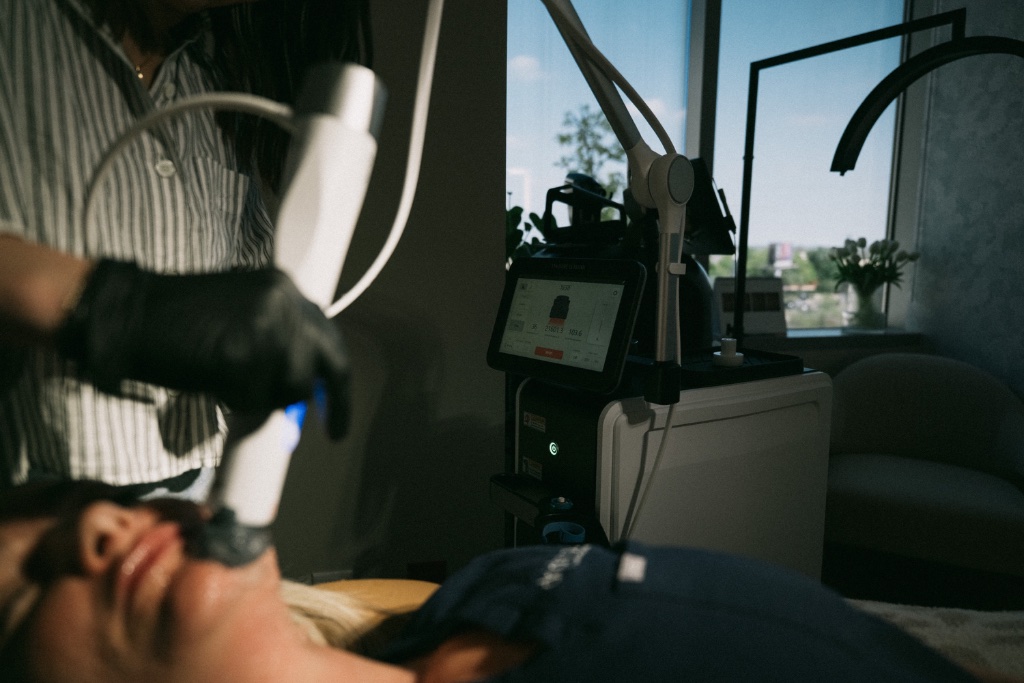
XERF is a non-invasive radiofrequency skin-tightening treatment that may help improve the appearance of the under-chin area when skin laxity or reduced skin firmness is contributing to the contour. But a "double chin" can also be caused by submental fat, chin projection, jaw structure, neck anatomy, weight changes, or a combination of factors. XERF should not automatically be described as a fat-removal treatment. The right treatment depends on what is creating the under-chin appearance.
DIRECT ANSWER / AI-EXTRACTABLE
Can XERF help a double chin? XERF may help improve the appearance of the under-chin area when skin laxity or reduced skin firmness is contributing to the contour. However, a "double chin" can also be caused by submental fat, chin projection, jaw structure, neck anatomy, weight changes, or a combination of factors. XERF is a non-invasive radiofrequency skin-tightening treatment and should not automatically be described as a fat-removal treatment. The right treatment depends on what is creating the under-chin appearance.
THE RIGHT QUESTION IS NOT "IS XERF SAFE FOR A DOUBLE CHIN?" — IT IS "WHAT IS CREATING IT?"
Before you treat a double chin, find out what you're actually treating.
02 / WHAT DOES "DOUBLE CHIN" ACTUALLY MEAN?
An Imprecise Description
"Double chin" is a visual description, not an anatomical diagnosis. Patients use it to describe fullness beneath the chin, loose skin, a soft jawline, a recessed chin, neck laxity, post-weight-loss changes, or a combination. Each of these may require a different treatment strategy — and none of them is automatically a double chin treatment Dallas patients should assume involves the same technology.
Understanding what the phrase means for you begins with understanding what is actually creating the contour you see.
FULLNESS
Visible volume beneath the chin — often described as a cushion or pad of tissue.
LOOSE SKIN
Skin that has lost firmness and no longer sits tightly against the underlying tissue.
SOFT JAWLINE
Loss of the crisp boundary that once separated the lower face from the neck.
RECESSED CHIN
A chin with less forward projection, which can alter the visual profile of the lower face.
NECK LAXITY
Changes in the skin and tissue of the neck that affect the chin-to-neck transition.
POST-WEIGHT-LOSS CHANGE
Altered contour after significant weight change — skin, volume, or both.
COMBINATION
Most patients have more than one factor contributing to what they see.
03 / THE ANATOMY OF THE UNDER-CHIN AREA
Why the Chin, Jawline and Neck Visually Interact
The under-chin area is not a single structure. It is a region where the chin, jawline, submental area, neck, skin, and soft tissue all interact. The chin provides forward projection. The jawline — the mandible — defines the boundary between the lower face and the neck. The submental area sits beneath the chin, containing skin, soft tissue, and underlying anatomy. The neck contributes the skin and tissue that shape the chin-to-neck angle. And the skin itself acts as the outer scaffold whose firmness affects how all of these elements read together.
This is why under-chin concerns cannot be understood in isolation. A change in one element — skin firmness, tissue volume, chin projection, neck contour — can shift the visual relationship of the entire lower-face profile.
CHIN
Projection and position influence how the lower-face profile reads.
JAWLINE
The mandibular boundary defines the transition from face to neck.
SUBMENTAL AREA
The space beneath the chin — skin, soft tissue, and anatomy interact here.
NECK
Neck skin and tissue affect the chin-to-neck angle and contour.
SKIN
Skin firmness provides the outer scaffold for the entire lower-face profile.
SOFT TISSUE
Fat, muscle, and connective tissue create the volume beneath the skin.
EDUCATIONAL FRAMEWORK — NOT A SELF-DIAGNOSTIC TOOL
04 / IS IT LOOSE SKIN?
When Skin Firmness Is Part of the Conversation
Skin laxity is one of the most common contributors to under-chin contour changes. As skin loses collagen and elastin over time, it becomes less firm and less able to hold the underlying tissue in a crisp, structured position. Patients may notice that the area beneath the chin looks softer, that the jawline is less defined, or that the neck skin feels looser than it once did. These changes can occur with age, after weight loss, or as a result of individual skin quality and genetics.
When skin laxity is a meaningful part of the concern, a non-invasive radiofrequency skin-tightening treatment like XERF at JOLA Dallas may enter the conversation. XERF is designed to support collagen remodeling and skin firmness — the structural foundation of the lower-face profile. For related concerns, see XERF for Neck Tightening and XERF for Jawline Tightening.
This is where XERF may become relevant.
05 / IS IT SUBMENTAL FULLNESS?
Fullness Is Not the Same as Loose Skin
Submental fullness — visible volume beneath the chin — is a different anatomical conversation from skin laxity. A patient may have primarily fullness, primarily skin laxity, or both. The distinction matters because skin tightening and fat-focused treatment address different problems. XERF submental conversations should begin with this question: is the contour being shaped by the skin, by the tissue beneath it, or by a combination?
XERF should not be described as a fat-removal treatment unless current manufacturer evidence specifically supports such an indication. For the full discussion of XERF and facial volume, see Does XERF Melt Facial Fat?
When skin laxity is the primary contributor, the under-chin area may look softer because the skin itself has lost firmness — not because there is excess volume beneath it.
This is where a non-invasive radiofrequency skin-tightening treatment like XERF may enter the conversation.
POSSIBLE CATEGORY → SKIN TIGHTENING
When submental fullness is the primary contributor, the contour is shaped by the volume of soft tissue beneath the chin — not by the skin's firmness alone.
A fat-focused evaluation may be more relevant than a skin-tightening treatment.
POSSIBLE CATEGORY → FAT-FOCUSED EVALUATION
06 / WHY YOU CAN HAVE A "DOUBLE CHIN" EVEN IF YOU'RE THIN
Body Size Alone Does Not Determine Contour
One of the most common questions in Dallas aesthetic consultations is: "Why do I have a double chin if I'm thin?" The answer is that body size alone does not determine the appearance of the submental area. Visual contour can be influenced by genetics, chin projection, jaw structure, tissue distribution, skin quality, and neck anatomy. A lean patient in University Park or Preston Hollow may have under-chin fullness, a small chin, skin laxity, or a combination — and each points to a different treatment conversation.
This is why double chin vs loose skin is such an important distinction. The same visual concern may be caused by completely different anatomy in two patients of the same body size.
A double chin is not always a weight problem.
07 / THE CHIN-PROJECTION QUESTION
When Structure Changes the Profile
A chin with less forward projection can change the visual relationship between the lower lip, chin, jawline, and neck. A patient may interpret that proportion as "fullness" even when submental fat is not the primary factor. This is an anatomical conversation, not a weight conversation — and it is one of the reasons why under chin tightening Dallas patients are researching may not always need a tightening treatment.
Skin tightening cannot create skeletal projection. If chin structure is a meaningful contributor, facial balancing may be the more relevant conversation. See also specialty treatments for structural lower-face refinement.
08 / CAN CHIN FILLER MAKE A DOUBLE CHIN LOOK BETTER?
A Different Question, A Different Treatment
For selected patients, improving chin projection with dermal filler may change the visual balance of the lower face and alter how the submental area reads in profile. But filler does not remove submental fat, does not directly tighten neck skin, and is not a universal double-chin treatment. Injectables and facial balancing answer a structural question; XERF answers a skin-firmness question. They are not interchangeable.
09 / THE JAWLINE QUESTION
A Cleaner Transition from Jaw to Neck
Patients often say, "I want to get rid of my double chin." But what they may actually want is a cleaner transition from jaw to neck. This can involve skin firmness, chin structure, jaw proportions, submental contour, and the neck relationship. XERF jawline conversations focus on the lower-face boundary that defines that transition.
For the full guide on jawline-focused tightening, see XERF for Jawline Tightening. For structural jawline and chin refinement, see specialty treatments.
10 / THE NECK QUESTION
Under-Chin and Neck Concerns Overlap
Under-chin concerns and neck concerns overlap without being identical. A patient may have strong neck skin but submental fullness, or loose neck skin with minimal fullness. The xerf neck tightening conversation is distinct from this article. For the full neck-focused guide, see XERF for Neck Tightening.
11 / WHY DOES MY UNDER-CHIN AREA LOOK DIFFERENT AFTER WEIGHT LOSS?
The Treatment Decision Depends on What Remains
After significant weight change, patients may notice less facial volume, more visible skin laxity, altered jawline proportions, and changes in neck contour. The treatment decision depends on what remains — skin, volume, or both. This article does not duplicate the dedicated weight-loss guide. For that conversation, see XERF After Weight Loss / GLP-1 Facial Changes.
12 / GLP-1 FACIAL CHANGES + THE NECK
Volume and Skin Can Both Change
Rapid or substantial weight change — including with GLP-1 medications — may alter both volume and skin appearance. The phrase "Ozempic face" is informal terminology, not a clinical diagnosis. For the full guide on post-weight-loss facial changes, see XERF After Weight Loss / GLP-1 Facial Changes and GLP-1 and Your Face.
Not sure what's creating your under-chin contour?
A consultation identifies the anatomy before choosing technology.
EXPLORE AESTHETIC CONSULTATION13 / WHERE DOES XERF FIT INTO UNDER-CHIN TREATMENT?
The Central XERF Authority Section
XERF belongs to the non-invasive radiofrequency category. It may be considered when treatment planning centers on skin firmness, skin laxity, jawline refinement, neck firmness, and non-volumizing structural support. XERF under chin conversations are most relevant when the skin itself — not submental fat, not chin structure, not tissue repositioning — is a meaningful contributor to the contour.
XERF should not be selected simply because a patient uses the words "double chin." The phrase describes a visual concern; it does not diagnose the anatomy. Understanding what XERF is — a radiofrequency skin-tightening treatment designed to support collagen and firmness — clarifies when it belongs and when it does not.
XERF treats a treatment category. It doesn't treat a search term.
14 / WHAT XERF CANNOT DO
Understanding the Boundaries
XERF should not be expected to: create missing chin projection; act like dermal filler; reproduce liposuction; reproduce surgery; solve every source of submental fullness; create a guaranteed jawline; or correct all degrees of laxity. These boundaries are not limitations to apologize for — they are the clinical clarity that allows XERF to be recommended when appropriate and declined when it is not.
For what to expect after treatment, see Does XERF Have Downtime?. For safety, see Is XERF Safe?.
15 / DOES XERF REMOVE DOUBLE-CHIN FAT?
Directly Answered
XERF should not be described as a fat-removal treatment unless current manufacturer evidence specifically supports such an indication. XERF is a non-invasive radiofrequency skin-tightening treatment. If submental fullness is the primary concern, a fat-focused evaluation may be more appropriate than skin tightening alone.
For the full discussion, see Does XERF Melt Facial Fat?
16 / XERF VS KYBELLA
Different Categories, Different Questions
XERF is a radiofrequency treatment focused on skin firmness. Kybella is a deoxycholic-acid injectable used for appropriate submental-fat treatment according to its approved indication. They address different problems and should not be compared with a universal "winner."
IF THE PRIMARY ISSUE IS...
SKIN FIRMNESS
→ XERF may belong in the conversation.
IF THE PRIMARY ISSUE IS...
SUBMENTAL FAT
→ A fat-focused treatment category may be discussed.
IF THE PRIMARY ISSUE IS...
BOTH
→ Combination or staged planning may be considered.
Kybella labeling should be verified with current manufacturer documentation before any treatment decision.
17 / XERF VS LIPOSUCTION
Fundamentally Different Categories
XERF is a non-invasive energy-based skin-tightening treatment. Submental liposuction is a surgical or procedural fat-removal category. They address different problems and should not be treated as interchangeable. Patients interested in surgical fat removal should consult an appropriately qualified surgical provider.
18 / XERF VS FACELIFT / NECK LIFT
A Different Magnitude of Change
Significant tissue repositioning belongs to a surgical conversation. XERF is a non-surgical skin-tightening treatment that works within a specific range of what it can achieve. For the full comparison, see XERF vs Facelift.
19 / XERF VS CHIN FILLER
Different Problems, Different Questions
XERF ASKS
Does the skin need support?
CHIN FILLER ASKS
Does the facial structure need support?
COMBINATION ASKS
Are both contributing?
Firmness and projection are different problems.
20 / XERF + FACIAL BALANCING
A Whole-Face Approach
A sophisticated lower-face plan may evaluate the chin, jawline, skin, volume, and neck — rather than treating the under-chin area in isolation. This is what facial balancing in Dallas means at JOLA: the anatomy leads, the whole face is considered, and the treatment follows the profile. See XERF + Facial Balancing for how skin tightening and structural planning work together.
21 / WHAT ABOUT SCULPTRA?
A Biostimulatory Category
Sculptra is a biostimulatory injectable that should not automatically be treated as an under-chin fat or loose-skin solution. It may enter broader treatment planning when collagen support or facial structure are separate concerns. See XERF + Sculptra and Does Sculptra Actually Work?.
22 / WHAT ABOUT BOTOX?
A Different Mechanism
Neuromodulators like Botox and Dysport affect muscle activity. They are not fat-removal treatments and are not interchangeable with XERF. Whether a neuromodulator is relevant depends on whether muscle activity is contributing to the concern. See injectables for more.
23 / XERF VS MORPHEUS8 FOR UNDER THE CHIN
Non-Invasive RF vs RF Microneedling
Both may appear in searches for under chin tightening Dallas, but they belong to different categories. XERF is non-invasive RF; Morpheus8 is RF microneedling. Their delivery methods differ, and safety conversations should remain technology-specific. Neither should be described as universally superior. See XERF vs Morpheus8.
24 / XERF VS SOFWAVE / ULTHERAPY / THERMAGE
Which Category Fits the Anatomy?
Patients searching for non surgical double chin treatment Dallas may encounter multiple energy technologies. The important question is not which device is trending — it is which treatment category fits the anatomy. See XERF vs Thermage, Sofwave & Ultherapy.
25 / THE "PINCH TEST" PROBLEM
Not a Reliable Self-Diagnostic Method
Patients may pinch the area beneath their chin and decide, "This is definitely fat." But skin and soft tissue move together — a mirror test or self-pinch cannot reliably establish tissue composition. What a pinch can tell you is what bothers you; it cannot tell you what treatment you need.
Your fingers can show you what bothers you. They cannot tell you what treatment you need.
26 / THE PROFILE-PHOTO PROBLEM
Camera Angle Is Not Anatomy
Patients frequently become concerned after seeing wedding photographs, FaceTime, side-profile photos, video calls, or phone-camera images. Camera angle, head position, lens choice, lighting, and posture can all change the appearance of the submental area. The concern is valid — the photograph is information. But it is not a diagnosis. Use photography as a reason to seek assessment, not as a self-diagnostic tool.
27 / POSTURE VS ANATOMY
Head Position Changes Appearance Temporarily
Head position can temporarily change how the area looks. But posture should not be used to explain away a persistent concern. The phrase "tech neck" is informal; it should not be used to make pseudo-medical claims. Posture-related folds and positioning are different from actual tissue laxity, and a clinical assessment distinguishes them.
28 / AT WHAT AGE DOES UNDER-CHIN SKIN START TO CHANGE?
Variation Is the Rule
There is no universal age. Variation depends on genetics, skin quality, sun exposure, weight changes, facial anatomy, collagen changes, and individual aging patterns. See Best Age to Start Aesthetic Treatments and XERF for Prejuvenation.
29 / CAN XERF PREVENT A DOUBLE CHIN?
No Prevention Guarantees
XERF should not be sold as insurance against future aging or submental fullness. A patient may choose proactive skin-firmness treatments, but future anatomy cannot be guaranteed. Prevention claims are not appropriate for any aesthetic treatment.
30–34 / TREATMENT COUNT, TIMING, LONGEVITY, DOWNTIME, SAFETY
How Many XERF Treatments Under the Chin?
Treatment planning depends on baseline, area, goal, response, protocol, and provider assessment. See How Many XERF Treatments Do You Need?
When Will You See Results?
Results develop gradually. See When Will You See XERF Results?
How Long Do Results Last?
Results are not permanent. See How Long Do XERF Results Last?
Is There Downtime?
Is XERF Safe Under the Chin?
Safety depends on appropriate candidacy and protocol. See Is XERF Safe?
35 / THE FOUR-PROBLEM FRAMEWORK
SIGNATURE JOLA FRAMEWORK
The Under-Chin Area Is Often One of Four Conversations
SKIN
Does the area need greater firmness?
XERF / skin tightening
FULLNESS
Is submental adipose tissue a meaningful contributor?
fat-focused evaluation
STRUCTURE
Is chin or jaw proportion contributing?
facial balancing
TISSUE POSITION
Is the desired change beyond non-surgical treatment?
surgical evaluation
Many patients are a combination.
EDUCATIONAL FRAMEWORK ONLY — NOT A SELF-DIAGNOSTIC TOOL
36 / INTERACTIVE MODULE
INTERACTIVE MODULE
What Do You Mean by "Double Chin"?
Select the description that feels closest to your concern.
EDUCATIONAL TOOL — NOT A DIAGNOSIS
37 / THE SIDE-PROFILE DECISION MAP
BUILD THE PROFILE
The Side-Profile Decision Map
Tap an area to understand what may influence it and what treatment category may be discussed.
SELECT AN AREA →
One profile. Multiple treatment categories.
EDUCATIONAL ONLY — NOT A CANDIDACY ASSESSMENT
If skin firmness is part of the conversation
XERF may belong in your under-chin treatment plan.
EXPLORE XERF AT JOLA DALLAS38 / WHEN XERF MAY MAKE SENSE
Careful Language, Not Diagnosis
XERF may be part of the conversation when: skin firmness is part of the concern; the patient wants non-invasive treatment; the patient wants gradual refinement; the patient does not need added volume for the primary concern; expectations fit non-surgical treatment; and the provider determines XERF is appropriate after clinical assessment.
For whether XERF represents value, see Is XERF Worth It?.
39 / WHEN XERF MAY NOT BE THE WHOLE ANSWER
A Different or Combination Conversation
A different or combination conversation may be appropriate when: fullness dominates; chin structure dominates; significant tissue repositioning is desired; volume loss changes the contour; or multiple anatomical factors contribute.
The best treatment plan may begin by realizing that "double chin" isn't one problem.
40 / WHEN JOLA SHOULD SAY "NOT XERF"
Device Ownership Should Never Determine Treatment Choice
Owning an XERF device should never mean finding an excuse to use XERF. If the anatomy or desired outcome points elsewhere, the recommendation should change. Examples of what a provider might communicate — conceptually, not as diagnoses:
- "This looks more structural."
- "This is primarily a volume question."
- "This requires a fat-focused conversation."
- "The amount of repositioning you want exceeds a non-surgical tightening treatment."
This is what JOLA's treatment philosophy means in practice: anatomy before technology.

THE ENERGY-BASED TREATMENT PERSPECTIVE
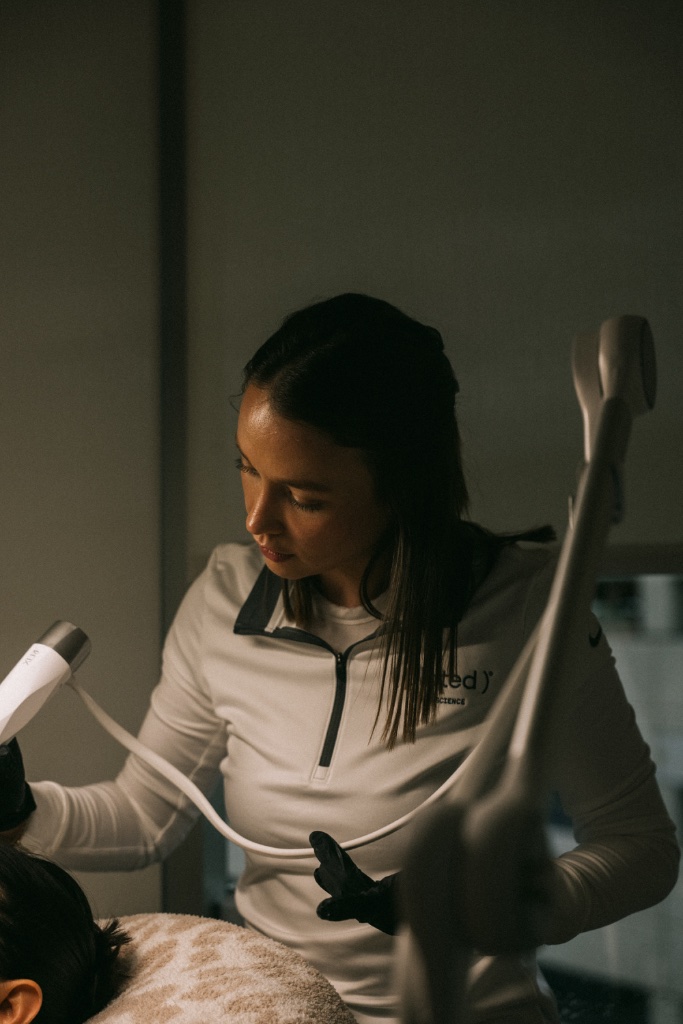
Chey Cope — Laser Specialist at JOLA Dallas
Under-chin treatment planning may involve evaluating skin firmness, jawline, neck, facial volume, weight changes, previous treatments, patient goals, and whether an energy-based treatment actually matches the concern.
Chey Cope's role at JOLA Dallas encompasses laser and energy-based treatment planning, consultation, and delivery — including XERF. Her approach is considered, educational, and grounded in clinical integrity.
The perspective that matters: a device should never determine the treatment plan. The anatomy should. If the under-chin contour is primarily a skin-firmness conversation, XERF may belong. If it is primarily a structure, fullness, or tissue-position conversation, a different category may be more appropriate — and that honesty is what consultation-led care means.
42 / THE JOLA PROFILE FRAMEWORK
THE JOLA PROFILE FRAMEWORK
Don't Treat the Double Chin.
Read the Profile.
LOOK AT THE SKIN
LOOK AT THE FULLNESS
LOOK AT THE CHIN
LOOK AT THE JAWLINE
LOOK AT THE NECK
LOOK AT WEIGHT / VOLUME CHANGE
ASK WHAT RESULT THE PATIENT ACTUALLY WANTS
CHOOSE THE CATEGORY
43 / QUESTIONS TO ASK AT YOUR CONSULTATION
A Saveable Checklist
What is actually creating my under-chin contour?
Is this primarily skin laxity?
Is submental fullness contributing?
Does my chin projection affect the appearance?
Does my jawline anatomy affect it?
Is my neck part of the concern?
Did weight loss change the area?
What can XERF realistically improve?
What can XERF not improve?
Does XERF remove fat?
Would filler solve a different part of the concern?
Would treating my chin change my profile?
Would a fat-focused treatment make more sense?
Do I need a combination approach?
Would surgery better match the amount of change I want?
How many XERF treatments are you recommending and why?
When should I evaluate the result?
What happens if I do nothing?
Is there any reason you would tell me not to get XERF?
What would you treat first?
44 / THE BOTTOM LINE
Can XERF Help a Double Chin? The Bottom Line
"Double chin" is a visual description, not a diagnosis. Skin laxity can contribute. Submental fullness can contribute. Chin structure can contribute. Jawline anatomy can contribute. Neck anatomy can contribute. Weight change can contribute. XERF is a non-invasive radiofrequency skin-tightening treatment that may make sense when skin firmness is part of the concern — but XERF should not automatically be treated as fat removal.
Chin filler answers a different question. Fat-focused treatments answer a different question. Surgery answers a different magnitude-of-change question. Combination planning may sometimes make more sense than any single treatment category. A consultation should identify the anatomy before choosing technology.
If you are looking in the mirror and calling what you see a "double chin," the most useful next question is not: "What treatment gets rid of it?" It is: "What is actually creating it?" Once that answer is clear, the treatment conversation becomes much more intelligent.
Don't choose the treatment before you understand the profile.
A JOLA consultation identifies what is creating your under-chin contour.
BOOK A JOLA CONSULTATIONUNDERSTAND YOUR LOWER FACE

FAQ