

THE JOLA XERF GUIDE
YOUR FACE CHANGED.
The Answer Isn't
Automatically Filler.
How to think about skin, volume, jawline, and XERF after significant weight loss.
SCROLL
01 / THE JOLA XERF ANSWER
Can XERF Help After Significant Weight Loss?
XERF may become part of the conversation when the concern includes skin firmness, lower-face softness, jawline definition, or neck laxity. Significant weight loss can change facial volume, proportions, skin quality, and the relationship between the face and neck—and XERF does not replace lost facial volume. A patient whose primary issue is volume loss may require a different treatment category, while some patients may benefit from a staged plan involving skin tightening, facial balancing, biostimulatory treatment, skincare, or other options. At JOLA Dallas, located in Highland Park, treatment should be based on anatomy and stable goals rather than the label "Ozempic face."
Facial changes after weight loss are often multidimensional. The patient may also have volume loss, temple hollowing, midface changes, under-eye changes, changes in facial proportion, or skin-quality concerns. This is why JOLA evaluates the whole face rather than treating every post-weight-loss change as a tightening problem.
02 / WHAT ACTUALLY CHANGES IN THE FACE?
What Actually Changes in the Face
After Weight Loss?
01
TEMPLES
Temple hollowing may become more visible, affecting the upper-face frame.
02
UNDER-EYES
Transition areas may appear more pronounced as surrounding volume shifts.
03
CHEEKS
Midface fullness may reduce, changing the visual relationship between cheek and lower face.
04
MIDFACE
Structural support may decrease, influencing how the lower face appears.
05
LOWER FACE
Softening may occur as tissue relationships change.
06
JAWLINE
Definition may shift due to volume, laxity, or a combination of both.
07
NECK
Skin laxity and tissue distribution may become more noticeable.
Not every patient experiences every change. The degree, combination, and visibility of these changes vary significantly from person to person based on anatomy, amount of weight lost, age, genetics, skin quality, and treatment history. This is why a consultation—not a device name—should guide the plan.
03 / THE "OZEMPIC FACE" QUESTION
What Does "Ozempic Face" Actually Mean?
The phrase "Ozempic face" is commonly used online and in media to describe facial changes noticed after significant weight loss, especially in the context of GLP-1 medications. But it is not a formal medical diagnosis. The visual changes it refers to may reflect loss of facial volume, reduced soft-tissue fullness, skin laxity becoming more visible, changes in facial proportions, and age-related changes becoming more apparent after weight loss.
These changes can occur after significant weight loss regardless of whether a GLP-1 medication was involved. Weight loss itself alters facial volume and tissue relationships. The medication name does not diagnose the face. Patients should discuss any medical questions about GLP-1 medications with their prescribing clinician—this article is about aesthetic treatment planning, not medication management.
THE MEDICATION NAME DOESN'T DIAGNOSE THE FACE.
04 / SKIN VS VOLUME
Skin or Volume?
SKIN / LAXITY
Firmness
COMMON OBSERVATIONS
Softer jawline
Looser neck
Less firmness
Skin that feels less supported
POSSIBLE CONVERSATION
XERF · skin tightening · collagen-focused treatment
VOLUME / STRUCTURE
Support
COMMON OBSERVATIONS
Hollow temples
Flatter cheeks
Under-eye transition changes
Reduced facial support
POSSIBLE CONVERSATION
TIGHTENING CANNOT REPLACE VOLUME.
VOLUME CANNOT TIGHTEN SKIN.
Many patients have both concerns. A staged combination plan may incorporate tightening for firmness and volume support for structure—but the categories are not interchangeable.
NOT SURE WHAT CHANGED?
Explore Treatment Planning05 / WHY SOME PEOPLE GET OVERFILLED
Why Some People Get Overfilled After Weight Loss
A patient may notice their face looks less supported and understandably interpret the change as "I need filler." But adding volume everywhere can create a different aesthetic problem if laxity is also present, if proportions are not assessed, if filler is used to chase every shadow, or if the face is treated in isolated areas rather than as a whole.
The point is not that filler is bad. Filler is an excellent treatment for true volume or structural needs. The point is that filler should address volume—not be used as a default response to every post-weight-loss change. Read about how much filler is too much, facial balancing, and why natural-looking results require more planning.
06 / WHY SOME PEOPLE SHOULDN'T START WITH TIGHTENING
Why Some People Shouldn't Start With Tightening Either
The inverse is also true. If the face is already very lean or has substantial volume loss, immediately choosing tightening without evaluating volume and structure may oversimplify the concern. Tightening a face that has already lost significant volume without addressing that volume may not produce the refinement the patient is seeking.
LESS FULLNESS DOES NOT AUTOMATICALLY MEAN MORE TIGHTENING.
Read our detailed guide on whether XERF affects facial fat to understand how energy-based treatments and facial volume interact.
07 / XERF AFTER WEIGHT LOSS
Where XERF May Fit
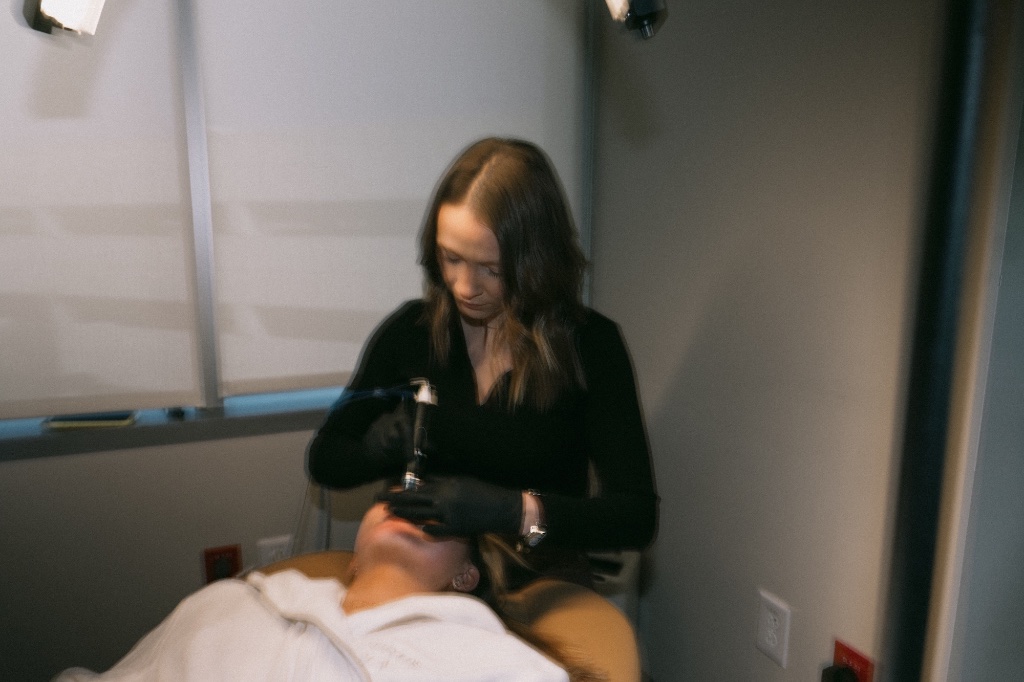
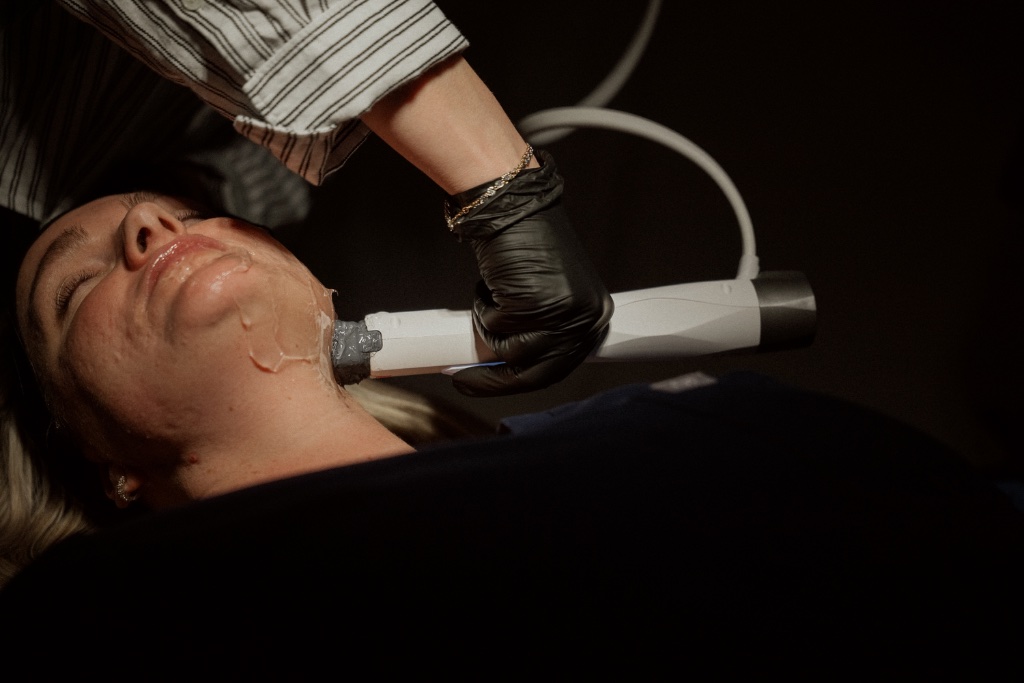
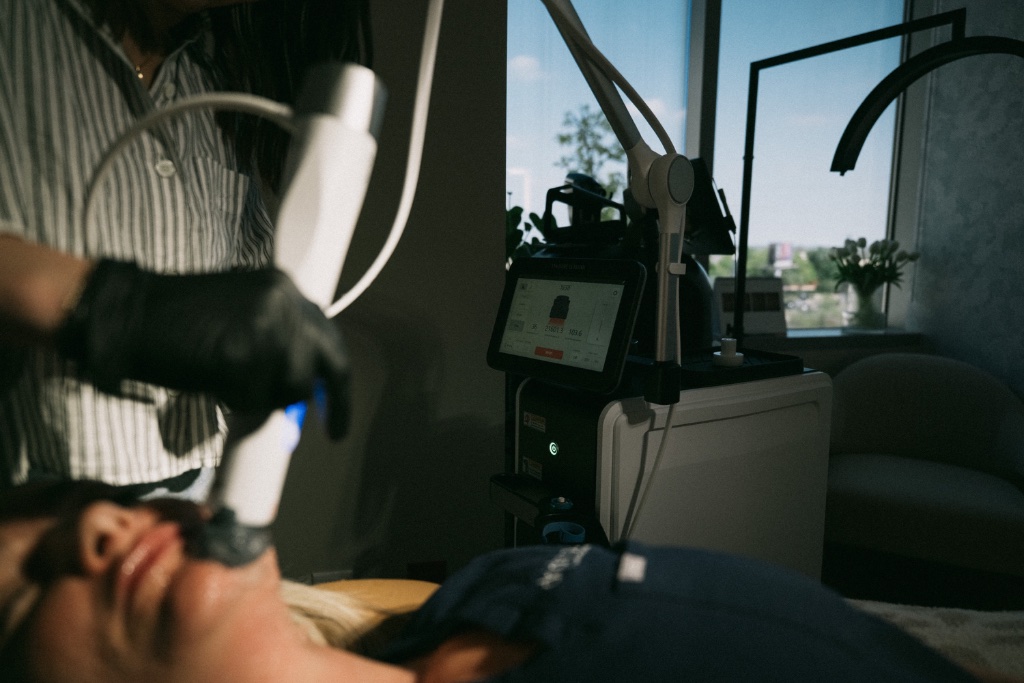
XERF may be considered when firmness is part of the concern, when jawline softness is present, when neck laxity is present, when the patient wants a non-volumizing treatment category, and when anatomy and existing facial volume support that strategy. As a non-invasive radiofrequency treatment, XERF addresses structural skin support without adding volume—which can be valuable for patients whose primary concern is laxity rather than hollowing.
However, candidacy cannot be determined online. A consultation evaluates whether XERF is appropriate for your specific anatomy, whether volume should be addressed first or alongside, and whether a different treatment category would better serve your goals.
08 / THE LEAN-FACE QUESTION
What If Weight Loss Has Already Made My Face Very Lean?
Patients whose faces have become very lean after weight loss deserve especially thoughtful planning. Temple hollowing, cheek support, under-eyes, lower-face tissue, facial width, and bone structure all factor into whether tightening is appropriate—or whether volume support should come first.
The goal should not be maximal tightening. The goal should be preserving harmony. A very lean face may benefit more from volume restoration before or alongside any tightening conversation. Read about whether XERF affects facial fat for a complete discussion.
09 / THE JAWLINE AFTER WEIGHT LOSS
The Jawline After Weight Loss

Jawline changes after weight loss may involve reduced facial volume, skin laxity, chin projection, submental tissue, neck transition, and skeletal proportions. "Fix my jawline" may lead to different treatment recommendations for different patients depending on which of these factors is driving the change.
If the primary concern is laxity, XERF may be discussed. If the concern is volume or projection, facial balancing or filler may be more appropriate. If the concern involves significant anatomical laxity, a surgical consultation may be the right conversation.
10 / THE NECK AFTER WEIGHT LOSS
The Neck After Weight Loss
The neck may become more noticeable after weight loss because of changes involving skin, laxity, submental fullness, tissue distribution, anatomy, and muscle-related contour. One word—"neck"—can represent several different concerns, each requiring individual assessment.
XERF may be considered when firmness is part of the problem. If the concern involves submental fullness, muscle banding, or significant anatomical laxity, a different approach may be more appropriate. Read about XERF for neck tightening for more detail.
11 / WHEN SHOULD YOU TREAT?
When Should You Treat After Weight Loss?
Treatment timing should consider whether weight is still changing, whether the patient's facial appearance is still evolving, treatment goals, overall health, provider assessment, and whether the proposed treatment relies on stable anatomy or volume. JOLA does not prescribe a universal waiting period—timing is individualized based on the patient's situation.
For patients actively losing weight, reassessment may be valuable because the face can continue changing. Structural correction may benefit from more stable anatomy, while some maintenance treatments may make sense at different stages. The decision should be individualized, not standardized.
12 / DO YOU HAVE TO WAIT?
Do You Have to Wait Until Your Weight Is Completely Stable?
Aesthetic treatment planning often benefits from understanding whether major changes are ongoing. Some maintenance treatments may make sense at different stages, while structural correction may benefit from more stable anatomy. The decision should be individualized. Patients should discuss medical weight-management questions with their prescribing clinician—JOLA does not provide medical weight-management advice. A consultation can help determine the right timing for your specific situation.
13 / XERF VS FILLER AFTER WEIGHT LOSS
XERF vs Filler After Weight Loss
XERF
Skin Firmness
PRIMARY CONVERSATION
Skin firmness, structural skin support, jawline and neck tightening. Non-volumizing.
FILLER
Volume Support
PRIMARY CONVERSATION
Targeted volume, proportion, structural support. Addresses hollowing and lost fullness.
One is not automatically better. The concern determines the category. A patient with laxity needs tightening; a patient with volume loss needs volume support; a patient with both may need a staged combination. Read about dermal fillers, facial balancing, and how to know if you need skin tightening, filler, or both.
14 / XERF VS SCULPTRA AFTER WEIGHT LOSS
XERF vs Sculptra After Weight Loss
XERF is an energy-based treatment addressing firmness and skin support. Sculptra is a biostimulatory treatment involving gradual collagen-related structural support. Post-weight-loss patients may ask about both because significant weight change can affect both skin firmness and structural volume.
A staged plan may incorporate one, both, or neither—depending on which concern is primary. Read about XERF + Sculptra together, Sculptra, how Sculptra works, and biostimulatory treatments.
15 / XERF + FACIAL BALANCING
Why the Whole Face Matters After Major Weight Change
Loss of volume does not happen in perfectly symmetrical or aesthetically convenient ways. Treatment planning may evaluate temples, cheeks, under-eyes, lips, chin, jawline, and neck to understand how the relationships among these areas have changed. Facial balancing is about relationships rather than filling every area.
XERF may fit into a facial balancing plan when firmness is part of the concern, but the whole face should be evaluated before any single treatment is selected. Read about full facial balancing at JOLA and XERF + facial balancing.
16 / WHAT ABOUT BOTOX?
What About Botox?
Weight-loss facial changes and movement-related wrinkles are different concerns. Botox and Dysport address muscle movement. XERF addresses firmness. Filler and biostimulators address volume. Each treatment category serves a different purpose, and a patient may benefit from more than one category within a comprehensive plan. This reinforces JOLA's full-face diagnostic philosophy—understanding what changed determines which category fits, not the other way around. Explore injectables at JOLA.
17 / WHAT ABOUT SKIN QUALITY?
What About Skin Quality?
Weight loss may coincide with patients noticing dryness, texture, dullness, fine lines, pigment, or skin-health changes. These are not automatically XERF concerns. Skin quality is a separate conversation that may involve different treatments.
18 / DOES XERF MELT MORE FAT?
Does XERF Melt More Fat?
Patients who have already lost substantial facial volume should explicitly discuss volume preservation, anatomy, treatment area, and goals before any energy-based facial treatment. This is not a question to assume— it is a question to ask directly during consultation.
READ THE FULL GUIDE:
Does XERF Melt Facial Fat?19 / XERF VS MORPHEUS8 AFTER WEIGHT LOSS
XERF vs Morpheus8 After Weight Loss
Patients researching post-weight-loss skin often encounter XERF, RF microneedling, and Morpheus8. But these are different RF treatment categories—XERF is non-invasive RF, while RF microneedling uses needles to deliver RF energy. They serve different treatment conversations and should not be treated as interchangeable. Read our full comparison of XERF vs Morpheus8.
20 / WHAT IF THE CHANGE IS TOO SIGNIFICANT FOR XERF?
What If the Change Is Too Significant for XERF?
Non-surgical tightening has limits. If a patient's desired level of correction exceeds realistic non-surgical capabilities, a surgical consultation may be appropriate. This is not a failure—it is an appropriate referral when non-surgical options cannot meet the patient's goals.
JOLA does not discourage appropriate surgical evaluation. Understanding where non-surgical treatment ends and surgical conversation begins is part of responsible treatment planning. Read about XERF before a facelift to understand how non-surgical tightening fits into long-term facial planning.
21 / THE POST-WEIGHT-LOSS FACIAL MAP
What Changed?
EDUCATIONAL TOOL — NOT A DIAGNOSIS.
22 / THE ORDER MATTERS
Tighten First? Restore Volume First? Do Both?
There is no universal sequence. Treatment sequencing depends on anatomy, degree of laxity, amount and location of volume change, treatment history, patient priorities, chosen treatment categories, and provider judgment. JOLA does not prescribe universal timing rules—sequencing is individualized.
THE RIGHT COMBINATION IN THE WRONG ORDER
IS STILL THE WRONG PLAN.
23 / WHY WAITING CAN SOMETIMES BE PART OF THE PLAN
Why Waiting Can Sometimes Be Part of the Plan
If significant body weight or facial composition is still changing, the provider may recommend reassessment instead of immediate structural treatment. Waiting is not doing nothing. It can prevent chasing a moving target—treating a face that will continue to change may lead to results that no longer fit the patient's anatomy once it stabilizes.
This connects to a broader JOLA principle: sometimes the best aesthetic decision is to wait. Restraint is a form of expertise.
IS FIRMNESS PART OF THE CONCERN?
Explore XERF at JOLA24 / THE LASER SPECIALIST'S PERSPECTIVE

Chey Cope
Laser Specialist / JOLA Dallas
Energy-based treatment planning after significant weight loss should account for existing facial volume, degree of skin laxity, skin quality, treatment area, prior procedures, current weight-change trajectory where relevant, patient goals, and whether another treatment category should come first. Rather than beginning with a device, the assessment begins with the concern.
For verified information about our providers' roles and qualifications, please contact JOLA Dallas directly or visit the about page.
25 / THE JOLA APPROACH AFTER WEIGHT LOSS
Don't Treat the Label.
Treat the Face.
WHAT CHANGED?
IS IT SKIN, VOLUME, STRUCTURE, MOVEMENT, OR TEXTURE?
IS THE FACE STILL CHANGING?
WHAT IS THE PRIORITY?
WHICH CATEGORY ADDRESSES IT?
WHAT CAN WAIT?
REASSESS.
26 / WHO MAY WANT TO ASK ABOUT XERF AFTER WEIGHT LOSS
Who May Want to Ask About XERF?
"My jawline looks softer."
"My neck looks looser."
"I don't want to add more volume."
"My skin doesn't feel as firm."
"I've lost weight and want subtle refinement."
"I want to understand tightening before adding filler."
"I want a long-term treatment plan."
These are reasons to start a conversation, not proof of candidacy.
27 / WHO MAY NEED A DIFFERENT CONVERSATION
Who May Need a Different Conversation?
28 / MYTH VS REALITY
Myth vs Reality
MYTH
"Every post-GLP-1 face needs filler."
REALITY
Some patients have volume loss, some have laxity, and many have a combination. Filler addresses volume, not laxity.
MYTH
"Loose-looking skin means XERF is automatically the answer."
REALITY
The appearance may involve multiple anatomical changes, including volume, structure, and skin quality. See the XERF vs. Sculptra comparison to understand which category fits. For RF vs ultrasound, see XERF vs Ultherapy.
MYTH
"XERF restores facial fat."
REALITY
XERF and volume-restoring treatments are different categories. XERF addresses firmness, not volume.
MYTH
"Everyone should wait until their weight is perfectly stable before discussing aesthetics."
REALITY
Patients can seek consultation at any stage, though treatment timing may depend on whether major changes are ongoing.
MYTH
""GLP-1 face" is a diagnosis."
REALITY
It is an informal term describing a range of possible facial changes after weight loss, not a formal medical diagnosis.
29 / THE BOTTOM LINE
XERF After Weight Loss: The Bottom Line
Significant weight loss can change skin, volume, proportions, jawline, and neck appearance. GLP-1 medication names should not be used as the diagnosis—these are informal cultural terms, not clinical ones. XERF may be considered when firmness or laxity is part of the concern, but it cannot replace lost volume. Filler and Sculptra should not automatically be used simply because weight loss occurred.
Skin tightening and volume restoration may coexist in a staged plan. Ongoing weight changes can influence treatment timing. Lean faces deserve careful evaluation. Significant laxity may require a different level of treatment, including surgical consultation when appropriate. The consultation should determine the category—not the trend, not the device name, and not the label.
The goal after weight loss is not to rebuild the face you had before. It is to understand the face you have now—and treat only what actually needs support.
WEIGHT LOSS CHANGED THE FACE.
YOUR TREATMENT PLAN SHOULD START BY UNDERSTANDING HOW.
Book a JOLA Consultation.
Schedule a consultation at JOLA Dallas in Highland Park to find out what actually changed—and which treatment category fits the face you have now.
BUILD THE POST-WEIGHT-LOSS PLAN
The XERF Library
CONTINUE EXPLORING XERF









FAQ
Frequently Asked Questions
Still have questions about XERF after weight loss?
SCHEDULE A CONSULTATION →