
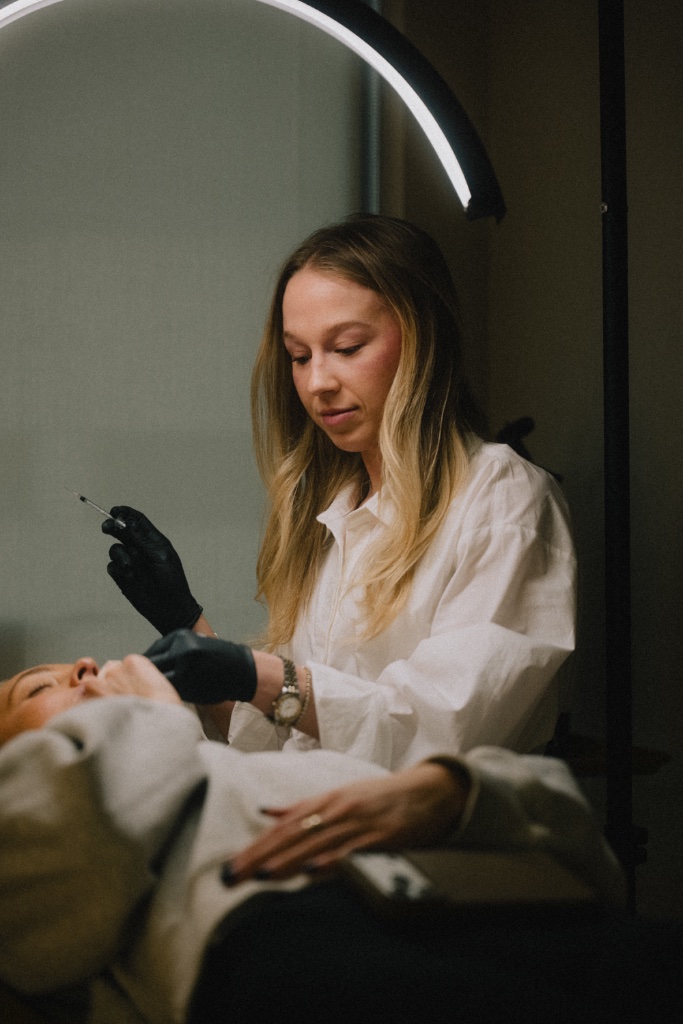
JOLA DALLAS — FACIAL BALANCING / WHOLE-FACE PLANNING
Something is shifting in how aesthetic patients in Dallas and Highland Park approach their care. Fewer patients arrive with a single isolated request — "just lips," "just filler," "just smooth the lines" — and more arrive with a different kind of question: why does my face not look quite right, and what would actually improve it? This is the question that full facial balancing at JOLA is designed to answer.
The face is not a collection of independent features. It is a composition — and the impression it creates depends far more on the relationship between features than on the state of any one of them. A patient who feels their lips look small may actually be responding to an underprojected chin. A patient who looks tired may be presenting with a combination of temple hollowing, midface volume loss, and under-eye concern that no single treatment can resolve alone. Facial balancing in Dallas begins with this understanding: the whole face matters more than any single part.
At JOLA Dallas, full facial balancing is both a clinical philosophy and a practical framework. It means beginning every appointment with a complete assessment of facial proportion, structure, movement, and support — and building a treatment plan from that assessment rather than from a feature request. The result is not more treatment. It is smarter treatment. And when it is done well, the outcome looks less like a procedure and more like the patient at their best.

What Full Facial Balancing Actually Means
Full facial balancing is a whole-face aesthetic strategy that evaluates how all features of the face relate to one another and selects treatments based on improving those relationships — not simply on addressing individual requests. It is not the same as treating multiple areas. It is the recognition that the face reads as a unified composition and that improving it requires seeing it that way.
In practice, full facial balancing at JOLA may involve support in one area, movement management in another, collagen stimulation in a third, and a decision not to treat a fourth at all. The plan reflects what the anatomy calls for — not what a menu offers. This is why balancing often produces more elegant results than feature-by-feature treatment: it addresses the cause of imbalance rather than simply layering correction on top of it.
"Full facial balancing is not about doing more. It is about understanding what the face actually needs — and treating from that understanding."
The most important word in the phrase is not "facial" or "balancing" — it is "full." A full approach means the entire face is held in view at once, even when the treatment plan is selective. It means the cheeks are evaluated in relationship to the temples. The lips are evaluated in relationship to the chin. The jawline is considered alongside the midface and the profile. This is what distinguishes a balancing consultation from a feature correction — and it is why small adjustments can create natural-looking harmony when they are made from this perspective.

Why the Whole Face Matters More Than One Feature
Facial features are not independent variables. The appearance of any one feature is shaped by its relationship to every other. Lips that appear thin may be responding, in part, to a recessed or undefined chin. Cheeks that look flat may appear that way because of temple hollowing above rather than actual midface volume loss. Jawline softening may be amplified by neck laxity or diminished chin projection. The face reads the way a sentence reads — every element affects the meaning of every other.
This is why isolated treatment can sometimes create problems it did not intend to solve. Adding lip volume without addressing the chin-to-lip proportion can make the lower face appear heavier or less refined. Treating nasolabial lines directly without addressing the midface support that created them may produce a result that looks artificially smoothed rather than improved. Treating under-eye hollows without evaluating the cheek's support structure can result in work that does not hold as expected.
The clinical insight behind full facial balancing at JOLA is that the right treatment for one area is often somewhere else on the face. When that insight is applied consistently — as part of a whole-face philosophy — the results look less like correction and more like the face simply working better as a whole. That is the standard at JOLA.
Why Full Facial Balancing Changes the Result
Harmony Over Isolation
When treatment decisions are made in reference to the whole face, the result has a quality that isolated treatment rarely achieves: coherence. Features fit together. Proportions read as natural. Nothing calls attention to itself. This is harmony — and it is what facial balancing in Dallas at JOLA is oriented toward. It is a harder standard to meet than "this area looks better," but it is a more meaningful one.
Support Over Excess
Many patients who come in asking for volume actually need support — structural reinforcement of a facial framework that has shifted or softened over time. The distinction matters because volume and support are not the same thing. Volume fills. Support repositions. A whole-face approach identifies which the face needs — and avoids the overfilled appearance that results from applying volume where support was the actual clinical need.
Structure Over Trend
Trend-driven treatment applies a generalized aesthetic ideal to individual anatomy. Whole-face balancing applies clinical assessment of individual anatomy to individual goals. These are fundamentally different approaches — and they produce fundamentally different results. Structure-based planning ages better, looks more individual, and tends to compound positively over time rather than accumulating as a series of disconnected interventions. This is what JOLA's treatment philosophy calls anatomy-first planning.
Why Subtle Treatment Often Looks More Luxurious
In aesthetic medicine, subtlety is a form of quality. When treatment is coordinated across the face — when each decision serves the whole rather than simply improving one part — the result carries a quality that is difficult to achieve through accumulation. It looks effortless. The face looks like itself, only better. This is the hallmark of skilled, restrained, whole-face treatment planning — and it is why patients who experience it often describe feeling that they look like themselves, rather than like someone who has had work done.
UPPER FACE
- Temples
- Brow Frame
- Upper Structure
Foundation of facial proportion
MIDFACE
- Cheeks
- Under-Eyes
- Nasolabial Transition
Central volume and lift relationships
LOWER FACE
- Lips
- Perioral Region
- Chin
- Jawline
Profile balance and structure
TREATMENT LOGIC
- Movement Management
- Support
- Collagen
- Restraint
What the whole face actually needs
JOLA DALLAS — FULL FACIAL BALANCING — CONSULTATION-LED PLANNING — DALLAS, TEXAS
What Full Facial Balancing May Involve
Because full facial balancing at JOLA is driven by assessment rather than protocol, no two treatment plans look exactly alike. The specific composition of a plan depends entirely on what the anatomy presents and what the patient's goals require. What follows is a description of the categories that balancing plans may draw from — not a standard protocol applied to every patient.
Injectables in Dallas form the core of many balancing plans. Neuromodulators such as Botox and Dysport may support movement-related refinement — softening dynamic lines, adjusting brow position, or relaxing the masseter to refine the jawline. Dermal fillers may be used for targeted support and contour — cheek structure, chin projection, lip definition, or under-eye support where appropriate.
Biostimulatory treatments such as Sculptra in Dallas may be included for patients whose goals are better served by gradual collagen stimulation than by immediate volume correction. PRF and regenerative treatments may support the under-eye and periorbital region, or complement structural treatment with tissue quality improvement. In some plans, skin tightening — including XERF RF skin tightening — may be part of a broader whole-face strategy when firmness and structural laxity are part of the clinical picture. And in some plans, the most valuable element is a clear decision about what not to treat.
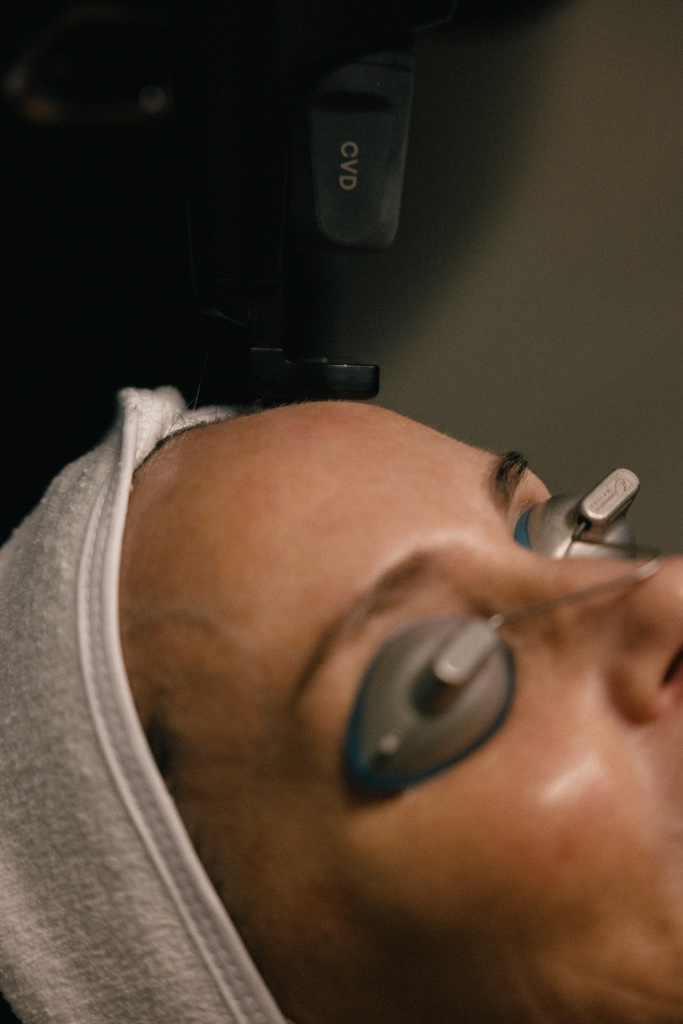
What Areas Are Often Evaluated in Full Facial Balancing?
A full-face assessment at JOLA evaluates each of the following regions — not because all of them will be treated, but because understanding their relationships is essential to making intelligent treatment decisions.
Temples and Upper-Face Frame
The temples define the upper border of the facial frame. Volume loss in this region creates a narrowing at the top of the face that affects the overall silhouette — and often contributes to the appearance of upper-face heaviness or midface descent. Temple hollowing is frequently underdiagnosed as a contributing factor to aging-related facial changes, and restoring it is often a high-value component of a whole-face plan.
Under-Eyes and Midface
The relationship between the under-eye region and the midface is one of the most clinically nuanced in facial aesthetics. Under-eye hollows may result from true tear trough changes, cheek descent, or a combination of both — and the correct treatment depends on which is driving the concern. Addressing midface support is often more effective than directly treating the under-eye in isolation.
Lips and Perioral Balance
Lips exist in proportional relationship to the chin, the philtrum, and the overall lower third. Lip enhancement that is calibrated to this relationship produces a result that looks like better lips, not obvious augmentation. JOLA's approach to lip enhancement begins with the lower face as a whole, not with a volume target.
Chin and Jawline Support
Chin projection and jawline definition are among the most impactful drivers of perceived facial proportion. A well-supported chin contributes to profile balance, lip proportion, and the overall quality of the lower-face silhouette. Jawline and chin sculpting — through carefully placed filler, neuromodulator support, or a combination — can be one of the most elegant components of a balancing plan.
Profile and Lower-Face Transition
The profile is often underweighted in aesthetic consultations that focus primarily on front-facing appearance. The transition from the lower face to the neck and jawline — the vertical definition of the lower face in profile — significantly affects how balanced and refined the face reads at any angle. JOLA's whole-face approach always includes profile evaluation, because many of the most meaningful improvements to facial harmony are most visible from the side.

What a Full-Face Assessment at JOLA Looks At
The full-face assessment is where full facial balancing at JOLA begins — and it is a more comprehensive process than a standard injectable consultation. The assessment evaluates facial proportions in relation to established anatomical ideals of harmony and balance, while holding the patient's own features and identity as the primary reference. This is not about applying a template. It is about seeing clearly what is present and what it calls for.
The assessment considers: the vertical and horizontal thirds of the face; the width-to-height ratio of key features; the profile's balance and projection; facial movement patterns and where dynamic expression affects appearance; the support and volume relationships between regions; any asymmetry that is structurally significant versus simply natural and individual; skin quality, firmness, and laxity where they are relevant to the treatment plan; and the patient's stated goals alongside a realistic understanding of what treatment can achieve.
This level of assessment takes time. It also produces a different quality of treatment plan — one that addresses the face as a clinical whole rather than as a series of separate concerns. The clinical fluency required for this kind of assessment is one of the things JOLA invests in as a practice, and it is central to why full facial balancing at JOLA consistently produces natural-looking results.
Full Facial Balancing Is Not the Same as "More Filler"
This is perhaps the most important distinction to make clearly. Full facial balancing is a planning philosophy — not a product category, and not a commitment to treating multiple areas. It is entirely possible, and common at JOLA, for a whole-face assessment to result in a more selective plan than the patient initially expected. Some patients need less than they think. Some need support, not fullness. Some need movement management, not volume. Some need collagen stimulation over time, not immediate correction.
JOLA does not approach the face with a volume-first mentality. The art of restraint is explicitly built into how JOLA works — and it applies directly to facial balancing. Adding product in multiple areas without a clear structural rationale is not balancing. It is accumulation. The difference between accumulation and true whole-face refinement is visible in the result: one reads as treated, the other reads as the person looking well.
"The best facial balancing plan may involve saying no to something. That is not a failure of care. It is a demonstration of it."
This approach is directly aligned with the broader JOLA perspective on choosing the right treatment category for each patient rather than defaulting to the most familiar option. Sculptra versus filler, biostimulatory treatment versus direct volume, tightening versus support — these are the kinds of decisions that whole-face thinking makes possible.

Who May Be a Good Candidate for Full Facial Balancing?
Full facial balancing at JOLA is particularly well suited for patients who have a sense that something is off but cannot identify exactly what — and patients who want natural-looking improvement without obvious intervention. If you find yourself looking at your face and feeling that something about it seems less harmonious than it used to, or less proportionate than you would like, a whole-face assessment is likely more useful than a targeted treatment request.
Patients who are experiencing age-related structural changes — gradual softening of the jawline, shifting of midface volume, temple hollowing, or deepening of the perioral region — often benefit from a balancing approach that addresses the underlying structural shifts rather than their surface expressions. Patients with profile or lower-face imbalance, where chin, lip, and jawline relationships have become less defined, are frequently well served by whole-face planning that includes structural support alongside any surface correction.
The natural-look-first patient — someone who wants elegance rather than visible correction, who values the quality of their result more than the quantity of treatment, and who wants to feel like themselves rather than like someone who has had work done — is consistently well served by the JOLA approach to facial balancing. Patients from Dallas, University Park, Preston Hollow, and the Park Cities who want this kind of care will find JOLA's consultation-led framework aligned with their expectations.
What to Expect During a Full Facial Balancing Consultation at JOLA
A facial balancing consultation at JOLA begins with conversation — a discussion of what the patient is noticing, what matters to them, what their timeline looks like, and what kind of results they are hoping to achieve. This is not a formality. It is the foundation of the clinical assessment that follows. Understanding the patient's perspective before the clinical review ensures that the treatment plan is oriented toward their actual goals, not a standardized outcome.
The assessment itself reviews facial structure at rest and in motion — because how the face moves is as important as how it appears statically. Proportional relationships are evaluated, including the vertical thirds, the width relationships of key features, the profile balance, and the quality of the transitions between facial zones. Skin quality, firmness, and laxity are noted where they are relevant to treatment selection. Any structural asymmetry that warrants consideration is discussed honestly and in appropriate context.
From this assessment, a treatment plan is developed that prioritizes what will deliver the most meaningful improvement. This includes an explicit conversation about what should be treated now, what should be deferred, and what is not necessary. Some plans are staged — intentionally sequenced over time to let the effects of early treatment inform later decisions. This is not inefficiency. It is how the most elegant results are built. The treatment planning process at JOLA treats sequencing as a clinical skill, not an afterthought.
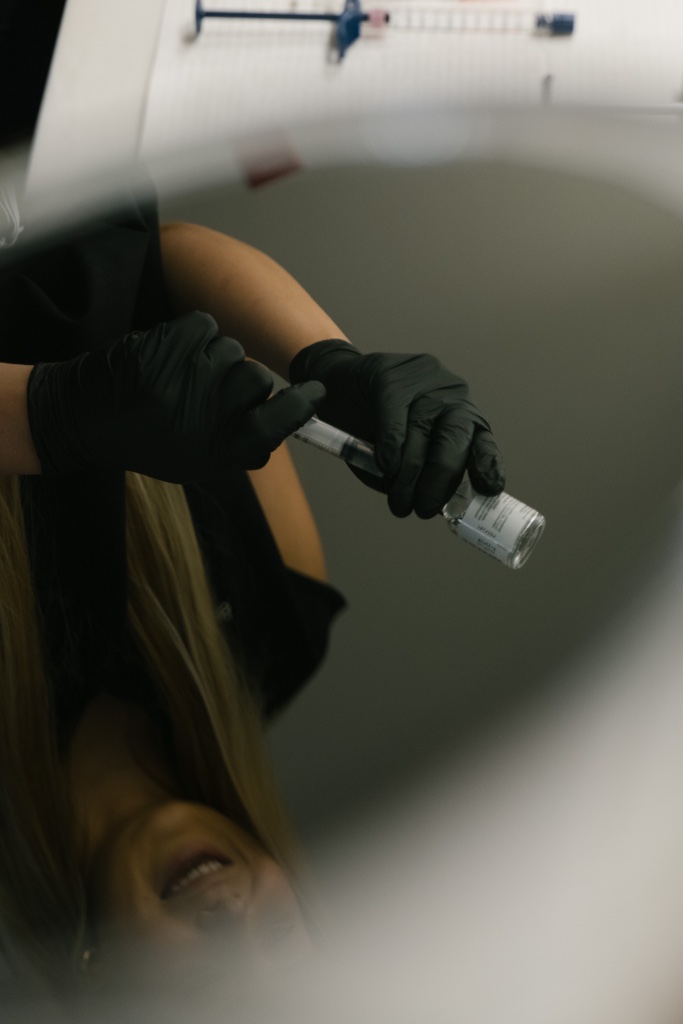
How Full Facial Balancing Fits Into JOLA's Broader Philosophy
Full facial balancing at JOLA is not a standalone service. It is the organizing framework through which all injectable and treatment planning decisions are made. Every category of treatment at JOLA — injectables, laser and energy-based treatments, regenerative and advanced care, skin treatments — can be a component of a facial balancing plan when the anatomy calls for it. The balancing philosophy is what makes these categories work together rather than in isolation.
This means that a patient coming to JOLA for neuromodulators may leave with a plan that also includes a conversation about chin support or temple restoration. A patient coming for dermal fillers may be guided toward biostimulatory treatments if collagen support is the more appropriate long-term strategy for their anatomy. A patient coming for one thing may leave with a clearer understanding of their whole face — and a smarter plan for how to support it over time.
JOLA treats the face as a complete composition. Natural-looking outcomes come from judgment, proportion, and restraint — not from trend replication or feature maximization. JOLA's treatment philosophy holds that facial balancing is not a procedure. It is a way of thinking — and it is the framework that makes all other treatment decisions smarter, more elegant, and more durable over time.
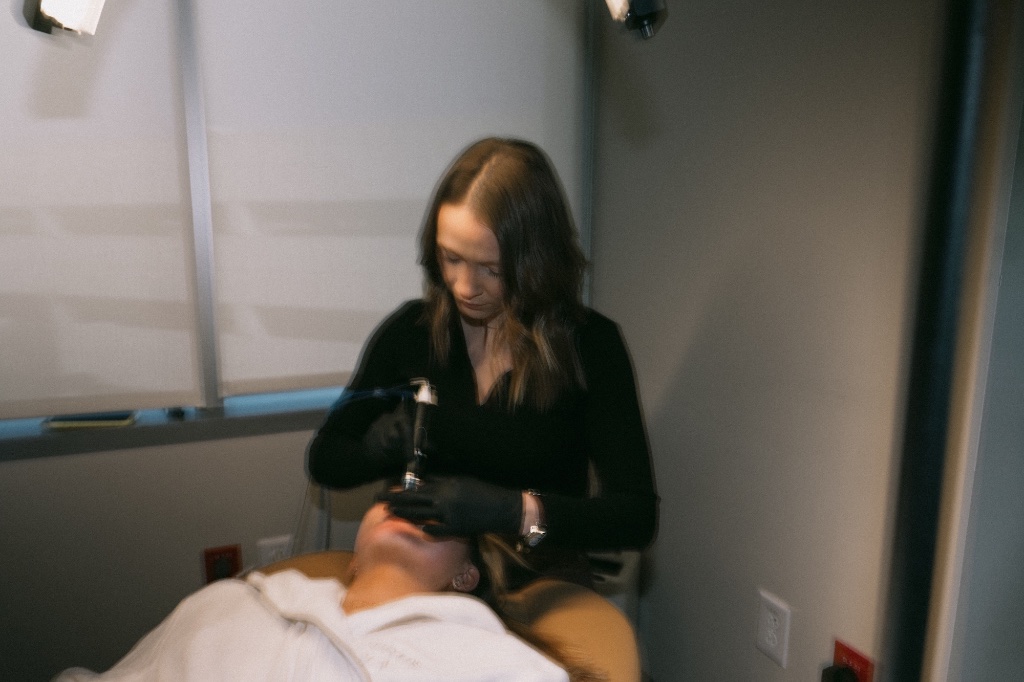
Begin a Full Facial Balancing Consultation
Patients in Dallas, Highland Park, University Park, Preston Hollow, and the Park Cities are welcome to begin a consultation at JOLA Dallas. The conversation starts with a full clinical assessment of your face — and ends with a plan that reflects what you actually need, not what is simply available.