
TREATMENT COMPARISON / INJECTABLES
JOLA DALLAS
BIOSTIMULATORS
VS DERMAL FILLERS
Which one is right for your face, goals, and timeline?
JOLA DALLAS / JUNE 2026
18 MIN READ
Across Dallas, Highland Park, University Park, and the broader Park Cities, one of the most common and clinically meaningful questions in aesthetic medicine is the comparison of biostimulators vs dermal fillers dallas patients are navigating in consultation rooms and online research. Both treatments are injectable. Both may be used in the face. And both are positioned within the broader category of facial rejuvenation. But the similarity ends there — and understanding what each actually is, how it works, and what anatomy it is suited to is the starting point for any intelligent treatment decision in this space.
The comparison matters because choosing between them — or coordinating both within a plan — requires more than a preference. It requires a clinical assessment of the face: what kind of change is present, where it is concentrated, what tissue is involved, and what the patient's goals and timeline genuinely allow. Patients who arrive at a conclusion before that assessment has taken place — selecting biostimulatory treatments because they sound more "natural," or fillers because they want faster results — are choosing on reasoning that has nothing to do with their anatomy.
This guide is written to give patients a clear, medically grounded understanding of both treatment categories — what each is, how they differ, when each may be appropriate, and why the most important step in this decision is the consultation that makes the anatomy visible.

What Biostimulators Actually Are
Biostimulators are injectable treatments designed to stimulate the body's own collagen production rather than to add synthetic volume directly to the face. The most established biostimulatory injectable used in facial aesthetics is Sculptra, made from poly-L-lactic acid (PLLA) — a biocompatible synthetic polymer with a long track record in medical applications. When injected into the deep dermis and subcutaneous tissue, PLLA microparticles gradually stimulate the activity of fibroblasts — the cells responsible for producing collagen in the skin's structural matrix. The result is a progressive increase in collagen density and tissue thickness in the treated area.
This is a fundamentally different kind of result than what filler produces. There is no injected substance occupying a space. Instead, the patient's own biology has been stimulated to generate new structural tissue. The improvement that emerges — which typically becomes apparent three to six months after a treatment course of two to three sessions — reflects what the body has built, not what has been placed inside it. Because the result is tissue-own, it tends to look and feel natural: supported, refreshed, structurally improved without appearing artificially filled.
In the context of biostimulators vs dermal fillers dallas, this mechanism is the defining feature of the biostimulatory category. It is why biostimulatory treatments dallas are particularly valued for patients whose concern is diffuse — age-related collagen and structural density loss across a broader area rather than in a specific, targeted zone. The biostimulatory approach works with the tissue architecture as a whole, building structural support broadly rather than adding a substance in one place. For a deeper exploration of this category within JOLA's treatment ecosystem, see regenerative and advanced treatments in Dallas and Sculptra in Dallas: What It Is, Benefits & Who It's For.

What Dermal Fillers Actually Are
Dermal fillers are injectable treatments that add volume directly to a targeted area of the face. The most commonly used preparations in facial aesthetics are hyaluronic acid (HA) gels — a biocompatible, naturally-occurring molecule that is formulated into preparations of varying thickness, elasticity, and longevity depending on the area and goal. When injected with precision into the deep dermis, subcutaneous tissue, or along the periosteum, filler physically occupies the space it is placed in — restoring contour, addressing hollowness, and creating visible structural support.
The important distinction in the biostimulators vs dermal fillers dallas comparison is that filler acts through its presence rather than through a biological response it stimulates. The change is relatively immediate — visible within days to weeks as initial swelling resolves and the material settles into the tissue. And the result is specific to where the filler is placed: it supports the area it was injected into, rather than spreading a broader biological stimulus across the surrounding tissue as biostimulators do.
Dermal fillers dallas are not inherently excessive, unnatural, or heavy-handed. When selected carefully, placed with anatomical precision, and applied with appropriate restraint, filler can produce results that are beautifully proportionate and entirely natural-looking. The reputation that filler occasionally carries for looking overdone tends to reflect cases of excessive volume, inappropriate placement, or poor product-tissue matching — not the category itself. The philosophy that shapes how filler is used at JOLA is explored in depth in The Art of Restraint. For the role of filler within a full-face strategy, see facial balancing in Dallas.

Biostimulators vs Dermal Fillers: The Main Differences
Collagen Stimulation vs Direct Volume
The most fundamental difference between biostimulators vs dermal fillers dallas is mechanism. Biostimulators stimulate the body's own collagen — the improvement comes from within, produced by the patient's own fibroblasts over time. Filler adds volume directly — the change comes from the physical presence of the injected material. These are not variations of the same approach. They are categorically different mechanisms that produce different kinds of results, operate on different timescales, and are suited to different anatomical presentations. Understanding this difference is the starting point for any intelligent comparison.
Gradual Change vs More Immediate Structural Support
Biostimulatory treatments such as Sculptra develop progressively — most patients notice early signs of improvement four to eight weeks after the first session, with the full effect of a complete treatment course becoming apparent at three to six months. Filler produces visible change much sooner — typically within days to two weeks as initial swelling resolves. This timeline difference matters clinically. A patient whose concern is urgent or who wants visible improvement within a specific window may not be well-served by a biostimulatory timeline. A patient who values gradual, undetectable improvement over time may find the immediate-change nature of filler more conspicuous than they prefer. Neither timeline is superior — they serve different needs and different patients.
Long-Term Planning vs Targeted Area Correction
Biostimulators tend to be most valuable when the concern is diffuse — when the face has lost collagen and structural density broadly, across the midface, temples, or overall facial framework, rather than in one specific, well-defined zone. The biostimulatory effect spreads across the tissue it contacts, making it suited to global structural improvement rather than targeted placement. Filler, by contrast, is a precision tool — best suited to specific, well-defined deficits where targeted volume placement produces a proportionate correction. The more diffuse and broadly structural the concern, the more likely biostimulatory treatment is relevant. The more specific and targeted the deficit, the more likely filler is the appropriate choice.
Why They Are Different Tools, Not Direct Competitors
The framing of biostimulators vs dermal fillers dallas as a competition or ranking misrepresents what both treatments are. They are different tools designed for different clinical roles. Choosing between them — or coordinating them — is not a matter of which is more fashionable, which sounds more natural, or which a patient has read more compelling content about. It is a matter of what the anatomy requires: what the face needs, what the concern is, and what the patient's goals and timeline allow. The right answer can only emerge from clinical assessment. Read more on the judgment that shapes this decision-making in Clinical Fluency at JOLA Dallas.
BIOSTIMULATORS
e.g. Sculptra
DERMAL FILLERS
e.g. Hyaluronic Acid
THE RIGHT CHOICE IS ALWAYS ANATOMY-FIRST — DETERMINED THROUGH CLINICAL CONSULTATION AT JOLA DALLAS
When Biostimulators May Be the Better Fit
In the biostimulators vs dermal fillers dallas comparison, biostimulatory treatments tend to be the more clinically appropriate choice for patients whose concern is diffuse, gradual, and structurally driven rather than specific and targeted. The following presentations often align well with what biostimulatory treatment can offer:
- Patients with diffuse, age-related facial volume and collagen loss — those whose face has gradually thinned across the midface, cheeks, and temples, where the concern is structural density reduction across a broad area rather than one specific hollow. Biostimulatory treatment's broad collagen-stimulating effect addresses this pattern more appropriately than targeted filler placement.
- Patients seeking gradual, natural-looking rejuvenation — those whose primary goal is improvement that reads as simply looking more refreshed and supported over time, without a visible treatment event. The progressive timeline of collagen stimulation dallas through Sculptra aligns naturally with this priority.
- Patients philosophically aligned with working with the body's own biology — those who prefer treatments that stimulate the body's own repair mechanisms rather than adding a synthetic material, and who are comfortable with a multi-session protocol over three to six months.
- Patients with upper-face structural loss — particularly those with temple hollowing in Dallas, where biostimulatory treatment can support a natural structural restoration of the upper face as part of a broader facial balancing dallas plan.
- Patients who think in terms of long-term investment — those who approach aesthetic care as a sustained strategy for facial health rather than a series of short-term corrections, and who value the collagen-banking philosophy that biostimulatory treatment supports over time.

When Dermal Fillers May Be the Better Fit
In the biostimulators vs dermal fillers dallas comparison, dermal fillers tend to be the more clinically appropriate choice when the concern is specific, targeted, and well-defined rather than diffuse and broadly structural. The following presentations often align well with what filler can offer:
- Patients with specific, well-defined structural hollowness — those with a pronounced tear trough, localized cheek hollowing, defined nasolabial fold depth, or other targeted areas where precise volume placement resolves the concern more accurately than broad collagen stimulation.
- Patients seeking visible structural improvement within a shorter window — those for whom the three-to-six-month development timeline of biostimulatory treatment is not suited to their goals, timeline, or the urgency of the structural concern they are addressing.
- Patients whose anatomy is better served by precision placement — those with asymmetries, defined structural deficits in specific areas, or presentations where clinical judgment favors the controlled precision of filler over the diffuse structural support of collagen stimulation.
- Patients as part of a coordinated combination plan — where natural facial rejuvenation dallas includes filler as the targeted, precision component of a broader strategy that may also use biostimulatory treatments for structural foundation and regenerative care for tissue quality.
As with biostimulators, candidacy for filler in any given area is confirmed through a full-face clinical assessment. The specific preparation, volume, placement depth, and technique all depend on the individual anatomy rather than any generalized approach. There is no default filler protocol that applies across patients.

Why Some Patients Need Both
For many patients, the honest answer to biostimulators vs dermal fillers dallas is that the question is not either/or — it is how to coordinate both within a thoughtful, staged plan. Facial rejuvenation is rarely a single-layer problem. The concerns that bring patients to a consultation often involve a combination of diffuse structural and collagen loss across a broad area alongside more specific, targeted hollowness in one or two zones, plus skin quality changes that affect how the face reads even when structural support is present.
A plan that uses sculptra dallas to build the broad structural foundation — stimulating collagen across the midface and temples over three to six months — and then uses filler judiciously to address any residual targeted deficits that the biostimulatory approach alone does not fully resolve can produce results that are both broadly supported and precisely refined. The two treatments complement rather than compete with each other when sequenced and coordinated with clinical care.
Within the JOLA approach to facial balancing dallas, this layered thinking is central. Structure, skin quality, timing, and facial harmony all matter — and treating them in isolation often misses how they interact. The right combination of biostimulatory treatment, filler, and other modalities is always determined by what the anatomy needs, not by what is available or what a patient has read about. This kind of coordinated, anatomy-first planning is the foundation of the treatment planning process at JOLA Dallas.
What a Consultation Should Evaluate
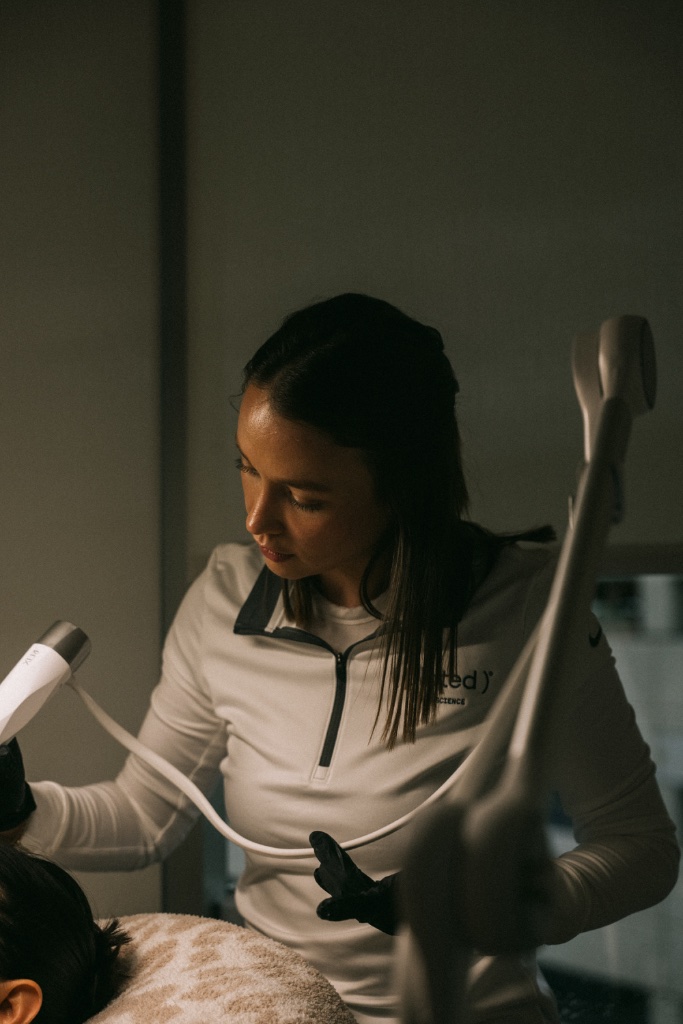
A consultation focused on the biostimulators vs dermal fillers dallas question begins not with a product recommendation, but with a structured, full-face anatomical assessment. Your provider evaluates the entire facial structure — the temples, cheeks, midface, under-eye, jawline, lower face, profile, and overall proportions — to understand what is actually present in the anatomy and what is genuinely driving the concern.
Specifically, a thorough assessment should identify: the degree and distribution of structural volume loss; whether the concern is diffuse (collagen and density loss across a broad area) or specific (a targeted hollow or contour deficit); the quality and laxity of the overlying skin; the relationship between the lower face, midface, temples, and under-eye; whether any asymmetries are present and what is driving them; and the patient's timeline expectations, lifestyle, and comfort with gradual versus more immediate results.
The treatment recommendation that follows — whether it involves biostimulatory treatment, filler, or a coordinated plan using both — derives from what this assessment reveals. If the consultation determines that neither is the most appropriate primary intervention, or that a different sequence or approach is more clinically sound, patients at JOLA will hear that clearly and honestly. This kind of anatomy-first honesty is what defines genuine clinical fluency. For more on the full-face assessment process, see The Art of Restraint and Clinical Fluency at JOLA.

How JOLA Approaches Biostimulators and Fillers
At JOLA Dallas, the approach to biostimulators vs dermal fillers dallas is consistent with the same philosophy that governs every treatment decision: the anatomy drives the plan, not the product. Jola dallas does not lead with a modality. Every consultation begins with a full structural assessment of the face — understanding what has changed, where, at what depth, and in relation to the whole — before any treatment recommendation is made.
Within the injectables program at JOLA Dallas, biostimulatory treatments including sculptra dallas are offered alongside a full range of hyaluronic acid and other dermal filler preparations — not as competing products, but as complementary tools with distinct clinical roles. The selection between them, or the decision to coordinate both, is always driven by what the individual anatomy actually needs.
For patients whose faces show diffuse, age-related structural loss that would benefit from broad collagen stimulation dallas, a biostimulatory protocol — typically a series of two to three Sculptra sessions over several months — is often the most clinically appropriate starting point. For patients with specific, targeted structural deficits that are better resolved through precision filler placement, that becomes the primary approach. For patients with both patterns, a coordinated plan is developed that stages and sequences both modalities in the way most likely to produce natural, harmonious, and durable results.
This anatomy-first, consultation-led approach is what defines how luxury med spa dallas care should function when it is genuinely medically grounded. The treatments available at JOLA are not menus to choose from independently — they are tools that belong in a clinical framework. The consultation is not a formality before the product is dispensed. It is the process through which the right treatment, for the right person, in the right sequence, becomes possible.

How Both Fit Into a Larger Aesthetic Strategy
The best outcomes in natural facial rejuvenation dallas tend to emerge not from a single product or treatment, but from a considered strategy that coordinates multiple modalities around the genuine needs of the individual face. Biostimulators vs dermal fillers dallas is ultimately not a binary choice — it is a starting point for understanding two important tools within a broader system of care.
- Sculptra in Dallas — the leading biostimulatory option for gradual, collagen-focused structural support across the face and temples.
- Sculptra vs Filler in Dallas — a deeper comparison of Sculptra specifically against hyaluronic acid filler, including mechanisms, candidacy, and clinical logic.
- Injectables in Dallas — the full injectable picture at JOLA, encompassing neurotoxins, fillers, biostimulatory treatments, and how they interact in a comprehensive plan.
- Facial Balancing in Dallas — the anatomy-led, full-face approach that puts biostimulatory and filler decisions in their proper structural context.
- Temple Restoration in Dallas — where biostimulatory treatment is among the most clinically appropriate options for upper-face structural support and long-term collagen investment.
- Regenerative and Advanced Treatments at JOLA Dallas — PRF, biostimulatory options, and the broader category of treatments working with the body's own biology to support long-term facial health.
- Specialty Treatments in Dallas — Sculptra and targeted injectable approaches within the JOLA treatment ecosystem.
- Treatment Planning at JOLA Dallas — the consultation-first coordination process that ensures every modality is selected and staged for the individual anatomy.
Begin Your Consultation at JOLA Dallas
If you are comparing biostimulators vs dermal fillers dallas and want an anatomy-first clinical conversation about which approach — or which combination — is most appropriate for your specific face and goals, the right next step is a consultation at JOLA Dallas. Patients in Dallas, Highland Park, University Park, Preston Hollow, and the Park Cities are welcome to begin with a conversation.
214.515.0002 / info@joladallas.com
Frequently Asked Questions
Explore Biostimulatory Treatments and Fillers in Dallas
JOLA Dallas offers consultation-led, anatomy-first injectable and biostimulatory aesthetics for patients in Dallas, Highland Park, University Park, Preston Hollow, and the Park Cities. Begin with an honest clinical conversation about what your face needs — and which approach is genuinely right for your goals.
BEGIN CONSULTATION