
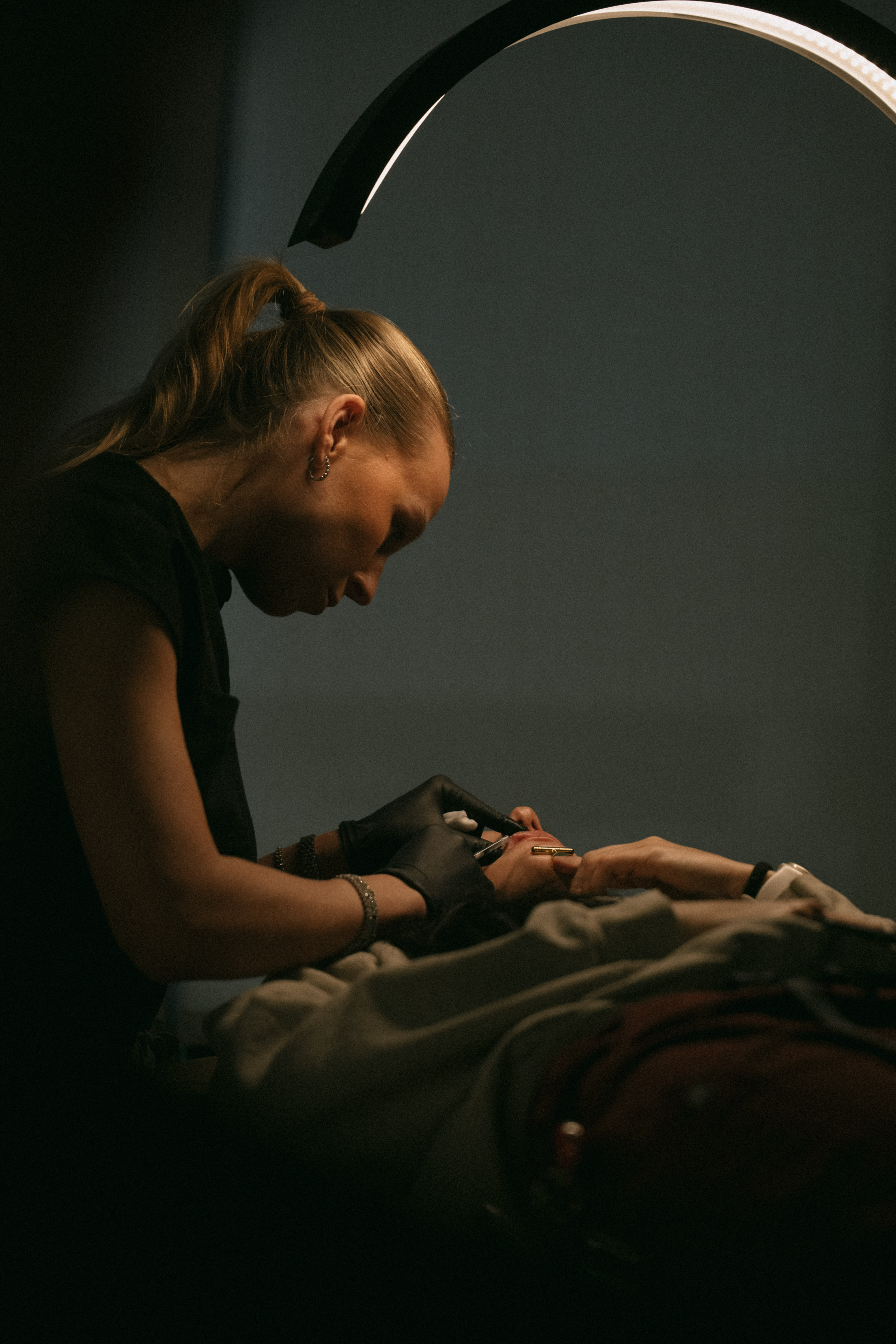
THE LOWER FACE STUDY
What Actually Causes Jowls? How to Treat the Lower Face Without Overfilling It
Jowls are not one problem. Understanding what changed determines what should — and should not — be treated.
A JOLA Dallas guide to XERF, facial balancing, volume, structure and lower-face treatment planning.
JOLA DALLAS / AUG 2026
18 MIN READ
STUDY 01 / THE 30-SECOND ANSWER
What Causes Jowls?
What causes jowls is one of the most common lower-face questions we hear at JOLA Dallas — from patients in Highland Park, University Park, Preston Hollow, and across the Park Cities. The answer is rarely simple. Jowls are usually multifactorial, meaning their appearance may be influenced by several anatomical factors rather than one isolated change.
Jowls may be influenced by skin laxity, changes in facial volume, soft-tissue position, chin and jaw structure, pre-jowl anatomy, weight changes, and age-related changes across several facial layers. Because the cause differs by patient, the best treatment for jowls also differs. XERF may be considered when skin firmness is part of the concern. Facial balancing, filler, or Sculptra may enter when proportion, structure, or volume contributes. More significant tissue descent may require a surgical discussion if the desired magnitude exceeds what non-surgical treatment can reasonably address.
SKIN
Reduced firmness / laxity
SOFT TISSUE
Changing position or distribution
VOLUME
Changes around the cheek and pre-jowl area
STRUCTURE
Chin and mandibular relationships
WEIGHT
Changes in facial volume and skin envelope
NECK
The lower-face / neck transition
A jowl is a contour change.
It does not tell you which layer caused it.
DIRECT ANSWERS
WHAT CAUSES JOWLS?
Jowls are usually multifactorial — influenced by skin laxity, facial volume changes, soft-tissue position, chin and jaw structure, pre-jowl anatomy, weight changes, and age-related changes across several facial layers.
WHY AM I SUDDENLY GETTING JOWLS?
Changes often accumulate gradually but become noticeable after weight change, different lighting, photographs, or increased awareness. If a change is genuinely abrupt, asymmetric, or accompanied by symptoms, medical evaluation is recommended.
CAN YOU GET RID OF JOWLS WITHOUT SURGERY?
Non-surgical treatments may improve selected contributors. They should not be expected to reproduce surgical tissue repositioning. The approach depends on which anatomical factors are involved.
WHAT IS THE BEST TREATMENT FOR JOWLS?
There is no universal best treatment. XERF may be considered for skin firmness. Filler or Sculptra for volume. Facial balancing for proportion. Surgery for significant tissue descent. The cause determines the treatment.
DOES XERF HELP JOWLS?
For selected patients, XERF may support skin firmness when laxity contributes to lower-face softness. It does not remove jowls, add volume, or reposition tissue surgically.
DOES FILLER HELP JOWLS?
Filler may change contour in selected plans involving chin, jawline, or pre-jowl areas. It does not literally tighten loose skin. The question is what purpose the volume would serve.
CAN FILLER MAKE JOWLS WORSE?
Poorly selected or excessive volume may make the lower face appear heavier. The issue is not filler itself but selection, placement, amount, anatomy, and treatment goal.
DOES SCULPTRA HELP JOWLS?
Sculptra is an injectable biostimulator that supports collagen and volume over time. It should not be described as universally lifting jowls. Its role depends on anatomy and goals.
CAN A WEAK CHIN MAKE JOWLS LOOK WORSE?
A shorter or less projected chin may influence how clearly the lower-face contour is defined. This does not mean the anatomy is abnormal — structural relationships matter when evaluating the jawline.
DOES WEIGHT LOSS CAUSE JOWLS?
Facial volume may change after significant weight loss. Jowls may become more noticeable in some patients, but weight loss does not universally create jowls.
CAN BOTOX HELP JOWLS?
Neuromodulators affect muscle activity. They do not broadly tighten loose skin. Botox is not a universal jowl treatment but may be relevant when muscle activity contributes.
XERF VS FILLER FOR JOWLS?
XERF is energy-based RF that supports skin firmness without adding volume. Filler is injectable and adds contour. They answer different anatomical questions.
XERF VS SCULPTRA FOR JOWLS?
XERF is non-invasive RF for skin firmness. Sculptra is an injectable biostimulator for volume and collagen. Neither is universally better — they address different contributors.
WHEN DO JOWLS NEED SURGERY?
When significant tissue descent or excess skin exceeds what non-surgical treatment can address, or when the desired magnitude is surgical, a surgical consultation may be more appropriate.
STUDY 02
What Exactly Is a Jowl?
A jowl is a visible contour change along the lower jawline — a softening, fullness, or descent of tissue that alters the clean transition between the lower cheek, the jawline border, the chin, and the neck. It is not a diagnosis. It is an appearance.
The lower face has a natural architectural transition: from the cheek downward, across the pre-jowl region, along the mandibular border, to the chin, and then into the neck. When that transition reads as smooth and continuous, the jawline appears defined. When tissue along that transition changes — whether through skin laxity, volume shifts, structural relationships, or soft-tissue position — the contour can appear heavier, softer, or less distinct. That visible change is what patients commonly call a jowl.
Understanding what causes jowls begins with recognizing that the jowl itself is the symptom. The source may be in the skin, in the tissue beneath it, in the volume above it, in the structure behind it, or in the neck below it.
STUDY 03
The Lower Face Is a System
The lower face is not a single line. It is a system of interconnected elements — each one influencing how the others appear. Change one element and the entire lower-face silhouette can look different.
Volume + tissue position
Contour transition
Projection + proportion
Skeletal boundary
Envelope + firmness
Lower contour transition
Change one element and the entire lower-face silhouette can look different.
STUDY 04
Cause 01: Skin Firmness Changes
The skin is the envelope of the lower face. When collagen and elastin change with age, the skin may become less firm and less elastic. This reduced firmness can soften the mandibular border — the line where the jaw meets the neck — making the lower-face contour appear less defined.
Skin laxity is one of the most common contributors to the appearance of jowling, and it is the conversation where XERF — a radiofrequency treatment that supports skin firmness — may become relevant. XERF delivers controlled RF energy to support collagen remodeling in treated areas, without needles, without incisions, and without adding volume.
It is important to note that skin laxity is one of several possible contributors. If the skin is genuinely part of the problem, XERF may have a role. If the dominant issue is volume, structure, or tissue position, skin treatment alone may not address the concern.
STUDY 05
Cause 02: Soft-Tissue Position Changes
Facial aging involves complex changes across tissue compartments and support structures. The soft tissue of the face — the fat pads, connective tissue, and supporting ligaments — changes in position and distribution over time. This is not simply "fat falling down." It is a multifactorial process involving multiple tissue layers.
Non-surgical treatments should not be claimed to fully reposition descended tissue. Energy-based treatments like XERF support skin firmness, not tissue repositioning. Fillers change contour but do not reposition tissue. Significant tissue descent may require a surgical conversation.
STUDY 06
Cause 03: Volume Changes
Facial volume changes can influence how the lower-face contour appears. Loss of volume in the midface can change how the lower face reads — the cheek-to-jaw transition can look less supported, and the pre-jowl area can appear more prominent by contrast.
However, replacing every area of volume loss is not automatically necessary or appropriate. Volume support should serve a specific structural purpose, not simply fill every area where volume has changed. The question is always what purpose the volume would serve.
STUDY 07
Cause 04: Chin and Jaw Structure
A shorter or less projected chin, or certain jaw relationships, may influence how clearly the lower-face contour is defined. This does not mean the anatomy is abnormal — it means structural relationships matter when evaluating the jawline. The mandible forms the skeletal boundary of the lower face, and chin projection influences how the pre-jowl area, jawline, and neck are perceived.
In selected patients, improving chin proportion through facial balancing may change the overall lower-face silhouette. This is a structural conversation — not a skin-tightening conversation, and not a volume-replacement conversation.
STUDY 08
Cause 05: The Pre-Jowl Area
The pre-jowl area is the region along the lower jawline just ahead of the chin — what patients commonly call "the dip next to my chin" or "the shadow before the jowl." This area can influence the perception of jowling. A visible pre-jowl hollow can make the tissue beside it appear more prominent.
It is important not to automatically recommend filler for the pre-jowl area. In some patients, supporting the pre-jowl contour may improve the lower-face silhouette. In others, filler may add unnecessary heaviness. The decision depends on anatomy, proportion, and what is actually creating the visible change.
STUDY 09
Cause 06: Weight Loss
Facial volume may change after significant weight loss. Skin and soft tissue may adapt differently between patients — some skin retracts well, some does not. Jowls may become more noticeable in some patients after weight loss, as the reduction in facial volume can make the lower-face contour appear less supported.
Weight loss does not universally create jowls. Some patients lose weight and see no change in their lower-face contour. Others notice significant changes. The cause is often a combination of volume and skin changes, not one factor alone.
STUDY 10
What About GLP-1 Medications?
Patients frequently search "Ozempic face," but this is not a formal diagnosis. Visible facial changes associated with substantial weight loss may involve volume, skin, tissue relationships, and individual anatomy. A standardized facial appearance should not be attributed directly to a medication.
What is real is that significant weight loss — whatever its cause — can change facial volume and skin relationships. For patients experiencing these changes, the conversation is about understanding which layers changed and what, if anything, may help.
STUDY 11
Cause 07: The Neck Can Change the Way the Jawline Looks
The neck and the jawline are not separate conversations. Neck skin, submental contour, and platysmal activity can all influence how the jawline appears. A lower-face consultation should not isolate the jowl from the neck — the transition between them is part of the same visual system.
In some patients, what appears to be a jowl problem is partly a neck problem. Understanding the jaw-neck transition is essential to building an appropriate treatment plan.
STUDY 12
Why Jowls Can Appear 'Suddenly'
Changes may accumulate gradually but become noticeable after a weight change, different lighting, photographs, skin changes, a milestone birthday, hair or makeup changes, or simply increased awareness. The physical change may have been developing for months or years — the noticing is what is sudden.
If a change is genuinely abrupt, asymmetric, painful, swollen, or accompanied by other symptoms, it should not be assumed to be aesthetic. Appropriate medical evaluation is recommended in those circumstances.
STUDY 13
Does Collagen Loss Cause Jowls?
Collagen loss can be one contributor through changes in skin firmness, but jowls are not simply a "collagen deficiency." Multiple factors — tissue position, volume, structure, and skin laxity — may each play a role. Collagen is one part of the story, not the whole story.
STUDY 14
What Is the Best Treatment for Jowls?
There is no universal best treatment for jowls. The right treatment depends on which anatomical factor is creating the visible change. The framework below is educational — not a prescription. A consultation determines which contributor is dominant for each individual.
IF THE PRIMARY CONTRIBUTOR IS
SKIN FIRMNESS
→ XERF / appropriate energy-based treatment may enter
IF THE PRIMARY CONTRIBUTOR IS
VOLUME / PRE-JOWL CONTOUR
→ Filler or Sculptra may enter depending on anatomy
IF THE PRIMARY CONTRIBUTOR IS
CHIN / JAW PROPORTION
→ Facial Balancing may enter
IF THE PRIMARY CONTRIBUTOR IS
MUSCLE ACTIVITY
→ Neuromodulator conversation may sometimes be relevant
IF THE PRIMARY CONTRIBUTOR IS
SIGNIFICANT TISSUE DESCENT
→ Surgical consultation may be appropriate
IF THE PRIMARY CONTRIBUTOR IS
MULTIPLE CONTRIBUTORS
→ Staged combination planning
EDUCATIONAL FRAMEWORK — NOT A PRESCRIPTION
STUDY 15
XERF for Jowls: When the Skin Is Part of the Problem
XERF is a radiofrequency skin-tightening treatment by Cynosure Lutronic. It is non-invasive, uses no microneedles, and delivers controlled RF energy to support skin firmness in treated areas. For selected patients, XERF may become relevant when skin laxity contributes to lower-face softness or the appearance of jowling.
XERF does not remove jowls. It does not add volume, create chin projection, build jaw structure, or surgically reposition tissue. What it may do — in appropriately selected patients — is support the skin-firmness component of a lower-face concern. That distinction matters. If skin laxity is genuinely part of the problem, XERF may have a role. If the dominant issue is volume, structure, or significant tissue descent, XERF alone may not be the right conversation.
This is why JOLA approaches XERF within a consultation-led, anatomy-first framework — not as a standalone answer to jowls, but as one tool that may fit when the skin is part of the story.
STUDY 16
What XERF Can and Cannot Do for Jowls
XERF MAY ADDRESS
- Skin firmness
- Skin laxity where appropriate
- Skin along supported lower-face treatment areas
- Progressive firmness goals where supported
XERF DOES NOT CREATE
- Chin projection
- Jaw bone
- Facial volume
- Surgical tissue repositioning
- Removal of excess skin
The more precise the cause, the more precise the role of XERF.
STUDY 17
Does Filler Help Jowls?
Filler may be used strategically in selected treatment plans involving the chin, jawline, pre-jowl contour, or other structural relationships. In the right anatomy, filler can change how the lower-face silhouette reads — supporting proportion, contour, and definition.
But filler does not literally tighten loose skin. It changes contour. That is a different conversation from skin firmness. If the primary issue is skin laxity, adding filler alone may not address the actual concern. If the primary issue is structural or volume-related, filler may serve a clear purpose.
Filler can change contour. That is not the same as tightening skin.
STUDY 18
Can Filler Make Jowls Look Heavier?
Poorly selected or excessive volume may make a lower face appear heavier rather than more refined. This is not a problem with filler itself — it is a problem with selection, placement, amount, anatomy, and treatment goal. When volume is added without a clear structural reason, the lower face can look wider, broader, or heavier, which is the opposite of the intended refinement.
This is why the question is never simply "filler or no filler?" The question is what purpose the volume would serve. If there is a clear structural reason — supporting chin projection, refining pre-jowl contour, or improving proportion — filler may be appropriate. If the goal is simply to chase a sharper line, filler may create more problems than it solves.
The question is not "filler or no filler?" The question is "what purpose would the volume serve?"
STUDY 19
Why Overfilling the Jawline Is Not Facial Balancing
Jawline filler should not be used simply to chase an increasingly sharp mandibular border. Facial balancing is about proportion — chin, profile, lower-face width, soft-tissue relationships — not about creating the sharpest possible line. Overfilling the jawline can make the lower face look wider, heavier, and less natural, which is the opposite of the intended refinement.
Gender-neutral, individualized aesthetics means evaluating each face on its own proportions, not applying a generic template. Restraint is part of natural-looking results.
STUDY 20
Does Chin Filler Help Jowls?
In selected patients, improving chin proportion may change the overall lower-face silhouette. A chin that is shorter or less projected relative to the face can influence how the jawline and pre-jowl area are perceived. Enhancing chin projection can sometimes improve the visual balance of the lower face.
However, chin filler does not directly remove jowls or tighten skin. It changes proportion. That distinction is important — chin filler is a structural conversation, not a skin-tightening conversation.
STUDY 21
Does Jawline Filler Help Jowls?
Jawline filler may change contour in selected anatomy. In patients where the mandibular border has softened due to volume changes rather than skin laxity, strategic filler along the jawline can restore definition.
But if skin laxity or significant tissue descent is the dominant issue, adding volume alone may not address the actual concern. In some cases, adding volume along the jawline when the skin is genuinely loose can make the lower face appear heavier. The question is always whether volume is the right tool for the specific contributor.
STUDY 22
Does Sculptra Help Jowls?
Sculptra is injectable poly-L-lactic acid — a biostimulatory treatment that supports collagen production and volume over time. It belongs to a different conversation than XERF. XERF is a non-invasive energy-based skin-firmness treatment. Sculptra is an injectable biostimulator that works through the body's collagen response to poly-L-lactic acid particles.
Sculptra should not be described as universally "lifting" jowls. Its role depends on anatomy and goals. In patients where volume support and gradual collagen stimulation are appropriate, Sculptra may be part of the plan. In patients where skin laxity is the dominant concern, Sculptra alone may not address the primary issue.
STUDY 23
XERF vs. Filler for Jowls
XERF
- Energy-based radiofrequency
- Non-invasive
- No needles
- Skin-firmness conversation
- Does not add volume
FILLER
- Injectable
- Adds volume / contour
- May influence structural relationships
- Does not biologically tighten loose skin
- Immediate contour change
They answer different anatomical questions. XERF addresses firmness; filler addresses proportion. In some patients, both may be relevant — but for different reasons.
STUDY 24
XERF vs. Sculptra for Jowls
XERF
- Non-invasive RF
- Skin firmness
- No needles
- No volume added
- Progressive over weeks to months
SCULPTRA
- Injectable biostimulator
- Collagen and volume support
- Poly-L-lactic acid
- Gradual volume through collagen
- Progressive over months
Neither is universally better. XERF addresses skin firmness; Sculptra addresses volume and collagen support. They may complement each other in selected plans.
STUDY 25
XERF vs. Morpheus8 for Jowls
XERF
- Non-invasive RF
- No needles
- Skin firmness
- Minimal downtime
- Surface delivery
MORPHEUS8
- RF microneedling
- Needles deliver RF
- Texture + firmness
- Moderate downtime
- Deeper delivery via needles
Both use radiofrequency but deliver it differently. XERF is non-invasive; Morpheus8 uses needles. The right choice depends on the concern, anatomy, and downtime tolerance.
STUDY 26
Can Botox Help Jowls?
Neuromodulators like Botox and Dysport affect muscle activity. They do not broadly tighten loose lower-face skin. Selected lower-face treatment strategies may involve neuromodulators depending on anatomy and muscle activity — for example, when specific muscle bands contribute to the appearance of the lower face or neck.
Botox should not be described as a universal jowl treatment. It is one tool that may be relevant when muscle activity is part of the picture, not a substitute for skin tightening, volume, or structural treatment.
STUDY 27
Can Laser Treat Jowls?
"Laser" is too broad a term. Lasers vary considerably — resurfacing lasers address texture, tone, and pigment; other energy-based devices address different concerns. Skin resurfacing, pigment correction, and texture goals differ from treating structural jowling. It is also important to reinforce that XERF is RF, not laser. RF and laser are different energy categories that work at different levels.
STUDY 28
Can Microneedling Treat Jowls?
Traditional microneedling is primarily a texture-focused treatment. It should not automatically be expected to create a major change in lower-face contour. RF microneedling — which delivers radiofrequency through needles — is a different category that may address both texture and some firmness concerns. XERF, which is non-invasive RF without needles, is different again. A texture-focused treatment should not be expected to address a structural concern.
STUDY 29
Can You Treat Jowls Without Filler?
Potentially, yes. If skin firmness is the dominant concern, XERF or another appropriate energy-based treatment may be considered without adding volume. But if structural or volume relationships contribute significantly, avoiding filler categorically may leave part of the concern unaddressed. The decision should follow the anatomy, not a preference for or against a specific treatment type.
STUDY 30
Can You Treat Jowls Without Needles?
XERF is non-invasive and does not use microneedles. It may be relevant when skin firmness is part of the lower-face concern. However, needle-free does not automatically mean better. If the primary contributor is volume, structure, or significant tissue descent, a needle-free treatment alone may not address the actual issue. The right treatment depends on the anatomy, not on the delivery method alone.
STUDY 31
Can You Get Rid of Jowls Without Surgery?
Non-surgical treatments may improve selected contributors to the appearance of jowls. They should not be expected to reproduce surgical tissue repositioning. The extent of improvement depends on which factors are involved, the degree of change, and the individual's anatomy. We avoid the phrase "get rid of" in JOLA's own claims because it implies a level of resolution that may not be realistic for every patient.
STUDY 32
When Surgery Becomes a Different Conversation
When significant tissue descent, excess skin, the desired magnitude of change, longevity expectations, or patient goals exceed what non-surgical treatment can reasonably address, a lower facelift or facelift consultation may be more appropriate. This is not a failure of non-surgical treatment — it is a recognition that different categories of concern require different categories of treatment.
Surgery should not be framed negatively. For the right patient, it is the most appropriate and most honest recommendation. For others, non-surgical treatment remains the better fit. JOLA does not diagnose surgical candidacy — we help patients understand when a surgical conversation makes sense.
STUDY 33
XERF vs. Facelift for Jowls
XERF
- Non-invasive RF
- Skin-firmness conversation
- No incision
- Does not reposition tissue
- Minimal downtime
FACELIFT / LOWER FACELIFT
- Surgical procedure
- Tissue repositioning
- Incisions
- Different magnitude
- Significant recovery
Different categories. Not direct substitutes. XERF supports skin firmness; a facelift repositions tissue surgically. The right choice depends on anatomy and desired magnitude.
STUDY 34-36
Jowls by Decade
JOWLS IN YOUR 30s
Some patients notice early lower-face changes in their 30s. Possible contributors include baseline anatomy, skin characteristics, weight changes, chin and jaw relationships, and early skin-firmness changes. Early changes do not automatically require treatment — many patients benefit more from understanding and monitoring than from intervention.
JOWLS IN YOUR 40s
In your 40s, multiple contributors may become more visible simultaneously — skin firmness, volume, lower-face contour, jawline, and neck. This is often the decade where patients first notice the lower face changing. Treatment depends on which factors are dominant. XERF, filler, Sculptra, or a combination may be considered based on anatomy.
JOWLS IN YOUR 50s+
Age alone does not determine treatment. Non-surgical treatment may still have a role for selected goals. For others, surgery may be more appropriate. Anatomy and desired magnitude matter more than age. Some patients in their 50s and beyond are excellent candidates for non-surgical treatment; others are better served by a surgical conversation.
STUDY 37
The Jowl Decision Map
A structured way to think through what may be contributing to the appearance of jowls. Each question narrows the conversation toward the anatomical layer that is most relevant.
I see a jowl
Begin with the contour change you notice.
Is my skin less firm?
→ XERF / skin-firmness conversation
Is there a dip next to my chin?
→ Evaluate pre-jowl anatomy + volume
Is my chin under-projected relative to my face?
→ Evaluate facial proportion
Has my face lost volume?
→ Evaluate volume / biostimulation
Did I lose significant weight?
→ Evaluate both skin + volume
Is my neck also part of the change?
→ Evaluate neck anatomy
Do I want a dramatic repositioning?
→ Surgical consultation may be more appropriate
Are several factors present?
→ Staged treatment planning
EDUCATIONAL ONLY. NOT A CANDIDACY OR DIAGNOSTIC TOOL.
STUDY 38
The JOLA Lower-Face Framework
DON'T ASK
"How do I get rid of my jowls?"
ASK
What is creating them?
How much is skin?
How much is tissue position?
How much is volume?
How much is pre-jowl contour?
How much is chin proportion?
How much is jaw structure?
How much is the neck?
Did weight change?
What magnitude of change do I want?
What should we leave alone?
The lower face is a relationship.
Not a single line to erase.
STUDY 39
The Jowl Treatment Matrix
A comparison of treatment categories that may enter the jowl conversation. No category is universally best — each addresses a different anatomical contributor.
XERF
DERMAL FILLER
SCULPTRA
RF MICRONEEDLING
NEUROMODULATOR
FACELIFT
Category
RF skin firmness
Injectable volume
Injectable biostimulator
RF via needles
Muscle activity
Surgery
Uses energy?
Yes
No
No
Yes
No
No
Uses needles?
No
Yes
Yes
Yes
Yes
Surgical incisions
Adds volume?
No
Yes
Gradually
No
No
No
Targets muscle?
No
No
No
No
Yes
No
Skin-firmness?
Yes
No
Indirect
Partial
No
Via repositioning
Structural contour?
No
Yes
Partial
No
No
Yes
Volume support?
No
Yes
Yes
No
No
No
Texture?
No
No
Indirect
Yes
No
No
Surgical repositioning?
No
No
No
No
No
Yes
Downtime
Minimal
Minimal
Minimal
Moderate
Minimal
Significant
Progressive?
Yes
Immediate
Yes
Yes
Days
Surgical healing
Best-fit concern
Skin laxity
Contour / proportion
Volume / collagen
Texture + firmness
Muscle activity
Tissue descent
Major limitation
No volume or structure
No skin tightening
Not a lift
Needles / downtime
Not for laxity
Surgical recovery
EDUCATIONAL COMPARISON — NOT A RANKING
STUDY 40
Why 'Just Fill the Jawline' Can Be the Wrong Starting Point
The lower face should be evaluated globally. Simply adding filler along the jaw may not address skin laxity, pre-jowl anatomy, chin proportion, volume distribution, neck, or tissue position. When filler is used to chase an increasingly sharp mandibular border without considering the rest of the face, the result can look wider, heavier, or less natural — not more refined.
Jawline filler should be considered in the context of proportion, chin, profile, lower-face width, soft-tissue relationships, and individual — not generic — aesthetic goals. Restraint is part of natural-looking results.
A sharper line is not always a better-balanced face.
STUDY 41
Why 'Just Tighten the Skin' Can Also Be the Wrong Starting Point
If the primary contributor is structure, volume, significant tissue descent, or submental contour, then an RF skin-firmness treatment alone may not create the desired result. XERF is an excellent tool when skin laxity is genuinely part of the problem. It is not a universal answer to every lower-face concern.
This is why an honest consultation matters. If skin firmness is the dominant issue, XERF may be the right conversation. If it is not, recommending XERF alone would be misleading — and the result would likely disappoint. The right treatment plan starts with the right diagnosis.
STUDY 42
When Combination Treatment Makes Sense
Combination treatment should address separate anatomical contributors — not simply combine procedures for the sake of combination. For example, if skin firmness and chin proportion are both contributors, a plan might include XERF for the skin component and facial balancing for the structural component. If skin firmness and volume are both involved, XERF and Sculptra may each serve a distinct purpose.
Combination should never be prescribed generically. Sequencing, timing, and the specific reason for each treatment should be discussed in a consultation.
Combination treatment should combine reasons. Not just procedures.
STUDY 43
When Jowling Includes a Skin-Firmness Question
Energy-based treatment planning for the lower face may consider: skin firmness, degree of laxity, jawline, lower face, neck, skin quality, previous RF, previous RF microneedling, previous ultrasound, previous laser, previous filler, previous Sculptra, weight changes, skin tone, pigmentation history, downtime preferences, needle preferences, and desired magnitude of change.

LASER SPECIALIST / JOLA DALLAS
Chey Cope
LASER SPECIALIST — ENERGY-BASED TREATMENTS
Chey's expertise in energy-based treatments — including XERF, radiofrequency, and the broader range of laser and light-based modalities at JOLA — is built on deep technical knowledge and careful patient assessment. Her consultation conversations around lower-face skin firmness are grounded in honest candidacy evaluation: understanding who will benefit, who may not, and what realistic outcomes look like within an individual's specific anatomy and goals.
@MAISON.DE.CHEYSTUDY 44
How JOLA Evaluates Jowls
WHAT DO YOU SEE?
The consultation begins with the patient's own observation.
WHAT IS CREATING IT?
Which anatomical layers are involved?
SKIN? TISSUE? VOLUME? STRUCTURE? CHIN? NECK?
Each layer is evaluated individually and in relation to the others.
WHAT MAGNITUDE DO YOU WANT?
Realistic expectations guide treatment selection.
WHAT TREATMENT CATEGORY MATCHES?
The right tool for the right contributor.
WHAT SHOULD NOT BE TREATED?
Restraint is part of the plan.
STUDY 45
What JOLA May Say 'No' or 'Not Yet' To
- 01
Jawline filler when additional volume would create heaviness
- 02
XERF when skin firmness is not a meaningful contributor
- 03
Sculptra when volume or biostimulation does not fit the concern
- 04
Botox when muscle activity is not relevant
- 05
Multiple procedures when one targeted intervention is sufficient
- 06
Non-surgical treatment when the requested magnitude is surgical
The right treatment plan may include less treatment than you expect.
STUDY 46
Questions to Ask Before Treating Jowls
A 25-question checklist to bring to your consultation.
What is actually causing my jowls?
How much is skin laxity?
How much is tissue position?
Has my facial volume changed?
Is there a pre-jowl hollow?
Does my chin affect the contour?
Does my jaw structure affect the contour?
Is my neck contributing?
Is submental contour contributing?
Did weight loss change my face?
Is XERF appropriate for the skin component?
What can XERF realistically change?
What will XERF not change?
Would filler serve a specific purpose?
Would filler add unnecessary heaviness?
Would Sculptra serve a specific purpose?
Is muscle activity relevant?
Would a texture treatment actually address my concern?
Do I need one treatment category or several?
Should treatment be staged?
What magnitude of improvement is realistic?
How much downtime am I comfortable with?
Am I avoiding surgery even if surgery matches my goal better?
What should be left untreated?
Would doing nothing yet also be reasonable?
THE SIGNATURE
The jowl is the symptom.
What is the source?
SKIN
Firmness / laxity
TISSUE
Position / distribution
VOLUME
Support / pre-jowl relationships
CHIN
Projection / proportion
JAW
Structural boundary
NECK
Lower-face transition
WEIGHT CHANGE
Skin + volume relationships
Don't chase the jowl.
Identify the contributor.
STUDY 47
What Causes Jowls? The Bottom Line
Jowls are multifactorial. They are not simply loose skin, not simply volume loss, not simply collagen depletion, and not simply aging. Skin firmness may contribute. Tissue position may contribute. Volume changes may contribute. Pre-jowl anatomy matters. Chin proportion matters. Jaw structure matters. Neck anatomy matters. Weight changes may matter. Collagen is only one part of the story.
XERF uses radiofrequency to support skin firmness. It is not a laser. It does not add volume, create jaw bone, or surgically reposition tissue. Filler changes contour and proportion but does not literally tighten loose skin. Sculptra is a different category — an injectable biostimulator. Botox is a different category — a neuromodulator. RF microneedling is different from XERF. Surgery offers a different mechanism and a different magnitude of change.
No single treatment is universally best. Combination treatment should have a reason. Natural-looking lower-face work requires restraint. Some patients may need only skin treatment. Some may need structural treatment. Some may need volume support. Some may need staged combination treatment. Some may be better served by surgery. Some may not need treatment at all.
If you are asking "how do I get rid of my jowls?" — start with a better question: what is creating them? Skin? Tissue position? Volume? Pre-jowl contour? Chin? Jaw structure? Neck? Once the anatomy is clear, the treatment becomes much easier to choose.
At JOLA, the goal is not to chase the jowl. It is to understand the lower face.
STUDY FAQ
Frequently Asked Questions
WHAT IS CHANGING YOUR JAWLINE?
01
MY SKIN FEELS LOOSER
Explore XERF for Jowls.
02
MY JAWLINE LOOKS SOFTER
Explore XERF for Jawline Tightening.
03
MY CHIN LOOKS LESS BALANCED
Explore Facial Balancing.
04
I HAVE A DIP NEXT TO MY CHIN
Explore Facial Balancing.
05
MY FACE LOOKS HOLLOWER
Explore Sculptra.
06
I LOST WEIGHT AND MY LOWER FACE CHANGED
Explore XERF After Weight Loss.
07
I WANT TO AVOID FILLER
Explore How to Tighten Your Face Without Surgery.
08
I DON'T KNOW WHAT IS CAUSING MY JOWLS
Explore Aesthetic Consultation.
RELATED PATHWAYS
XERF Laser Dallas
The full XERF treatment overview.
XERF for Jowls
The dedicated XERF jowl treatment guide.
XERF for Jawline Tightening
How XERF may support jawline definition.
XERF for Neck Tightening
How XERF may support neck firmness.
XERF for Sagging Skin
The broader loose-skin decision guide.
XERF After Weight Loss
Facial changes after weight loss.
XERF + Facial Balancing
How XERF integrates with injectable planning.
XERF vs Sculptra
RF vs biostimulatory comparison.
XERF + Sculptra
How they may be combined.
XERF vs Morpheus8
Non-invasive RF vs RF microneedling.
XERF vs RF Microneedling
The RF delivery comparison.
XERF vs Facelift
Non-surgical vs surgical comparison.
Does XERF Melt Facial Fat?
What patients should know.
How to Tighten Face Without Surgery
The non-surgical tightening pillar.
How to Rebuild Collagen in Face
The collagen-rebuilding pillar.
Why Does My Face Look Older?
The facial-aging pillar.
Facial Balancing Dallas
What facial balancing is and who it is for.
Sculptra Dallas
What Sculptra is and who it is for.
Biostimulators vs Dermal Fillers
Which is right for you.
How Much Filler Is Too Much?
Signs you have found the right injector.
Botox Dallas
Cost, results, what to expect.
Laser Treatments Dallas
All energy-based and laser treatments.
Treatment Planning
The consultation-led foundation.
About JOLA Treatment Philosophy
How JOLA approaches aesthetic medicine.
Aesthetic Consultation
What happens at a JOLA consultation.
Contact JOLA
Get in touch.