
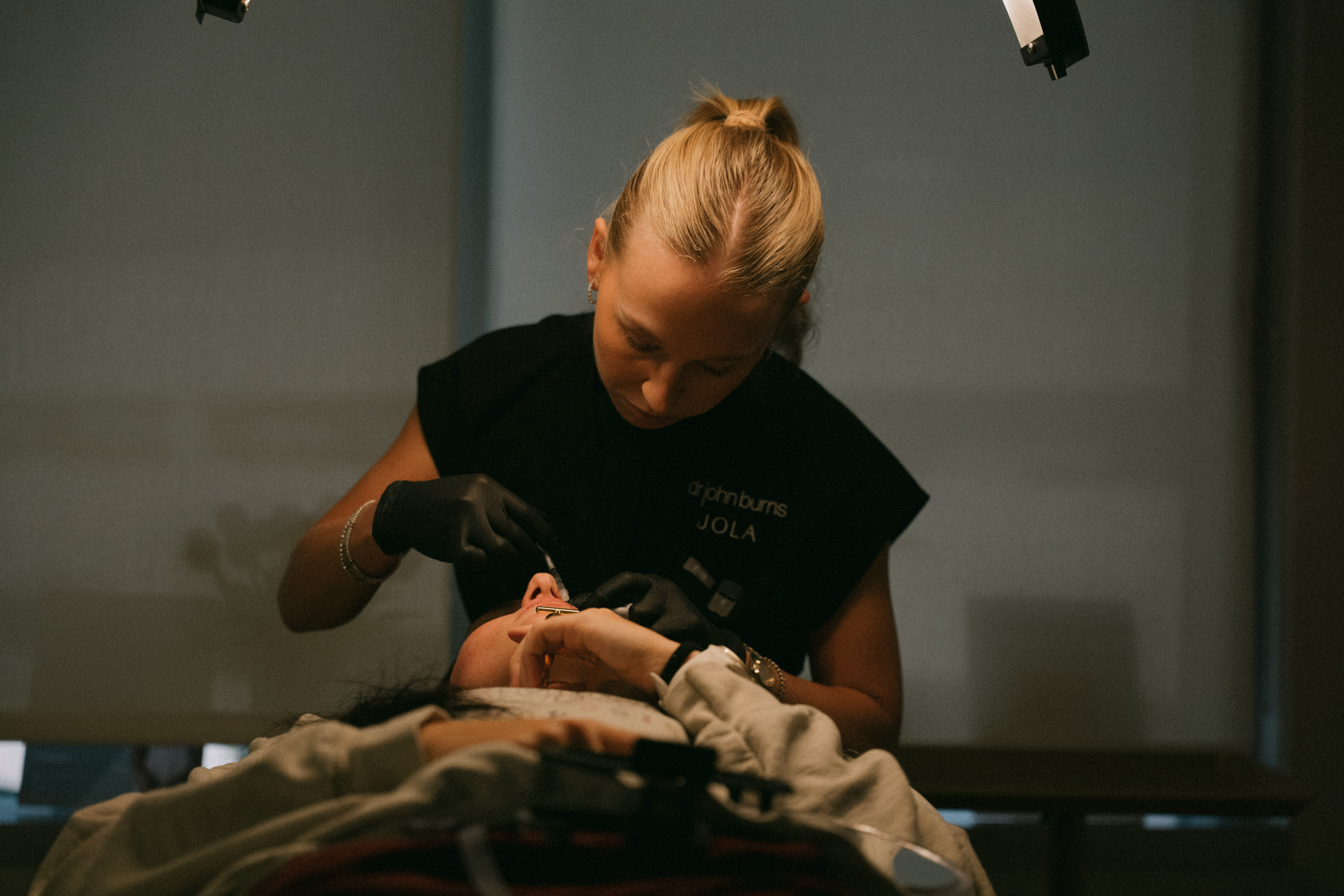
PILLAR GUIDE / COLLAGEN & SKIN REJUVENATION
JOLA DALLAS
COLLAGEN IS NOT
A TREATMENT.
Why XERF, Sculptra, microneedling and laser can all enter the collagen conversation — for very different reasons. A consultation-led guide to the best collagen-stimulating treatments in Dallas.
JOLA DALLAS / AUGUST 2026
PILLAR RESOURCE
THE DIRECT ANSWER
What Is the Best Treatment to Stimulate Collagen?
There is no single best collagen-stimulating treatment for everyone. Across Dallas and Highland Park, patients ask this question expecting one answer — but the honest answer is that different treatments influence collagen through different mechanisms and are chosen for different concerns. The best collagen stimulating treatments are not a ranking; they are a mapping of mechanism to problem.
XERF is a non-invasive radiofrequency treatment that may enter the conversation when skin firmness and laxity are priorities. Sculptra is an injectable poly-L-lactic acid biostimulator used to stimulate collagen through a different pathway and may be considered when facial support and volume-related goals are relevant. Microneedling and RF microneedling may be considered when texture and remodeling are priorities. Fractional laser treatments may address skin quality, texture, pigment, and resurfacing depending on the technology.
The correct treatment depends on the anatomical problem — firmness, volume, texture, scarring, pigment, or skin quality — not simply the desire to "make more collagen." This guide explains why these categories are not interchangeable and how JOLA Dallas approaches the question through consultation-led, anatomy-first planning.
SECTION 01
The 30-Second Answer
01
XERF
CATEGORY
Non-invasive RF
COMMON CONVERSATION
Firmness / laxity
02
SCULPTRA
CATEGORY
Injectable biostimulator
COMMON CONVERSATION
Collagen support / facial volume and structure according to indication and planning
03
MICRONEEDLING / RF MICRONEEDLING
CATEGORY
Controlled skin remodeling
COMMON CONVERSATION
Texture / scars / skin quality, depending on technology
04
LASER
CATEGORY
Light-based / resurfacing technology
COMMON CONVERSATION
Texture / pigment / resurfacing / skin quality depending on laser
ALL MAY INVOLVE COLLAGEN. THAT DOES NOT MAKE THEM INTERCHANGEABLE.
SECTION 02
What Is Collagen?
Collagen is a structural protein — the most abundant protein in the human body — and a primary component of the dermis, the skin's deeper layer. Together with elastin and the extracellular matrix, collagen provides the skin with its firmness, resilience, and structural support. Fibroblasts, the cells responsible for producing collagen, maintain and repair this network throughout life.
It is important not to oversimplify collagen as the sole determinant of how skin ages. Skin quality involves hydration, barrier function, pigment behavior, vascular health, and surface texture — not collagen alone. Collagen is one important component of a complex biological system, not the entire explanation for why skin changes over time.
Why Does Collagen Change With Age?
Collagen changes through a combination of intrinsic aging — the natural biological program of the skin over time — and extrinsic factors including UV exposure, environmental damage, and lifestyle factors such as smoking. Over time, the balance between collagen production and collagen breakdown shifts, and the existing collagen network may become less dense and less organized.
It is tempting to cite a single annual collagen-decline percentage, but the reality is more nuanced. Collagen loss is not a uniform cliff that begins at a specific age for everyone — it is influenced by genetics, sun exposure history, skin type, hormonal changes, and environmental factors. We prefer to avoid simplistic percentage claims and instead emphasize that collagen-related biology is progressive, individual, and influenced by factors that patients and providers can consider together.
SECTION 04
Is Collagen Loss Really the Reason Your Face Looks Different?
Not always. This is one of the most important distinctions JOLA Dallas makes in consultation. When a patient notices their face changing, collagen is frequently invoked — but facial aging involves multiple overlapping factors:
- — Changes in facial fat pad position and volume
- — Bone structure and skeletal support
- — Tissue position and gravitational descent
- — Muscle activity and movement patterns
- — Pigment changes and sun damage
- — Vascular changes
- — Hydration and skin barrier quality
- — Surface texture and skin quality
A patient who attributes every change to "collagen loss" may select a treatment that does not address the actual anatomical driver. This is why a consultation begins with what changed — not with a treatment category.
COLLAGEN IS ONE PART OF FACIAL AGING.
NOT THE ENTIRE EXPLANATION.
SECTION 05
Can You Actually "Rebuild" Collagen?
The word "rebuild" is marketing language, not a clinical guarantee. You cannot literally restore collagen to a youthful baseline. What is possible is supporting collagen production, encouraging collagen remodeling, or — where scientifically appropriate — neocollagenesis (the formation of new collagen) through specific treatment mechanisms. Different interventions initiate different biological responses, and none of them "reverses" aging. Precision in language matters because imprecise claims lead to imprecise expectations.
SECTION 06
What Does "Collagen Stimulation" Actually Mean?
"Collagen stimulation" is not one mechanism. Different interventions may initiate different biological responses:
ENERGY
Radiofrequency heats dermal tissue, triggering collagen contraction and remodeling (e.g., XERF).
INJECTABLE BIOSTIMULATION
PLLA material stimulates fibroblasts to produce collagen over time (e.g., Sculptra).
CONTROLLED MICRO-INJURY
Needles create micro-wounds that initiate a wound-healing remodeling response (microneedling).
FRACTIONAL RESURFACING
Light-based thermal injury remodels skin surface and deeper tissue (fractional laser).
These are not identical mechanisms. They target different tissue, produce different responses, and address different concerns.
SECTION 07
The Collagen Treatment Map
FOUR PATHWAYS. FOUR DIFFERENT CONVERSATIONS.
01
XERF
→ RADIOFREQUENCY
→ SKIN FIRMNESS
EXPLORE →
02
SCULPTRA
→ INJECTABLE PLLA
→ BIOSTIMULATION / SUPPORT
EXPLORE →
03
MICRONEEDLING
→ CONTROLLED MICRO-INJURY
→ TEXTURE / REMODELING
EXPLORE →
04
LASER
→ CONTROLLED LIGHT / THERMAL INTERACTION
→ RESURFACING / SKIN QUALITY
EXPLORE →
THE BEST PATHWAY DEPENDS ON THE PROBLEM.
SECTION 08
How Does XERF Support Collagen-Related Skin Firmness?
XERF is a non-invasive radiofrequency skin tightening treatment. Developed by Cynosure Lutronic, XERF delivers multifrequency monopolar radiofrequency energy through the skin surface into the dermal layers where collagen resides. The thermal energy generates controlled heat in the tissue, which may trigger existing collagen to contract and support a progressive remodeling response over the weeks and months following treatment.
Because the delivery is non-invasive — no needles, no numbing, no injected product — XERF is discussed in the context of skin firmness and laxity rather than volume or biostimulation. The radiofrequency energy works at the structural collagen layer, which is why XERF Dallas patients considering the treatment are typically those noticing early to moderate skin laxity in the jawline, neck, or lower face.
Collagen remodeling through radiofrequency is a well-established concept in energy-based aesthetics. However, the specific results, treatment course, and appropriateness of XERF for any individual patient depend on anatomy, degree of laxity, and treatment goals — confirmed through consultation, not self-selection. For a deeper explanation of the treatment, read What Is XERF? and explore XERF for Sagging Skin.
SECTION 09
XERF Is Not an Injectable Biostimulator
This is an important semantic distinction. XERF may affect collagen-related skin remodeling through energy — radiofrequency applied to the skin surface. Sculptra works through an injectable PLLA mechanism beneath the skin surface. These are fundamentally different pathways. XERF should not be called a "biostimulator injection" — it is neither injectable nor a biostimulator in the PLLA sense. Implying the mechanisms are identical conflates two distinct treatment categories and can lead to incorrect treatment selection.
SECTION 10
How Does Sculptra Stimulate Collagen?
Sculptra is an injectable treatment whose active ingredient is poly-L-lactic acid (PLLA), a biocompatible material that has been studied and used in medicine for decades. When injected into the appropriate tissue layer, PLLA works as a biostimulator — it encourages the body's own fibroblasts to produce new collagen in the treated area over time. This response is gradual, typically developing over weeks to months following a treatment series.
Because Sculptra works through biostimulation rather than simply adding volume through an injected gel, it is discussed in the context of facial support and structural change. It is used according to its approved indication and treatment planning — not as a generic "collagen injection." For a deeper explanation, read Sculptra Dallas, Does Sculptra Actually Work?, and explore biostimulatory treatments.
SECTION 11
Is Sculptra a Filler?
Patients often call Sculptra a "filler" because it is injected and because it addresses facial volume-related concerns. However, its mechanism and treatment behavior differ from conventional hyaluronic-acid dermal fillers. HA fillers primarily add volume through the injected gel material itself — the result is immediate and proportional to the amount injected. Sculptra works through biostimulation — the result develops gradually as the body produces its own collagen in response to the PLLA material. Calling Sculptra a "filler" without this distinction can create incorrect expectations about timing, mechanism, and results. For a full comparison, read biostimulators vs dermal fillers.
SECTION 12
XERF vs Sculptra for Collagen
XERF
DELIVERY
Energy-based / non-invasive
PRIMARY CONVERSATION
Skin firmness
ADDS INJECTED PRODUCT
No
SCULPTRA
DELIVERY
Injection
PRIMARY CONVERSATION
Biostimulation / support according to treatment plan
ADDS INJECTED PRODUCT
Yes
THE QUESTION IS NOT: WHICH CREATES "MORE COLLAGEN?"
THE QUESTION IS: DO YOU NEED SKIN FIRMNESS, FACIAL SUPPORT, OR BOTH?
For a full comparison, read XERF vs Sculptra and XERF + Sculptra — and explore how these two categories may work together when a patient has both skin firmness and volume concerns.
SECTION 13
How Does Microneedling Affect Collagen?
Traditional microneedling uses fine needles to create controlled micro-injuries in the skin. This initiates a wound-healing response that may include collagen remodeling. Microneedling is commonly discussed for texture, fine lines, and acne scars — concerns where surface and dermal remodeling are the goal. It should not be claimed that traditional microneedling tightens significant skin laxity; that is not its primary mechanism. For more, read about microneedling in Dallas and Advanced Skin Refinement.
SECTION 14
How Is RF Microneedling Different?
RF microneedling combines needles with radiofrequency energy. The needles create the micro-channels, and RF energy is delivered through those needles into the dermis — adding a thermal component to the mechanical remodeling response. This device-dependent delivery may address texture, scarring, and some firmness concerns depending on the technology. For a full comparison, read XERF vs RF Microneedling.
SECTION 15
Traditional Microneedling vs RF Microneedling
MICRONEEDLING
Needles
RF MICRONEEDLING
Needles + RF
XERF
RF without microneedles
THE WORD "RF" DOES NOT MAKE TWO TREATMENTS THE SAME.
SECTION 16
How Do Lasers Affect Collagen?
"Laser" is a broad category. Different lasers differ in wavelength, target chromophore, depth, ablative vs non-ablative delivery, fractional vs full-field treatment, pigment interaction, vascular interaction, and resurfacing capability. Certain lasers — particularly fractional resurfacing — are associated with collagen remodeling as part of the skin's healing response. But not all lasers are chosen for collagen-related purposes. Some target pigment, some target vascular structures, some remove hair. Generalizing "laser stimulates collagen" oversimplifies a technology family. For the full category, explore laser treatments in Dallas.
SECTION 17
Ablative vs Non-Ablative Collagen Treatments
Ablative treatments remove or vaporize the outer skin layer, creating a more intensive resurfacing and remodeling response with correspondingly more recovery. Non-ablative treatments preserve the surface and deliver energy to deeper tissue with less recovery but a different intensity profile. The trade-off is between treatment intensity, surface injury, recovery, and treatment goals. Neither is universally "better" — the choice depends on the concern, skin type, downtime tolerance, and desired magnitude of change.
SECTION 18
Which Treatment Is Best for Skin Firmness?
When skin firmness and laxity are the primary concern, non-invasive radiofrequency treatments like XERF may enter the conversation. Other energy-based technologies — including ultrasound-based devices — may also be relevant depending on the anatomy. The right choice depends on the degree of laxity, the treatment area, and individual goals. Read XERF for Sagging Skin, XERF for Jawline, and XERF for Neck.
SECTION 19
Which Treatment Is Best for Facial Volume Loss?
Collagen language can obscure volume loss. When the concern is true facial volume loss, potential categories include Sculptra, dermal filler, and facial balancing — depending on anatomy. XERF should not be presented as a volume replacement; it addresses skin firmness, not volume restoration. Conflating firmness with volume leads to incorrect treatment selection. Explore Facial Balancing and injectables in Dallas.
SECTION 20
Which Collagen Treatment Is Best for Texture?
When surface texture is the dominant concern, microneedling, RF microneedling, fractional laser, or chemical peel / Advanced Skin Refinement may be more relevant than XERF. Texture and laxity are different concerns — XERF addresses the structural collagen layer for firmness, while texture treatments address the surface and upper dermis for smoothness and refinement. The treatment should follow the concern.
SECTION 21
Which Collagen Treatment Is Best for Acne Scars?
Acne scar treatment depends on scar type — atrophic, rolling, boxcar, or ice-pick scars each respond differently. RF microneedling, traditional microneedling, and certain fractional lasers are commonly discussed for scarring. XERF is not positioned as a primary acne-scar treatment unless specifically supported for the scar type in question. Scar-focused treatment planning through consultation is the right starting point.
SECTION 22
Which Collagen Treatment Is Best for Fine Lines?
Fine lines may arise from movement, photoaging, skin quality, texture, or laxity. Botox may address movement lines; laser or microneedling may address texture-related lines; skin tightening may address laxity-related lines; skincare may support skin quality. The word "collagen" alone is insufficient — the cause of the line determines the treatment. Read about Botox / Dysport in Dallas.
SECTION 23
Which Collagen Treatment Is Best for Jowls?
Jowls are multifactorial. Skin firmness is only one component. XERF may enter the conversation for the skin-tightening component, while facial balancing and injectable support may address structural components. Read XERF for Jowls and Facial Balancing.
SECTION 24
Which Collagen Treatment Is Best for the Jawline?
Jawline appearance involves skin, chin projection, jaw structure, jowls, submental contour, and volume. XERF may address the skin-firmness component; facial balancing and injectables may address structural components. The right plan depends on which factors are driving the concern. Read XERF for Jawline and explore jawline & chin sculpting.
SECTION 25
Which Collagen Treatment Is Best for the Neck?
Neck concerns may involve laxity, texture, crepey appearance, muscle, and submental fullness. XERF may enter the conversation for neck firmness. Texture treatments may address crepiness. A consultation determines the right combination for the specific neck anatomy. Read XERF for Neck.
SECTION 26
Collagen vs Volume
This is a central distinction. Skin can be firm but volume-deficient. A face can have volume but poor skin quality. A patient can have both — or neither. Collagen language and volume language are not interchangeable, and conflating them leads to treatment plans that address the wrong concern.
BETTER SKIN DOES NOT ALWAYS REQUIRE MORE VOLUME.
MORE VOLUME DOES NOT AUTOMATICALLY CREATE BETTER SKIN.
SECTION 27
Collagen vs Elastin
Collagen provides structural firmness; elastin provides the skin's ability to stretch and recoil. They are distinct proteins with distinct roles, and both decline with age. Marketing sometimes collapses them into a single "youth protein" narrative, but they are biologically different and respond differently to treatment. Precision matters.
SECTION 28
Collagen vs Hyaluronic Acid
Collagen is a structural protein. Hyaluronic acid (HA) is a molecule that attracts and binds water, contributing to skin hydration. HA exists naturally in the skin and is also used as an injectable dermal filler material. Topical hyaluronic acid (skincare) should not be conflated with injectable HA filler — they are different products with different capabilities. Neither collagen nor HA is "better" — they serve different functions in skin biology and treatment.
SECTION 29
Does Botox Build Collagen?
No — not primarily. Botox and Dysport are neuromodulators that address muscle activity by temporarily reducing the movement of treated muscles. They are not primarily discussed as collagen treatments. Positioning neuromodulators as collagen stimulators misrepresents their mechanism. They are excellent for movement lines, but they are not a collagen intervention. Read about Botox / Dysport in Dallas.
SECTION 30
Does Dermal Filler Build Collagen?
Different filler products and materials behave differently. Conventional hyaluronic-acid fillers are primarily discussed for volume and contour, not as JOLA's primary "collagen treatment." Biostimulators like Sculptra work through a different mechanism. A universal statement that "filler builds collagen" is not accurate across all products. The distinction between HA filler and biostimulatory injectables matters for treatment planning.
SECTION 31
What Is "Collagen Banking"?
"Collagen banking" is a consumer-facing marketing concept used to describe strategies intended to support collagen before more visible age-related changes develop. It is commonly used in aesthetics — but it is not a literal biological bank account. You cannot deposit collagen for later withdrawal. The term should be understood as a framing device for early, preventive treatment thinking, not as a settled medical fact. Patients should interpret it critically and not feel pressured into unnecessary treatment by the language alone.
YOU CANNOT DEPOSIT COLLAGEN FOR LATER.
SECTION 32
When Should You Start Collagen-Stimulating Treatments?
There is no universal age to start. Concern, skin condition, anatomy, sun exposure, goals, and treatment category matter more than birthday. Some patients benefit from early preventive support; others do not need treatment until a specific concern appears. A consultation — not a birthday — determines timing. Read Best Age to Start Aesthetic Treatments and Prejuvenation.
SECTION 33
Collagen Treatments in Your 20s
Prevention should not mean unnecessary procedures. In your 20s, the focus is typically on sun protection, skincare, and skin health. Appropriate treatment may be considered when a specific concern is present — but the absence of visible change does not automatically warrant intervention. The goal is to build healthy skin habits, not to start a treatment timeline prematurely.
SECTION 34
Collagen Treatments in Your 30s
In your 30s, early texture changes, movement lines, skin quality shifts, and early firmness changes may begin. Treatment is not mandatory. When indicated, categories may include skincare, neuromodulators for movement, microneedling for texture, or early energy-based treatment — depending on the specific concern and anatomy. The plan should be individualized.
SECTION 35
Collagen Treatments in Your 40s
In your 40s, skin firmness, texture, volume changes, photoaging, and lower-face changes may become more visible. Multi-category planning may become relevant — combining energy-based treatment for firmness, injectable support for volume, and skin treatments for texture. The plan should be individualized, not template-driven.
SECTION 36
Collagen Treatments in Your 50s and Beyond
Later treatment can still be highly appropriate. Age does not automatically determine treatment. The desired magnitude of change, anatomy, and goals matter more than age alone. Some patients benefit from layered plans; others from a single category; others from skincare and observation.
SECTION 37
Can You Stimulate Collagen Without Adding Filler?
Potentially, yes. Energy-based treatments like XERF and skin-remodeling treatments like microneedling do not necessarily involve adding facial volume. For patients whose concern is skin firmness or texture — not volume — these categories may be appropriate without any injectable product. However, if the concern is true volume loss, avoiding all volume treatment may not address the actual issue. The treatment should follow the concern — not a preference for or against a category. XERF naturally enters this conversation for patients seeking firmness without volume.
SECTION 38
Can You Combine Collagen-Stimulating Treatments?
Potentially, when different treatments address different concerns. XERF + Sculptra may combine firmness and support. XERF + skin refinement may combine firmness and texture. XERF + laser may combine firmness and resurfacing. Sculptra + skin treatments may combine support and surface quality. Combination plans should have a reason — not simply because multiple treatments are described as "collagen stimulating." Sequencing and timing should be determined through consultation, not assumed.
SECTION 39
Can You "Overstimulate" Collagen?
The more useful concern is overtreatment. Multiple treatments should not be stacked simply because they are described as "collagen stimulating." Device, dose, timing, tissue, and indication matter. More collagen language does not automatically mean a better treatment plan.
MORE COLLAGEN LANGUAGE DOES NOT MEAN A BETTER TREATMENT PLAN.
SECTION 40
How Long Does Collagen Remodeling Take?
Collagen remodeling is progressive and treatment-specific. XERF, Sculptra, microneedling, and laser each have different biological timelines. There is no single timeline that applies to all categories. Your provider outlines category-specific expectations during consultation — and these timelines should not be invented or generalized across treatments.
SECTION 41
How Long Do Collagen-Treatment Results Last?
Longevity is treatment-specific and depends on ongoing aging, sun exposure, maintenance, baseline anatomy, and treatment type. There is no universal longevity promise across XERF, Sculptra, microneedling, and laser. Each category has its own maintenance considerations, which should be discussed during consultation.
SECTION 42
Can Skincare Build Collagen?
Certain evidence-based topical categories, such as retinoids, may support skin quality over time. However, topical skincare should not be expected to reproduce procedural outcomes. Skincare and procedures have different capabilities and occupy different roles in a skin plan. Explore clinical skincare and skin health programs.
SECTION 43
What About Collagen Supplements?
Oral collagen supplementation is a separate question from procedural collagen remodeling. The evidence for oral collagen supplements should be interpreted carefully. JOLA does not make supplement recommendations or medical promises about collagen supplements. They are not a substitute for procedural treatment when a procedural concern exists. This section is informational, not a supplement sales pitch.
SECTION 44
The "What Do I Actually Need?" Collagen Map
DON'T START WITH COLLAGEN. START WITH THE CHANGE YOU SEE.
MY SKIN FEELS LOOSER
↓ EXPLORE
XERF · Skin Tightening
MY FACE LOOKS HOLLOWER
↓ EXPLORE
Sculptra · Facial Balancing · Dermal Filler
MY SKIN TEXTURE HAS CHANGED
↓ EXPLORE
Microneedling · Advanced Skin Refinement · Laser Treatments
I HAVE ACNE SCARS
↓ EXPLORE
Scar-focused treatment planning
MY JAWLINE LOOKS SOFTER
↓ EXPLORE
XERF · Facial Balancing
MY NECK LOOKS CREPEY / LOOSE
↓ EXPLORE
XERF · Skin Rejuvenation · appropriate texture treatment
I HAVE SUN DAMAGE
↓ EXPLORE
Laser Treatments · Skin Health
I WANT "COLLAGEN" BUT DON'T KNOW WHY
↓ EXPLORE
Aesthetic Consultation
EDUCATIONAL ONLY — NOT A CANDIDACY TOOL
SECTION 45
The JOLA Collagen Framework
THE COLLAGEN QUESTION
COLLAGEN IS THE BIOLOGY.
TREATMENT PLANNING IS THE STRATEGY.
SECTION 46
Why JOLA Doesn't Have One "Best Collagen Treatment"
A clinic with multiple technologies should not force every concern into one device. Owning XERF should not make every patient an XERF patient. Offering Sculptra should not make every aging concern a Sculptra concern. Offering lasers should not make every skin concern a laser concern. This is central to JOLA's philosophy: the treatment should follow the anatomy, not the inventory.
THE TREATMENT SHOULD FOLLOW THE ANATOMY.
NOT THE INVENTORY.
SECTION 47
When XERF May Make Sense
Potentially relevant when skin firmness, laxity, jawline, neck, and non-invasive treatment preference are central to the goal. Explore XERF Dallas.
SECTION 48
When Sculptra May Make Sense
Potentially relevant when biostimulation, facial support, and volume-related change are part of treatment planning. This is not a diagnosis — it is a category consideration confirmed through consultation.
SECTION 49
When Microneedling May Make Sense
Potentially relevant when texture, scars, and skin refinement are central.
SECTION 50
When Laser May Make Sense
Potentially relevant when pigment, sun damage, texture, resurfacing, and specific skin-quality concerns are dominant. Laser choice matters — different wavelengths and devices address different concerns.
SECTION 51
When More Than One Category May Make Sense
Layered treatment planning may be appropriate when a patient has firmness + volume + texture — each requiring a different category. The plan should be built around the specific anatomy, not invented protocols or template stacking.
SECTION 52
When None of These May Be Necessary
Some patients may benefit most from skincare, sun protection, observation, another treatment category, or no treatment. "Not yet" is a valid aesthetic plan. The integrity to say this is part of what distinguishes consultation-led care from transactional treatment.
"NOT YET" IS A VALID AESTHETIC PLAN.
SECTION 53
THE ENERGY-BASED COLLAGEN PERSPECTIVE
Chey Cope
LASER SPECIALIST · JOLA DALLAS
When evaluating energy-based treatment options, the considerations at JOLA Dallas may include skin quality, firmness, laxity, texture, pigment, scarring, jawline, neck, previous RF, previous microneedling, previous laser, previous filler, previous Sculptra, skin tone, post-inflammatory hyperpigmentation history, downtime tolerance, and the desired result.
This individualized assessment — not a single device — is what guides how energy-based treatment fits into a collagen-related plan. The relationship between Chey Cope, JOLA Dallas, XERF, laser treatments, and energy-based skin rejuvenation is built around consultation-led, anatomy-first planning.
SECTION 54
How JOLA Decides Which "Collagen Treatment" Actually Fits
A JOLA consultation begins with what you see, identifies the anatomical change creating it, determines whether the issue is skin, volume, texture, structure, pigment, or movement, and then selects the treatment category that addresses it. The process is:
WHAT DO YOU SEE? ↓
WHAT ANATOMICAL CHANGE IS CREATING IT? ↓
IS THE ISSUE: SKIN? VOLUME? TEXTURE? STRUCTURE? PIGMENT? MOVEMENT? ↓
WHAT CATEGORY ADDRESSES IT? ↓
WHAT SHOULD WAIT?
Explore aesthetic consultation, treatment planning, and JOLA's treatment philosophy.
SECTION 55
Collagen Treatment Comparison Table
| XERF | SCULPTRA | MICRONEEDLING | RF MICRONEEDLING | FRACTIONAL LASER | |
|---|---|---|---|---|---|
| Treatment category | Non-invasive RF | Injectable biostimulator | Controlled micro-injury | Micro-injury + RF | Light-based resurfacing |
| Energy / material | Radiofrequency | Poly-L-lactic acid | Needles only | Needles + radiofrequency | Laser wavelength |
| Needles? | No | Yes (injection) | Yes | Yes | Device-dependent |
| Injectable? | No | Yes | No | No | No |
| Primary conversation | Skin firmness | Biostimulation / support | Texture / remodeling | Texture / scarring / firmness | Resurfacing / pigment / skin quality |
| Firmness | PRIMARY | NOT PRIMARY | NOT PRIMARY | POSSIBLE | DEVICE-DEPENDENT |
| Volume | NOT PRIMARY | PRIMARY | NOT PRIMARY | NOT PRIMARY | NOT PRIMARY |
| Texture | NOT PRIMARY | NOT PRIMARY | PRIMARY | PRIMARY | PRIMARY |
| Acne scars | NOT PRIMARY | NOT PRIMARY | POSSIBLE | PRIMARY | DEVICE-DEPENDENT |
| Pigment | NOT PRIMARY | NOT PRIMARY | NOT PRIMARY | NOT PRIMARY | PRIMARY |
| Surface resurfacing | No | No | POSSIBLE | POSSIBLE | PRIMARY |
| Downtime | Minimal | Minimal | Variable | Variable | Variable |
| Progressive results | Yes | Yes | Yes | Yes | Yes |
| Treatment areas | Face, jawline, neck | Face (per indication) | Face, neck | Face, neck | Face, neck, décolletage |
| Best-fit concern | Skin laxity / firmness | Facial support / volume | Texture / fine lines | Scars / texture / firmness | Pigment / texture / resurfacing |
| Important limitation | Not a volume treatment | Not a skin-tightening device | Not for significant laxity | Device-dependent depth | Not for all skin concerns |
PRIMARY · POSSIBLE · NOT PRIMARY · DEVICE-DEPENDENT · CONSULTATION-DEPENDENT — NOT RANKINGS
SECTION 56
Questions to Ask Before a "Collagen" Treatment
QUESTIONS TO ASK BEFORE A "COLLAGEN" TREATMENT
What am I actually trying to improve?
Is the issue skin firmness?
Is the issue volume loss?
Is the issue texture?
Is the issue acne scarring?
Is the issue pigment?
Is the issue movement?
Is the issue facial structure?
Why is collagen relevant to my concern?
What treatment category is being recommended?
How does it interact with tissue?
Is it energy-based?
Is it injectable?
Does it use needles?
Does it resurface the skin?
Does it add volume?
Is volume actually desirable?
What result should I realistically expect?
What will it not change?
When should results appear?
Is the response progressive?
What downtime is expected?
What temporary effects are common?
Does my skin tone affect treatment planning?
Does my PIH history matter?
Does previous filler matter?
Does previous Sculptra matter?
Does previous RF / laser matter?
Would another treatment category fit better?
Would doing nothing yet be reasonable?
SECTION 57
What Is the Best Collagen-Stimulating Treatment? The Bottom Line
There is no universal best collagen treatment. Collagen is one component of skin and facial aging — not the entire explanation. Collagen loss is not synonymous with volume loss. XERF uses radiofrequency, is non-invasive, and may enter the conversation when skin firmness and laxity are important. Sculptra is injectable PLLA and works through a different biostimulatory pathway. Sculptra and XERF are not interchangeable. Microneedling is another category entirely. RF microneedling is not the same as XERF. Laser is a broad category, and different lasers have different targets.
Texture differs from laxity. Scarring differs from laxity. Pigment differs from laxity. Volume differs from skin quality. Botox is not primarily a collagen treatment. Filler should not be conflated with skin tightening. "Collagen banking" should not encourage unnecessary treatment. Age alone should not determine treatment. More treatments do not automatically mean more benefit. Combination plans may be useful when multiple concerns exist — but some patients need only one category, some need another, and some need nothing yet.
If you are searching for the "best collagen treatment," start by replacing one question — what builds the most collagen? — with a better one: what am I actually trying to change? Firmness? Volume? Texture? Scarring? Skin quality? Once the concern is clear, the collagen conversation becomes much more useful.
COLLAGEN IS THE BIOLOGY.
THE CONCERN CHOOSES THE TREATMENT.
FIRMNESS
XERF / appropriate energy treatment
VOLUME + BIOSTIMULATION
SCULPTRA / appropriate injectable planning
TEXTURE
MICRONEEDLING / RF MICRONEEDLING / LASER depending on concern
SCARRING
SCAR-SPECIFIC TREATMENT
PIGMENT
APPROPRIATE LASER / SKIN TREATMENT
MULTIPLE CONCERNS
STAGED TREATMENT PLANNING
SIMPLIFIED EDUCATIONAL FRAMEWORK
Frequently Asked Questions
COLLAGEN IS ONLY THE BEGINNING
Begin With the Concern, Not the Treatment
JOLA Dallas offers consultation-led, anatomy-first treatment planning for patients in Dallas, Highland Park, University Park, Preston Hollow, and the Park Cities. Begin with an honest clinical conversation about what is actually changing — and which category, if any, fits.
BEGIN CONSULTATION