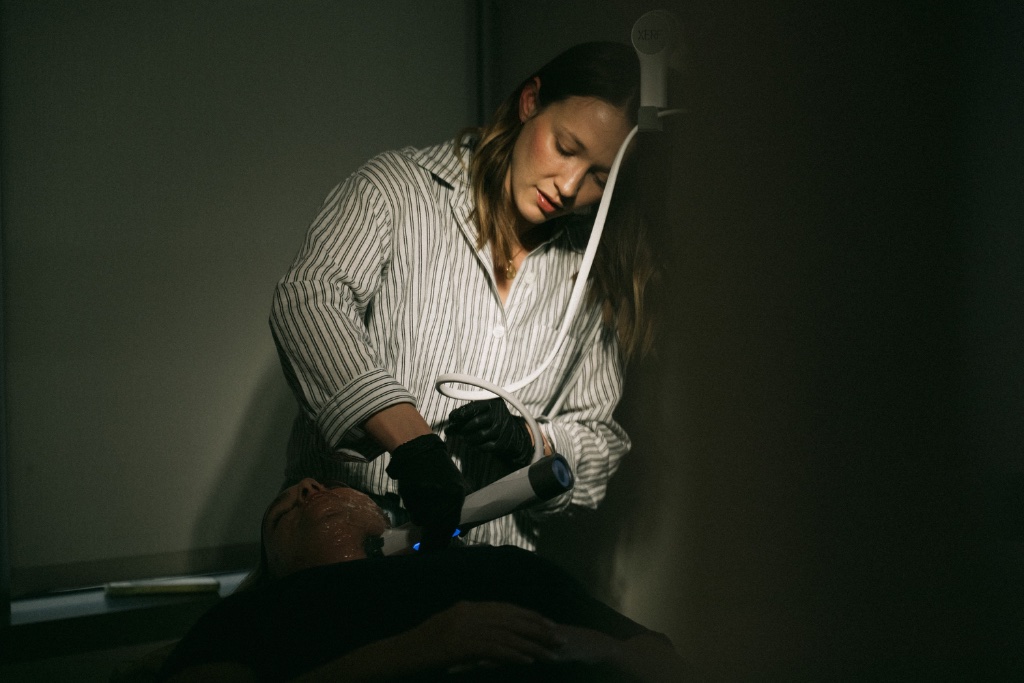
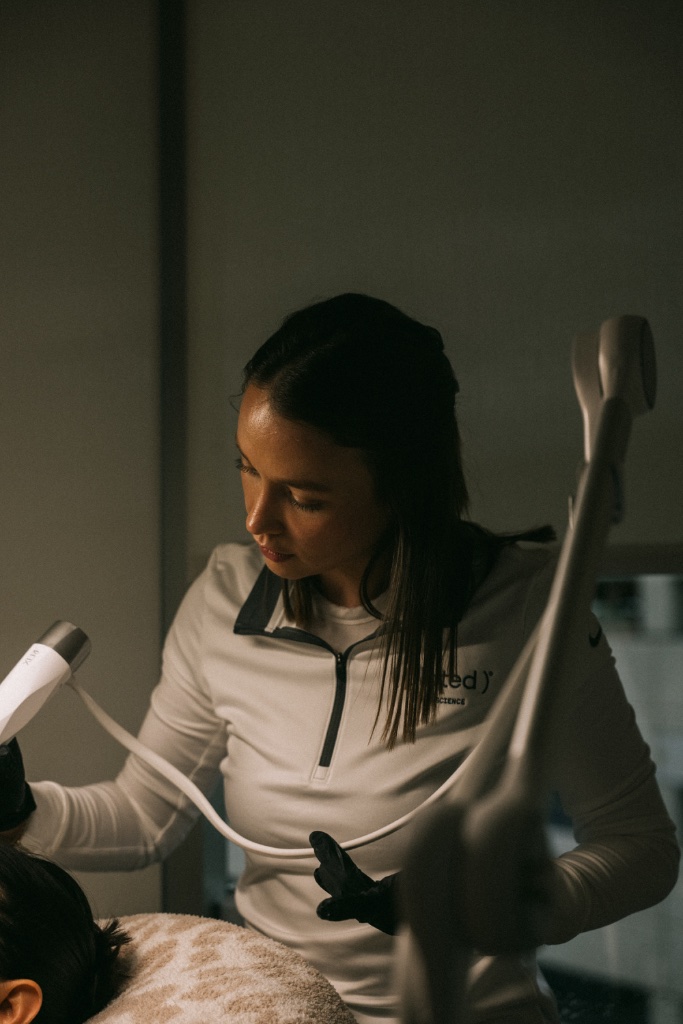
A good XERF candidate cannot be identified by age alone. XERF may be considered when the concern appropriately relates to skin firmness or laxity and the patient wants a non-invasive radiofrequency approach, but candidacy depends on anatomy, degree of change, treatment area, medical history, previous procedures, goals, and realistic expectations. Some patients who think they need XERF may actually be seeing volume loss, structural proportions, submental fullness, skin texture, pigmentation, muscle activity, or tissue descent that requires a different conversation. Individual assessment matters.
Among patients across Dallas — including Highland Park, University Park, Preston Hollow, and the Park Cities — the question am I a good candidate for XERF is one of the most important to ask before booking. And it deserves a more thoughtful answer than a checklist or an age range.
NOT:
"I'm 45."
BUT:
"I have this specific change."
↓ "What tissue is causing it?"
↓ "Does XERF address that tissue?"
↓ "Is the expected magnitude aligned with my goal?"
CANDIDACY IS A MATCH BETWEEN A CONCERN AND A MECHANISM. NOT A MATCH BETWEEN A TREATMENT AND A BIRTHDAY.
SECTION 02 / START WITH THE CONCERN, NOT THE DEVICE
Patients often arrive saying "I want XERF." A more useful starting point is: "What are you hoping to change?" Possible answers include "My jawline feels softer," "I'm noticing jowls," "My neck looks less firm," "My face changed after weight loss," "I feel like my lower face is heavier," "I look tired," "My skin feels looser," or "I want to prevent sagging." These statements can point toward very different anatomical issues.
SECTION 03 / THE FIVE THINGS THAT CAN LOOK LIKE "SAGGING"
01
SKIN LAXITY
Loss of skin firmness and elasticity.
02
VOLUME LOSS
Reduction in facial fat compartments and soft-tissue fullness.
03
STRUCTURAL PROPORTION
Chin, jaw, and skeletal relationships.
04
SUBMENTAL / FACIAL FULLNESS
Tissue accumulation under the chin or in the lower face.
05
TISSUE POSITION
Descent of facial tissues over time.
Several can coexist. The mirror shows the result. It doesn't tell you the cause.
THE MIRROR SHOWS THE RESULT. IT DOESN'T TELL YOU THE CAUSE.
SECTION 04 / WHY THIS MATTERS FOR XERF
XERF belongs primarily in a skin-firmness and RF conversation. It should not be expected to substitute automatically for filler, biostimulation, neuromodulators, pigment treatment, resurfacing, fat-reduction treatment, or surgery. This is central to appropriate candidacy. For the full overview, see what is XERF and XERF Dallas.
SECTION 05 / IS THERE A "BEST AGE" FOR XERF?
Age Is a Weak Tool
Do not create a universal age. Chronological age is a weak standalone treatment-selection tool. Two patients who are both 45 can have very different skin quality, collagen history, sun exposure, weight history, facial structure, volume, tissue position, previous treatment, and goals.
TREAT THE FACE IN FRONT OF YOU. NOT THE NUMBER NEXT TO THE BIRTHDAY.
SECTION 06 / XERF IN YOUR 20s
Some patients in their 20s may have no meaningful indication for skin-tightening treatment. If the concern is skin health, acne, pigment, texture, dynamic lines, or prevention, another treatment category may make more sense. A provider should be comfortable saying "not yet." For more, see best age to start aesthetic treatments, prejuvenation, and skin health programs.
SECTION 07 / XERF IN YOUR 30s
Patients may begin noticing subtle firmness changes, early lower-face changes, post-weight-loss changes, or nothing at all. Age itself does not establish candidacy.
30s + NO MEANINGFUL LAXITY
→
XERF may not be necessary.
30s + APPROPRIATE CONCERN
→
Assessment may be reasonable.
30s + VOLUME / STRUCTURE CONCERN
→
Another category may be more relevant.
SECTION 08 / XERF IN YOUR 40s
This may be a common decade for patients to begin noticing changes involving jawline, lower face, neck, skin firmness, and collagen-related quality — but there is still no automatic indication. Discuss treatment planning without promising results.
SECTION 09 / XERF IN YOUR 50s
Patients may have multiple simultaneous contributors: skin laxity, volume loss, structural change, tissue descent, neck changes, and skin-quality changes. This makes diagnosis more important, not less. A single modality may or may not address the entire concern.
SECTION 10 / XERF IN YOUR 60s AND BEYOND
Older age does not automatically make someone "too old" for aesthetic treatment. But expectations regarding the magnitude achievable with a non-invasive treatment become particularly important when laxity or tissue descent is more advanced. Sometimes XERF may fit. Sometimes combination planning may fit. Sometimes surgery may better match the desired magnitude. Sometimes no treatment is preferred.
SECTION 11 / CAN YOU BE TOO YOUNG FOR XERF?
The issue is not simply age. The question is whether there is an appropriate indication or concern. Treating normal youthful tissue simply because a technology is available can create unnecessary treatment.
PREVENTION SHOULD NOT BECOME PREEMPTIVE OVERTREATMENT.
SECTION 12 / CAN YOU BE TOO OLD FOR XERF?
Again, age alone is not the answer. More useful questions: How much laxity exists? What tissue is responsible? What degree of change is desired? Would non-invasive improvement satisfy the patient? Is surgery being avoided because it is genuinely unwanted, or because the patient expects XERF to reproduce surgery?
SECTION 13 / MILD VS MODERATE VS MORE ADVANCED LAXITY
Do not create unsupported clinical grading. Use descriptive language: subtle change, more visible change, more significant tissue descent. Discuss why realistic magnitude matters. Do not promise that XERF "works best" for a specific severity unless supported.
SECTION 14 / IS XERF GOOD FOR JOWLS?
FEATURED ANSWER
"Jowls" can involve skin laxity, facial volume shifts, structural anatomy, tissue descent, and potentially other factors. XERF may be relevant when skin firmness is part of the concern. It does not mean every jowl is an XERF problem. For more, see JOLA's guide to XERF for jowls.
SECTION 15 / IS XERF GOOD FOR THE JAWLINE?
A poorly defined jawline may result from skin, jowling, chin projection, mandibular contour, submental fullness, facial volume, genetics, or combinations.
Neck appearance can reflect skin laxity, platysmal activity, submental tissue, neck anatomy, sun damage, texture, and other factors. XERF may fit some skin-firmness concerns. It should not be positioned as the answer to every neck complaint. For more, see XERF for neck.
SECTION 17 / WHAT ABOUT UNDER THE CHIN?
Understand the difference between loose skin and submental fullness. A patient may have one, the other, or both. XERF should not automatically be presented as fat reduction. For more, see does XERF melt facial fat.
SECTION 18 / IS XERF GOOD FOR A THIN FACE?
Thin faces often create anxiety around energy-based treatment. Discuss existing facial volume, skin laxity, skeletal structure, treatment goal, previous volume loss, and patient concerns. Do not guarantee preservation of facial fat. For the full discussion, see does XERF melt facial fat.
SECTION 19 / IS XERF GOOD FOR A FULLER FACE?
Fullness does not necessarily mean laxity. A fuller lower face may involve facial anatomy, subcutaneous tissue, muscle, skin, structure, or combinations. Do not market XERF as facial slimming unless officially supported.
SECTION 20 / XERF AFTER WEIGHT LOSS
Weight loss can change facial volume, skin envelope, tissue support, jawline, neck, and facial proportions. The correct treatment depends on what remains after weight stabilization and individual assessment. For more, see XERF after weight loss.
SECTION 21 / XERF AFTER OZEMPIC, MOUNJARO, WEGOVY, OR OTHER GLP-1 USE
Do not imply GLP-1 medications directly "cause" a unique facial disease. Significant weight loss, regardless of method, can alter facial volume and skin relationships. The medication name alone does not determine XERF candidacy.
THE TREATMENT PLAN SHOULD RESPOND TO THE FACE. NOT THE NAME OF THE WEIGHT-LOSS METHOD.
SECTION 22 / DOES YOUR WEIGHT NEED TO BE STABLE?
Only make specific recommendations if supported by appropriate clinical guidance. Conceptually, ongoing major weight change can continue altering facial anatomy and therefore influence aesthetic planning. Do not create arbitrary "wait X months" rules.
JOLA DALLAS
Don't start with the device. Start with what you're seeing.
Previous filler does not automatically answer candidacy. Relevant factors may include product, location, amount, timing, current anatomy, and treatment area. Do not invent a waiting period. For more, see facial balancing.
SECTION 24 / XERF IF YOU HAVE SCULPTRA
Sculptra and XERF address different biological and aesthetic questions. Previous Sculptra should be disclosed. Do not invent sequencing intervals. For more, see XERF vs Sculptra and XERF + Sculptra.
SECTION 25 / XERF IF YOU GET BOTOX OR DYSPORT
Neuromodulators primarily address muscle activity. XERF belongs to a different treatment category. A patient can have both movement and firmness concerns. Treatment planning should identify which issue is responsible for what the patient sees.
SECTION 26 / XERF AFTER RF MICRONEEDLING
Previous energy treatment matters. The provider should know what treatment, when, what area, how the skin responded, and what concern remains. Do not invent retreatment timing. For more, see XERF vs RF microneedling.
SECTION 27 / XERF AFTER LASER
"Laser" is not one treatment. Previous laser history should include, if known, device or treatment type, treatment area, timing, response, complications, and current skin status. For more, see laser treatments Dallas.
SECTION 28 / XERF AFTER FACELIFT OR OTHER FACIAL SURGERY
Previous surgery changes the treatment-history conversation. Patients should disclose procedure, area, approximate date, healing history, and surgeon guidance where relevant. Do not imply XERF is routinely appropriate after surgery. Do not invent timing. For more, see XERF vs facelift.
SECTION 29 / XERF FOR MEN
Candidacy principles are fundamentally anatomy-driven. Men may have different individual skin characteristics, facial structure, hair patterns, treatment goals, and desired degree of change. But sex alone does not determine candidacy. For more, see XERF for men.
SECTION 30 / SKIN TONE AND XERF CANDIDACY
RF and light-based technologies are different. Do not create a universal "safe for all skin tones" claim without evidence. Candidacy should reflect current manufacturer guidance, skin history, pigment history, medical history, and individual assessment. For more, see is XERF safe and XERF for all skin tones.
SECTION 31 / SKIN QUALITY VS SKIN LAXITY
Skin quality can refer to texture, pigmentation, hydration, pores, fine surface changes, and radiance. Skin laxity refers to a different concern involving firmness or looseness. A patient who says "my skin looks bad" may not actually need tightening.
Volume loss may create temple hollowing, midface flattening, under-eye transitions, and changes in contour. Skin laxity creates a different treatment conversation. They may coexist. For the full guide, see loose skin vs volume loss.
SECTION 33 / STRUCTURE VS LAXITY
Some patients asking for a tighter jawline may actually be seeing chin proportion, mandibular contour, facial proportions, or structural relationships. Energy cannot replace every structural treatment. For more, see facial balancing.
SECTION 34 / MOVEMENT VS LAXITY
Dynamic lines and muscle activity belong to a different treatment category. XERF should not be used simply because the patient wants "something natural" if neuromodulation better matches the actual concern. For more, see neuromodulators.
SECTION 35 / TEXTURE / PIGMENT VS LAXITY
If the primary complaint is brown spots, sun damage, surface texture, acne scars, redness, or another skin-quality issue, another modality may be more relevant. For more, see laser treatments and skin health programs.
SECTION 36 / WHEN XERF MAY BE A STRONGER FIT
XERF may be worth discussing when: the patient has a concern related to skin firmness or laxity, the treatment area is appropriate, the patient prefers a non-invasive RF approach, the desired magnitude is realistic, the medical or treatment history does not create a contraindication, expectations align with what non-surgical treatment can reasonably accomplish, and the provider believes the mechanism matches the concern. Do not call these guarantees of candidacy.
SECTION 37 / WHEN XERF MAY BE A WEAKER FIT
XERF may be less aligned when the primary goal is: adding volume, changing skeletal proportion, treating dynamic muscle movement, treating pigment, resurfacing significant texture, removing substantial fat, reproducing surgical lifting, creating an immediate dramatic transformation, treating despite a contraindication, or treating simply because the patient reached a certain age.
SECTION 38 / WHEN SURGERY MAY DESERVE A CONVERSATION
Non-invasive treatments and surgery are not interchangeable levels of the same procedure. When the desired outcome requires significant tissue repositioning, a surgical consultation may provide more useful information. This does not mean every patient with laxity needs surgery. It means treatment magnitude should match desired magnitude. For more, see XERF vs facelift.
SECTION 39 / THE EXPECTATION TEST
What Would Make You Happy?
A
"I would like a subtle improvement in firmness."
B
"I want my face to look exactly like it did 15 years ago."
C
"I want my jowls completely gone."
D
"I want to avoid surgery but get a surgical result."
E
"I want thoughtful improvement without looking treated."
Expectations influence whether a non-invasive treatment is likely to feel worthwhile. Do not promise A or E outcomes.
SECTION 40 / THE "I DON'T WANT FILLER" PATIENT
Not wanting filler is a valid preference. But declining filler does not automatically make XERF the substitute. If the concern is primarily volume or structure, the patient should understand what XERF can and cannot change.
A PREFERENCE AGAINST ONE TREATMENT DOES NOT CHANGE THE MECHANISM OF ANOTHER.
SECTION 41 / THE "I DON'T WANT SURGERY" PATIENT
Not wanting surgery is valid. But a non-surgical treatment should not be represented as surgery without surgery. The consultation should clarify what degree of change would still feel worthwhile.
SECTION 42 / THE "I JUST WANT PREVENTION" PATIENT
Preventive thinking should remain proportional. A patient should not automatically receive every collagen-oriented technology early simply because aging will eventually occur. Sometimes skincare, sun protection, skin-health maintenance, or simply waiting may be more appropriate.
SECTION 43 / WHAT IF NOTHING REALLY BOTHERS YOU?
Curiosity about aesthetics does not create an obligation to treat. A patient may attend a consultation and decide nothing needs to be done.
YOU DO NOT NEED TO FIND A PROBLEM BECAUSE YOU BOOKED A CONSULTATION.
Is desired magnitude beyond non-invasive treatment?
Discuss realistic non-surgical limits and surgical consultation where appropriate.
No meaningful concern
Why treat?
Possibly no treatment.
SECTION 45 / THE AGE MATRIX
DECADE
QUESTION
20s
Is there actually something to treat?
30s
Is the concern skin, movement, volume, or early firmness?
40s
Which tissues are beginning to contribute?
50s
Are multiple treatment categories now involved?
60s+
What magnitude is desired, and which category can realistically provide it?
AGE PROVIDES CONTEXT. ANATOMY PROVIDES DIRECTION.
SECTION 46 / THE JOLA CANDIDACY FRAMEWORK
Before XERF, Ask
01
What do you see?
02
What actually bothers you?
03
Is it skin?
04
Is it volume?
05
Is it structure?
06
Is it movement?
07
Is it fullness?
08
Is it tissue position?
09
Is more than one factor involved?
10
What have you done before?
11
What is your medical history?
12
What magnitude do you want?
13
What downtime do you accept?
14
What treatments do you not want?
15
What can XERF realistically address?
16
What can it not address?
17
Would another category fit better?
18
Would combination planning fit better?
19
Would waiting fit better?
20
Do you need treatment at all?
THE GOAL IS NOT TO QUALIFY YOU FOR XERF. THE GOAL IS TO DETERMINE WHETHER XERF QUALIFIES FOR YOU.
SECTION 47 / CHEY COPE / LASER SPECIALIST
Candidacy Is a Clinical Decision. Not a Marketing Category.
LASER SPECIALIST / JOLA DALLAS
Chey Cope
LASER SPECIALIST — ENERGY-BASED TREATMENTS
XERF treatment planning may consider skin firmness, degree of laxity, facial structure, volume, jawline, jowls, neck, weight history, previous filler, previous Sculptra, previous RF, previous RF microneedling, previous laser, treatment goals, medical history, contraindications, desired magnitude, and expectations.
SECTION 48 / HOW JOLA DECIDES WHETHER XERF MAKES SENSE
JOLA's philosophy should not be "How do we make this patient a XERF patient?" Instead: What is the concern? What is causing it? What treatment category fits? What can wait? What would be unnecessary? What is likely to look natural? What magnitude is realistic? Is XERF actually the best fit? For more, see treatment planning and about JOLA treatment philosophy.
SECTION 49 / WHY JOLA MAY RECOMMEND SOMETHING ELSE
SKIN HEALTH
LASER
NEUROMODULATOR
FILLER
FACIAL BALANCING
BIOSTIMULATION
SURGICAL CONSULTATION
NO TREATMENT
Consultation is not a sales funnel toward one device.
SECTION 50 / WHY JOLA MAY SAY "NOT YET"
Sometimes the concern is too subtle to justify treatment. Sometimes the patient is still undergoing meaningful weight change. Sometimes another recent treatment needs to be considered. Sometimes the patient's goals are not aligned with the modality. Sometimes observation is appropriate. Do not create specific medical waiting periods.
SECTION 51 / WHY JOLA MAY SAY "NOT XERF"
NOT EVERY "NO" MEANS NO TREATMENT.
SOMETIMES IT MEANS:
NOT THIS TREATMENT.
NOT THIS AREA.
NOT THIS MOMENT.
NOT THIS MAGNITUDE.
NOT YET.
OR: YOU DON'T NEED ANYTHING.
SECTION 52 / SELF-ASSESSMENT: SHOULD I ASK ABOUT XERF?
Yes / Maybe / Different Question
01
Am I noticing reduced firmness?
02
Is my concern mostly lower-face or neck skin?
03
Am I looking for a non-invasive option?
04
Am I comfortable with subtle / progressive rather than surgical change?
05
Do I understand that XERF does not add volume?
06
Do I understand that XERF is not a facelift?
07
Do I have previous aesthetic treatments I can disclose?
08
Am I willing to have the provider recommend something else?
09
Am I willing to hear "not yet"?
10
Am I willing to hear "you do not need treatment"?
THIS IS NOT A MEDICAL CANDIDACY TEST. IT IS A BETTER WAY TO PREPARE FOR A CONSULTATION.
SECTION 53 / QUESTIONS TO ASK AT YOUR XERF CONSULTATION
30 Questions
01
What do you think is causing the change I'm seeing?
02
Is it actually skin laxity?
03
Is volume loss contributing?
04
Is facial structure contributing?
05
Is fullness contributing?
06
Is muscle movement contributing?
07
Is tissue position contributing?
08
Is XERF the right mechanism?
09
Why?
10
What will XERF not change?
11
What degree of improvement is realistic?
12
Is my age relevant?
13
Is my skin quality relevant?
14
Is my skin tone relevant?
15
Is my weight history relevant?
16
Should my weight be stable first?
17
Does my previous filler matter?
18
Does previous Sculptra matter?
19
Does previous Botox or Dysport matter?
20
Does previous laser matter?
21
Does previous RF microneedling matter?
22
Does previous surgery matter?
23
Are there medical reasons I should not have XERF?
24
What side effects should I know about?
25
What is the treatment plan?
26
When should results be evaluated?
27
Would another treatment fit better?
28
Would combination treatment fit better?
29
Would waiting make sense?
30
What would you recommend if XERF did not exist?
SECTION 54 / THE MOST IMPORTANT QUESTION
WHAT WOULD YOU RECOMMEND IF XERF DID NOT EXIST?
This question can reveal whether the recommendation begins with the patient or the device. Do not frame this as distrust. Frame it as a useful treatment-planning question.
Candidacy and comfort are separate conversations. If you are wondering is XERF painful or what the treatment feels like, our XERF treatment experience guide explains what you may feel, how numbing works, and how comfort is managed.
SECTION 55 / THE BOTTOM LINE
Are You a Good Candidate for XERF? The Bottom Line
There is no universal best age. Candidacy is anatomy-driven. Skin firmness matters. Laxity and volume loss are different. Structure and laxity are different. Fullness and laxity are different. Movement and laxity are different. Pigmentation and laxity are different. Several concerns can coexist.
XERF is non-invasive RF. XERF does not add volume. XERF is not filler. XERF is not Sculptra. XERF is not a neuromodulator. XERF is not RF microneedling. XERF is not a laser. XERF is not a facelift.
Age alone does not determine candidacy. Being young does not mean treatment is preventive or necessary. Being older does not automatically make treatment inappropriate. Severity matters. Desired magnitude matters. Previous treatments matter. Weight history may matter. Medical history matters. Contraindications matter. Expectations matter. Safety matters.
Some patients may benefit from another category. Some may benefit from combination planning. Some may benefit from waiting. Some may need surgical consultation for the magnitude they want. Some may not need treatment at all.
The question is not "am I the right patient for XERF?"
The better question is "is XERF the right treatment for what I'm seeing?"
At JOLA Dallas, that distinction matters. Because good aesthetic treatment planning is not about finding a reason to use a device. It is about understanding the face first.