
JOLA DALLAS — INJECTABLES / HOW TO CHOOSE AN AESTHETIC INJECTOR IN DALLAS
Most patients in Dallas and Highland Park begin their injectable search the same way: looking for the treatment, not the provider. They search for Botox, filler, or lip enhancement — and only then consider who will actually be performing it. This is an understandable way to start. But it is not the sequence that leads to the best outcomes.
The injector's judgment, training, and philosophy affect the result far more than the product used. Two patients receiving the same filler in the same area on the same day can look completely different — not because of the material, but because of the clinical decisions made around it. Where the product is placed, how much is used, what areas were assessed first, and whether the full face was considered as a whole: these are the variables that separate an outcome that looks natural from one that simply looks done.
Knowing how to choose an aesthetic injector in Dallas is a skill — and like all skills, it improves with better questions. This article offers seven of them. Each question targets a specific dimension of injector quality: not just technical ability, but clinical judgment, philosophical orientation, and the integrity of the consultation process that should precede any treatment.
At JOLA Dallas, the belief is that educated patients make better decisions — and that a practice which supports that education is one that earns lasting trust. These seven questions are offered in that spirit.
Why Choosing the Right Injector Matters
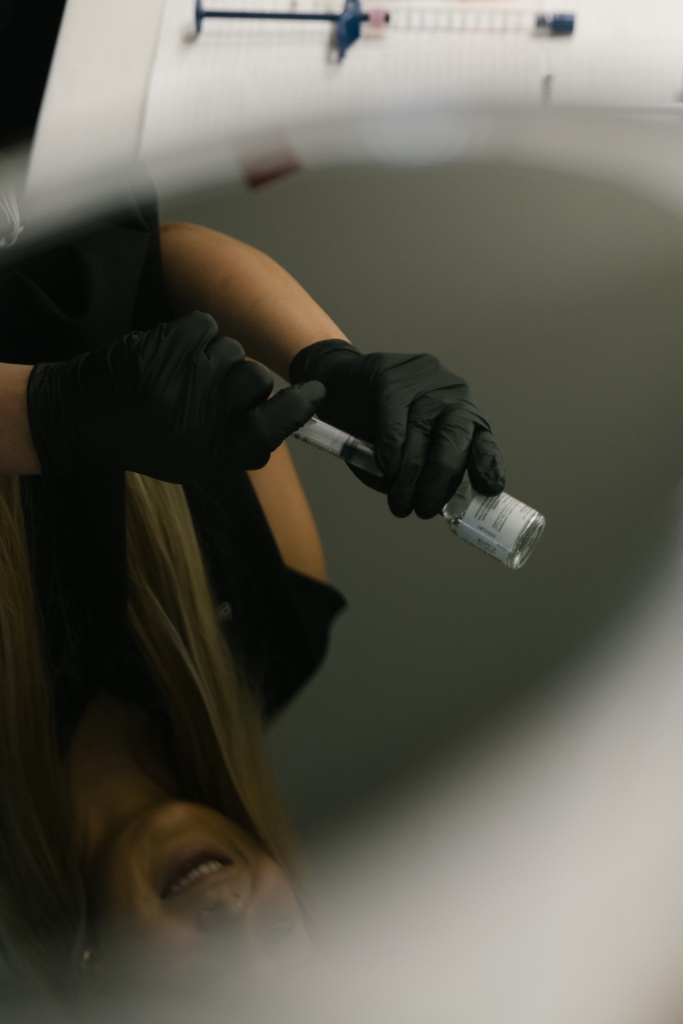
The quality of an injectable outcome is not primarily a function of the product. It is a function of who uses it, how they think about the face, and what clinical standards govern their decisions. An exceptional injector brings anatomy knowledge, restraint, judgment about candidacy, and a genuine understanding of facial harmony to every appointment. A less thoughtful one brings technique alone — and technique without judgment is where overfilled, imbalanced, or prematurely aging results come from.
Safety is the foundation. Injectables involve needles, vascular anatomy, and the potential for serious complications when placed incorrectly. Credentials, training, and ongoing clinical education are non-negotiable starting points. But safety is the floor, not the ceiling. Above it, the question becomes: does this injector produce work that looks elegant, ages gracefully, and respects the patient's individuality? That requires more than technique.
The right injector also manages the consultation with the same rigor they bring to the treatment itself. They listen carefully. They assess the whole face, not just the requested area. They advise honestly, including when the honest advice is to do less. And they build a relationship with the patient's face over time — rather than treating each appointment as a standalone product delivery.
Understanding who is injecting your face — and why it matters — is the first act of informed patient care. The seven questions that follow help patients evaluate exactly that.
Who will actually be treating me?
Confirm the treating provider before you book
What is their training and clinical background?
Credentials, experience, and specialization
How do they assess the face before treating?
Full-face evaluation vs feature-by-feature requests
What is their treatment philosophy?
Restraint, anatomy-first, consultation-led
How do they approach natural-looking outcomes?
Conservative start, editorial eye, no over-treatment
What if I am not a good candidate for what I asked for?
Willingness to redirect and say no
How do they build a plan, not just a single appointment?
Long-term strategy and staged sequencing
JOLA DALLAS — HOW TO CHOOSE AN AESTHETIC INJECTOR IN DALLAS — CONSULTATION-LED CARE
Who Will Actually Be Treating Me?
This question is more important than it may appear. In many practices, consultations are conducted by one provider while treatments are performed by another. In some settings, the person who answers questions at reception is not the same person holding the syringe. For a patient trying to choose an aesthetic injector in Dallas, establishing this from the beginning is essential.
The continuity between consultation and treatment matters clinically. The injector who assessed your face, understood your goals, and developed the plan is the same person whose judgment will govern how the product is placed. If those are not the same person — or if the consultation was superficial and the treatment is the actual clinical event — that is information worth having before booking.
A direct answer to this question — with the treating provider's name, credentials, and clinical background — is a basic quality signal. A practice that cannot or will not answer it clearly is telling you something.

What Is Their Training and Clinical Background?
Credentials in aesthetic medicine are not uniform. A nurse, a physician assistant, a nurse practitioner, and a physician may all legally perform injectables in Texas — and the range of clinical training and anatomical knowledge between them can vary enormously. What matters is not simply the license category, but the depth of clinical education, the specialization in facial anatomy, and the commitment to ongoing training that the injector brings to the work.
When evaluating a Botox or filler injector in Dallas, ask specifically: where did they train in aesthetics? Do they continue education in facial anatomy, advanced injection techniques, and complication management? Do they have a specialized background in the area you are seeking treatment — facial balancing, neuromodulators, lip enhancement, or structural support?
The best injectors are not simply experienced — they are specifically educated in facial anatomy and aesthetics, maintain current knowledge of technique and product innovation, and can discuss the anatomical rationale for every clinical decision they make. That depth of training is what separates safe from truly skilled.
How Do They Assess the Face?
This question reveals more about an injector's clinical approach than almost anything else. Ask specifically: do they evaluate the entire face before recommending treatment — or do they focus only on the area the patient requests? Do they evaluate facial movement? Do they consider proportional relationships between features? Do they assess the profile as well as the front view?
A full-face assessment is the foundation of natural-looking injectables in Dallas. The face is a composition — and understanding how features relate to each other is essential to placing product in a way that improves overall harmony rather than simply changing one part in isolation. An injector who only evaluates the area being treated is missing the context that determines whether the treatment will look elegant or simply altered.
The answer to this question should describe a systematic process: assessment of facial thirds, proportional relationships, movement patterns, support structures, and the relationship between what the patient wants and what the anatomy supports. If the answer amounts to "I look at the area and then treat it," that is a useful piece of information about the quality of assessment you can expect.
What Is Their Treatment Philosophy?
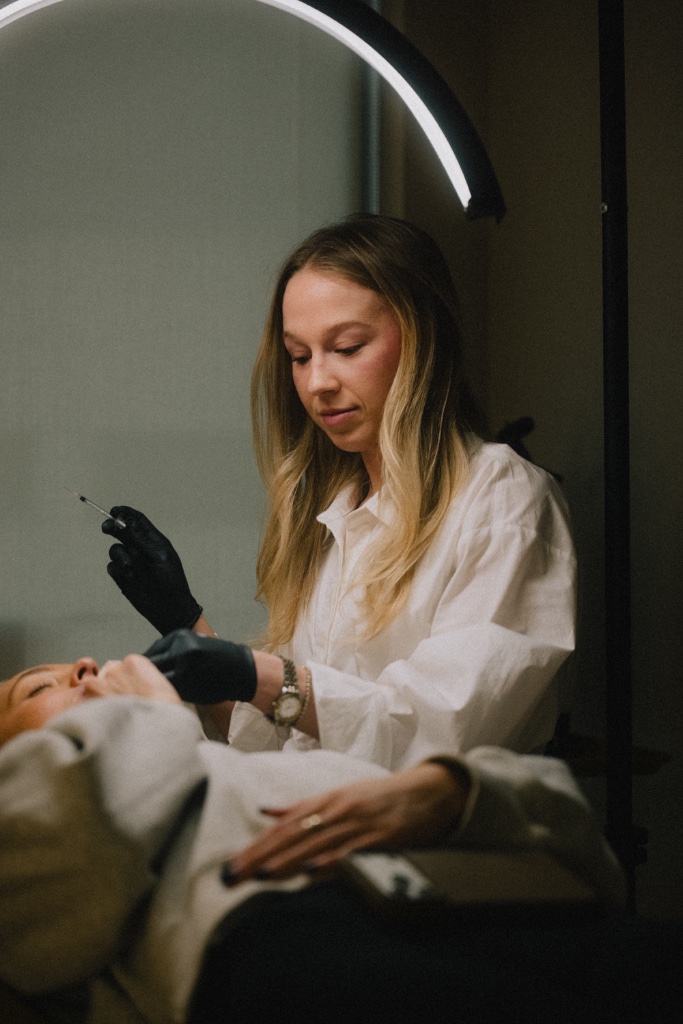
Treatment philosophy is the set of values and principles that govern clinical decisions. It is different from technique — it is the why behind the how. And for patients trying to choose an aesthetic injector in Dallas, it is one of the most predictive variables in outcome quality.
Specifically, ask: is the philosophy anatomy-first or request-first? Does the injector start conservative and build from results, or do they apply maximum product at first session? Do they value restraint as a clinical principle — or do they default to more volume when uncertain? Do they treat each appointment as a standalone event, or do they think in terms of long-term facial evolution?
The most important thing a treatment philosophy signals is who is in clinical control of the appointment. In a restraint-forward, anatomy-first practice, the injector's judgment governs the plan. The patient's goals are heard and respected — but the clinical assessment determines what is appropriate. In a request-forward practice, the patient's stated desire governs the treatment, and the injector executes it. This distinction has a direct and visible effect on outcomes.
"The injector's philosophy is the invisible variable in every result. Two practices with identical credentials and identical products can produce completely different outcomes based on the values that govern clinical decisions."
JOLA's treatment philosophy is built on consultation-led care, anatomy-first planning, and the explicit value of restraint. The art of restraint is not a limitation — it is the mechanism through which the most natural-looking, elegant outcomes are achieved.
How Do They Approach Natural-Looking Outcomes?
Many injectors claim to produce natural-looking injectables in Dallas. The question is what they mean by it — and how specifically they achieve it. Ask this directly: how do they define a natural-looking outcome? What do they do differently to avoid the overfilled, over-treated appearance that some patients are trying to avoid?
Specific signals of genuine commitment to natural-looking outcomes include: starting conservatively with first-time patients and building from results rather than applying maximum product; using product placement that supports rather than replaces natural facial structure; making decisions based on the overall impression the face creates rather than the state of any one feature; and having an editorial eye — the ability to see when something is enough and stop before going too far.
A natural-looking result does not happen by accident. It is the product of conscious decisions at every step of the treatment — about how much product, where it goes, in what sequence, and with what level of restraint. The injector who thinks this way produces outcomes that look like the patient at their best. The injector who does not produces outcomes that look like someone who has had work done.

What Happens If I Am Not a Good Candidate for What I Asked For?
This question is one of the most revealing you can ask. The answer exposes whether the practice is capable of clinical independence from patient requests — or whether it simply delivers whatever the patient asks for, regardless of whether that treatment is appropriate for their anatomy.
An experienced injector in Dallas will be able to describe, clearly and comfortably, circumstances in which they have declined to perform a treatment as requested — and what they recommended instead. The ability to say no is not a limitation of service. It is a demonstration of expertise. When an injector redirects a patient from lip filler to a chin assessment, or from volume to movement management, or from immediate correction to a staged plan — that is the injector exercising clinical judgment in the patient's actual interest.
Practices that never say no — that accommodate every request regardless of anatomical appropriateness — are telling you something important about how clinical decisions are made. A practice that sometimes says "not yet" or "not this" is a practice that can be trusted when it says yes. This is one of the foundational principles of the JOLA treatment approach.
How Do They Build a Plan, Not Just a Single Appointment?
The most sophisticated aesthetic outcomes are not achieved in a single session. They are built over time — through a sequence of carefully chosen treatments that each inform the next, that allow for assessment of early results before committing to more, and that adapt as the patient's face and goals evolve. An injector who thinks in terms of a plan rather than an appointment is one who is invested in long-term outcomes rather than short-term volume.
Ask specifically: how do they approach staging and sequencing? Do they have a conversation about what the long-term goal is and how today's treatment fits into it? Do they schedule follow-up appropriately — not just to sell another appointment, but to assess settling and determine whether refinement is needed? Do they discuss which treatments should come before others, and why?
A practice with a genuine treatment planning approach will be able to describe a specific methodology for sequencing decisions. This is the difference between accumulation — adding product in response to each new request — and architecture — building a face that improves coherently over time. The best results at any luxury med spa in Dallas come from this architectural thinking.
Read more about what to expect at a first filler appointment at JOLA — including how the planning conversation begins from the very first visit.
What the Best Answers to These Questions Have in Common
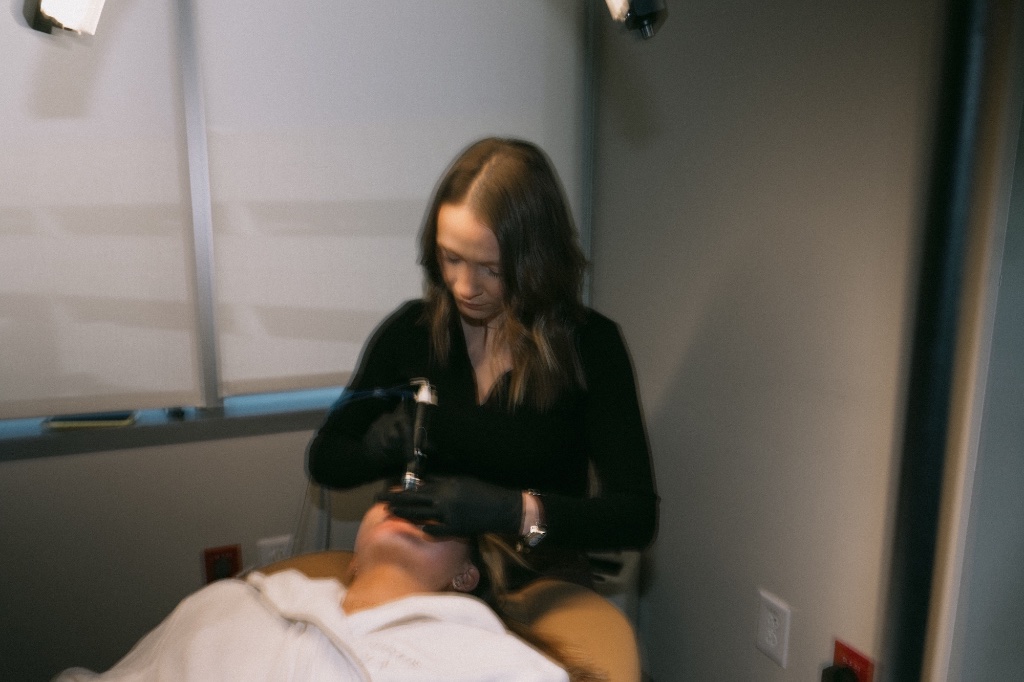
When asked well, these seven questions reveal a consistent set of qualities in the best providers. The answers are clear and specific — not vague reassurances or marketing language. They reflect genuine confidence in the clinical rationale for each approach, not just a desire to please. They demonstrate full-face thinking: the recognition that every treatment decision exists in the context of the whole face. And they reveal a commitment to consultation-led care — the principle that the assessment governs the plan, and that the patient's request is the starting point of a clinical conversation rather than its conclusion.
The best answers also tend to involve an absence of pressure. A skilled aesthetic injector in Dallas does not need to oversell treatment. They have enough clinical confidence to recommend conservatively and enough long-term perspective to understand that a patient who trusts them over time is more valuable than one who is overtreated once. The absence of upselling pressure — the sense that the practice is recommending exactly what is needed and not one thing more — is one of the clearest signals of genuine expertise.
Clinical fluency — the ability to read a face, communicate clearly about what is needed, and execute with precision — is what makes these qualities coherent. It is not one skill. It is the integration of assessment, judgment, technique, and communication into a single clinical standard.

How JOLA Thinks About Expertise in Injectables
At JOLA Dallas, expertise in injectables is defined by the quality of the clinical judgment brought to each appointment — not by the volume of product delivered. The practice is built around four foundational principles: consultation before product, anatomy before volume, restraint before maximum effect, and long-term planning before single-session thinking.
Injectables at JOLA encompass neuromodulators, dermal fillers, biostimulatory treatments, and regenerative care — each selected and calibrated through the same consultation-led assessment process. Whether a patient is seeking neuromodulator refinement, structural filler support, or a comprehensive facial balancing plan, the clinical process begins the same way: with a full assessment of the face as a whole.
This is not a framework that limits what JOLA offers. It is a framework that makes every treatment more effective, more elegant, and more durable over time. Patients who come to JOLA after experiencing practices that treated aggressively or without full assessment often describe a relief at having their face understood before anything was proposed. That experience — of being truly assessed, not just treated — is what JOLA considers the standard of an excellent consultation.
Why This Matters Beyond Injectables
The questions that help patients choose an aesthetic injector in Dallas are not exclusive to injectables. They apply with equal relevance to laser and energy-based treatments — and the patients who ask them carefully in one category should apply the same standard when considering others.
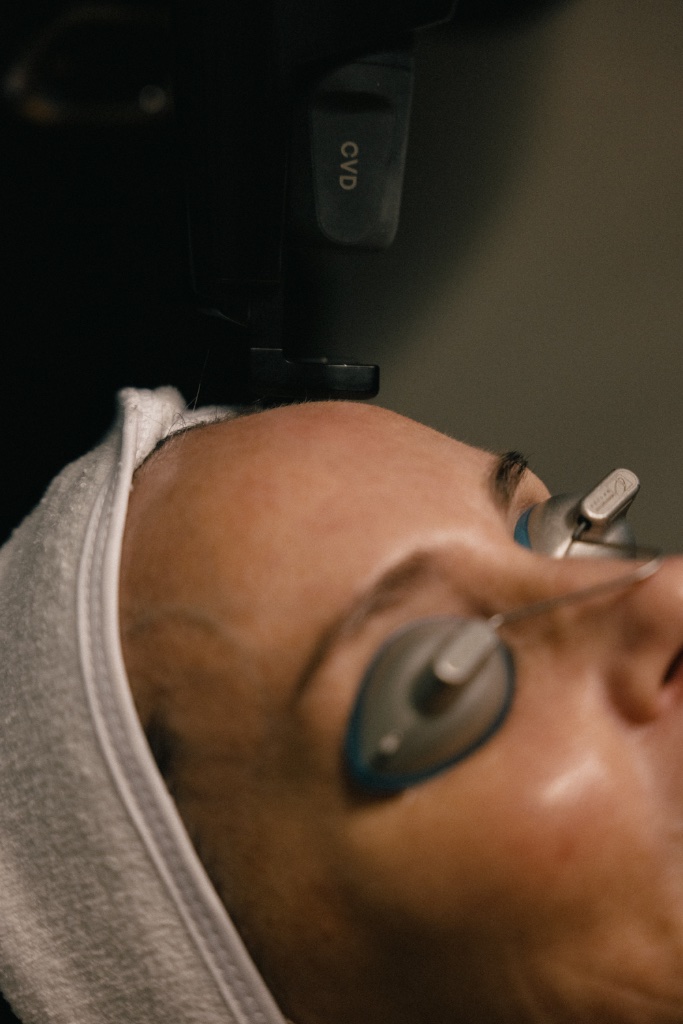
Treatments like XERF RF structural skin tightening involve the same clinical variables that define injectable excellence: candidacy assessment, treatment planning, anatomical understanding, and realistic expectation-setting. A provider offering XERF without a genuine consultation process — without assessing whether the patient is an appropriate candidate, what outcome is achievable, and how the treatment fits into a broader structural plan — is operating with the same limitations as an injector who simply fills what is requested.
At JOLA Dallas, the consultation-led, anatomy-first philosophy that governs injectable care applies equally to laser and energy-based treatments. Understanding what XERF is and why JOLA is a leading practice for it means understanding that the treatment's quality depends as much on how it is selected and planned as on the device itself.
Patients considering XERF can ask the same seven questions outlined above — and they should. Questions about who is assessing them, what the treatment philosophy is, how candidacy is determined, and what the long-term plan looks like are as relevant for a structural tightening treatment as they are for a filler appointment. Understanding what to expect after XERF treatment is one part of that preparation — and it begins with a thorough consultation that sets honest expectations from the start.
The standard of discernment that makes a patient a good candidate for a particular injectable plan is the same standard that makes them well prepared for any category of treatment at JOLA. Educated patients, thoughtful questions, and a practice that welcomes both: this is the combination that produces the best outcomes across every category of care.
Begin With a Consultation at JOLA Dallas
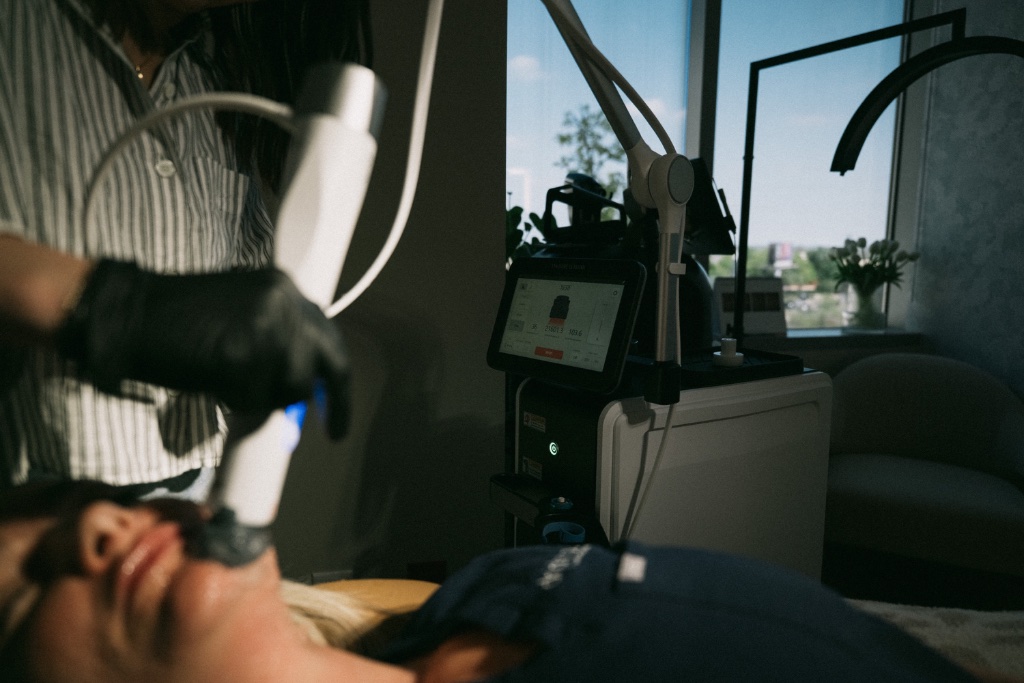
Patients in Dallas, Highland Park, University Park, Preston Hollow, and the Park Cities are welcome to bring these questions — and any others — to a consultation at JOLA Dallas. The consultation is where every plan begins, and it is where the quality of the care becomes evident. If you are evaluating how to choose an aesthetic injector in Dallas, the best first step is a conversation with a practice that believes your questions deserve real answers.
ALSO READ