
THE RESULTS STUDY / eCO2 3D
eCO2
3D
Before / After
FRACTIONAL CO2 RESULTS
The photograph matters. The context behind the photograph matters more.
JOLA Dallas.
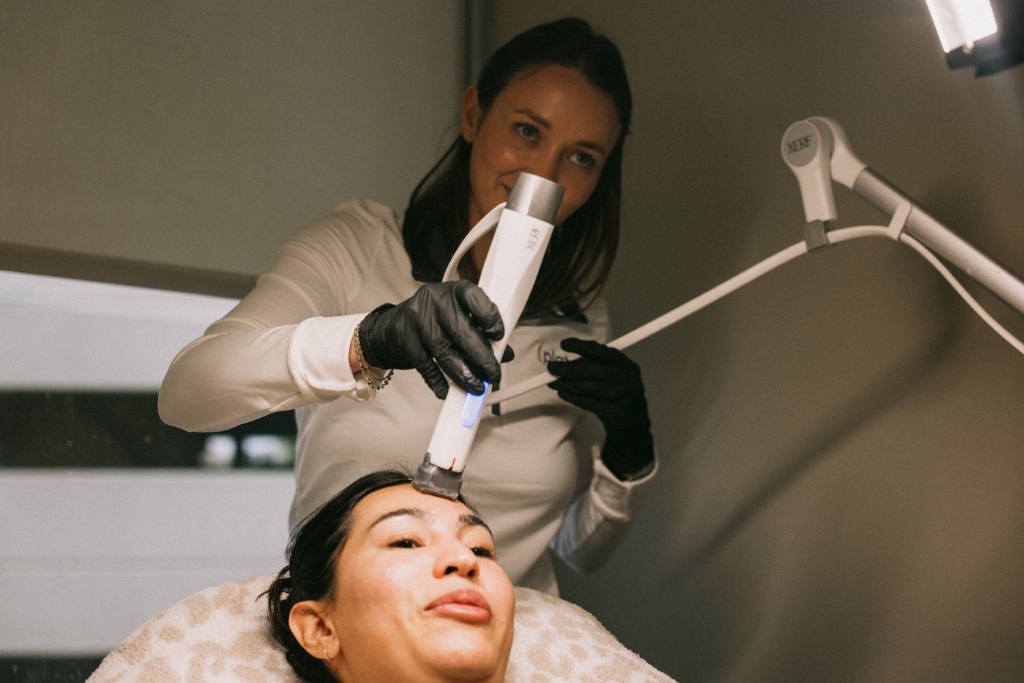
CLINICAL DOCUMENTATION / DALLAS
IMAGE 01 / eCO2 3D BEFORE AFTER RESULTS DALLAS
A before/after is evidence of what happened to one patient.
Not a promise of what will happen to every patient.
CONCERN. SKIN. TREATMENT. INTENSITY. SESSION COUNT. TIME. LIGHTING.
Results need context.
CHAPTER 01 / THE RESULTS STUDY
What eCO2 3D Changes
What does eCO2 3D actually change?
eCO2 3D is fractional CO2 resurfacing. Depending on indication, treatment plan, intensity, skin characteristics and healing, it may address concerns involving surface texture, certain acne scars, fine lines and wrinkles, photoaging, pigment appearance and collagen remodeling. These categories are not equally responsive, and no category is guaranteed to change in every patient.
SURFACE. TEXTURE. SCARS. LINES. PIGMENT. REMODELING.
What does eCO2 3D not change?
Resurfacing does not restructure the face. CO2 does not change facial bone structure, significant volume loss, muscle movement, major tissue laxity, every form of pigmentation, all acne scars or all pores. Understanding what a treatment does not do is part of understanding what it does.
RESURFACING IS NOT RESTRUCTURING THE FACE.
What happens immediately after CO2?
Immediately after treatment, the skin shows a treatment response: erythema, edema, a treated surface and early healing. This is not a final result. The immediate appearance reflects the skin reacting to controlled columns of treatment, not the endpoint of remodeling. Distinguish treatment response from result.
The healing phase vs the results phase
A useful framework separates healing from results. Treatment leads to early healing, then surface recovery, then visible change, then remodeling, then reassessment. Healed does not always mean finished remodeling. The skin can look recovered while biological change is still evolving.
HEALED DOES NOT ALWAYS MEAN FINISHED REMODELING.
When do eCO2 3D results start?
There is no universal day results start. Some surface changes may become apparent after initial healing, while remodeling-related changes may evolve over weeks and months. Timing depends on the endpoint, intensity, healing response and concern being addressed.
CO2 results at 1 week
One week after treatment, the skin is generally still in early healing for many endpoints. Surface recovery may be underway, but this is often too early to judge many final results. A one-week image is a healing photograph, not a final outcome.
CO2 results at 2 weeks
At two weeks, surface recovery may continue and evolving appearance may be visible. Some concerns may show early change. Many endpoints are still developing. Two weeks is a point in a process, not a universal endpoint.
CO2 results at 1 month
At one month, visible change may be apparent for certain concerns as surface recovery settles. Remodeling may still be ongoing. One month can be a useful checkpoint, but it is not a universal final result for every endpoint.
CO2 results at 3 months
At three months, remodeling-related changes may be more evident where evidence supports ongoing biological change. This is a common reassessment point. Not every patient continues improving at the same rate, and not every endpoint is judged at three months.
CO2 results at 6 months
At six months, longer-term reassessment may occur. Some changes may be stable, while skin continues its normal aging process. Six months is not a universal endpoint, and not every patient is reassessed at this interval.
When are CO2 results "final"?
There is no universal single day a result becomes final. The endpoint depends on what was treated, treatment intensity, healing and the concern. Some endpoints settle earlier; others evolve longer. Final is a clinical judgment, not a calendar date.
Why day-7 photos can be misleading
A day-seven photograph captures early healing. Erythema, edema and surface recovery are still in progress. Treating a day-seven image as a final result misrepresents the treatment. Early healing is a stage, not an endpoint.
EARLY HEALING IS NOT A FINAL RESULT.
Why immediate after photos are not results
An immediate after photograph shows erythema, edema, surface change and altered reflectivity. Lighting and skin response can change appearance before any biological result develops. An immediate image documents the moment of treatment, not the outcome.
One treatment results
Some patients may notice meaningful change after one appropriately selected treatment. Others may require additional sessions, another modality or a staged plan. One treatment is not universally enough or universally insufficient. It depends on the goal, baseline and plan.
Can one CO2 treatment be enough?
For some goals and some patients, one treatment may be appropriate. For others, one treatment is not enough to reach the desired endpoint. Whether one treatment is enough depends on the concern, its severity, the treatment intensity, healing and the patient's desired result.
When would someone need multiple CO2 treatments?
Multiple treatments may be considered when severity is greater, scar architecture is complex, the desired endpoint is more ambitious, treatment intensity is conservative, risk tolerance favors a staged approach or skin characteristics support a series. The number is individualized.
Do more CO2 treatments always mean better results?
No. More treatments do not automatically create better results. Each additional session carries its own risk-benefit consideration. The endpoint is the goal, not the count. Treating beyond the endpoint does not improve the result.
MORE IS NOT THE ENDPOINT.
Does a stronger CO2 treatment create better results?
There is no universal rule that stronger means better. Higher intensity may create more effect, but also more downtime and risk. The right intensity balances potential effect, recovery and risk for the individual patient and goal.
Why maximum intensity is not the goal
The strongest treatment is not automatically the right treatment. Maximum intensity carries maximum downtime and risk. The goal is the treatment that best matches the concern, skin and risk tolerance, not the most aggressive option.
THE GOAL IS NOT THE STRONGEST TREATMENT. THE GOAL IS THE RIGHT TREATMENT.
What does "improvement" mean?
Improvement is not elimination. A scar can become softer, smoother, less visible, more even or more refined without disappearing. Improvement is a clinical direction. Erasure is not. Conflating the two creates unrealistic expectations.
SOFTER. SMOOTHER. LESS VISIBLE. MORE EVEN. MORE REFINED. NOT GONE.
CHAPTER 02 / THE RESULTS STUDY
Acne Scars & Lighting
Scar morphology and lighting determine what a before/after can honestly show. These sections explain why scars are three-dimensional and why light is part of how we see them.
Evidence: 4
Can eCO2 3D remove acne scars?
CO2 resurfacing does not remove acne scars. It may improve the appearance of certain scar types. Improvement means less visible, not gone. The word remove implies eradication, which is not an accurate description of what resurfacing does.
CO2 laser acne scar before & after
Acne scar response depends on scar morphology, depth, number, location and skin response. Not all scars respond the same way. A before/after of one scar type does not predict the response of another. Scar education precedes result evaluation.
Acne marks versus scars →Rolling scar results
Rolling scars have a broad, sloping architecture. Their appearance is influenced by tethering and skin support. Resurfacing may improve surface texture, but rolling scars often involve deeper structure. Morphology matters.
Boxcar scar results
Boxcar scars have defined edges and a flat base. Resurfacing may address the surface and edges. Depth and edge definition influence response. Not all boxcar scars respond identically.
Ice-pick scar results
Ice-pick scars are narrow and deep. CO2 resurfacing alone may not be the primary approach for every ice-pick scar. Other techniques may be considered for this morphology. One device does not address every scar architecture.
Mixed acne-scar results
Most acne-scar faces contain more than one scar type. A mixed presentation may require more than one approach. A single before/after cannot represent the response of every scar morphology on the face.
MOST ACNE-SCAR FACES DO NOT CONTAIN ONE SCAR TYPE.
Why the worst scar can distort how you judge the whole result
Patients often visually anchor on the deepest or most noticeable scar. That anchor can distort perception of the overall result. A single stubborn scar does not mean the treatment failed if other scars improved. Judge the face, not only the anchor.
Why side lighting matters for acne scars
Scars are three-dimensional. Light is part of how we see them. Frontal light can minimize shadow; side light can exaggerate depth. The same scar can look dramatically different under different lighting.
SCARS ARE THREE-DIMENSIONAL. LIGHT IS PART OF HOW WE SEE THEM.
Frontal light vs side light for scar photography
Frontal lighting reduces shadow and can make scars appear shallower. Side lighting creates shadow and can make scars appear deeper. A before photo in frontal light and an after photo in side light is not a fair comparison. Consistency is the point.
Can lighting make acne scars disappear?
Visually, yes. Clinically, no. Lighting can change the photograph. It does not change the scar. A scar that vanishes under frontal light has not been removed. It has been photographed differently.
LIGHT CAN CHANGE THE PHOTOGRAPH. NOT THE SCAR.
Pigment and skin-type risk →CHAPTER 03 / THE RESULTS STUDY
Wrinkles, Lines & Structure
Not every line is the same problem. These sections separate surface texture from movement and volume, and explain why resurfacing does not replace neuromodulators, filler or surgery.
Evidence: 3
CO2 for wrinkles before & after
Wrinkle response depends on whether lines are fine, etched, dynamic or structural. Resurfacing addresses surface texture. It does not address movement or volume. Not every line is the same problem.
Fine lines vs deep wrinkles
Fine lines may respond differently from deep wrinkles. A line is not just a line. Depth, etching and structural contribution influence what resurfacing can address. Shallow surface lines and deep structural folds are different problems.
A LINE IS NOT JUST A LINE.
Dynamic wrinkles vs static wrinkles
Dynamic wrinkles are created by muscle movement. Static wrinkles are present at rest. Resurfacing addresses surface texture. Neuromodulators address movement. They are different mechanisms for different problems. One does not replace the other.
CO2 around the mouth results
Perioral lines are a common resurfacing concern. Response depends on line depth, skin characteristics and whether lines are static or dynamic. Perioral lines often involve both surface and movement contributions.
Smoker's lines / lip lines + CO2
Perioral lines are sometimes called smoker's lines, but not every patient with these lines has a smoking history. Respectful terminology avoids assumptions. The treatment discussion is the same regardless of the term used.
CO2 under-eye results
CO2 may address fine crepey texture in the under-eye area. It does not address eye bags, major volume loss or significant laxity. The under-eye is a delicate area, and resurfacing is one of several possible approaches.
Can CO2 fix under-eye bags?
No. Under-eye bags involve fat-pad position. Resurfacing does not reposition fat. Surface texture and structural bags are different problems. Resurfacing is not a substitute for fat-pad surgery.
SURFACE AND VOLUME ARE DIFFERENT PROBLEMS.
Can CO2 tighten eyelids?
CO2 is not positioned as nonsurgical blepharoplasty unless specifically supported. Resurfacing may improve surface quality. Eyelid laxity and skin excess involve structure, not only surface. Do not equate resurfacing with eyelid surgery.
CO2 forehead results
The forehead may be treated when appropriate. Forehead lines may be static, dynamic or both. Resurfacing addresses surface. Movement lines involve muscle. The treatment plan depends on the mechanism behind the line.
CO2 crow's-feet results
Crow's feet are often dynamic, created by muscle movement around the eyes. Resurfacing may address surface texture. Movement lines respond to neuromodulators. Differentiate what is movement from what is texture.
CO2 nasolabial fold results
Deep nasolabial folds often involve structure and volume. CO2 resurfacing is not a structural replacement. Surface improvement and fold reduction are different goals. Resurfacing does not replace volume restoration for structural folds.
CO2 marionette line results
Marionette lines often involve structure and volume. Resurfacing may improve surface quality. It does not address the structural contribution to the fold. The mechanism behind the line determines the appropriate tool.
Can CO2 replace filler?
No. Surface and volume are different problems. Resurfacing addresses texture. Filler addresses volume. They are complementary, not interchangeable. A surface treatment does not replace a volume treatment.
SURFACE AND VOLUME ARE DIFFERENT PROBLEMS.
Can CO2 replace Botox?
No universal substitution. Movement and texture are different problems. Resurfacing does not stop muscle movement. Neuromodulators do not resurface texture. Each addresses a different mechanism.
MOVEMENT AND TEXTURE ARE DIFFERENT PROBLEMS.
Can CO2 replace a facelift?
No. Surface and structural laxity are different problems. Resurfacing addresses skin quality. A facelift addresses structural laxity. Resurfacing is not a nonsurgical facelift.
SURFACE AND STRUCTURAL LAXITY ARE DIFFERENT PROBLEMS.
Treatment planning →CHAPTER 04 / THE RESULTS STUDY
Pores, Texture & Pigment
CO2 laser pores before & after
Pores may appear less prominent as texture changes. CO2 does not close pores. Pore appearance is influenced by oil production, skin quality and lighting. A before/after showing smaller-looking pores may reflect texture and lighting, not structural pore change.
Can CO2 shrink pores?
Pores do not open and close like doors. Resurfacing may change the appearance of pores as surrounding texture changes. Precise language matters. Pores may look less prominent. They are not structurally closed.
PORES DO NOT OPEN AND CLOSE LIKE DOORS.
Can CO2 remove pores?
No. Pores are normal structures. They cannot be removed. Their appearance may change with texture and lighting. Anyone promising pore removal is not describing what a laser does.
Why pores look different in different lighting
Pore appearance is highly lighting-dependent. Diffuse light minimizes pore shadow. Directional light exaggerates it. A before/after under different lighting is not a fair comparison. Lighting is a variable in pore photography.
CO2 texture before & after
Texture improvement may involve roughness, surface irregularity and photoaging. Resurfacing addresses the surface. The degree of change depends on baseline texture, intensity and healing. Smoother is a direction, not a guarantee.
What does "smoother skin" actually mean?
Smoother is a reduction in surface irregularity. It does not mean flawless, poreless or airbrushed. Vague marketing language inflates expectations. Smoother is a clinical observation under consistent conditions, not a marketing promise.
CO2 sun damage before & after
Sun damage encompasses multiple changes: pigment, texture, fine lines and vascular changes. Not all sun damage is the same. Not all pigment lesions are identical. Resurfacing may address some photoaging; it does not address every form of sun damage.
CO2 brown spots before & after
Not every brown spot should be lasered. Pigmented lesions should be assessed individually. Some spots are appropriate for resurfacing; others require evaluation or a different approach. A blanket claim that CO2 removes brown spots is not accurate.
Can CO2 remove freckles?
No blanket claim. Freckles are pigment. Whether resurfacing is appropriate depends on the lesion, skin type and pigment history. Some pigment responds; some does not. Some pigment should not be treated with resurfacing.
Can CO2 treat melasma?
CO2 is not a universal melasma solution. Melasma is complex and may worsen with inflammation. Refer to the pigment article for the full discussion. Resurfacing for melasma requires careful individual assessment.
IF THE OUTCOME IS COLOR, THE PHOTO MUST REPRESENT COLOR ACCURATELY.
Melasma and CO2 →Why pigment before/afters require color accuracy
Pigment change is about color. If the photograph does not represent color accurately, it does not represent the result. White balance, exposure and lighting all affect color. A pigment before/after without color accuracy is not evidence.
CO2 redness results
CO2 is not a vascular laser. It is not positioned to treat redness as a primary concern. Redness involves vessels. Resurfacing addresses surface texture. Different problems require different tools.
CHAPTER 05 / THE RESULTS STUDY
Tightening, Areas & Age
Can CO2 treat rosacea?
No unsupported claim. Rosacea is a vascular and inflammatory condition. CO2 resurfacing is not a primary rosacea treatment. Do not position resurfacing as a rosacea solution.
CO2 skin tightening results
CO2 may create some degree of surface contraction and remodeling where evidence supports. This is not equivalent to facelift, RF tightening or surgical lifting. Tightening is a careful claim. It is not a structural lifting claim.
How much tightening can CO2 create?
No universal percentage. Tightening depends on the area, intensity, healing and baseline. A percentage claim is not accurate without a specific measurement under specific conditions. Tightening is individualized.
Why "tightening" is a difficult before/after to photograph
Tightening appearance is influenced by head position, camera height, neck extension, expression and lighting. A few degrees of change can alter the appearance of the jawline or neck. Tightening before/afters are especially variable.
CO2 jawline before & after
CO2 does not sculpt the jawline. Jawline appearance is structural. Resurfacing may improve surface quality. It does not redefine the jawline. Do not imply that resurfacing creates jawline definition.
CO2 neck before & after
Whether the neck is treated depends on JOLA's treatment areas and protocol. Neck skin differs from facial skin. Anatomy and risk differ. Do not assume the same settings or response as the face.
CO2 chest before & after
Whether the chest is treated depends on JOLA's treatment areas. Chest skin is delicate and may carry different healing and pigment considerations. Confirm whether chest treatment is offered.
CO2 hands before & after
Whether the hands are treated depends on JOLA's offerings. Hand skin is thin and may respond differently. Confirm whether hand treatment is part of the practice.
Face vs neck results
Facial and neck skin have different characteristics. They do not assume the same settings or the same response. Results on the face do not predict results on the neck. Each area is assessed individually.
Why the face may heal differently from the neck
Skin thickness, vascularity, healing capacity and pigment risk differ by area. The face and neck are not interchangeable. Evidence supports area-specific assessment. No universal parameter advice applies across all areas.
Results by age
Age alone does not select the treatment. Chronologic age, skin condition, photoaging, healing and treatment goals together inform planning. An age number is one variable, not a decision.
CO2 results in your 20s
In the 20s, CO2 may be considered for appropriate indications such as certain acne scars. Treatment is not promoted for unnecessary rejuvenation. The concern, not the age, drives the decision.
CO2 results in your 30s
In the 30s, early photoaging or texture concerns may be appropriate. The decision depends on skin condition and goals, not age alone. Not every patient in their 30s needs resurfacing.
CO2 results in your 40s
In the 40s, fine lines, texture and photoaging may be more relevant. Treatment intensity and risk tolerance are individualized. Age is context, not a treatment trigger.
CO2 results in your 50s
In the 50s, deeper photoaging and texture may be addressed. Healing capacity and skin characteristics are part of the assessment. The plan follows the skin, not the birthday.
CO2 results in your 60s+
In the 60s and beyond, treatment may be appropriate for selected concerns. Healing, skin condition and goals remain the basis. There is no automatic age cutoff.
CHAPTER 06 / THE RESULTS STUDY
Why Results Vary
Age does not select the treatment
Age is one variable among many. Skin condition, photoaging, healing and goals determine the plan. A treatment is not selected by decade. It is selected by the individual.
AGE DOES NOT SELECT THE TREATMENT.
Skin type and results →Results by skin type
Skin type influences both risk and planning. Refer to the pigment article for the full discussion of phototype, PIH and melasma. No blanket safety or result promise applies across all skin types.
Do darker skin tones get different results?
Outcome is not simply determined by tone. Risk and planning may differ. Phototype, pigment history, tanning response and healing all contribute. Tone is one variable, not the entire assessment.
Why results vary
Result equals concern plus baseline skin plus scar or wrinkle architecture plus treatment plan plus intensity plus healing response plus aftercare plus time. Same device, different skin, different plan, different result.
SAME DEVICE. DIFFERENT SKIN. DIFFERENT PLAN. DIFFERENT RESULT.
Does provider technique affect results?
Technique is one factor among many. No superiority claim is made here. Technique, parameter selection and assessment together contribute. The provider is part of the plan, not the only variable.
Does aftercare affect results?
Healing behavior matters. Aftercare supports recovery. Not every complication is patient-caused, and not every outcome is determined by aftercare alone. Aftercare is part of the process.
Does sun exposure affect results?
UV exposure affects pigmentation and photoaging. Sun behavior before and after treatment is part of the discussion. New UV exposure can create new photodamage. Sun protection is part of aftercare.
Does skincare affect results?
Skincare plays a supportive role. It does not recreate or rescue a laser outcome. Skincare supports healing and maintenance. It is not a substitute for the treatment itself.
Does smoking affect healing and results?
Current evidence suggests smoking can affect healing. This is stated carefully, without moralizing. Healing capacity is part of the assessment. No judgment is attached to the discussion.
Does alcohol affect results?
Avoid unsupported claims. Follow actual pre- and post-treatment instructions. If JOLA's protocol includes alcohol guidance, confirm it directly. Do not invent a universal rule.
Does sleep affect CO2 results?
Sleep supports general healing. Do not overstate wellness claims. Sleep is part of overall health. It is not a specific CO2 result variable with a quantified effect.
Does diet affect CO2 results?
Do not create pseudoscience. General nutrition supports health. No specific diet is claimed to improve CO2 results. The treatment outcome is not attributed to a dietary protocol.
Do collagen supplements improve CO2 results?
No unsupported claim. Collagen supplements are not presented as a result enhancer. If evidence is limited, the claim is limited. Do not invent a supplement benefit.
Does red-light therapy improve CO2 results?
Only current evidence and JOLA protocol apply. Red-light therapy is not automatically part of the plan. If JOLA uses it in sequence, confirm the protocol. Do not imply a universal combination.
Does PRP improve CO2 results?
Only evidence-based discussion. PRP is not presented as a required or automatic addition. Do not invent a JOLA combination. If PRP is offered, confirm the protocol and evidence.
Does exosome aftercare improve CO2 results?
Extremely careful. Do not make unapproved regenerative claims. Exosome products are not presented as proven result enhancers. If used, follow product-specific guidance and regulation.
Does growth-factor skincare improve CO2 results?
Only substantiated product-specific claims. Growth factors are not universally beneficial. Do not present a category as a result guarantee. Product-specific evidence, not category marketing.
Does Hydrafacial improve CO2 results?
Do not imply immediate post-CO2 Hydrafacial. Sequencing matters. If JOLA's protocol includes Hydrafacial in the timeline, confirm when. Immediate resurfacing aftercare is not the same as a facial.
ULTRA laser →Can ULTRA improve CO2 results?
Only if combined or staged for specific goals. ULTRA is a different wavelength and mechanism. It is not an automatic addition. Combination depends on the concern and plan.
XERF structural firmness →Can XERF improve CO2 results?
XERF is a different mechanism, radiofrequency for structure. It does not automatically improve CO2 results. Combination is not required. Each modality has a defined job.
K-LUXE: XERF + ULTRA →Can K-LUXE improve CO2 results?
K-LUXE is XERF plus ULTRA, a different treatment architecture. It is not an automatic add-on to CO2. Different concerns, different mechanisms. Combination is intentional, not automatic.
K-LUXE vs Morpheus8 →Can Morpheus8 improve CO2 results?
Only if clinically appropriate. Morpheus8 is RF microneedling, a different mechanism. It is not automatically combined with CO2. Each addition needs a reason.
Why every device in the office does not need to be used
More technology does not automatically create a better plan. Stacking devices without purpose increases risk and cost without guaranteed benefit. Each device must earn its place in the plan.
MORE TECHNOLOGY DOES NOT AUTOMATICALLY CREATE A BETTER PLAN.
When combination therapy makes sense
Combination therapy makes sense when each modality has a defined job. One concern, one mechanism, one reason. A combination is a plan, not a pile.
ONE CONCERN. ONE MECHANISM. ONE REASON.
CHAPTER 07 / THE RESULTS STUDY
Longevity & Maintenance
How long results last, whether they are permanent, and why maintenance should follow a need rather than a calendar. Laser does not stop the clock.
Evidence: 5
When combination therapy does not make sense
Combination does not make sense when modalities are stacked without purpose. If a device does not address a specific concern, adding it does not improve the plan. Avoid stacking without intention.
Recovery and downtime →How long do eCO2 3D results last?
Longevity depends on the endpoint. Scar remodeling may be durable. Wrinkle and texture results exist on skin that continues aging. No universal duration applies to every concern.
Are CO2 results permanent?
Permanent requires context. Some structural improvements may be durable. Skin continues aging. UV exposure continues. New acne can create new scars. Permanent is not an unqualified claim.
Do acne-scar results last?
Acne-scar structural improvement may be durable. New acne can create new scars. The result lasts; the skin does not stop being skin. Durability is not immunity from new scarring.
Do wrinkle results last?
Skin continues aging. Wrinkle improvement may persist, but new lines form. Wrinkle results are not permanent in the sense of stopping time. Maintenance is part of the discussion.
Do pore results last?
Avoid permanence claims. Pore appearance may change with texture and time. Pores are ongoing structures. Their appearance is maintained, not permanently eliminated.
Do texture results last?
Texture improvement may persist, but skin continues to age and accumulate exposure. Texture is maintained through skincare and sun protection. It is not a one-time permanent fix.
Do sun-damage results last?
New UV exposure can create new photodamage. Sun-damage improvement is not permanent if exposure continues. Sun protection is part of maintaining the result.
Do you need maintenance CO2?
No universal schedule. Maintenance follows a clinical need, not a calendar. If the concern recurs or progresses, reassessment determines whether another session is appropriate.
How often can you repeat eCO2 3D?
Repeat timing follows JOLA protocol and clinical assessment. No interval is invented here. The decision depends on healing, the endpoint and whether another session is warranted.
Can you do CO2 every year?
No universal need. Annual CO2 is not a default. Some patients may benefit from periodic treatment; others do not. The schedule follows the skin, not a subscription.
Can you do too much CO2?
Yes, conceptually. Cumulative treatment requires clinical judgment. More is not automatically better. Over-treatment carries risk. The endpoint, not the count, guides the plan.
Why "annual CO2" should not be an automatic subscription
Maintenance should follow a need, not a calendar. A subscription model is not a clinical model. Treatment is recommended when warranted, not automatically.
MAINTENANCE SHOULD FOLLOW A NEED. NOT A CALENDAR.
What happens to results as you age?
Laser does not stop the clock. Skin continues aging. Results exist on aging skin. The treatment improves a concern; it does not halt the process.
LASER DOES NOT STOP THE CLOCK.
Can CO2 prevent aging?
No. Resurfacing does not prevent aging. It may address existing concerns. Prevention is a different concept from treatment. Do not position CO2 as anti-aging prevention.
CHAPTER 08 / THE RESULTS STUDY
Natural Results & The JOLA Standard
What a natural result looks like, whether CO2 changes your face, and the six-criteria JOLA result standard: relevant, proportional, documented, natural, safe, worthwhile.
Evidence: 6
Can CO2 "age-proof" skin?
No. Skin cannot be age-proofed. This language is marketing, not medicine. The treatment addresses concerns; it does not immunize the skin against time.
Can CO2 make you look 10 years younger?
No age-reversal claim. Years younger is a bad metric. Skin quality is not a birthday. Do not quantify results in years reversed.
Why "years younger" is a bad results metric
Skin quality is not a birthday. Years younger is not a clinical measurement. It is a marketing phrase. A result is judged by the concern, not by a number of years reversed.
SKIN QUALITY IS NOT A BIRTHDAY.
What does a natural CO2 result look like?
A natural result is healthier-looking texture and refinement. It is not a different facial identity. The skin still looks like the patient's skin. Natural means improved, not transformed.
Can CO2 change your face?
CO2 changes skin characteristics. It does not change identity or structure in the way surgery or volumization can. The face remains the face. The surface improves.
Will people know I had CO2?
After recovery, not necessarily. Some patients may notice refinement; others may not. Do not promise invisibility or detection. The result is natural, not undetectable by guarantee.
CHAPTER 09 / THE RESULTS STUDY
Photography Integrity
The most important section for evaluating any before/after. Same light, same angle, same camera, same expression. No filter. No retouching. AI can design the page. It should not design the result.
Evidence: 6
The JOLA result standard
JOLA evaluates results by six criteria: relevant (did we improve the intended concern), proportional (was intensity appropriate), documented (can we see change under consistent conditions), natural (does the skin still look like the patient), safe (was risk considered), worthwhile (was the improvement meaningful relative to downtime, risk and investment).
THE GOAL IS NOT A DRAMATIC PHOTO. THE GOAL IS A MEANINGFUL RESULT.
How JOLA should photograph eCO2 3D results
A photography standard includes same camera, same lens, same focal length, same distance, same camera height, same room, same lighting, same white balance, same background, same patient position, same expression, same hair position, same makeup status and same moisturizer status where possible. Consistency is the standard.
No makeup vs makeup
Makeup is a variable. A before photo without makeup and an after photo with makeup is not a fair comparison. Makeup status must match. The photograph should document the skin, not the cosmetics.
MAKEUP IS A VARIABLE.
Why skincare "glow" can distort a result photo
Heavy moisturizer, occlusive products or oil can change reflectivity. A glowing after photo may reflect product, not treatment. Skincare status should be consistent or disclosed.
Why wet skin looks smoother
Wet skin changes light reflection. It can visually reduce texture and shadow. A before photo dry and an after photo dewy is not a fair comparison. Moisture status is a variable.
Why camera sharpness matters
Artificial sharpening differences alter texture appearance. A softer before and a sharper after misrepresents the result. Camera settings should match. Sharpness is a variable.
Why portrait mode should not be used
Portrait mode applies computational skin smoothing. It alters texture. A portrait-mode after photo is not a clinical photograph. Computational manipulation disqualifies the image.
Why phone camera processing matters
Modern phones automatically alter HDR, contrast, sharpness and tone mapping. These changes affect texture and pigment appearance. Phone processing is a variable in clinical photography.
Why white balance matters
Color accuracy is part of clinical accuracy. A shift in white balance changes pigment appearance. A pigment before/after with different white balance is not evidence of a result.
COLOR ACCURACY IS PART OF CLINICAL ACCURACY.
Why exposure matters
A brighter image can visually reduce texture, pigment and shadow. Overexposure hides. Underexposure exaggerates. Exposure must match. A brightness change is not a treatment change.
Why angle matters
A few degrees can change the appearance of the jawline, under-eye, scar shadow and wrinkle depth. Angle is a variable. A before and after at different angles is not a fair comparison.
Why facial expression matters
Expression changes the forehead, crow's feet and perioral lines. A relaxed before and a smiling after misrepresents wrinkle depth. Expression must match.
Why head position matters
Head position changes the neck, jawline and under-eye. A chin-down before and a chin-up after alters the jawline. Head position is a variable in tightening photography.
Why before/after sliders can be deceptive
Sliders are not inherently deceptive. They are only meaningful if images are standardized. A slider with different lighting or angle is a manipulation, not a comparison.
The JOLA photo integrity standard
Same light. Same angle. Same camera. Same expression. Same makeup status. No filter. No retouching. Real patient. Real timeline. This is the standard for clinical outcome photography.
SAME LIGHT. SAME ANGLE. SAME CAMERA. SAME EXPRESSION. SAME MAKEUP STATUS. NO FILTER. NO RETOUCHING. REAL PATIENT. REAL TIMELINE.
Can before/after photos be retouched?
JOLA should not retouch clinical outcome imagery. Retouching alters the evidence. A retouched before/after is not a clinical photograph. The image should represent the actual result.
Can AI enhance a before/after?
Not if it alters clinical appearance. AI can design the page. It should not design the result. An AI-enhanced after is not evidence of a treatment outcome.
AI CAN DESIGN THE PAGE. IT SHOULD NOT DESIGN THE RESULT.
Can AI generate a "representative result"?
No. Synthetic results are not clinical evidence. Do not use AI-generated patients as before/after evidence. A generated result represents the model, not the treatment.
CHAPTER 10 / THE RESULTS STUDY
Reading a Before/After
The seven questions to ask about any CO2 before/after, why combination results should be credited honestly, and how to define success before treatment.
Evidence: 6
Why real patient consent matters
Use the actual JOLA consent process. Patient photography is published only with appropriate consent. Consent is part of the integrity standard, not a formality.
What information should accompany a before/after?
Where consent and privacy allow: treatment, number of sessions, time between treatment and after photo, treatment area and relevant combination therapy. Do not publish unnecessary medical information. Disclose what is needed to interpret the result.
The 7 questions to ask about any CO2 before/after
One: is this the same patient? Two: is the lighting the same? Three: is the angle the same? Four: is the makeup status the same? Five: how many treatments? Six: when was the after photo taken? Seven: were other procedures performed?
LOOK AT THE RESULT. THEN LOOK AT THE CONDITIONS.
What if a before/after doesn't say how many treatments?
You do not have enough information to interpret it fully. A result from one session and a result from three sessions are different outcomes. Without the count, the image is incomplete.
What if it doesn't say when the after photo was taken?
Same. A one-week and a six-month photo are different endpoints. Without the timepoint, the image cannot be interpreted. The after photo needs a date.
What if other treatments were used?
They should be disclosed when relevant to interpreting the result. A combination outcome labeled as a single-treatment result is misleading. Credit the plan, not just the device.
Why combination results should not be labeled "CO2 results"
If the result involved multiple treatments, labeling it a CO2 result overstates what CO2 did. Credit the plan, not just the device. Honesty about combinations is part of integrity.
CREDIT THE PLAN. NOT JUST THE DEVICE.
Why a great result does not prove you will get the same result
Individual variability. One patient's result does not predict another's. A great before/after is evidence of what happened to that patient, not a promise of what will happen to you.
Why a modest result does not automatically mean the treatment failed
A modest result depends on baseline, goal, risk tolerance, intensity and expected endpoint. A subtle improvement may be exactly what was intended. Modest is not the same as failed.
How to define success before treatment
Ask: what specifically would make this worthwhile? Define the goal before looking for it. Success is defined before treatment, not judged after.
CHAPTER 11 / THE RESULTS STUDY
Reassessment & Expectations
What to do if the result differs from expectation, when to reassess, when to switch treatments, and why expectations are part of the outcome.
Evidence: 6
The result contract
Before treatment, define: what we are treating, what we are not treating, what degree of change is realistic, what downtime is acceptable, what risks matter and when we will reassess. This is an editorial framework, not a legal contract.
DEFINE SUCCESS BEFORE YOU LOOK FOR IT.
What if I don't get the result I expected?
Discuss reassessment, timeline, whether healing or remodeling is complete, whether the concern needs another modality or whether another session is appropriate. Do not promise retreatment or refunds. The response is clinical.
When should results be reassessed?
Reassessment follows JOLA protocol. The timing depends on the endpoint and healing. No universal interval is invented here. Confirm the reassessment schedule with JOLA.
When should you decide on another session?
After appropriate healing and reassessment. No invented interval. The decision depends on whether the endpoint was reached and whether another session is warranted.
When should you switch treatments instead?
If the remaining concern is driven by another mechanism: movement, volume, laxity, vascular redness, specific pigmentation or scar tethering. A surface treatment cannot address a structural problem. Switch when the mechanism is wrong.
Results vs satisfaction
A visible change does not automatically equal patient satisfaction. Satisfaction depends on expectations, goals and whether the result matches what was defined before treatment. Results and satisfaction are related but not identical.
Why expectations matter
Expectations are part of the outcome. A technically good result can feel disappointing if expectations were mismatched. Defining expectations before treatment is part of achieving satisfaction.
EXPECTATIONS ARE PART OF THE OUTCOME.
Can a technically good result still feel disappointing?
Yes, if expectations were mismatched. The treatment may have done what it was designed to do, but the patient expected something different. Expectation alignment is part of the consultation.
Why consultation photography matters
Baseline reference. Consultation photography documents the starting point. Without a baseline, there is no fair comparison. The baseline is part of the evidence.
Aura 3D + eCO2 3D results
Only use verified Aura capabilities. Objective imaging may complement, not replace, standardized photography if applicable. Do not invent diagnostic capabilities. Confirm what Aura measures and whether it applies to the endpoint.
Can Aura 3D prove CO2 worked?
Only if verified metrics support the specific endpoint. Do not overstate. Imaging is a tool, not proof. It complements clinical assessment; it does not replace it.
Can AI measure CO2 results?
Only validated technology. No unsupported claims. AI measurement is not a substitute for clinical assessment unless the technology is validated for the specific endpoint.
Patient memory vs photography
Patients adapt to gradual change and may forget their baseline. Standardized photos provide context. Memory is not a reliable baseline. Photography is the reference.
CHAPTER 12 / THE RESULTS STUDY
Dallas & The Gallery
eCO2 3D results in Dallas, the JOLA clinical case library standard, and why real results do not all look the same. Better is a clinical goal. Perfect is not.
Evidence: 6
Why gradual results can be hard to notice
You see your face every day. Change can become the new normal. Gradual improvement may be invisible to the patient who sees it daily. Photography reveals what memory cannot.
YOU SEE YOUR FACE EVERY DAY. CHANGE CAN BECOME THE NEW NORMAL.
The eCO2 3D platform →eCO2 3D results in Dallas
JOLA Dallas offers eCO2 3D in Dallas, serving patients from Highland Park, University Park, Park Cities, Preston Hollow and the DFW area. No claim of best, number one or most dramatic results is made. The practice offers the treatment; the result is individualized.
The JOLA before/after gallery
The clinical case library expands as patient-consented results become available. Each case card includes case number, concern, treatment, number of sessions, time to after photo, combination treatments and a photography note. No cases are invented.
Filter the gallery by concern
Filters may include acne scars, texture, fine lines, photoaging, pores, perioral, periocular, neck and chest. Only categories with real JOLA results are displayed. No category is populated without authentic cases.
Filter by number of treatments
Filters may include one session, multiple sessions and combination plan. The number of treatments is part of the evidence. Each case is labeled with its actual count.
Filter by timepoint
Filters may include one month, three months, six months and other verified timepoints. These are not required photo intervals. They are the actual timepoints of available cases.
Do not filter by "best results"
No cherry-picked ranking. A clinical gallery educates. It does not rank. There is no best filter because best is not a clinical category.
Why JOLA should show modest results too
A clinical gallery should educate, not only advertise. Modest results are part of the honest record. Showing only the most dramatic cases misrepresents the treatment.
REAL RESULTS DO NOT ALL LOOK THE SAME.
Why consistency builds more trust than drama
Consistent, standardized photography builds trust. Dramatic, manipulated imagery erodes it. Document. Don't dramatize.
DOCUMENT. DON'T DRAMATIZE.
What is a good CO2 result?
A good result meaningfully improves the intended concern while remaining appropriate to patient goals, risk tolerance, recovery and treatment plan. Good is defined by the match between goal and outcome, not by drama.
What is an unrealistic CO2 expectation?
Unrealistic expectations include zero pores, zero scars, permanent anti-aging, facelift-level lifting, complete pigment elimination and perfectly airbrushed skin. These are not what resurfacing does.
THE JOLA PHILOSOPHY
JOLA does not treat the before/after as the sales pitch.
A before/after should answer questions. Not create new ones. It should tell the patient what was treated, how many times, when the after photo was taken, whether other treatments were used, and whether the photographs were taken under the same conditions.
The goal is not the most dramatic photograph. The goal is the most honest representation of meaningful change.
Document. Don't dramatize.
A subtle result may be excellent if the original concern was subtle, the patient wanted minimal downtime, the treatment was intentionally conservative, or the risk profile called for restraint. A dramatic result may be appropriate in another case. Neither should be presented without context.
The photo is part of the medical record. Not a beauty filter.
LUXURY IN THE DETAILS.
THE BOTTOM LINE
eCO2 3D Results & Before/After Photos: The Bottom Line
"What will I look like after CO2?" is a reasonable question. A before/after photograph can help answer it. But the photograph alone cannot tell you why that patient was treated, what their baseline was, what settings were used, how many treatments they had, what other procedures they received, how they healed, when the after photo was taken, or whether the same plan makes sense for you.
eCO2 3D is fractional CO2 resurfacing. The goal may involve improvement in appropriately selected concerns such as texture, certain acne scars, fine lines, photoaging and other resurfacing indications. But improvement is not erasure. A scar can become less visible without disappearing. A wrinkle can soften without becoming nonexistent. Pores may appear less prominent without being closed. Texture can become smoother without becoming digitally perfect.
Some changes may be noticed after surface healing. Others may evolve as remodeling progresses. Therefore, a one-week image should not be treated as a universal final result. Nor should an immediate after image. Results need a timepoint.
Scar architecture matters. Rolling, boxcar, ice-pick and mixed scars respond differently. One device does not make those distinctions disappear. The morphology is part of the plan.
Wrinkles are not all the same. Static, dynamic and structural lines involve different mechanisms. CO2 resurfacing does not replace neuromodulators, volume restoration or surgery when the underlying problem is different. Surface, movement, volume and structure are different problems requiring different tools.
A result image should ideally use the same camera, lens, distance, lighting, white balance, angle, expression and makeup status. No filters. No retouching. No AI alteration of clinical appearance. Because light can change the photograph, not the scar. A photo should identify the number of treatments, the timepoint and combination therapies when appropriate and consented.
AI can help design a page. AI can organize a gallery. AI can help create educational diagrams. But AI should not design the result. Never generate a synthetic after and present it as evidence.
Skin continues aging. UV exposure continues. New acne can create new scars. Therefore, permanent requires context. Some structural improvements may be durable. That does not mean the skin stops changing. Laser does not stop the clock.
Maintenance should not automatically become annual CO2. Treatment should follow a clinical need, not a subscription calendar. The right question is not how dramatic we can make the after photo. It is what we are trying to improve, what degree of change is realistic, and what treatment plan gives that goal an appropriate balance of effect, downtime and risk.
ONE PATIENT. ONE PLAN. ONE RESULT.
A BEFORE/AFTER IS NOT A GUARANTEE.
THE AFTER PHOTO NEEDS A TIMEPOINT.
IMPROVEMENT IS NOT ERASURE.
MORE TREATMENTS DO NOT AUTOMATICALLY MEAN BETTER RESULTS.
MAXIMUM INTENSITY IS NOT THE GOAL.
PORES DO NOT OPEN AND CLOSE LIKE DOORS.
SURFACE IS NOT VOLUME.
MOVEMENT IS NOT TEXTURE.
RESURFACING IS NOT A FACELIFT.
LIGHT CAN CHANGE THE PHOTOGRAPH. NOT THE SCAR.
COLOR ACCURACY IS PART OF CLINICAL ACCURACY.
AI CAN DESIGN THE PAGE. IT SHOULD NOT DESIGN THE RESULT.
REAL RESULTS DO NOT ALL LOOK THE SAME.
DEFINE SUCCESS BEFORE YOU LOOK FOR IT.
DOCUMENT. DON'T DRAMATIZE.
RESULTS NEED CONTEXT.
LUXURY IN THE DETAILS.
THE QUESTION LIBRARY / 180 ANSWERS
eCO2 3D results, before & after FAQs
These answers distinguish mechanism, timeline and evidence limits rather than promise specific outcomes. No answer establishes personal candidacy, predicts a result or supplies an unverified JOLA protocol. Search by concern or expand the questions to prepare for an individualized discussion with your treating clinician.
180 matching questions
001What results can I expect from eCO2 3D?
Depending on your indication, treatment plan, intensity, skin characteristics and healing, eCO2 3D may address concerns involving texture, certain acne scars, fine lines, photoaging and other appropriate resurfacing indications. It does not promise perfect skin, scar removal, pore elimination or facelift-level tightening. Some changes may appear after healing; others evolve over months.
002Does eCO2 3D work?
eCO2 3D is fractional CO2 resurfacing that may improve appropriately selected concerns. Whether it works for you depends on the concern, your skin, the plan and your healing. It is not a universal solution for every skin issue.
003What does eCO2 3D do?
It creates controlled columns of treatment in the skin to address surface concerns such as texture, certain scars, fine lines and photoaging. It does not restructure the face, change bone or volume, or stop aging.
004What does eCO2 3D not do?
It does not change facial structure, replace volume, stop muscle movement, address major laxity, remove all pigmentation, remove all acne scars or close pores. Understanding the limits is part of understanding the treatment.
005When do eCO2 3D results start?
There is no universal day. Some surface changes may appear after initial healing. Remodeling-related changes may evolve over weeks and months. Timing depends on the endpoint, intensity and healing.
006When do CO2 laser results show?
Results show at different times for different endpoints. Surface change may appear earlier. Remodeling may take longer. A single day does not apply to every patient or concern.
007How long does CO2 take to work?
The treatment is performed in one session, but the result develops over time. Healing comes first, then visible change, then remodeling. The full timeline is individualized.
008What does CO2 look like after one week?
At one week, the skin is generally still in early healing. Erythema and surface recovery may be underway. This is often too early to judge final results.
009What does CO2 look like after two weeks?
At two weeks, surface recovery may continue and evolving appearance may be visible. Many endpoints are still developing. Two weeks is a checkpoint, not a final result.
010What are CO2 results at one month?
At one month, visible change may be apparent for certain concerns. Remodeling may still be ongoing. One month is useful but not universal.
011What are CO2 results at three months?
At three months, remodeling-related changes may be more evident. This is a common reassessment point. Not every patient is judged at three months.
012What are CO2 results at six months?
At six months, longer-term reassessment may occur. Some changes may be stable. Six months is not a universal endpoint.
013When are CO2 results final?
There is no universal final day. The endpoint depends on the concern, intensity, healing and goal. Final is a clinical judgment.
014Can you judge CO2 results after one week?
Generally not for many endpoints. A one-week image is a healing photograph. Early healing is not a final result.
015Are immediate CO2 after photos real results?
No. An immediate after photo shows erythema, edema and altered reflectivity. It documents the moment of treatment, not the outcome.
016Can one eCO2 3D treatment work?
For some goals and patients, one treatment may be enough. For others, more sessions or a staged plan is appropriate. It depends on the individual.
017Is one CO2 treatment enough?
Sometimes. Whether one treatment is enough depends on the concern, severity, intensity, healing and desired endpoint. There is no universal answer.
018How much improvement can one CO2 treatment create?
No universal percentage. Improvement depends on baseline, concern, intensity and healing. A percentage claim is not accurate without specific measurement.
019Will I need multiple CO2 treatments?
You may, depending on severity, scar architecture, desired endpoint, intensity and risk tolerance. The number is individualized.
020Do more CO2 treatments create better results?
Not automatically. More is not the endpoint. Each session carries its own risk-benefit consideration.
021Does stronger CO2 create better results?
Not universally. Higher intensity may create more effect but also more downtime and risk. The right intensity balances effect and risk.
022Does deeper CO2 create better results?
No universal rule. Depth is one variable. Deeper is not automatically better. The plan matches depth to the concern and risk tolerance.
023Is aggressive CO2 better?
No. The goal is the right treatment, not the most aggressive. Maximum intensity is not the goal.
024Can CO2 remove acne scars?
No. CO2 does not remove acne scars. It may improve their appearance. Improvement is not removal.
025Can CO2 improve acne scars?
Yes, for certain scar types. Improvement means less visible, not gone. Scar morphology influences response.
026How much can CO2 improve acne scars?
No universal percentage. Improvement depends on scar type, depth, location, skin response and treatment plan.
027Does CO2 work for rolling scars?
Rolling scars involve broad architecture and possible tethering. Resurfacing may improve surface texture. Morphology matters.
028Does CO2 work for boxcar scars?
Boxcar scars have defined edges. Resurfacing may address surface and edges. Depth and definition influence response.
029Does CO2 work for ice-pick scars?
Ice-pick scars are narrow and deep. CO2 alone may not be the primary approach. Other techniques may be considered.
030Does CO2 work for mixed acne scars?
Most faces have mixed scars. A mixed presentation may require more than one approach. One before/after cannot represent all morphologies.
031How long do acne-scar CO2 results take?
Acne-scar results develop over healing and remodeling. Timing varies. No universal day applies.
032Are acne-scar CO2 results permanent?
Structural improvement may be durable, but new acne can create new scars. Permanent requires context.
033Can acne scars come back after CO2?
Improved scars do not typically return, but new acne can create new scars. The result is durable; the skin is not immune.
034Can new acne create new scars after CO2?
Yes. New acne can create new scars. Acne management is part of maintaining the result.
035Does lighting change how acne scars look?
Yes. Scars are three-dimensional. Frontal light minimizes shadow; side light exaggerates depth. Lighting is a variable.
036Why do my acne scars look worse in side lighting?
Side lighting creates shadow that reveals depth. The scar has not changed; the light has.
037Can before/after lighting hide acne scars?
Visually, yes. Clinically, no. Lighting can change the photograph, not the scar.
038Does CO2 improve wrinkles?
It may improve certain wrinkles, especially fine lines and surface texture. Deep or dynamic wrinkles involve other mechanisms.
039Does CO2 remove wrinkles?
No. It may soften wrinkles. Removal is not an accurate description. Improvement is not erasure.
040Does CO2 work for fine lines?
Fine lines may respond to resurfacing. Surface lines are a common indication.
041Does CO2 work for deep wrinkles?
Deep wrinkles may involve structure. Resurfacing addresses surface. Structural folds may need volume or other approaches.
042Does CO2 work for dynamic wrinkles?
Dynamic wrinkles are created by movement. Resurfacing does not stop movement. Neuromodulators address dynamic lines.
043Does CO2 work around the mouth?
Perioral lines may be addressed. Response depends on depth and whether lines are static or dynamic.
044Does CO2 work for lip lines?
Lip lines, sometimes called smoker's lines, may be addressed. The term does not assume smoking history.
045Does CO2 work under the eyes?
It may address fine crepey texture. It does not address bags, volume loss or significant laxity.
046Can CO2 remove under-eye bags?
No. Bags involve fat-pad position. Resurfacing is not fat-pad surgery.
047Can CO2 tighten eyelids?
CO2 is not nonsurgical blepharoplasty. It may improve surface quality. Eyelid laxity involves structure.
048Does CO2 work for crow's feet?
Crow's feet are often dynamic. Resurfacing addresses surface texture. Movement lines need neuromodulators.
049Does CO2 work for forehead lines?
Forehead lines may be static or dynamic. Resurfacing addresses surface. The plan depends on the mechanism.
050Does CO2 work for nasolabial folds?
Deep folds involve structure and volume. Resurfacing is not a structural replacement.
051Does CO2 work for marionette lines?
Marionette lines often involve structure. Resurfacing may improve surface. It does not address the structural contribution.
052Can CO2 replace filler?
No. Surface and volume are different problems. Resurfacing does not restore volume.
053Can CO2 replace Botox?
No. Movement and texture are different problems. Resurfacing does not stop muscle movement.
054Can CO2 replace a facelift?
No. Surface and structural laxity are different problems. Resurfacing is not a facelift.
055Does CO2 shrink pores?
Pores do not open and close like doors. Resurfacing may change pore appearance as texture changes. Pores are not structurally shrunk.
056Does CO2 close pores?
No. Pores are normal structures. They do not close. Their appearance may change.
057Does CO2 remove pores?
No. Pores cannot be removed. Anyone promising pore removal is not describing what a laser does.
058Why do pores look smaller in some photos?
Lighting, texture and product affect pore appearance. A pore that looks smaller in a photo may reflect the conditions, not structural change.
059Does lighting change how pores look?
Yes. Diffuse light minimizes pore shadow. Directional light exaggerates it. Lighting is a variable in pore photography.
060Does CO2 improve skin texture?
Yes, texture is a common indication. Smoother is a direction, not a guarantee.
061Does CO2 make skin smoother?
It may reduce surface irregularity. Smoother does not mean flawless or airbrushed.
062Does CO2 help rough skin?
Roughness and surface irregularity may improve. The degree depends on baseline, intensity and healing.
063Does CO2 treat sun damage?
Sun damage includes pigment, texture, lines and vascular changes. Resurfacing may address some photoaging, not all forms.
064Does CO2 remove brown spots?
Not every brown spot should be lasered. Pigmented lesions are assessed individually. Some respond; some do not.
065Does CO2 remove freckles?
No blanket claim. Whether resurfacing is appropriate depends on the lesion, skin type and pigment history.
066Does CO2 treat melasma?
CO2 is not a universal melasma solution. Melasma may worsen with inflammation. Refer to the pigment article.
067Can CO2 worsen melasma?
Inflammation can affect melasma. Resurfacing for melasma requires careful individual assessment.
068Does CO2 treat redness?
CO2 is not a vascular laser. Redness involves vessels. Resurfacing addresses surface.
069Does CO2 treat rosacea?
No unsupported claim. Rosacea is vascular and inflammatory. CO2 is not a primary rosacea treatment.
070Does CO2 tighten skin?
CO2 may create some surface contraction and remodeling where evidence supports. It is not equivalent to facelift or RF tightening.
071How much does CO2 tighten skin?
No universal percentage. Tightening depends on area, intensity, healing and baseline.
072Does CO2 tighten the jawline?
CO2 does not sculpt the jawline. Jawline appearance is structural. Resurfacing improves surface.
073Does CO2 lift the face?
No. Resurfacing is not a facelift. Surface and structural laxity are different problems.
074Does CO2 tighten the neck?
Whether the neck is treated depends on JOLA's protocol. Neck skin differs from facial skin. Do not assume the same response.
075Does CO2 work on the chest?
Whether chest treatment is offered depends on JOLA. Chest skin is delicate. Confirm availability.
076Does CO2 work on the hands?
Whether hand treatment is offered depends on JOLA. Confirm availability.
077Does the neck respond differently than the face?
Yes. Skin characteristics differ by area. The face and neck do not assume the same settings or response.
078Does age affect CO2 results?
Age is one variable. Skin condition, photoaging, healing and goals matter more than the number.
079Is CO2 worth it in your 20s?
In the 20s, CO2 may be considered for appropriate indications like certain acne scars. Not for unnecessary rejuvenation.
080Is CO2 worth it in your 30s?
In the 30s, early photoaging or texture may be appropriate. The concern, not the age, decides.
081Is CO2 worth it in your 40s?
In the 40s, fine lines and photoaging may be relevant. Intensity and risk are individualized.
082Is CO2 worth it in your 50s?
In the 50s, deeper photoaging may be addressed. Healing and skin condition are part of the assessment.
083Is CO2 worth it in your 60s?
In the 60s and beyond, treatment may be appropriate for selected concerns. No automatic cutoff.
084Is there an age limit for CO2?
No fixed age limit. The decision depends on skin condition, healing and goals, not age alone.
085Do darker skin tones get different CO2 results?
Outcome is not determined by tone alone. Risk and planning may differ. Phototype and pigment history contribute.
086Does Fitzpatrick type affect results?
Fitzpatrick type is one variable in risk and planning. It does not solely determine outcome. Refer to the pigment article.
087Why do CO2 results vary?
Results vary because concern, baseline, architecture, plan, intensity, healing, aftercare and time all differ. Same device, different skin, different result.
088Does provider technique affect CO2 results?
Technique is one factor. No superiority claim is made. Technique, parameters and assessment contribute together.
089Does treatment intensity affect CO2 results?
Yes. Intensity is a variable. Higher intensity may create more effect but also more downtime and risk.
090Does aftercare affect CO2 results?
Healing behavior matters. Aftercare supports recovery. Not every outcome is determined by aftercare alone.
091Does sun exposure affect CO2 results?
Yes. UV affects pigmentation and photoaging. Sun protection is part of aftercare. New exposure creates new damage.
092Does sunscreen affect CO2 results?
Sunscreen supports healing and maintenance. It is part of protecting the result from new photodamage.
093Does skincare affect CO2 results?
Skincare plays a supportive role. It does not recreate or rescue a laser outcome.
094Does smoking affect CO2 results?
Current evidence suggests smoking can affect healing. Stated without moralizing. Healing capacity is part of assessment.
095Does alcohol affect CO2 results?
Follow actual pre- and post-treatment instructions. No unsupported universal claim.
096Does sleep affect CO2 results?
Sleep supports general healing. Do not overstate wellness claims. No quantified effect.
097Does diet affect CO2 results?
No pseudoscience. General nutrition supports health. No specific diet is claimed to improve results.
098Do collagen supplements improve CO2 results?
No unsupported claim. Collagen supplements are not presented as result enhancers.
099Does red light improve CO2 results?
Only current evidence and JOLA protocol. Red light is not an automatic addition.
100Does PRP improve CO2 results?
Only evidence-based. PRP is not a required or automatic addition. Do not invent a combination.
101Do exosomes improve CO2 results?
Extremely careful. No unapproved regenerative claims. Exosomes are not presented as proven enhancers.
102Do growth factors improve CO2 results?
Only substantiated product-specific claims. Not a category guarantee.
103Does Hydrafacial improve CO2 results?
Do not imply immediate post-CO2 Hydrafacial. Sequencing matters. Confirm JOLA protocol.
104Can ULTRA improve eCO2 3D results?
Only if combined or staged for specific goals. ULTRA is a different mechanism. Not automatic.
105Can XERF improve eCO2 3D results?
XERF is a different mechanism. Not an automatic addition. Each modality has a defined job.
106Can K-LUXE improve eCO2 3D results?
K-LUXE is XERF plus ULTRA, a different architecture. Not an automatic add-on.
107Can Morpheus8 improve CO2 results?
Only if clinically appropriate. Morpheus8 is a different mechanism. Each addition needs a reason.
108Is combining lasers better?
Not automatically. Combination makes sense when each modality has a defined job. Stacking without purpose is not better.
109Do I need combination treatment?
Not necessarily. Some concerns need one modality. Combination is intentional, not default.
110Why shouldn't every treatment be combined?
More technology does not automatically create a better plan. Each device must earn its place.
111How long do eCO2 3D results last?
Longevity depends on the endpoint. No universal duration. Some improvements are durable; skin continues aging.
112How long do CO2 laser results last?
By endpoint. Scar remodeling may be durable. Wrinkle and texture results exist on aging skin. No single number.
113Are CO2 results permanent?
Permanent requires context. Some improvements may be durable. Skin continues aging. Not unqualified.
114Are acne-scar results permanent?
Structural improvement may be durable. New acne can create new scars. Not immune.
115Are wrinkle results permanent?
Skin continues aging. Improvement may persist, but new lines form. Not permanent in the sense of stopping time.
116Are pore results permanent?
No. Pore appearance is maintained, not permanently eliminated. Avoid permanence claims.
117Are texture results permanent?
Texture may persist, but skin ages and accumulates exposure. Maintenance is part of the discussion.
118Are sun-damage results permanent?
New UV exposure creates new photodamage. Sun protection maintains the result. Not permanent without protection.
119Do you need maintenance CO2?
No universal schedule. Maintenance follows a clinical need, not a calendar.
120How often should you repeat CO2?
Repeat timing follows JOLA protocol and assessment. No interval is invented here.
121Can you do CO2 every year?
No universal need. Annual CO2 is not a default. The schedule follows the skin.
122Can you do too much CO2?
Yes, conceptually. Cumulative treatment requires judgment. More is not automatically better.
123Should everyone do annual CO2?
No. A subscription model is not a clinical model. Treatment follows need.
124Does CO2 stop skin aging?
No. Laser does not stop the clock. It addresses existing concerns. It does not halt aging.
125Can CO2 prevent aging?
No. Resurfacing does not prevent aging. Prevention is a different concept from treatment.
126Can CO2 age-proof skin?
No. Skin cannot be age-proofed. This is marketing, not medicine.
127Can CO2 make me look younger?
No age-reversal claim. It may improve concerns. Years younger is a bad metric.
128Can CO2 make me look 10 years younger?
No. Do not quantify results in years reversed. Skin quality is not a birthday.
129What does a natural CO2 result look like?
Healthier-looking texture and refinement. The skin still looks like the patient. Not a different identity.
130Will CO2 change my face?
It changes skin characteristics, not identity or structure. The face remains the face.
131Will I still look like myself after CO2?
Yes. The goal is refinement, not transformation. Natural means improved, not different.
132Will people know I had CO2?
After recovery, not necessarily. Do not promise invisibility. The result is natural.
133How should CO2 before-and-after photos be taken?
Same camera, lens, distance, height, room, lighting, white balance, background, position, expression, hair, makeup and moisturizer status. Consistency is the standard.
134Should before/after photos use the same lighting?
Yes. Different lighting changes the result appearance. Lighting must match.
135Should before/after photos use the same camera?
Yes. Different cameras alter texture and color. Camera must match.
136Should before/after photos use the same angle?
Yes. A few degrees change jawline, scar shadow and wrinkle depth. Angle must match.
137Should before/after photos use the same expression?
Yes. Expression changes lines. Expression must match.
138Should makeup be removed for before/after photos?
Yes. Makeup is a variable. Makeup status must match.
139Can moisturizer change how skin looks in photos?
Yes. Heavy moisturizer changes reflectivity. A dewy after photo may reflect product.
140Can wet skin look smoother?
Yes. Wet skin changes light reflection. It can visually reduce texture.
141Can phone cameras smooth skin automatically?
Yes. Modern phones alter HDR, contrast, sharpness and tone mapping. Phone processing is a variable.
142Does portrait mode alter skin texture?
Yes. Portrait mode applies computational smoothing. It is not a clinical photograph.
143Does HDR alter before/after photos?
Yes. HDR changes contrast and tone. It can affect texture and pigment appearance.
144Does white balance affect skin color?
Yes. A white balance shift changes pigment appearance. Color accuracy is part of clinical accuracy.
145Does exposure affect skin texture?
Yes. A brighter image can visually reduce texture, pigment and shadow. Exposure must match.
146Can angle make wrinkles look better?
Yes. A few degrees change wrinkle depth. Angle is a variable.
147Can head position make a jawline look tighter?
Yes. Chin position changes the jawline. Head position is a variable.
148Can expression change crow's feet?
Yes. Smiling versus resting changes crow's feet. Expression must match.
149Can before/after sliders be misleading?
Only if images are not standardized. A slider with different conditions is a manipulation.
150Can clinical photos be retouched?
They should not be. Retouching alters evidence. JOLA should not retouch outcome imagery.
151Should CO2 before/afters be retouched?
No. Retouching misrepresents the result. The image should represent the actual outcome.
152Can AI enhance a CO2 before/after?
Not if it alters clinical appearance. AI can design the page. It should not design the result.
153Can AI generate a CO2 before/after?
No. Synthetic results are not clinical evidence. Do not use AI-generated patients.
154Are AI before/afters reliable?
No. A generated result represents the model, not the treatment. They are not evidence.
155How do I know a CO2 before/after is real?
Ask the seven questions: same patient, same lighting, same angle, same makeup, how many treatments, when was the after taken, were other procedures done.
156What should a CO2 before/after tell me?
The treatment, number of sessions, timepoint, area and combination therapies. Without these, the image is incomplete.
157How many treatments should be listed with a before/after?
The actual number. A result from one session and three sessions are different outcomes.
158Should the photo date be listed?
Yes. The after photo needs a timepoint. Without it, the image cannot be interpreted.
159Should combination treatments be disclosed?
Yes, when relevant. A combination result labeled as single-treatment is misleading.
160What if other treatments were done with CO2?
They should be disclosed. Credit the plan, not just the device.
161Can a combination result be called a CO2 result?
Not accurately. If multiple treatments were used, labeling it a CO2 result overstates what CO2 did.
162Does a great before/after mean I will get the same result?
No. Individual variability. One patient's result does not predict another's.
163Does a modest before/after mean CO2 did not work?
Not necessarily. A modest result may be exactly what was intended. Modest is not failed.
164How should I define a successful CO2 result?
Before treatment, ask what specifically would make this worthwhile. Define success before you look for it.
165What if I don't get the result I expected?
Discuss reassessment, timeline, whether healing is complete, whether another modality or session is appropriate. Do not promise retreatment or refunds.
166When should CO2 results be reassessed?
Per JOLA protocol. Timing depends on endpoint and healing. Confirm the schedule.
167When should I get another CO2 session?
After appropriate healing and reassessment. No invented interval.
168When should I switch to another treatment?
If the remaining concern is driven by another mechanism: movement, volume, laxity, vascular redness, specific pigmentation or scar tethering.
169Can Aura 3D measure CO2 results?
Only if verified metrics support the specific endpoint. Do not overstate. Imaging complements, not replaces, clinical assessment.
170Can AI measure CO2 results?
Only validated technology. No unsupported claims. AI is not a substitute unless validated for the endpoint.
171Why do I forget what my skin looked like before treatment?
You see your face every day. Gradual change becomes the new normal. Photography provides the baseline memory cannot.
172Where can I see eCO2 3D before-and-afters in Dallas?
JOLA Dallas offers eCO2 3D. The clinical case library expands as patient-consented results become available. No cases are invented.
173Does JOLA have eCO2 3D before-and-after photos?
The gallery is populated only with authentic, consented patient photography. If no cases are currently available, the gallery states that clearly.
174Where can I get eCO2 3D in Dallas?
JOLA Dallas offers eCO2 3D, serving Dallas, Highland Park, University Park, Park Cities, Preston Hollow and DFW.
175Is eCO2 3D worth it?
Whether it is worthwhile depends on whether the improvement is meaningful relative to downtime, risk and investment. That is an individual decision.
176How do I know if my CO2 result is good?
A good result meaningfully improves the intended concern while remaining appropriate to your goals, risk tolerance, recovery and plan.
177What is an unrealistic CO2 expectation?
Zero pores, zero scars, permanent anti-aging, facelift-level lifting, complete pigment elimination, perfectly airbrushed skin. These are not what resurfacing does.
178Can CO2 give me perfect skin?
No. Better is a clinical goal. Perfect is not. Resurfacing aims for better.
179Does CO2 create glass skin?
No. Glass skin is a marketing concept, not a clinical outcome. Resurfacing improves texture; it does not create a filter.
180What is the difference between better skin and perfect skin?
Better is achievable and clinical. Perfect is not. The treatment aims for better. Promising perfect misrepresents what a laser can do.
EVIDENCE REVIEW / OCTOBER 5, 2026
Sources and verification boundaries
Public documentation supports the device identity and mechanism; broader literature informs biological response, with limitations. General fractional CO2 studies are not eCO2 3D-specific trials. No complete public current IFU, JOLA clinical protocol, photography standard, session count, timepoint or patient case was verified for this article. No improvement percentage, collagen figure or longevity guarantee is supplied.
Confirm JOLA's treatment areas, photography protocol, consent process, reassessment schedule and available patient photography directly. No doses, settings, waiting periods or result guarantees are published here.
Article and breadcrumb metadata describe this page. FAQ markup reflects the visible answers for semantic use, not a promise of Google FAQ rich results, rankings or AI citations.
- 1Cynosure Lutronic eCO2 3D product information
Manufacturer product page for the eCO2 3D fractional CO2 platform. Device identity, wavelength and fractional ablative mechanism are described in publicly available Cynosure Lutronic documentation. Confirm the current IFU, indications and treatment parameters directly with Cynosure Lutronic and JOLA.
- 2FDA 510(k) database — fractional ablative laser systems
Fractional CO2 laser systems are cleared under 510(k) provisions. Specific clearances, indications and labeling should be verified against the current FDA record for the exact device. This article does not quote a specific clearance number or indication list.
- 3Peer-reviewed literature — fractional CO2 resurfacing for photoaging and rhytids
Fractional ablative CO2 resurfacing has been studied for photoaging, fine lines and texture. Published results vary by study design, parameters, endpoint and patient selection. General literature is not an eCO2 3D-specific trial.
- 4Peer-reviewed literature — fractional CO2 for acne scarring
Fractional CO2 resurfacing has been studied for certain acne scar morphologies. Scar architecture (rolling, boxcar, ice-pick) influences response. No universal improvement percentage is cited in this article.
- 5Peer-reviewed literature — collagen remodeling after fractional ablative resurfacing
Histological and clinical studies describe a remodeling phase after fractional ablative treatment. Duration and degree of remodeling vary. No universal timeline or collagen percentage is claimed.
- 6JOLA Dallas clinical protocols and patient photography
JOLA treatment protocols, photography standards, treatment areas, session counts, timepoints and patient cases are referenced conceptually. Verify the current protocol, consent process and available patient photography directly with JOLA before treatment. No unverified JOLA case, percentage or interval is published in this article.
THE CANDIDACY STUDY
Am I a Good Candidate for eCO2 3D?
A good candidate is not someone who wants CO2. It is someone whose concern, skin, history, risk profile, expectations and timing make fractional CO2 resurfacing a reasonable tool. Read JOLA Dallas's complete candidacy guide.
Is CO2 right for meDEFINE SUCCESS BEFORE TREATMENT
Start with what you want to improve.
Discuss the concern, your baseline, the degree of change that is realistic, the downtime you can accept and the risks that matter to you. A treatment-planning assessment may lead to eCO2 3D, another approach, or not yet. Confirm the actual provider, candidacy process and follow-up before committing to treatment.
Discuss my results goalsOpens JOLA's Symplast scheduler directly. Booking an assessment does not establish treatment eligibility.