
JOLA DALLAS — CLINICAL FILE
The Architecture
of the Face
Why beautiful results begin with proportion, not volume.
THE 60-SECOND ANSWER
What is facial balancing?
Facial balancing is the process of evaluating facial proportions, symmetry, structure, and the relationships between features, not simply adding filler to one area.
It measures thirds and fifths, profile balance, and how each zone interacts. The goal is harmony: a face that reads as a unified, rested version of you rather than a collection of treated parts.
At JOLA Dallas, what is facial balancing is answered with measurement first, treatment second, so results look natural because they fit your face.
THE BLUEPRINT OF A BEAUTIFUL FACE
Proportion is the foundation.
FACIAL DIAGRAM
Facial Thirds
The face divides into three horizontal thirds: forehead to brow, brow to base of nose, and nose to chin. Imbalance in any third shifts how the whole face reads.
Facial Fifths
Vertically, the face divides into five roughly equal widths. The eyes, interocular distance, and outer segments each contribute to symmetry and proportion.
Profile Balance
In profile, chin projection, nose, and forehead relate along a continuous line. Small shifts in projection change the profile dramatically.
Jawline & Chin
The lower face anchors the profile. Definition and projection here frame everything above and determine structural harmony.
WHY TREATING ONE FEATURE OFTEN FAILS
A part is never the whole.
ISOLATED
Lips Alone
BALANCED
Whole Face
Maximizing lip size without context often makes the mouth look detached from the lower face.
ISOLATED
Cheeks Alone
BALANCED
Midface + Support
Adding cheek volume while ignoring temples or jawline can create disproportionate width.
ISOLATED
Filler for Laxity
BALANCED
XERF + Sequencing
Filling skin that lacks support masks laxity rather than correcting it.
HOW JOLA APPROACHES FACIAL BALANCING
Measurement first, treatment second.
Consultation
Every plan starts with conversation about your goals, history, and what you see in the mirror.
Measurements
Proportions are assessed against thirds, fifths, and profile to locate the true imbalance.
Photography
Neutralized imaging reveals what mirrors and selfies distort, giving an honest baseline.
Movement
Watching animation shows where expression pulls features out of balance.
Profile
Chin, nose, and jawline are read in profile, not just front-on.
Skin & Support
Skin quality and structural laxity are checked, since harmony depends on the canvas, not just volume.
Sequencing
Treatment is staged so each layer informs the next, never all at once.
THE ROLE OF SKIN QUALITY
Harmony depends on the canvas.
Volume and proportion matter, but they sit on skin. Dullness, texture, and tone undermine even the most precise structural work. Healthy skin reflects light evenly, so features read as connected rather than disconnected.
That is why facial balancing at JOLA often begins with skin. Rejuvenation supports the canvas that filler, biostimulators, and tightening act upon, making every other layer more effective.
WHERE XERF FITS
Not every imbalance is volume.
VOLUME LOSS
Filler and biostimulators restore structure where deflation is the cause.
LAXITY
XERF tightens skin support and refines the jawline when sagging, not deflation, is the concern.
Some patients need skin support, jawline refinement, collagen stimulation, or lower-face tightening rather than filler. Adding volume to lax skin only masks the issue; tightening restores the frame. Knowing which your face needs is what a measurement-led consultation uncovers.
Explore XERF and laser treatments, or begin with treatment planning.
INTERACTIVE FACE MAP
Tap a region to explore.
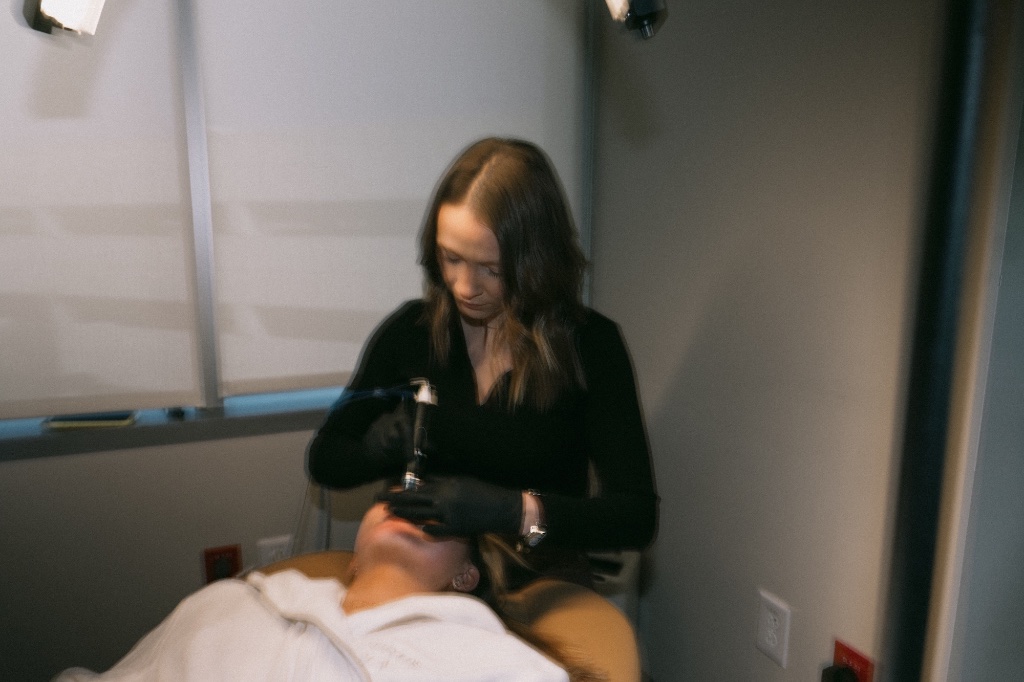
Each region contributes to facial harmony. Select a point on the diagram to understand what the area contributes, common treatments, and how it affects balance.
FREQUENTLY ASKED
Questions, answered.
Facial balancing is the process of evaluating facial proportions, symmetry, structure, and the relationships between features, rather than simply adding filler to one area. It considers the whole face, measuring thirds, fifths, profile balance, and how each zone interacts so treatment enhances harmony instead of isolating a single feature.